- In middle-age eye surgery, is it just a matter of sagging skin? -
As people get older, many say their eyes feel tired easily and complain that their eyes feel “heavy” or that “it is hard to keep them open.”
At times like this, most people assume it is caused by sagging eyelid skin and think of upper blepharoplasty.
In fact, the most common cause of eye discomfort after middle age is indeed sagging eyelid skin.
However, in some cases—and more often than you might think—blepharoptosis (ptosis) is present as well.
- The difference between sagging eyelid skin and ptosis -
Ptosis refers to a condition in which the strength to open the eyes is insufficient, separate from the eyelid skin becoming loose and sagging.
✔ The skin is not very saggy, but the eyes look sleepy
✔ The eyes do not open well unless you use your forehead muscles
✔ By the afternoon, the eyes feel more droopy and tired
In these cases, simply removing skin may not provide enough improvement, and surgery to correct the muscle that opens the eyes (the levator muscle),
that is, ptosis correction surgery, may be necessary.
- Degrees of ptosis and terminology -
Ptosis is usually divided by severity into Mild, Moderate, and Severe. Severe ptosis is most often diagnosed early because it interferes with daily life, and when it occurs after middle age, it is often distributed between mild and moderate.
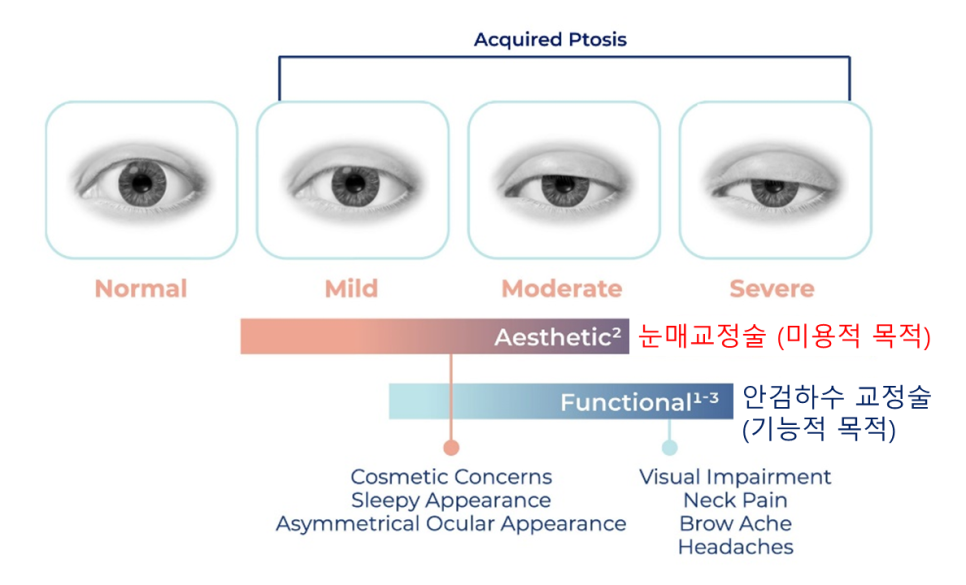 The degree of ptosis. Cosmetic eye-opening correction surgery. Functional ptosis correction surgery.
Also, the term used can differ depending on the purpose of the same surgery.
-
Eye-opening correction → a term used for cosmetic purposes
-
Ptosis correction surgery → a medical term emphasizing functional recovery
-
Upper blepharoplasty and eye-opening correction in a woman in her late 50s -
This was a woman in her late 50s who had sagging eyelid skin along with mild ptosis.
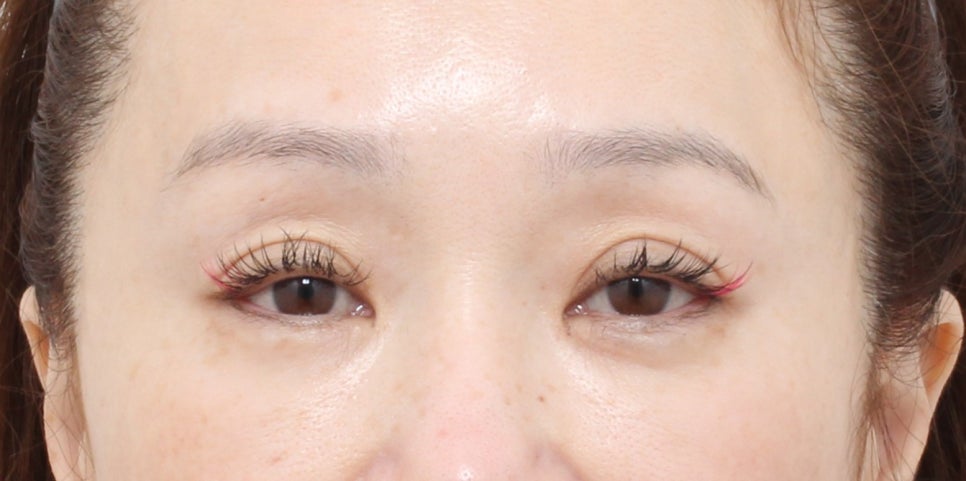 Mild ptosis. Ptosis in the 50s. Partial model with consent for release.
If only the skin were removed, the eyes might not look clearer, or the strength used to open the eyes could become more uncomfortable, so upper blepharoplasty and eye-opening correction (ptosis correction surgery) were performed at the same time.
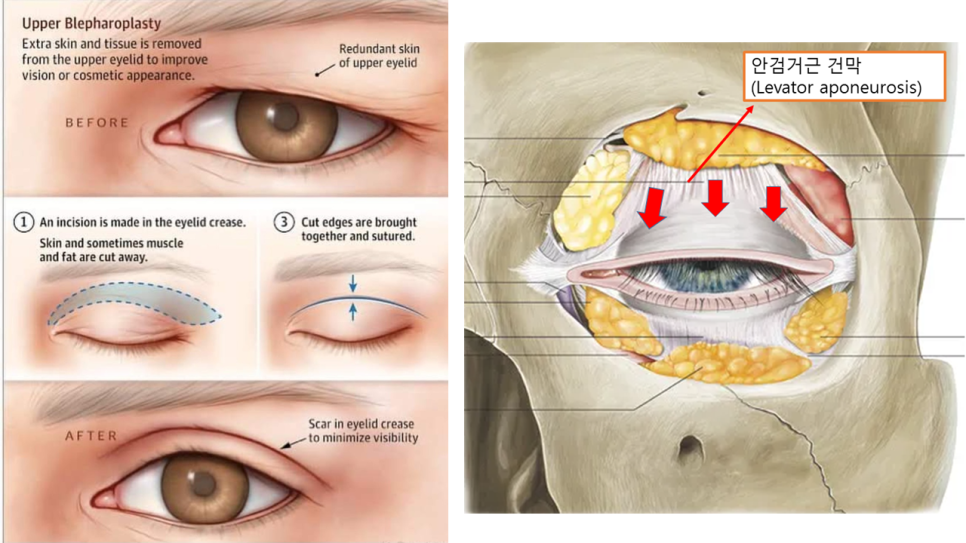 Upper blepharoplasty to improve sagging eyelid skin. Ptosis correction surgery, or eye-opening correction surgery, performed when the strength to open the eyes is insufficient.
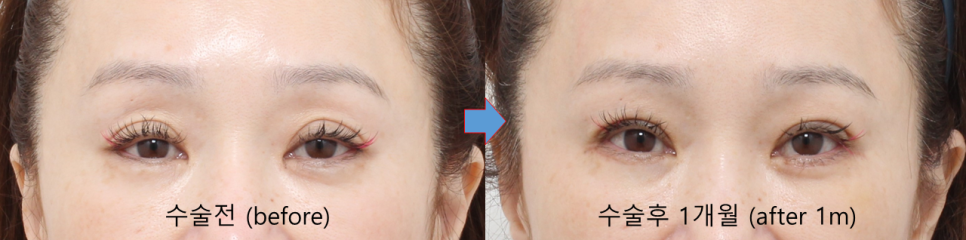 Middle-age eye-opening correction. Before and after middle-age eye-opening correction. Review of middle-age eye-opening correction. Ptosis correction surgery. Upper eyelid ptosis. Partial model with consent for release.
- Recovery process after surgery -
The postoperative course was relatively stable, and the recovery process also progressed well in stages.
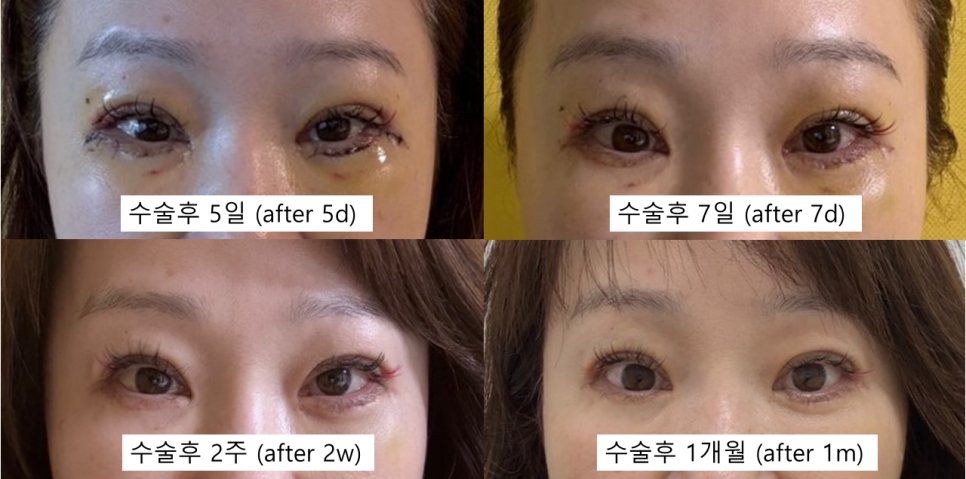 Recovery process after upper blepharoplasty. Recovery process after eye-opening correction. Recovery process after middle-age eye surgery. Postoperative course of upper blepharoplasty. Postoperative course of eye-opening correction. Partial model with consent for release.
▪ 5 days after surgery
-
Slight swelling and bruising remain
-
Daily life is possible, but the feeling of having just had surgery is still present
▪ 7 days after surgery
▪ 2 weeks after surgery
▪ 1 month after surgery
-
Some minor swelling remains
-
Overall, the eyes look natural and clear
-
As the incision scar continues to mature, both functional and aesthetic results are in a satisfying state
-
The most important point in middle-age eye surgery -
What matters in middle-age eye surgery is not “how much sagging skin can be removed,” but identifying the exact cause of the eye discomfort.
-
When there is only sagging skin
-
When ptosis is also present
-
When both are present together
The surgical approach must differ for each case
in order to achieve a natural and lasting result.
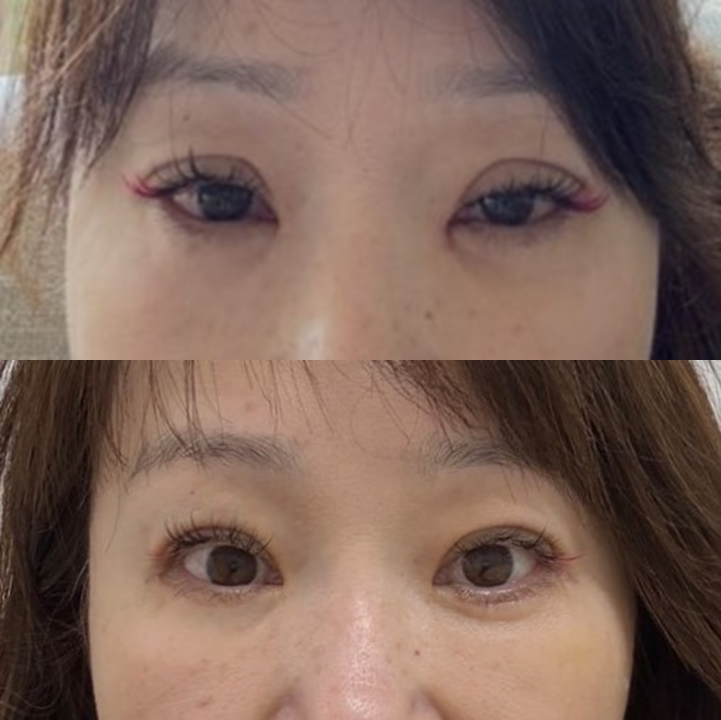 Review of middle-age eye-opening correction. Middle-age ptosis. Middle-age eye surgery. Middle-age double eyelid surgery. Upper and lower blepharoplasty before and after. Upper and lower blepharoplasty postoperative course. Upper and lower blepharoplasty review.