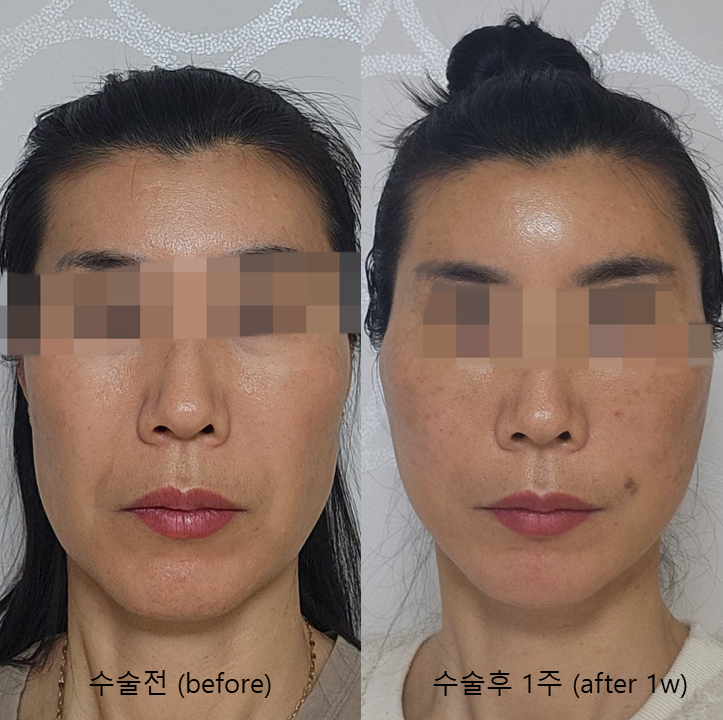
When talking about facial aging, one concept often used is the “Triangle of Youth.”
A youthful face maintains volume in the cheekbones and midface, while the jawline is neatly defined, showing a triangular shape that is wider at the top and narrower at the bottom.
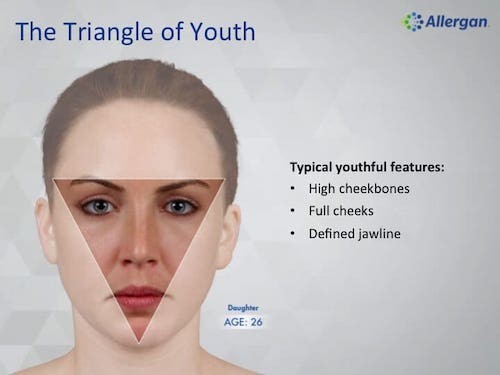
The Triangle of Youth. A youthful face shape. The triangle of youth.
But as we age, the structure of the face gradually changes in the opposite direction.
The soft tissue of the midface sags downward, and tissue gathers around the jawline, changing the face into an inverted triangle shape that is wider at the bottom and narrower at the top.
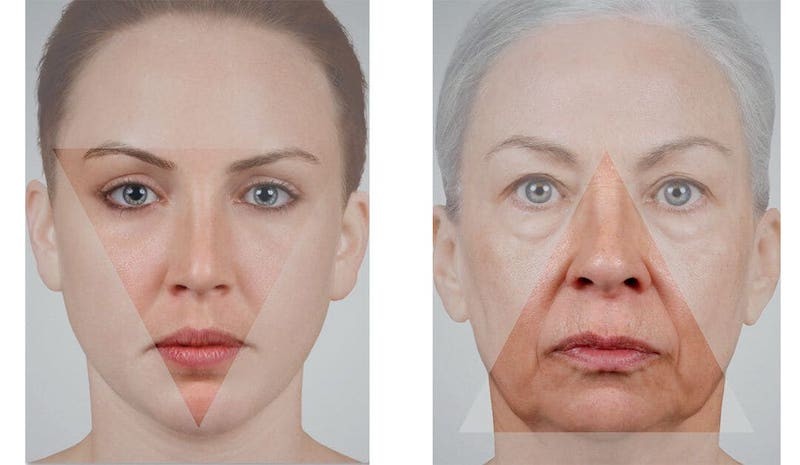
Changes in face shape due to aging.
Because of these changes, among patients who visit in middle age and later,
-
the face often feels longer than before
-
the lower face seems larger
-
the jawline feels thicker
are common concerns.
- Changes in Face Shape Created by a Facelift -
A facelift is not simply a procedure that pulls the skin tight; it is a surgery that repositions the sagging SMAS and soft tissue of the face back to their original location.
As a result, the following changes can occur.
-
The sagging midface is lifted upward
-
Tissue gathered around the jawline is repositioned upward
-
The thick-looking lower face becomes slimmer
-
The jawline becomes clearly defined again
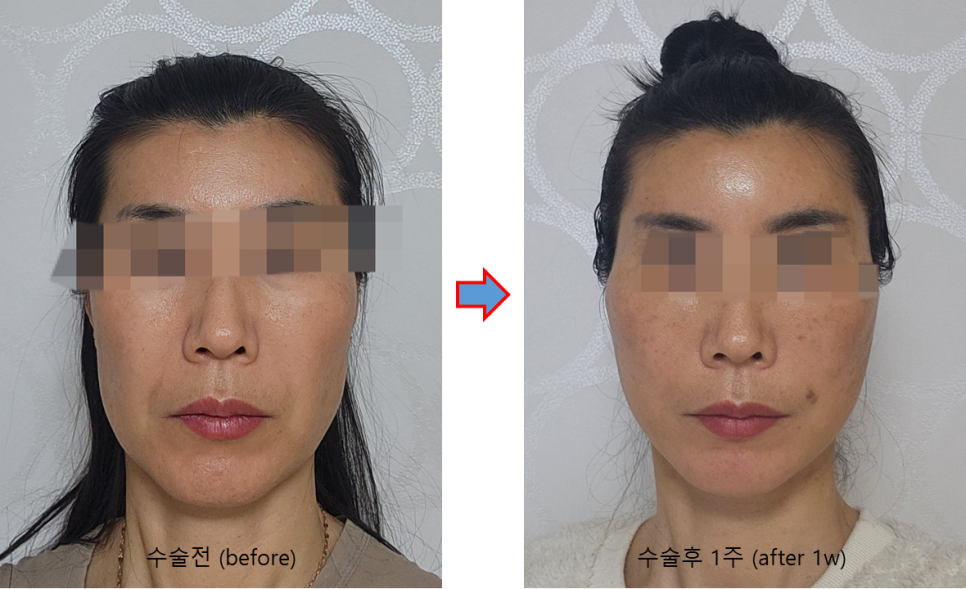
Before and after facelift. Facelift review. Partial model with consent for disclosure.
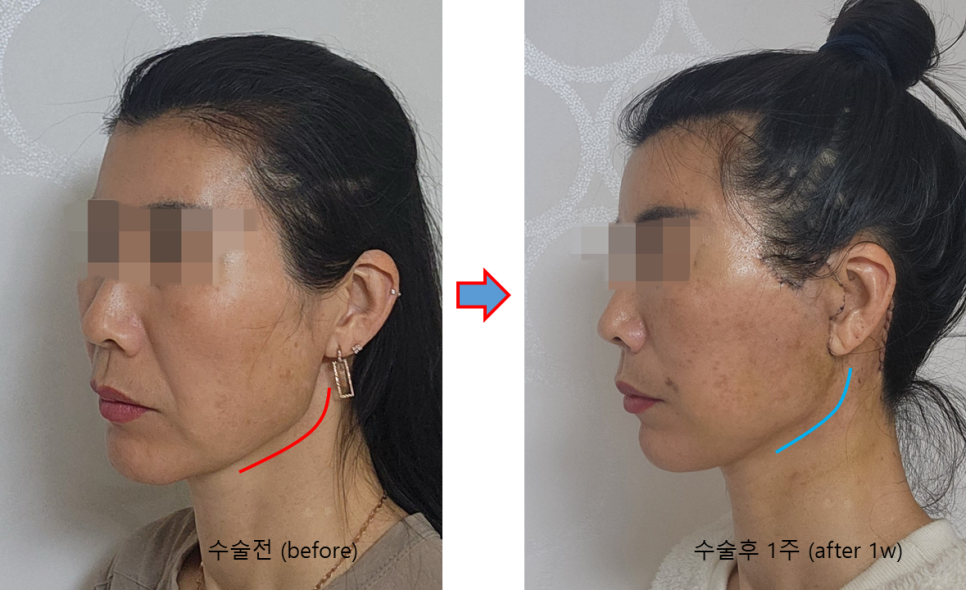
Facelift in the 50s. Lifting in the 50s. Jawline lift. Jawline lifting. Partial model with consent for disclosure.
Looking at the actual case of a woman in her 50s,
but after the facelift,
-
as the sagging tissue was lifted upward
-
it changed into a shape closer to the Triangle of Youth, a youthful face shape
-
and the jawline can be seen to have become much sharper and more defined.
-
A Facelift as an All-in-One Anti-Aging Package -
One reason facelifts have such high satisfaction for many people is that they do not solve just one problem.
Through a facelift,
- nasolabial folds can be softened
- marionette lines around the mouth can improve
- sagging cheeks can be lifted, creating a more youthful face shape
- and a more defined jawline can appear at the same time.
Because several common signs of facial aging are improved together in this way, a facelift is sometimes described as an “all-in-one anti-aging package.”
- Natural Results and Long-Term Maintenance -
A facelift can be seen not as a surgery that makes an aging face look artificial, but as one that returns it to the structure it had before sagging occurred.
Therefore, the results after surgery tend to be maintained for a relatively long time.
Aging itself does not stop, but it resumes gradually from a state repositioned to the youthful location.
- Concerns About Scars and Changes to the Sideburns -
One of the concerns of people considering facelift surgery is the scar and changes to the sideburns.
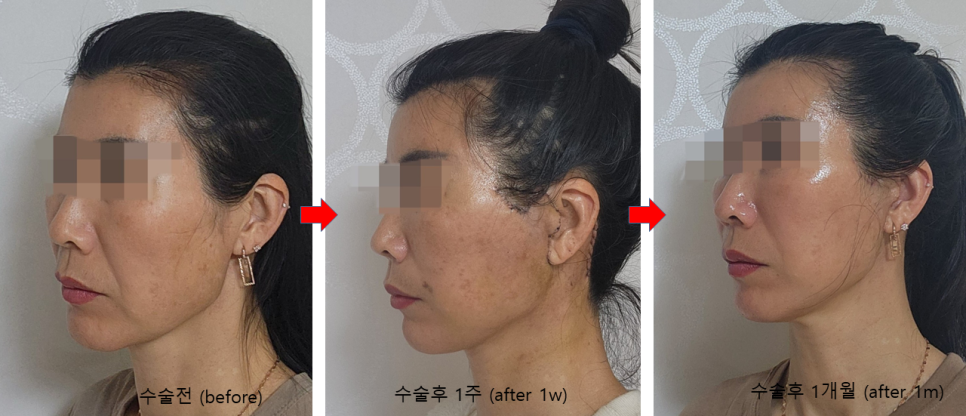
The incision for a facelift is designed along
-
in front of the ear
-
behind the ear
-
inside the hairline
If the incision line is properly designed, the scar is hidden by the natural borders around the ear and by the hair, and in most cases it gradually fades over time until it is not very noticeable.
Also, because the incision is planned so that the length or position of the sideburns does not change significantly during surgery, the sideburns almost never move upward or look unnatural after the procedure.
In the end, a facelift is not simply a procedure that smooths wrinkles, but one that lifts and repositions the sagging facial structure to restore a youthful face shape.
If you are concerned about a longer-looking face, a larger lower face, or a less defined jawline after middle age, it is important to understand that these changes are not simply due to the bones, but to changes in the position of the soft tissue.
And with an appropriate facelift, you can expect anti-aging effects such as a sharper jawline, a youthful face shape, and improvement in nasolabial folds and wrinkles around the mouth.