Interest in suture lifting, a procedure that can provide a facial lifting effect with a simple treatment, has been steadily increasing.
However, in actual clinical practice, a simple approach such as “the more threads you insert, the more it lifts” can sometimes cause side effects instead.
The key to suture lifting is not the number of threads, but “efficient lifting” based on an accurate anatomical understanding.
- What Matters More Than the Number of Threads -
In suture lifting, if you simply increase the number of threads to enhance the lifting effect,
problems may occur.
Therefore, it is important to create the maximum lifting effect with an appropriate number of threads, and the anatomical concepts used in facelifting are essential for this.
- Key Concepts Taken from Facelifting -
- The Two Types of the SMAS Layer: Fixed SMAS vs Mobile SMAS
One of the very important concepts in facelifting surgery is
the distinction between Fixed SMAS and Mobile SMAS.
-
Fixed SMAS: a firm area with little movement and strong fixation
-
Mobile SMAS: a relatively mobile, softer area
In suture lifting,
👉 the key is to place the upper fixation point of the thread in the Fixed SMAS.
This allows the thread to be stably anchored,
after which the lifting retention and traction force improve much more.
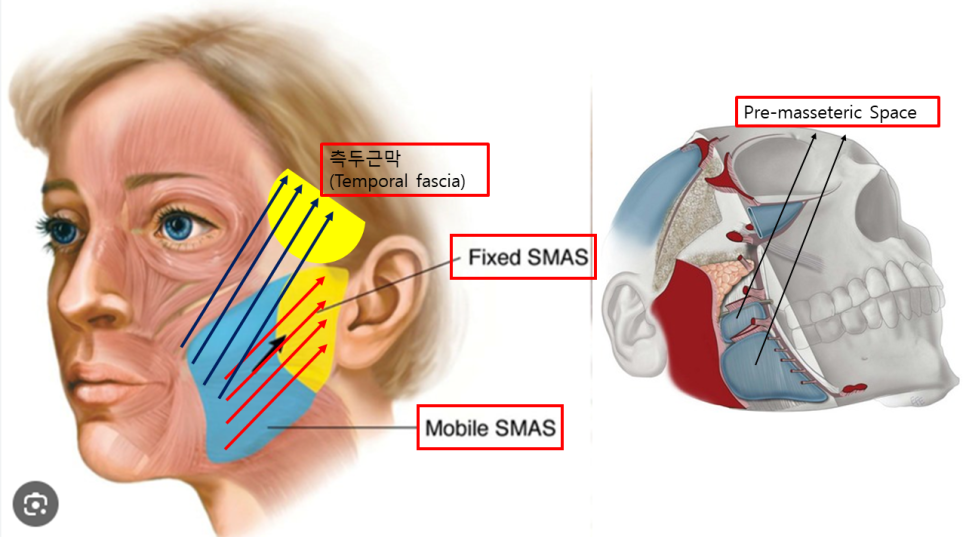
Types of SMAS in facelifting. Facelift SMAS. Mobile SMAS. Fixed SMAS. Pre-masseteric space.
- Use of the Premasseteric Space
Another important concept is the premasseteric space.
This space
In suture lifting, setting the depth of the thread’s path according to this space can make lifting more effective and help avoid a forced or overly pulled appearance, so the result looks more natural.
FixPoint suture lifting patent office trademark registration.
- But There Are Risk Factors You Must Know -
The premasseteric space is not just an empty space.
Below this area are important structures such as
-
facial nerve branches
-
the parotid gland
-
the parotid gland duct
Therefore, approaching it without anatomical understanding can carry risks such as nerve injury.
In other words, this is an area that requires sufficient anatomical knowledge and experience.
- Progress After the FixPoint Suture Lifting Procedure -
Looking at the course after suture lifting, the following characteristics can be seen.
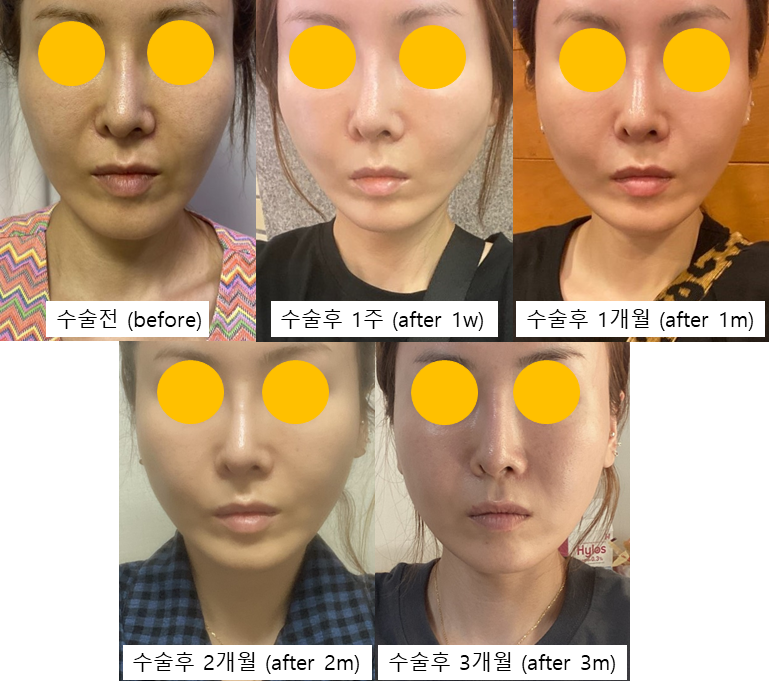
Before and after suture lifting. Suture lifting review. Suture lifting duration. Suture lifting swelling. Suture lifting recovery period. 30s lifting. This is a partial model with consent for disclosure.
-
Week 1: a slightly overcorrected feeling (a common appearance in the early stage of lifting)
-
Month 1: the unnatural look decreases and a natural contour forms
-
Month 2 / Month 3: the lifting effect continues while maintaining a natural look
As time passes and the tissues stabilize,
👉 you can see the process in which both naturalness and durability improve at the same time.
When these facelifting concepts are applied to suture lifting,
-
sufficient lifting effect with fewer threads
-
maintenance of natural facial movement
-
reduced foreign-body sensation and discomfort
-
improved durability
can be achieved.
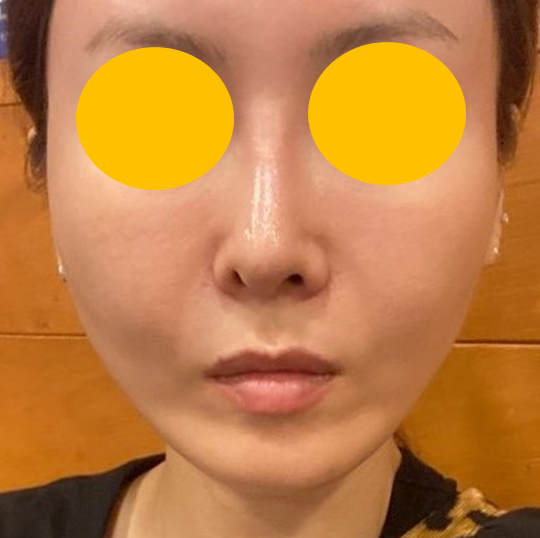
Suture lifting review. Before and after suture lifting. Suture lifting duration. Suture lifting swelling. This is a partial model with consent for disclosure.
Although suture lifting may seem like a simple procedure,
if it is performed based on the anatomical understanding used in facelifting surgery,
it can create lifting results that are natural and long-lasting even with fewer threads.