One of the most common questions from people considering under-eye fat repositioning is:
“Won’t my facial expression look unnatural after surgery?”
The under-eye area is not simply a region with fat; it is also where important structures that create facial expressions are located, so the surgical result is directly tied to how natural it looks.
- Basic Principles of Under-Eye Fat Repositioning -
Under-eye fat repositioning is a procedure in which the surgeon approaches the under-eye area through an incision made in the inner conjunctiva, thoroughly releases the tear trough, and then repositions the orbital fat downward in a flap-like manner.
There is the advantage of no visible skin incision, but that makes it even more important to accurately understand the internal anatomical structures and to approach them with precision.
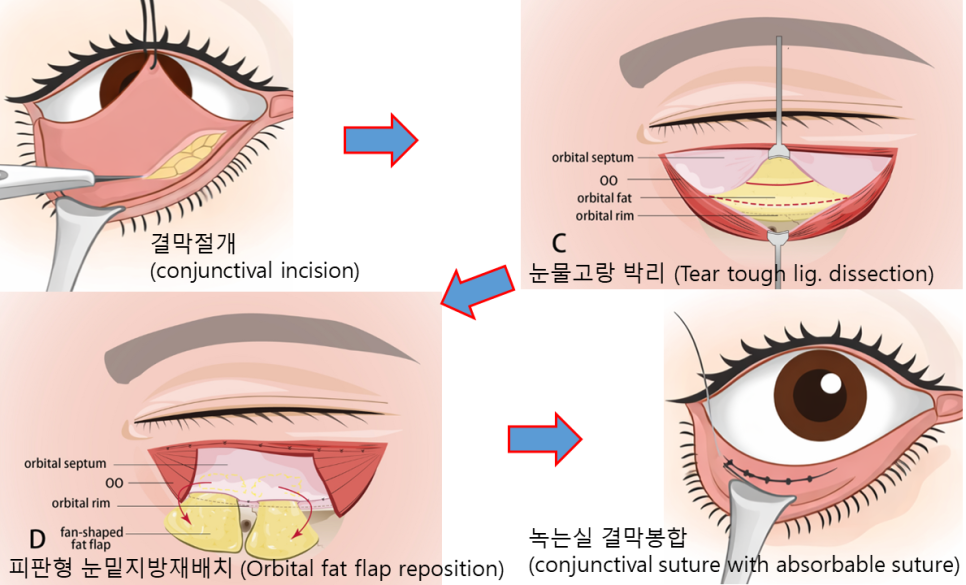
The surgical process of under-eye fat repositioning. Under-eye fat repositioning. Under-eye area.
- The Key Factor That Determines Natural Results: The Orbicularis Oculi Muscle -
The most important structure in creating a natural expression under the eyes is the orbicularis oculi muscle.
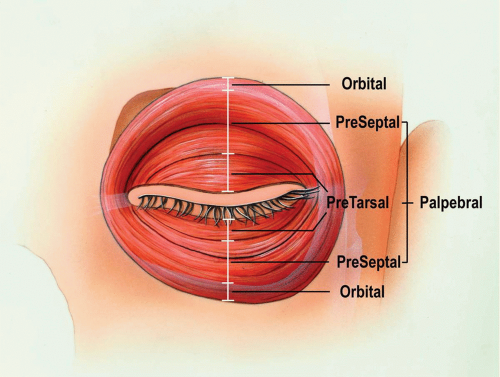
Orbicularis oculi muscle. Distinction of the orbicularis oculi muscle.
This muscle creates the “aegyo-sal” when smiling and is responsible for the soft movement around the eyes.
In a normal under-eye fat repositioning procedure, because the approach is made through the conjunctiva, the orbicularis oculi muscle should not be damaged.
However, in rare cases, if the location of the conjunctival incision is inaccurate or the wrong tissue plane is entered:
👉 Orbicularis oculi muscle damage may occur
👉 As a result, the aegyo-sal may disappear
👉 Facial expressions may look unnatural when smiling
In other words, even though this is a procedure performed through an incision that is not visible from the outside, it is by no means a simple surgery; the incision must be made at the exact conjunctival location, and the procedure must be performed along the correct anatomical plane.
The key to under-eye fat repositioning is not simply moving fat.
- Making the conjunctival incision at the correct location
- Dissecting along the proper anatomical plane
- Repositioning the fat while preserving the orbicularis oculi muscle
This is what must be done properly for results that preserve a natural facial expression.
- Recovery Process After Under-Eye Fat Repositioning in a Woman in Her Late 20s -
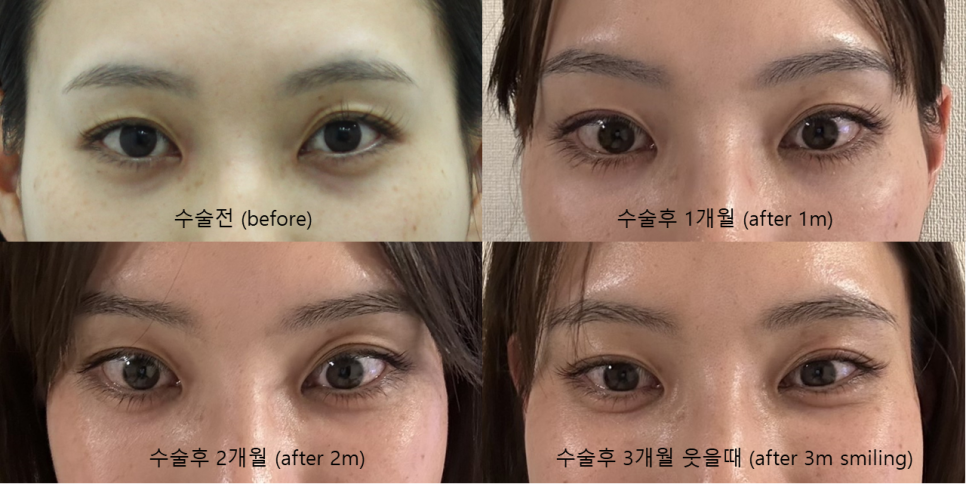
Under-eye fat repositioning in the late 20s. Recovery process after under-eye fat repositioning. Before and after under-eye fat repositioning. Under-eye fat repositioning review. This is a partially featured model who consented to disclosure.
Before surgery
A woman in her late 20s showed these concerns.
1 month after surgery
2 months after surgery
3 months after surgery (smiling)
-
The aegyo-sal remains clearly visible
-
Overall, a younger-looking and softer impression
-
Why Under-Eye Fat Repositioning? -
There are various procedures that can improve under-eye hollowing, dark circles, and unevenness, such as:
-
Fillers
-
Fat grafting
-
Laser treatment
-
Thread lifting
-
Skin boosters
However,
👉 The most definite way to directly address the structural cause is under-eye fat repositioning.
Also, if the surgery is performed without damaging the orbicularis oculi muscle,
👉 The result is not just a “flatter under-eye area”
👉 It can also be a naturally expressive result
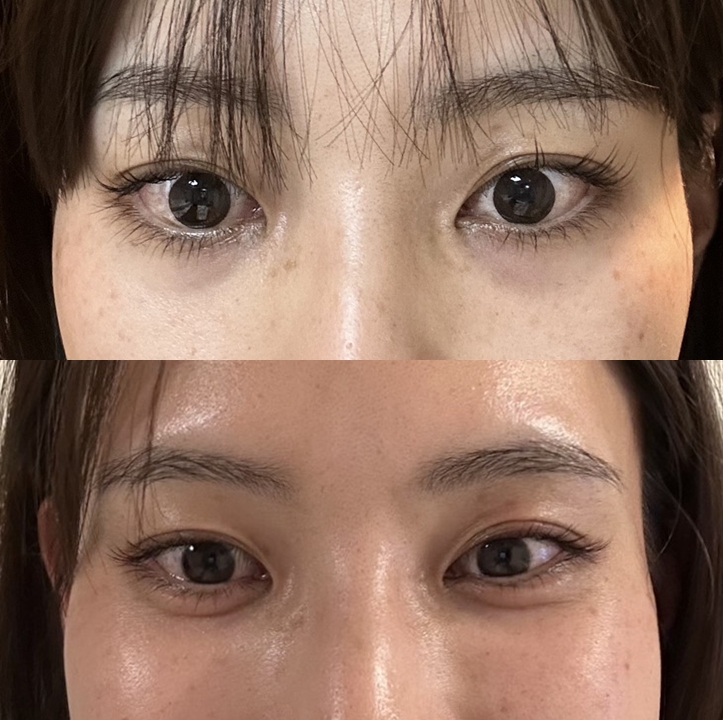
Under-eye fat repositioning in the 20s. Under-eye fat repositioning in the 30s. Review of under-eye fat repositioning. Before and after under-eye fat repositioning. This is a partially featured model who consented to disclosure.
The under-eye area is a region where even a very small difference can greatly change the overall impression.
That is why,
the less visible the incision is, the more precise it must be.