Facelift surgery is generally performed most often in people in their 50s and 60s,
but
recently, consultations and inquiries from patients in their 70s have also been steadily increasing.
“Is surgery possible even though I’m older?”
The answer to this question is not determined simply by age.
Today, I’ll explain in detail whether a facelift is possible in your 70s, the recovery process, and the changes after 3 months through real cases.
- Facelift in Your 70s: What Are the Criteria for Surgery? -
For facelift surgery, overall health status is more important than age.
Especially in your 70s, the following items must be checked.
-
Presence of underlying conditions (high blood pressure, diabetes, cardiovascular disease, cerebrovascular disease, etc.)
-
How well chronic conditions are controlled
-
Medications currently being taken
👉 During the preoperative consultation
You must accurately inform us of the medications you are currently taking and your medical history so that a safe surgical plan can be made.
- Recovery Process After a Facelift in the Early 70s (Actual Progress) -
The recovery process is one of the most frequently asked-about topics.
To start with the conclusion: being in your 70s does not mean recovery is especially slower.
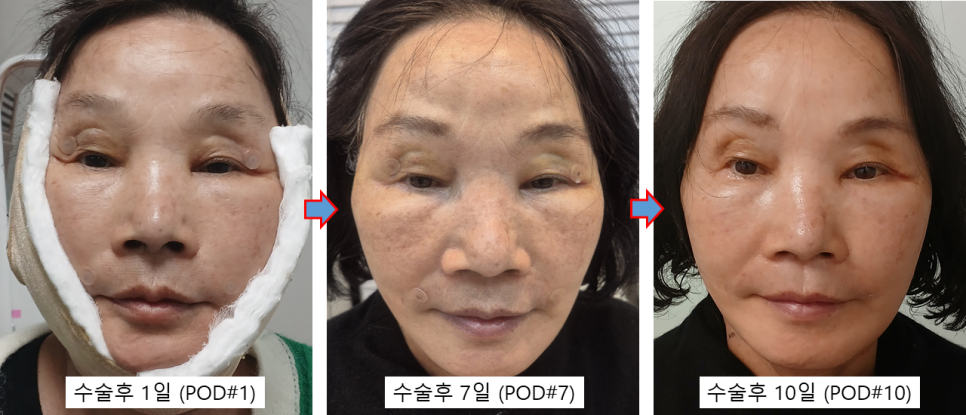 This is a real model who consented to disclosure. Facelift in the 70s. Facelift recovery process. Facelift swelling. Facelift recovery.
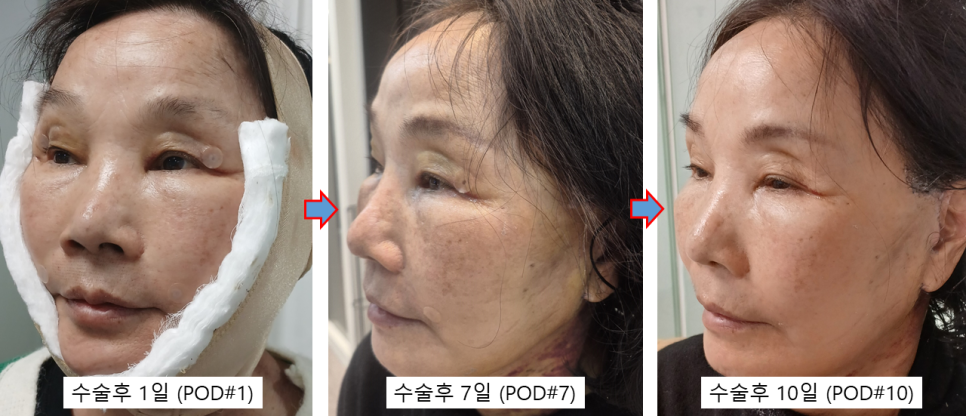 Facelift day 1. Facelift day 7. Facelift day 10. Facelift compression garment. This is a real model who consented to disclosure.
A typical recovery flow is as follows.
2–3 days after surgery
- On the first day after surgery, the drains are removed, and this is the time when swelling is at its peak, so the face may look the most swollen.
Around 7 days after surgery
- As the facial swelling goes down, bruising and swelling gradually move downward (toward the neck), and changes become visible.
10–14 days after surgery
- Depending on how the wound is healing, stitches are removed, and recovery progresses to the point where going বাইরে is possible.
👉 After that, as time passes, the swelling gradually subsides naturally and a clearer contour becomes visible.
- Care Methods That Help Speed Recovery -
Proper care during recovery can also affect the results.
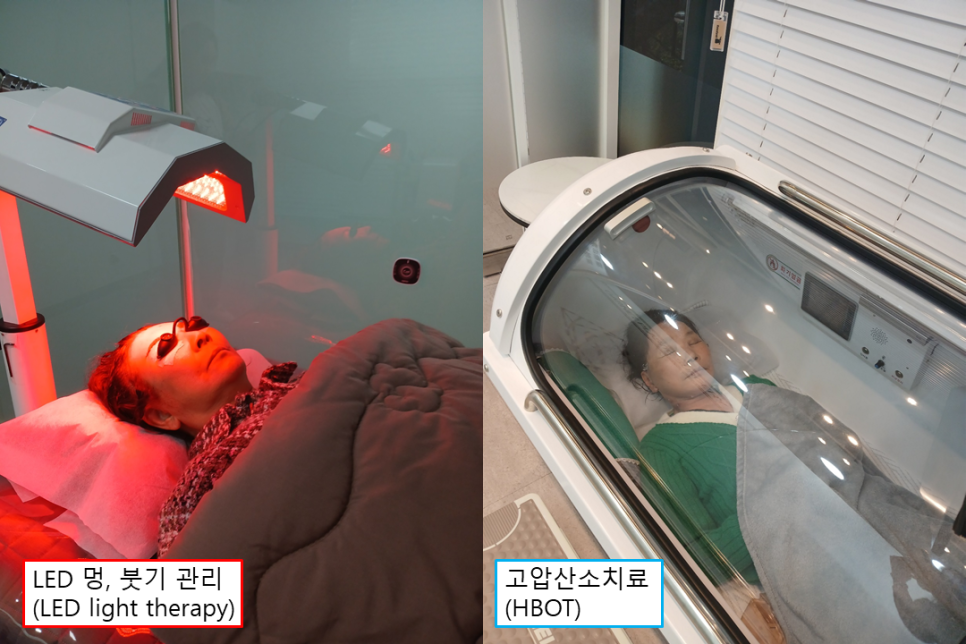 LED light therapy (LED light therapy)
→ Helps reduce swelling and bruising
Hyperbaric Oxygen Therapy (Hyperbaric Oxygen Therapy)
→ Improves microcirculation in the surgical area and increases oxygen supply
In particular, for older patients, supportive treatments that help tissue recovery may be beneficial.
We also operate various recovery-support programs, such as swelling injections through fluid therapy.
- Changes Before and After Surgery (2–3 Months Later) -
For a patient living overseas, the postoperative progress appears to have settled stably.
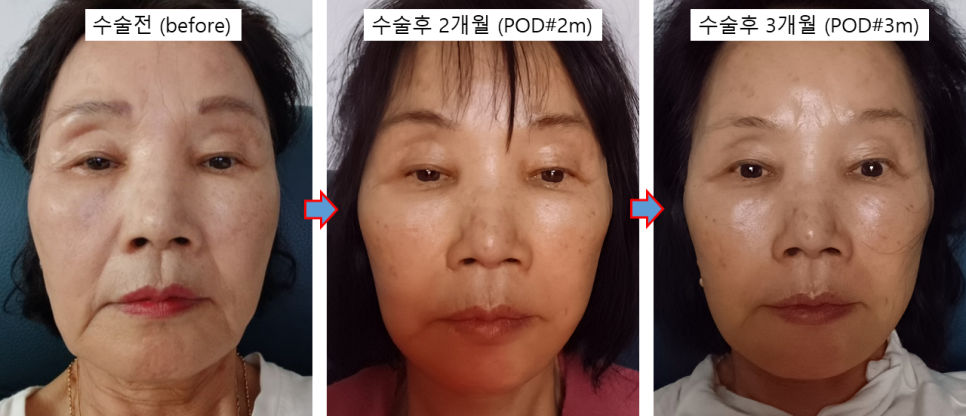 Facelift progress. Facelift 2 months. Facelift 3 months. Facelift review. This is a real model who consented to disclosure.
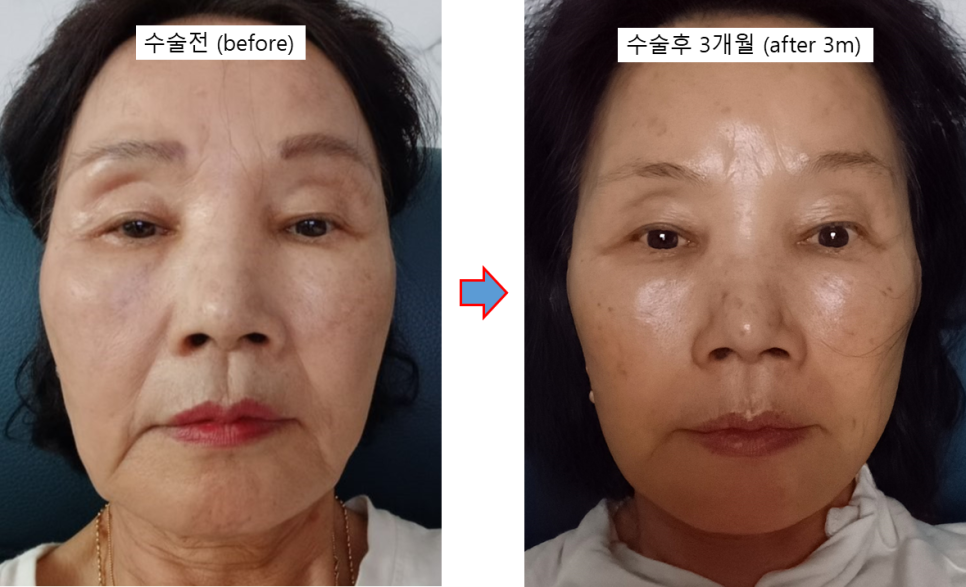 Before and after facelift. Facelift in the 70s. Facelift review in the 70s. Before and after facelift in the 70s. This is a real model who consented to disclosure.
If you compare the appearance before surgery and 3 months later,
-
Improvement in overall facial sagging
-
Softening of nasolabial folds
-
Reduction in wrinkles around the mouth
-
Refinement of the double chin and neck line
👉 Overall, you can see a change to a clearer and more refined impression.
This case is of a patient living overseas, so it is unfortunate that there are not enough photos from various angles.
-
Facelift in Your 70s, Key Takeaways -
-
Health status is more important than age
-
If chronic conditions are well controlled, surgery is possible
-
The recovery process is not very different from that of people in their 50s and 60s
-
Return to daily life is possible in about 2 weeks
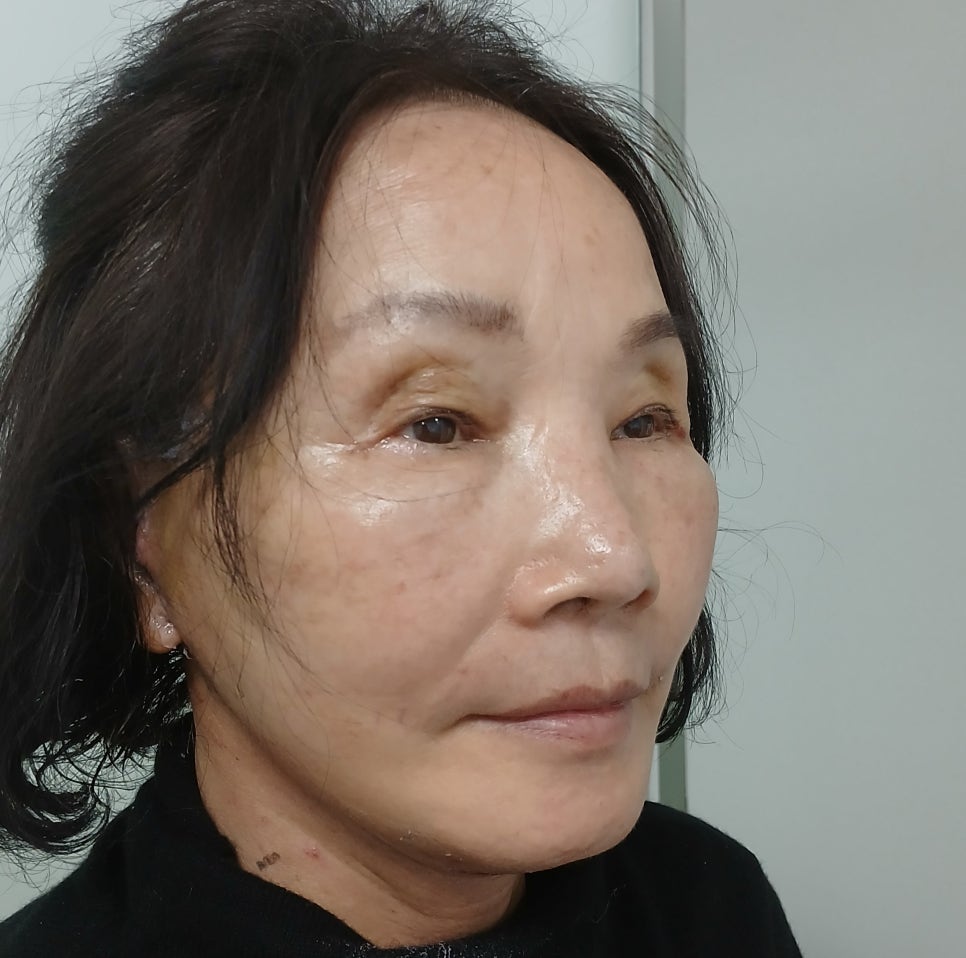 This is a real model who consented to disclosure. Facelift review in the 70s. Before and after facelift in the 70s.
Rather than judging whether facelift surgery is possible simply by age, the current health condition is what matters,
and I recommend confirming the method that suits you best through a professional consultation.