Recently, among Japanese patients who undergo anti-aging surgery in Korea,
many have already experienced thread lifting, as well as radiofrequency and ultrasound lifting procedures (energy-based devices).
One point they often mention in particular is
that “the duration was shorter than expected.”
Right after thread lifting, the facial line may feel more defined,
but as time passes, the nasolabial folds or jawline sagging can appear again,
leading some patients to consider a lifting surgery that is more definitive and longer lasting.
- Deep mini facelift case for a Japanese patient in her early 30s -
This patient was a Japanese woman in her early 30s,
and rather than having severe overall facial aging,
she was concerned about early sagging in the midface, around the mouth, and along the jawline.
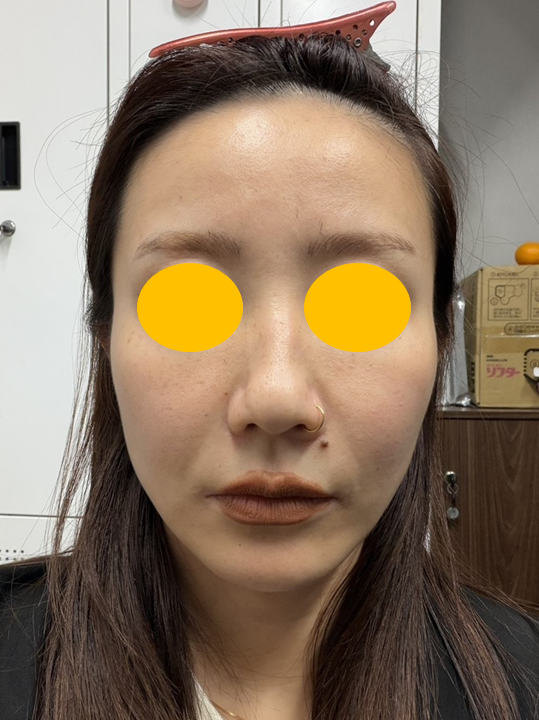
In particular, when taking photos,
These were the points that bothered her, she said.
Because she had already experienced thread lifting, she valued durability and natural results more than simply “a pulling sensation.”
- What makes the deep-plane mini facelift different? -
In general, when people hear “mini facelift,”
they often think of it as a simple lift with a small dissection area.
However, a deep plane mini facelift takes a fundamentally different approach from simple skin tightening.
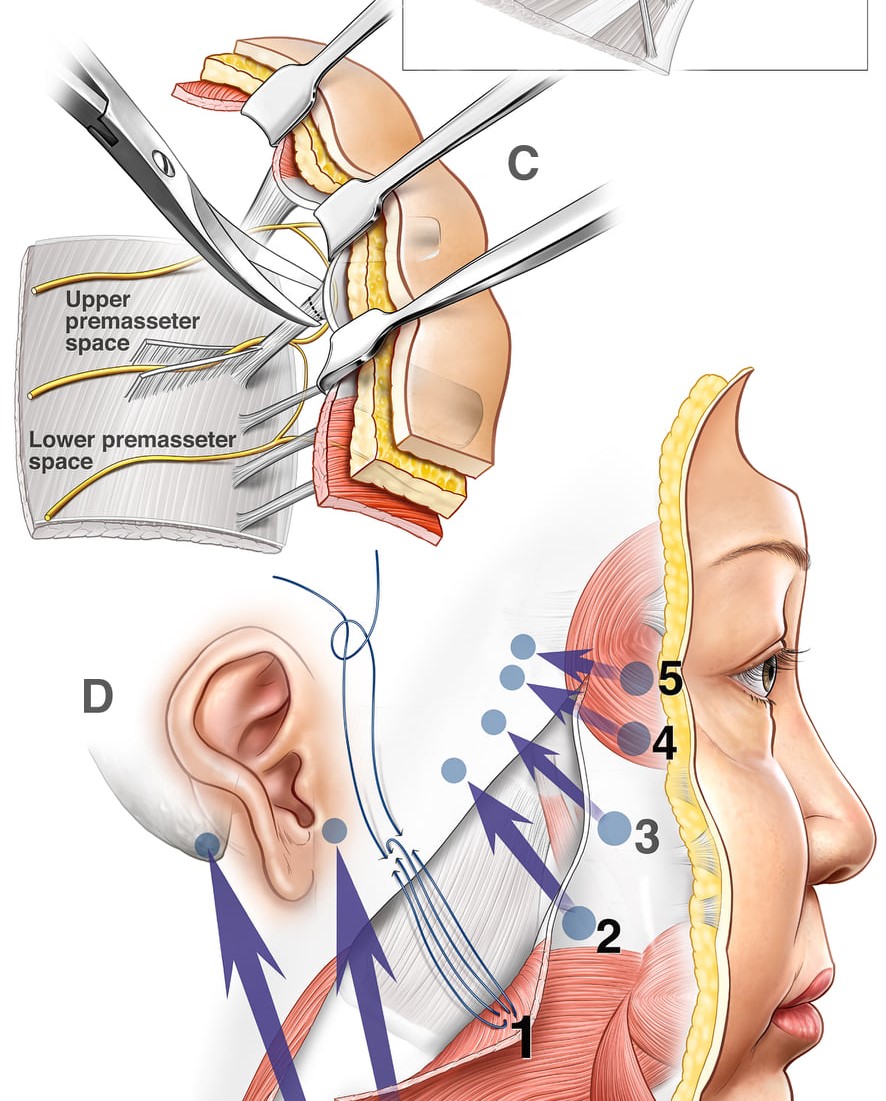 Source: Mendelson, Composite facelift of Asian
While minimizing subcutaneous dissection,
Source: Mendelson, Composite facelift of Asian
While minimizing subcutaneous dissection,
dissection is sufficiently extended below the SMAS layer and the facial retaining ligaments are adequately released,
then the sagging tissues themselves are repositioned.
In other words,
rather than forcibly pulling the skin,
it is closer to the concept of naturally rearranging the deeper structural layers.
- A faster recovery advantage due to less subcutaneous dissection -
One of the advantages of a deep plane mini facelift is
that the extent of subcutaneous dissection can be reduced.
If skin dissection is excessive,
-
swelling
-
bruising
-
reduced sensation
-
delayed recovery
can become greater burdens,
but because the deep plane approach focuses dissection below the deeper facial layers, that is, beneath the SMAS layer,
it can help reduce the recovery burden relatively.
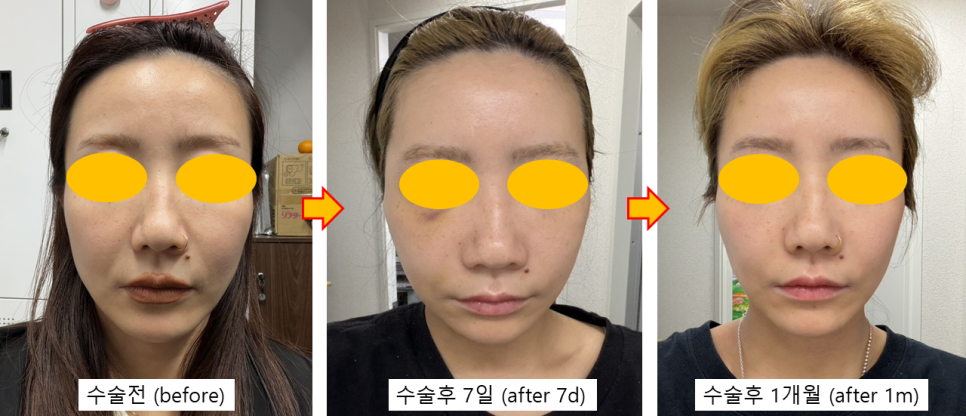 Recovery process of deep mini facelift. Recovery process of mini facelift. Swelling after mini facelift. Recovery after mini facelift. This is a model for whom disclosure was agreed.
In particular, since many overseas patients find it difficult to stay for a long period,
recovery speed is an important factor.
In fact, among Japanese patients,
there are cases where surgery is scheduled with departure plans as soon as 2 to 3 days after the operation.
Also, because it is a mini facelift,
it is often performed without inserting a drain,
which can reduce the burden of returning to daily life after surgery.
- Changes before and after surgery -
In the preoperative photos,
were visible.
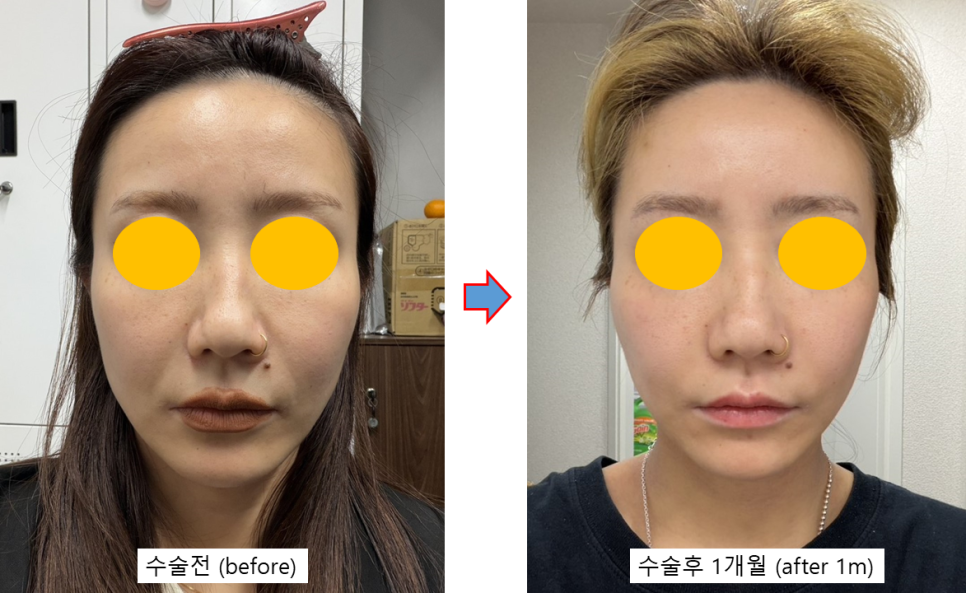 Before and after deep mini facelift. Before and after mini facelift. Mini facelift review. This is a model for whom disclosure was agreed.
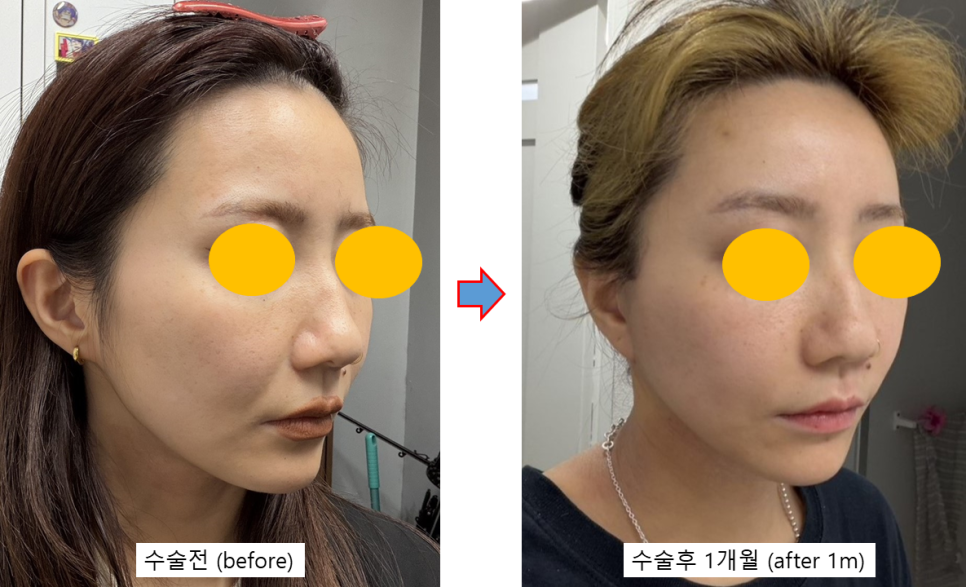 Deep mini facelift review. Before and after deep mini facelift. Mini facelift sideburn preservation. Mini facelift ear shape preservation. This is a model for whom disclosure was agreed.
In the postoperative photos,
the sagging midface tissues and jawline are naturally lifted,
allowing a more refined facial line to be seen.
In particular, one notable point is that the nasolabial folds and sagging around the mouth improved naturally,
without the forced pulled-to-the-side look.
Also, among the concerns patients often have about facelift surgery,
it is important that a natural hairline and ear shape were maintained without such side effects.
- If you are considering a more definitive lift after thread lifting -
Thread lifting is a relatively low-burden procedure,
but some people feel dissatisfied with its duration or lifting strength.
In particular, after repeated thread lifting,
many patients start considering a more structural lift.
A deep mini facelift using the deep plane method is a surgery that approaches lifting in the direction of
- not over-tightening the skin
- correcting sagging in the deeper layers
- creating a natural facial line
- improving durability
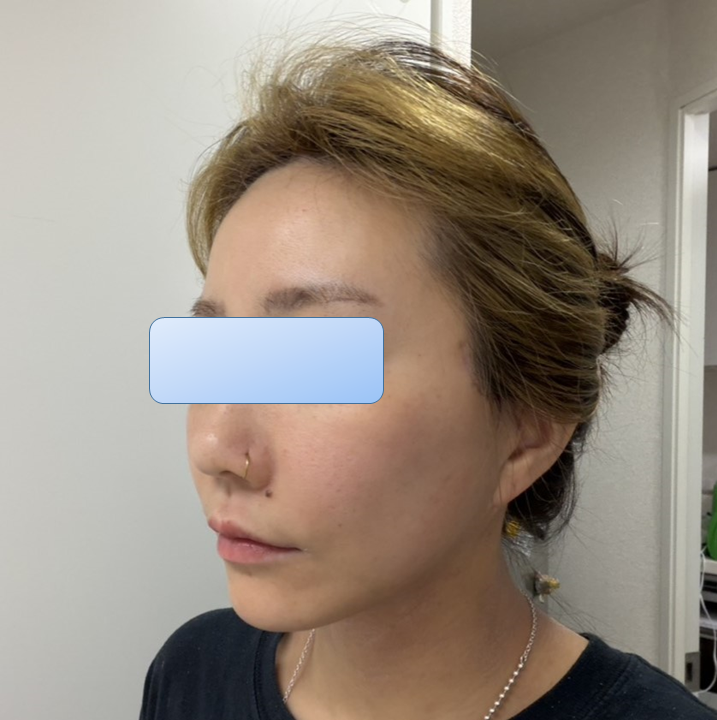 Mini facelift review. Deep mini facelift review. Mini facelift duration. Deep mini facelift. This is a model for whom disclosure was agreed.
What matters is not simply pulling harder,
but understanding the facial structure and the direction of sagging,
and designing the lift in a way that suits each patient.