In recent years, the emergence of GLP-1 weight-loss medications such as Ozempic, Wegovy, and Mounjaro has significantly changed the paradigm of weight loss worldwide.
Many people who previously struggled to lose weight through diet and exercise alone are now able to reduce their weight more effectively, and there has also been an increase in cases involving improvements in health and quality of life.

Weight-control medications: Ozempic, Wegovy, Mounjaro, and Trulicity. Source: Media reports.
However, many patients who visit plastic surgeons after successfully losing weight share an unexpected concern.
"I lost weight, but my face looks so gaunt."
"I lost weight, but people actually tell me that I look older."
"The area under my eyes looks sunken, and my cheekbones look more prominent."
This noticeable loss of facial volume and appearance of aging after weight loss is commonly referred to as Ozempic Face.
- Why does Ozempic Face occur? -
Ozempic Face is not so much a direct side effect of the medication as it is a change that occurs when facial fat decreases due to rapid weight loss.
There are three main factors that help maintain a youthful appearance:
When body weight decreases, facial fat decreases along with fat in the rest of the body.
The face is especially prone to noticeable changes because its fat layers are thin and it is strongly affected by aging.

Hollywood star with Ozempic Face. Side effects of dieting. Diet-related aging. Rapid aging caused by dieting. Source: Media reports.
- Common characteristics of Ozempic Face -
- Reduced volume in the anterior cheeks and midface
The area below the cheekbones becomes hollow, making the face look flatter.
- Under-eye hollows and dark circles
As the fat cushion under the eyes decreases, the face may appear tired and older.
- More pronounced nasolabial folds
Reduced midface volume can make the nasolabial folds appear deeper.
- Sagging along the jawline
Although the fat decreases, the skin may remain, which can lead to sagging.
- Skeletal face
In more severe cases, a substantial reduction in the facial fat layers makes the cheekbones and orbital bones more prominent, creating a gaunt, skeletal appearance.
- Why is it more noticeable after middle age? -
People in their 20s and 30s generally have good skin elasticity, allowing the skin to adapt relatively naturally after weight loss.
By contrast, people in their 40s to 60s may already have experienced
When rapid weight loss is added to these changes, facial aging may become apparent all at once, causing Ozempic Face to appear more severely.
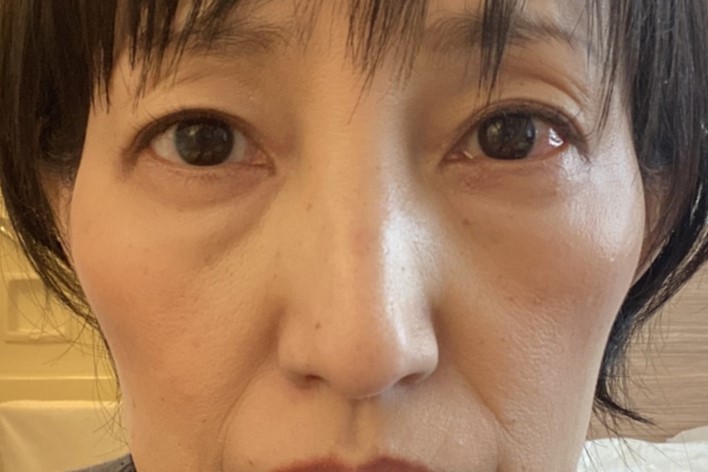
Skeletal face. Peanut-shaped face. Hollowing at the sides of the cheeks. This is a real model who consented to publication.
- How is it actually treated? -
When Ozempic Face is severe, structural correction beyond simple filler treatment may be necessary.
Midface lifting
The descended midface tissues are elevated closer to their original position.
Lower blepharoplasty
Bulging and hollowing under the eyes are improved to reduce a tired-looking appearance.
Fat grafting
The lost facial volume is restored naturally.
When these three approaches are appropriately combined, the goal is not simply to fill the face but to help restore the healthy, vibrant appearance it had before weight loss.
- A case of correcting aging that developed after weight loss -
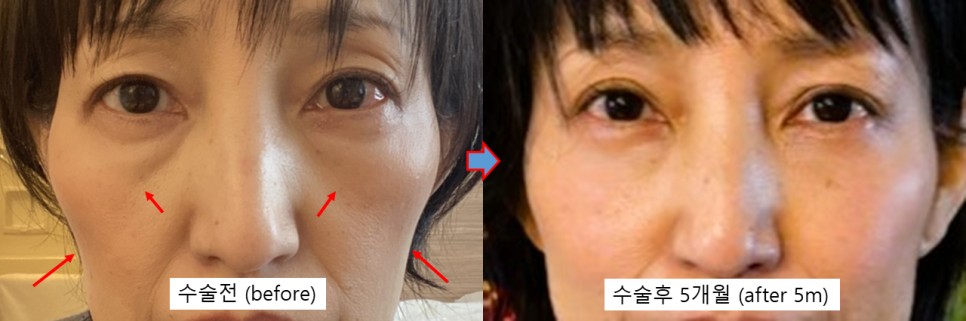
After losing weight, the patient shown above developed severe under-eye hollowing and reduced midface volume, presenting with a typical skeletal facial appearance.
Because midface descent and under-eye aging could not be sufficiently improved with fat grafting alone,
were performed together.
After surgery, the previously hollow-looking midface was naturally restored, and the transition under the eyes became smoother, resulting in a healthier and more vibrant appearance.
The important point is that the face was not excessively filled. Instead, the descended tissues were lifted and deficient volume was replenished to restore facial balance.

Results after lower blepharoplasty. Results after midface lifting. Results after fat grafting. This is a real model who consented to publication.
Ozempic Face is not a failure of weight loss but a new concern that may arise after successful weight loss.
There is no need to fear weight loss itself, but if facial changes occur after rapid weight reduction, it is important to evaluate the accompanying structural changes in the face.
Particularly when under-eye hollowing, midface sagging, and a skeletal facial appearance occur together, a comprehensive approach involving midface lifting, lower blepharoplasty, and fat grafting may offer a more natural and fundamental solution.
Healthy weight loss and a youthful, vibrant appearance can be achieved together.
The important thing is to accurately determine why the face has changed and choose treatment suited to the cause.
If you would like to learn about the recovery process after fat grafting, please refer to the blog post below.