One of the cosmetic procedures most often considered by people in their 20s and 30s during summer vacation and summer break is eye plastic surgery.
However, when people come in for a consultation, they often ask first about a specific procedure, such as “Do I need medial epicanthoplasty?” or “Would lateral canthoplasty be more effective?”
In reality, eye plastic surgery is not a single procedure but consists of several different procedures, each with its own role.
What is important is not which procedure is currently popular, but accurately determining what your eyes need most at present.
Today, I will introduce the main types of eye plastic surgery and discuss what I consider most important in eye surgery.
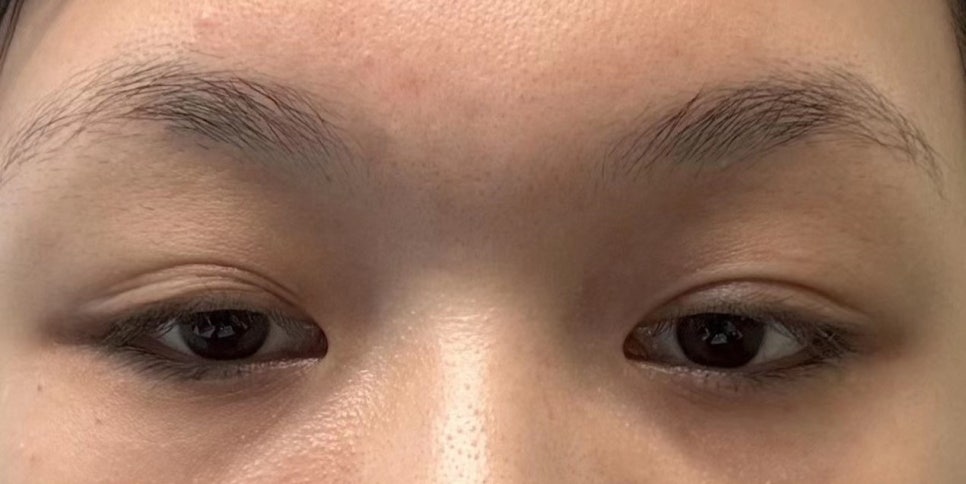
Reviews from people in their 20s and 30s. Eye surgery reviews. Priorities for eye plastic surgery. Real model with consent for disclosure.
- Various eye plastic surgery procedures among younger people -
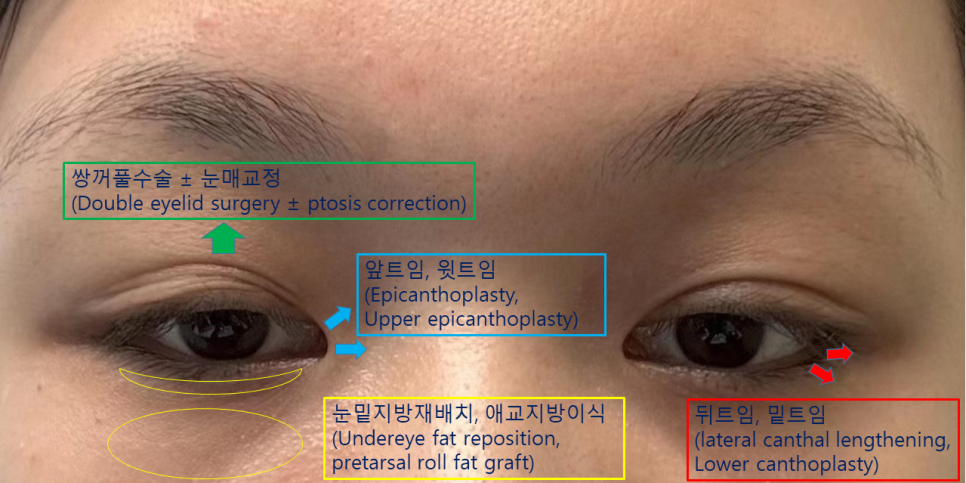
Types of eye plastic surgery. Eye surgery procedures. Incisional ptosis correction. Types of canthoplasty. Lateral and lower canthoplasty. Medial and upper epicanthoplasty. Real model with consent for disclosure.
- Double Eyelid Surgery · Ptosis Correction (Double eyelid surgery, ptosis correction)
These are the most basic procedures in eye plastic surgery.
Double eyelid surgery creates a natural eyelid crease, refines the appearance of the eyes, and makes the eyes look clearer and more defined.
Depending on the thickness of the eyelids, skin elasticity, and desired crease, an appropriate method—such as an incisional or non-incisional technique—is selected.
Ptosis correction improves the strength used to open the eyes by supplementing the function of the muscles that open them.
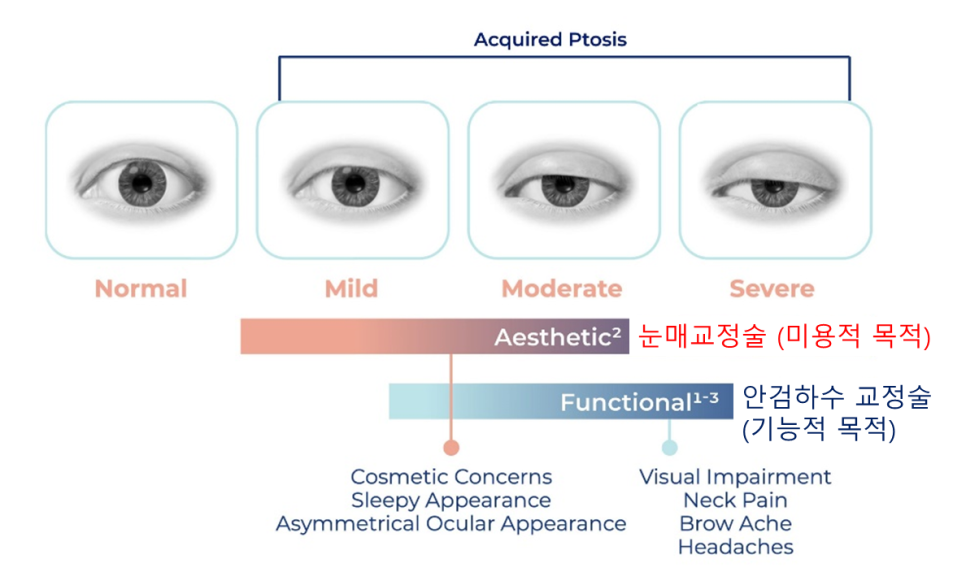
Ptosis. Ptosis correction. Ptosis surgery. Degree of ptosis. Meaning of ptosis correction.
It may be helpful for people who use their forehead extensively when opening their eyes, have a sleepy-looking appearance, or do not show enough of the irises.
I believe that the most important procedures in eye plastic surgery are double eyelid surgery and ptosis correction.
The reason is that a person’s first impression is determined not simply by the size of the eyes, but by “how comfortably and clearly the eyes open.”
If there is insufficient strength when opening the eyes, multiple creases form, or the double eyelid is unstable, then even enlarging the eyes with medial or lateral canthoplasty will not create a clean, well-organized overall impression.
Conversely, when the eye-opening function is stable and the double eyelid settles naturally, the eyes can appear much clearer and more refined on their own.
Therefore, during consultations, I first evaluate the eye-opening function and the stability of the double eyelid, and then determine whether any other procedures are needed.
- Medial Epicanthoplasty · Upper Epicanthoplasty (Epicanthoplasty, Upper Epicanthoplasty)
Medial epicanthoplasty opens the inner part of the eyes covered by the epicanthal fold, creating a more open appearance.
It may also help when the distance between the eyes appears wide.
Upper epicanthoplasty naturally opens the upper part of the inner eye area connected to the double eyelid crease.
It is performed to address the potential drawback of making the eyes appear too close together with medial epicanthoplasty and to determine the shape of the front portion of the double eyelid crease.
However, this procedure is not necessary for everyone.
It is important to perform it only after sufficiently evaluating the shape of the inner eye area and the extent of the epicanthal fold.
- Lateral Canthoplasty · Lower Canthoplasty (Lateral canthal lengthening, Lower canthoplasty)
Lateral canthoplasty naturally lengthens the outer corners of the eyes to improve a constricted-looking appearance.
Lower canthoplasty expands the lower outer corners of the eyes, making the eyes appear somewhat softer and more open.
These two procedures are often performed together and may help improve the horizontal length and overall proportions of the eyes.
However, because there are individual differences in the anatomical structure of the eyes,
it is much more important to plan the procedures within a range that harmonizes with the original eyes rather than extending them excessively.
- Undereye Fat Repositioning · Aegyo-Sal Fat Grafting (Undereye fat reposition, pretarsal roll fat graft)
Undereye fat repositioning improves both the fat under the eyes and the tear trough, creating a brighter and more vibrant appearance.
It is often performed for people who appear to have pronounced dark circles or who want to improve a tired-looking appearance.
Aegyo-sal fat grafting naturally supplements insufficient volume in the aegyo-sal area, creating a softer and more youthful image.
Unlike the translucent-looking aegyo-sal created with filler, the key to a natural result is creating subtle, natural-looking volume without excess.
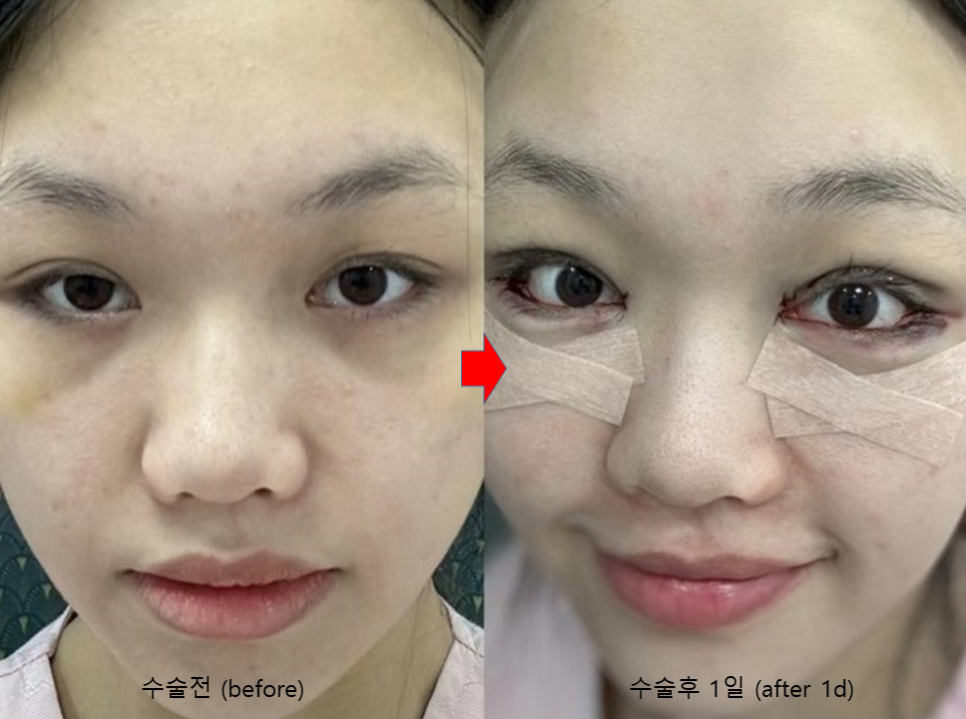
Immediately after eye plastic surgery. Day 1 after eye surgery. Swelling after eye plastic surgery. Recovery process after eye plastic surgery. Real model with consent for disclosure.
The basics—such as being able to open the eyes comfortably and having the double eyelid settle stably—must be addressed first. Only then do medial epicanthoplasty, upper epicanthoplasty, lateral canthoplasty, and lower canthoplasty become meaningful additions.
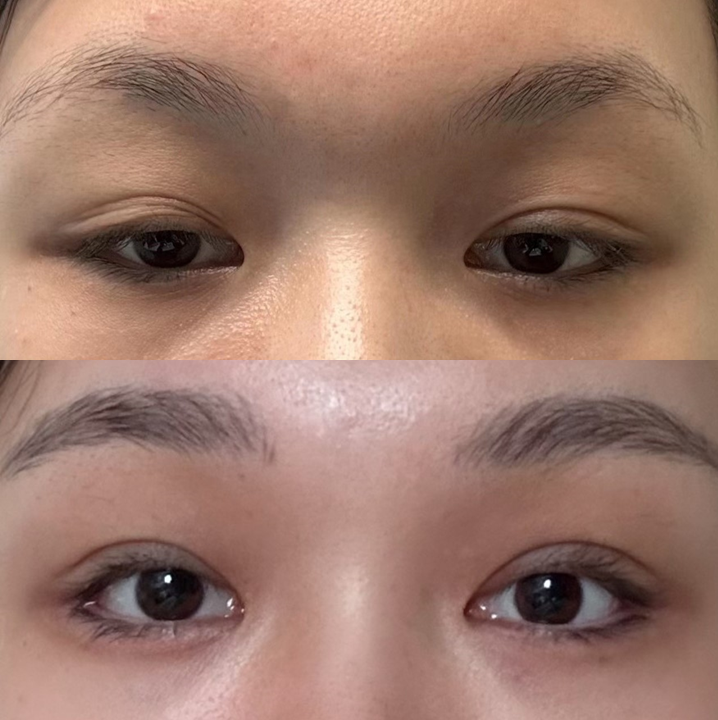
Ptosis correction reviews. Incisional double eyelid surgery reviews. Eye plastic surgery reviews. Eye surgery reviews. Real model with consent for disclosure.
Just as the foundation is the most important part of building a house, the fundamentals of eye plastic surgery are eye-opening function and a stable double eyelid.
When the foundation is strong, other procedures can harmonize naturally,
and satisfactory results can be maintained over time.

Eye plastic surgery reviews. Eye surgery reviews. Double eyelid surgery reviews. Ptosis correction reviews. Real model with consent for disclosure.