For those choosing the incision method in hair transplantation,
one of the biggest concerns is probably scarring.
Incisional hair transplantation is
because a portion of the scalp must be incised,
even after surgery, a linear scar inevitably remains.
These scars can sometimes cause misunderstandings for other people, and
for those who do not want to show their scars, they can be a major burden.
That is why many people hesitate to undergo incisional hair transplantation.
So, is there a way to make these scars as unnoticeable as possible?
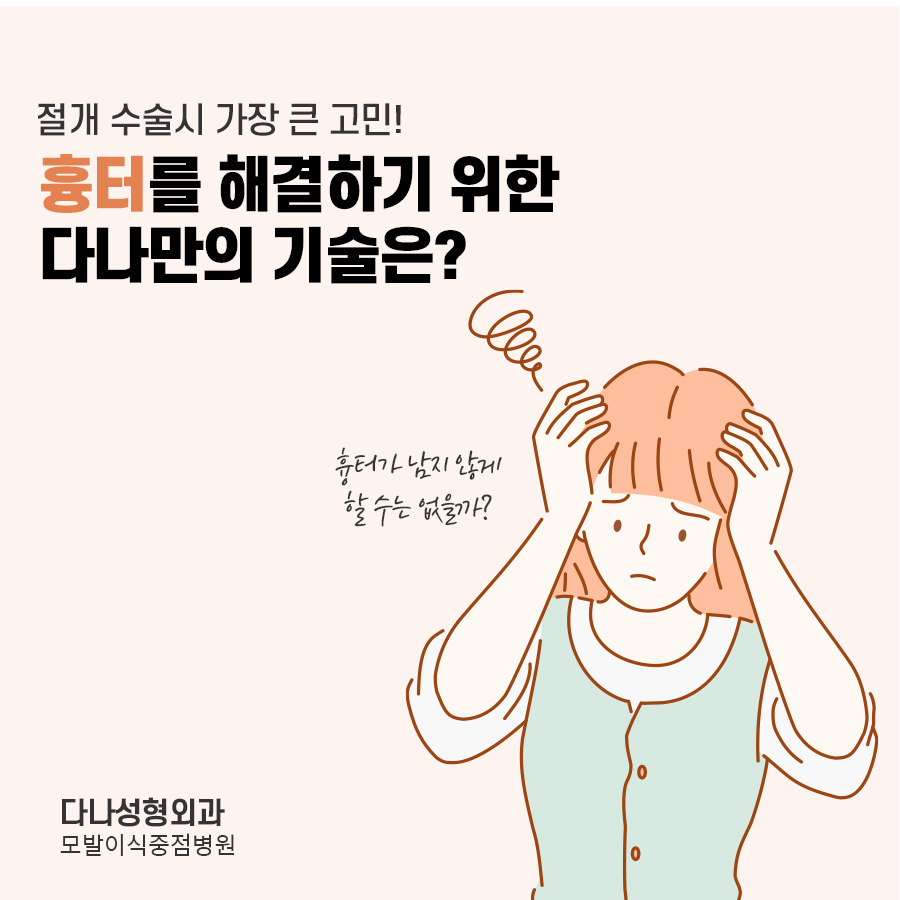
Today, we will talk about the biggest concern in incisional hair transplant surgery: scars!
To address this, Dana Plastic Surgery’s
scar-free suturing method will be explained.

How can scars from incisional hair transplant surgery be minimized? Scar-free suturing method
Although this is not an academic classification,
scalp scars can be divided into ordinary scars and
areas where hair has been lost, which can also be considered a type of scar.
The treatment plan for scalp scars varies depending on the cause, size, shape, and location.
Therefore, first of all,
a specialist should carefully examine the cause, size, shape, and location of the scar.
At Dana Plastic Surgery, we use the scar-free suturing method to address these scars.
What is the scar-free suturing method?
During incisional hair transplant surgery,
the best way to hide the bothersome scar is
to leave the scar as thin as possible and allow hair to grow through the scar so that it is concealed.
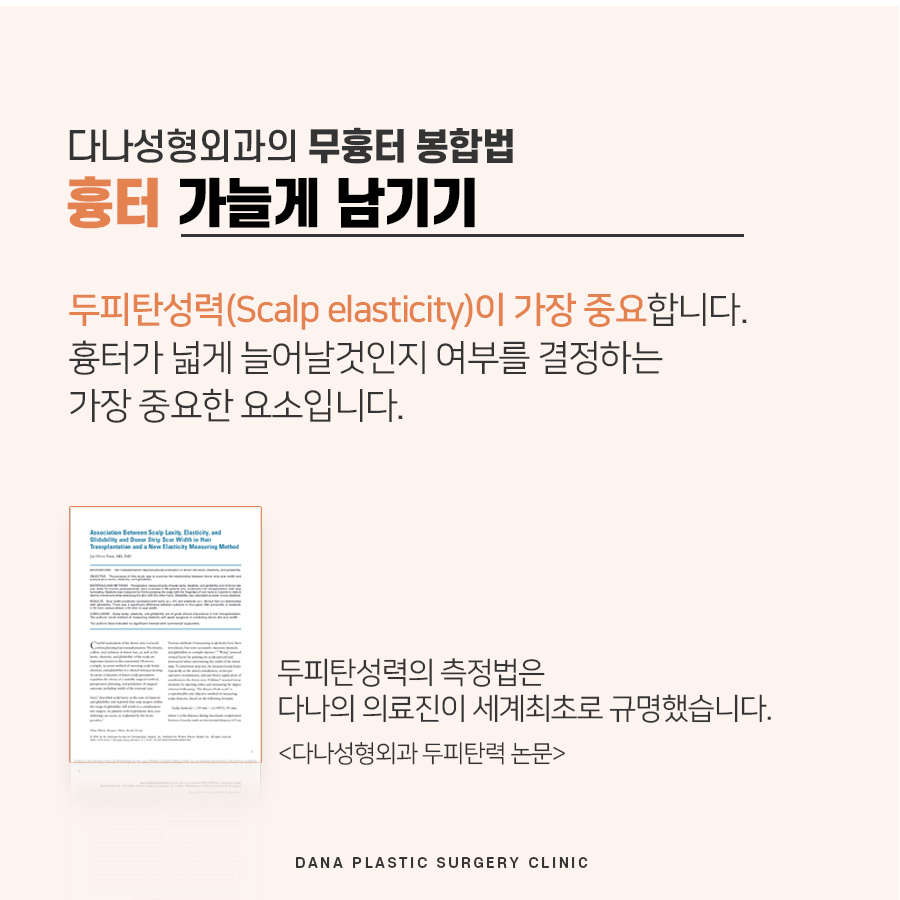
Whether the scar can spread widely or not
depends most importantly on scalp elasticity,
and the method for measuring scalp elasticity was first established worldwide by Dana’s medical team.
How is the scar-free suturing method performed?
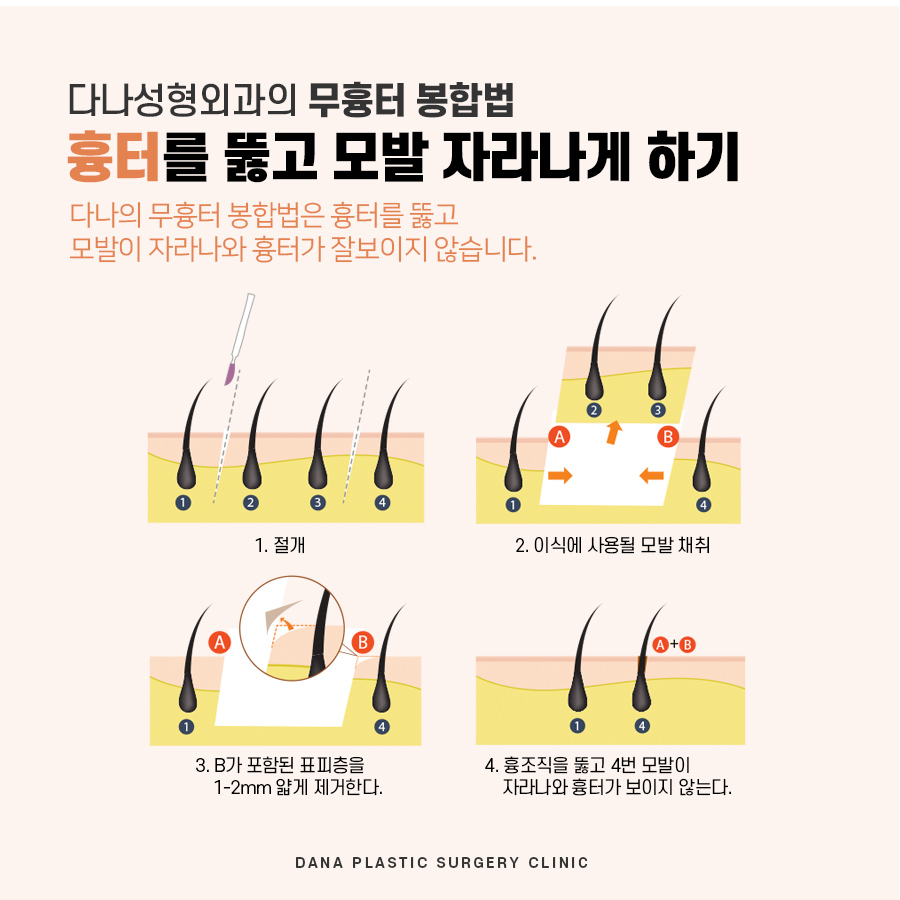
(1) Incision
(2) Harvest the hair (AB) to be used for transplantation.
(3) Remove the epidermal layer containing B in a thin 1–2 mm layer.
(4) Hair grows through the scar tissue so that the scar is not visible.
In this way, hair grows out
and makes the scar less visible; this is the scar-free suturing method.
.
.
.
.
.
So far, we have looked at the scar-free suturing method.
The biggest scar concern during incisional hair transplant surgery!!
No need to worry anymore,
and through
Dana Plastic Surgery’s scar-free suturing method, which can minimize scars,
why not solve your concerns?
Video
Dr. Park Jae-hyun’s special incisional hair transplant suturing method [Doctor’s Answer 101]
Each doctor has a different preferred suturing method, and the advantages and disadvantages of each are also clear. Depending on which suturing method is used, the postoperative results can vary greatly...
youtu.be