Hello, this is Dana Plastic Surgery😊
Today, we will take some time to answer a few of the most common questions about various situations that can happen after taking hair loss medication and about side effects that may appear.
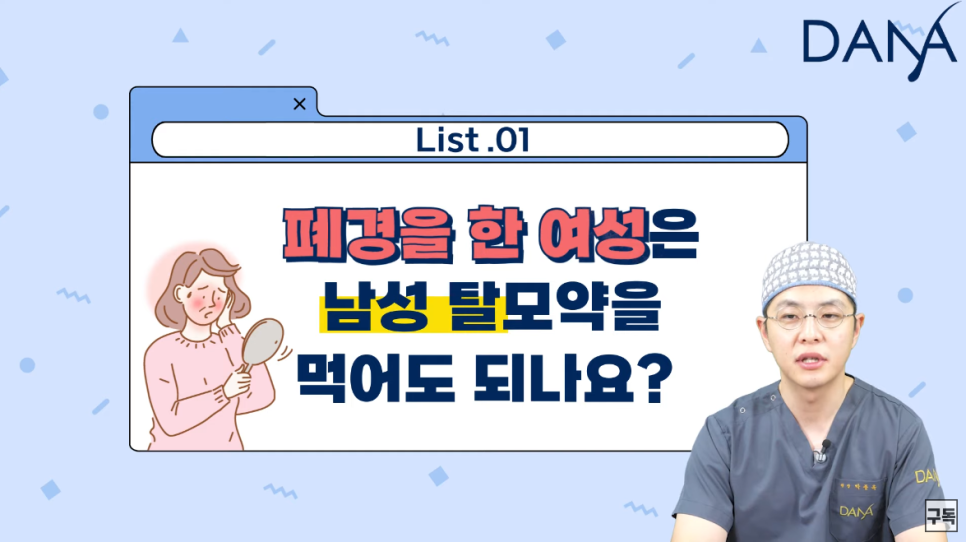
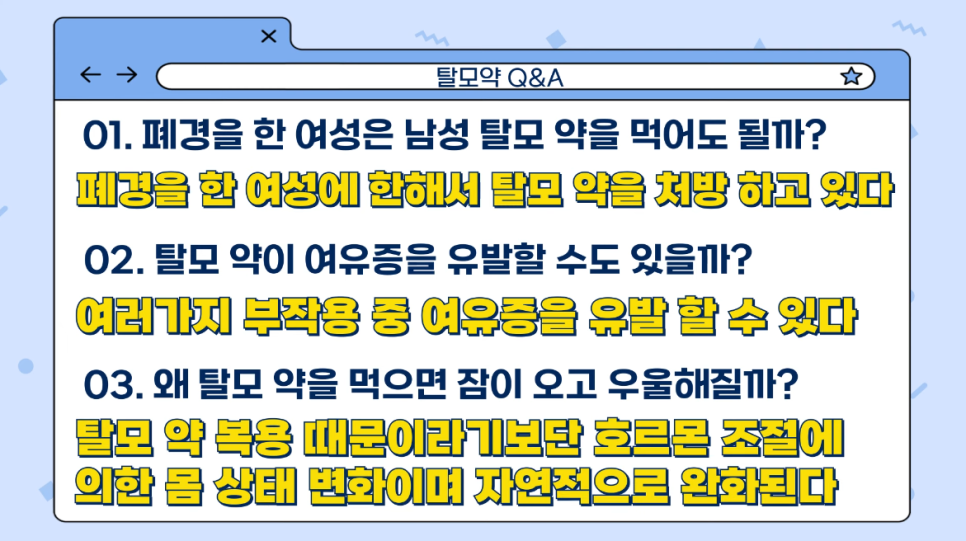
Q. Can postmenopausal women take male hair loss medication?
For women who have gone through menopause, we do in practice prescribe male hair loss medication.

As the question suggests, the most important point is “postmenopausal women.”
Before menopause, there is a possibility of pregnancy, so it is usually not prescribed. For postmenopausal women, however, we do prescribe hair loss medication.

As shown in studies in Korea and abroad, there are many research findings showing that, in postmenopausal women, taking medication in the Avodart or Propecia class can improve hair loss and help prevent it.
Based on those research results, we prescribe accordingly.
From a clinical perspective as well, when you look at people who take it, after 6 months or with long-term use,
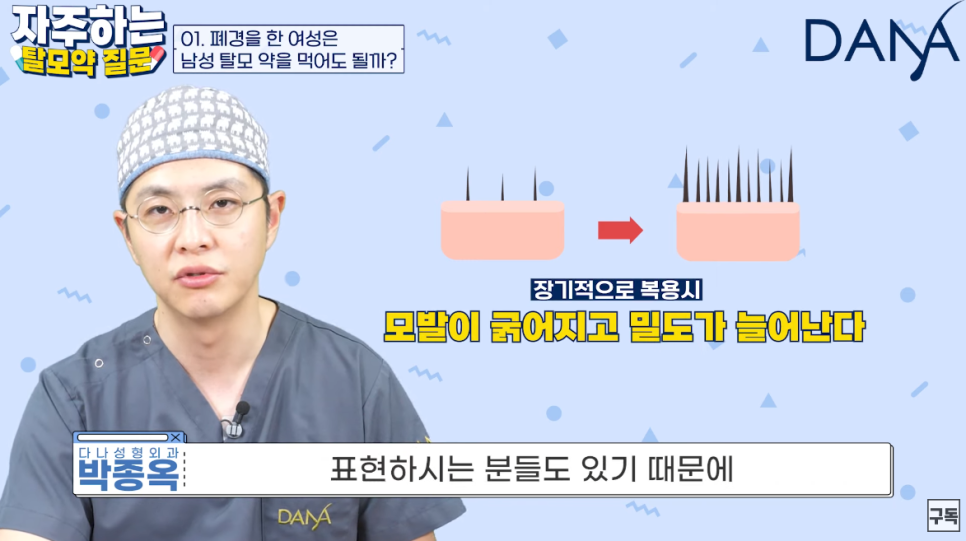
some people describe that the density per unit area has increased and the hair strands have become thicker,
so for postmenopausal women, we provide prescriptions as well.
Q. Can hair loss medication cause gynecomastia?
To answer first: yes, it can.
When taking hair loss medication, as with other medications, there can be various side effects.
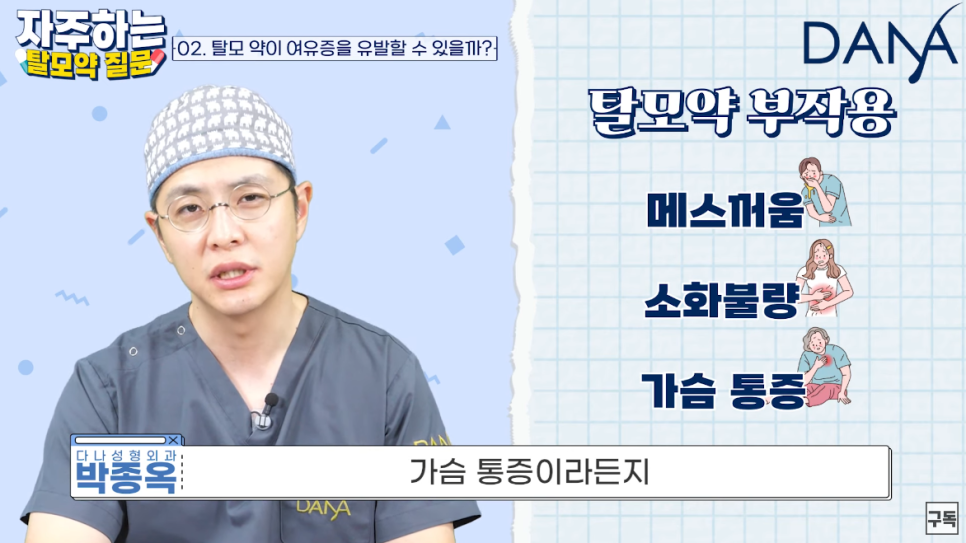
There can be nausea, indigestion, or chest pain, among others, but the frequency of these events is not that high.
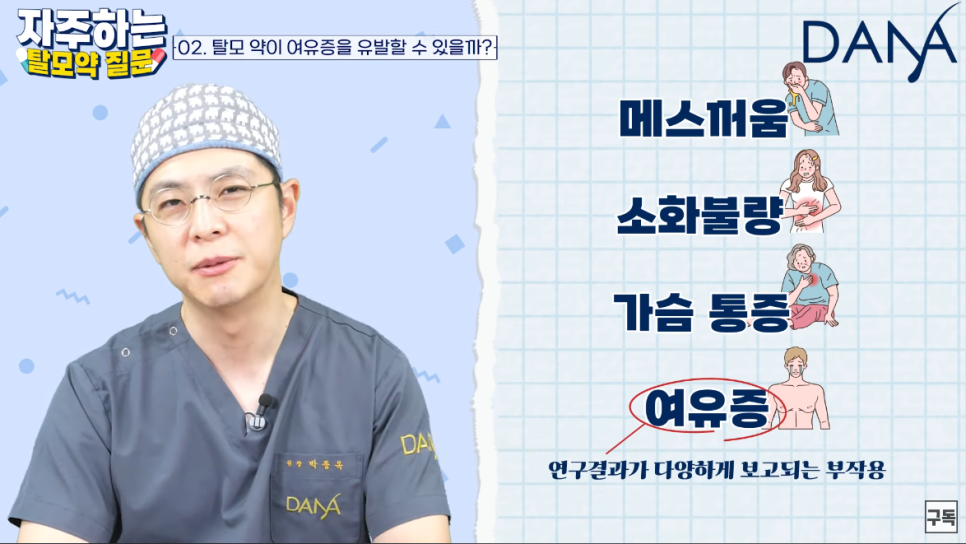
Among them, gynecomastia is one that is somewhat significant.
It is a side effect that has been reported in studies at various rates, from about 0.5% to 2%.
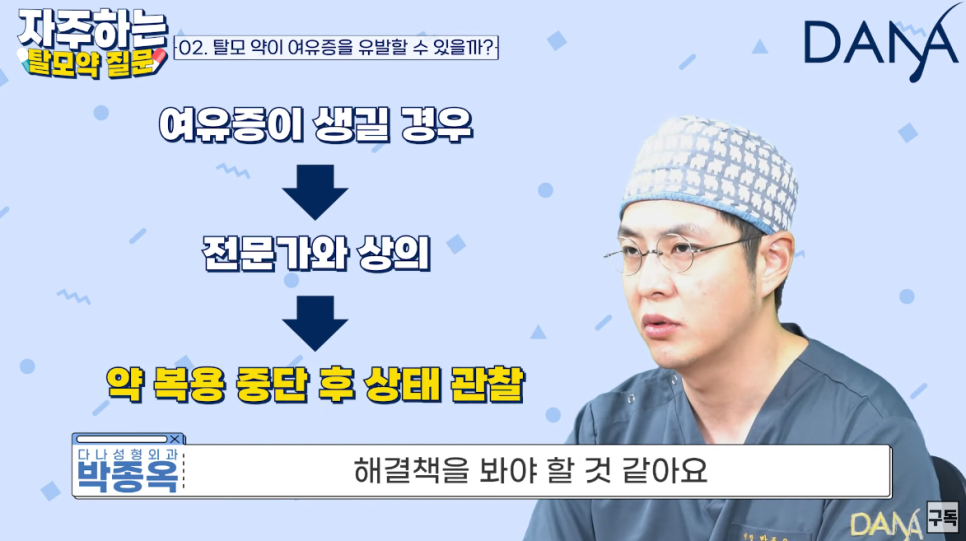
If you feel that gynecomastia has developed after taking hair loss medication, the first step should be to consult a specialist.
After that, the solution would be to discontinue the hair loss medication you were taking.
Then it is best to observe the condition gradually.
Q. Why does taking hair loss medication make you sleepy and depressed?
Taking hair loss medication does not necessarily make everyone sleepy or depressed.

In practice, when you take hair loss medication, hormonal regulation occurs in the body.
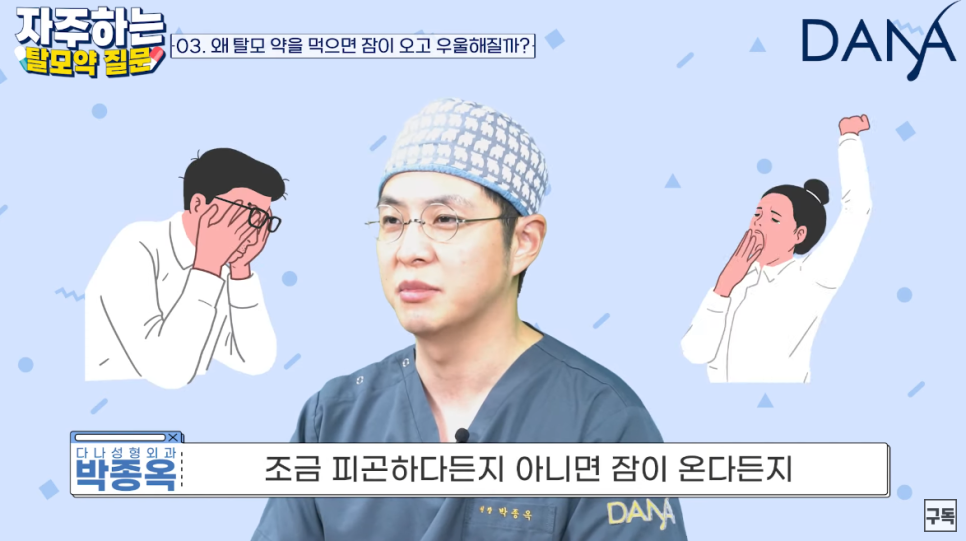
So in the early stages of taking hair loss medication, there may be changes such as feeling a bit tired or sleepy.

However, these phenomena are also mild symptoms that resolve as the body adjusts again to hormonal changes.
So rather than stopping the hair loss medication just because you feel tired or sleepy, it is best to consult a specialist first and make a decision together.
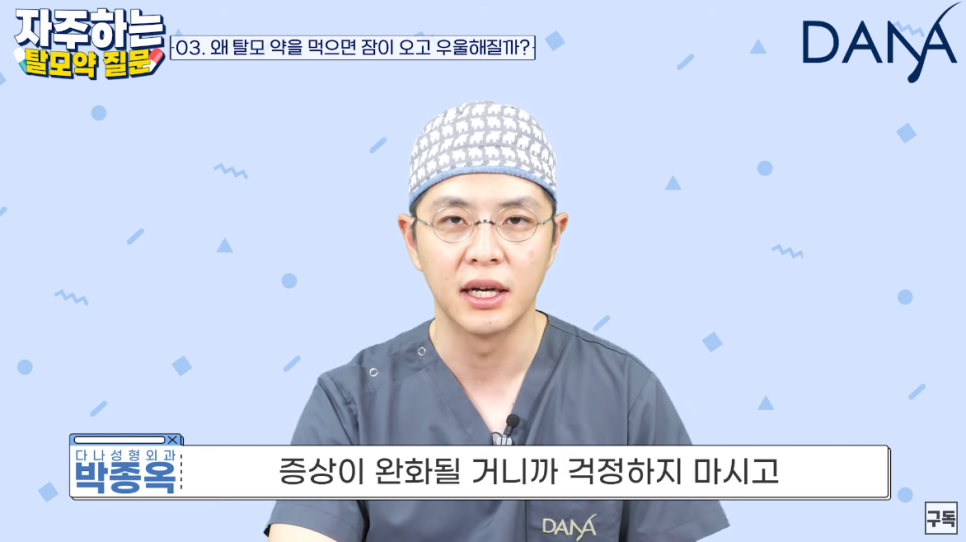
These symptoms naturally disappear and improve, so do not worry and continue taking the hair loss medication consistently.
Today, we took some time to answer a few of the most common questions among the various situations that can occur after taking hair loss medication.
If you have more questions, it is best to visit the hospital and find the method that suits you through an accurate diagnosis and consultation 😊
If you would like more detailed information about a few cases that can occur after taking hair loss medication, please search for Dana Plastic Surgery on YouTube!
https://www.youtube.com/watch?v=eIfjwXQLWS8