Hello, this is Dana Plastic Surgery :)
Today is the second part of our discussion about common misconceptions about hair transplantation, both online and offline.
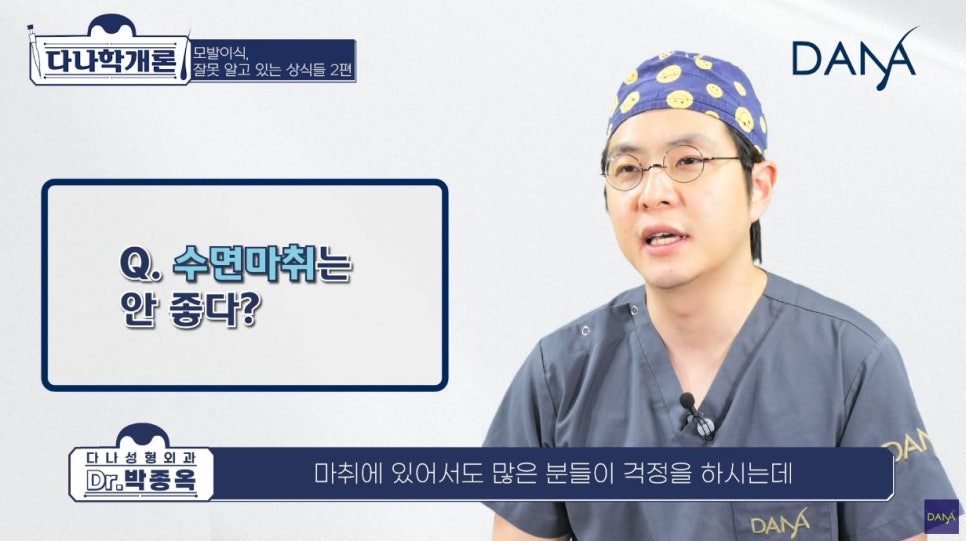
Q. Is sedation anesthesia bad?
Many people also worry about anesthesia.
Sedation anesthesia can be considered a safe anesthesia method.
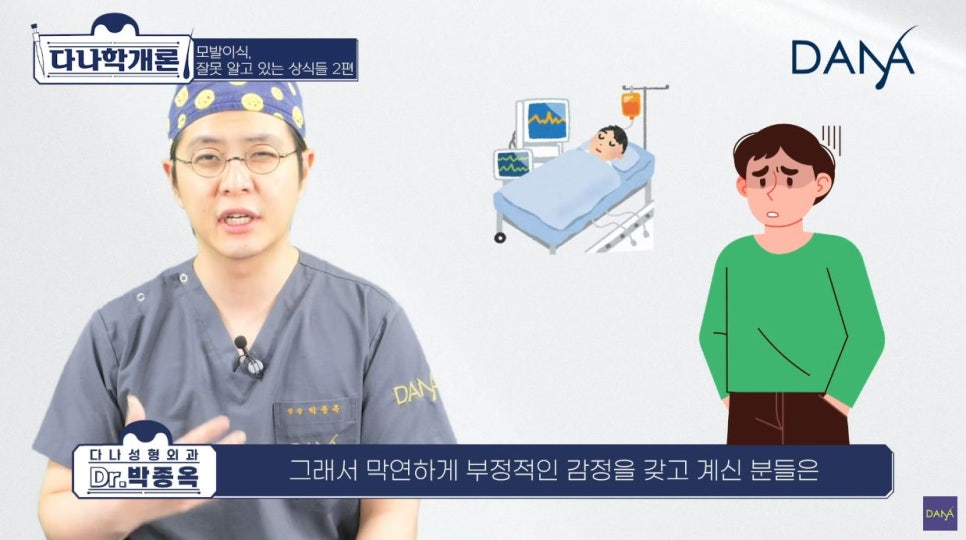
So, some people who have a vague negative feeling about it
do not choose sedation anesthesia.
You can think of the anesthesia method as a matter of choice.
If sedation anesthesia feels a bit burdensome, surgery can be performed with local anesthesia without sedation,
and if you want a more comfortable procedure with sedation anesthesia, you can simply proceed with sedation anesthesia.
It is a either-or decision.

Q. Does folliculitis negatively affect graft survival?
For people who already have some kind of scalp inflammation or severe folliculitis,
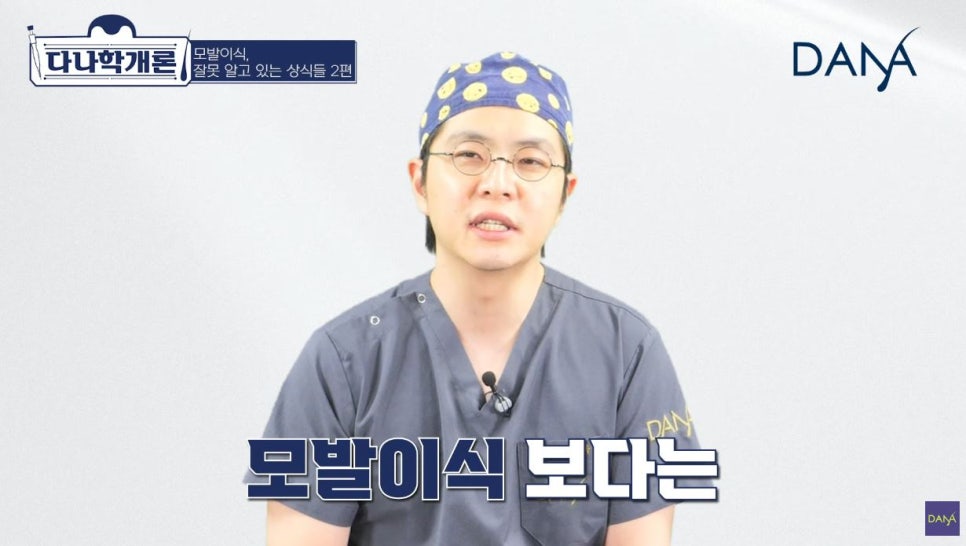
scalp disease should be treated first rather than proceeding with hair transplantation.
If transplantation is done without consideration,
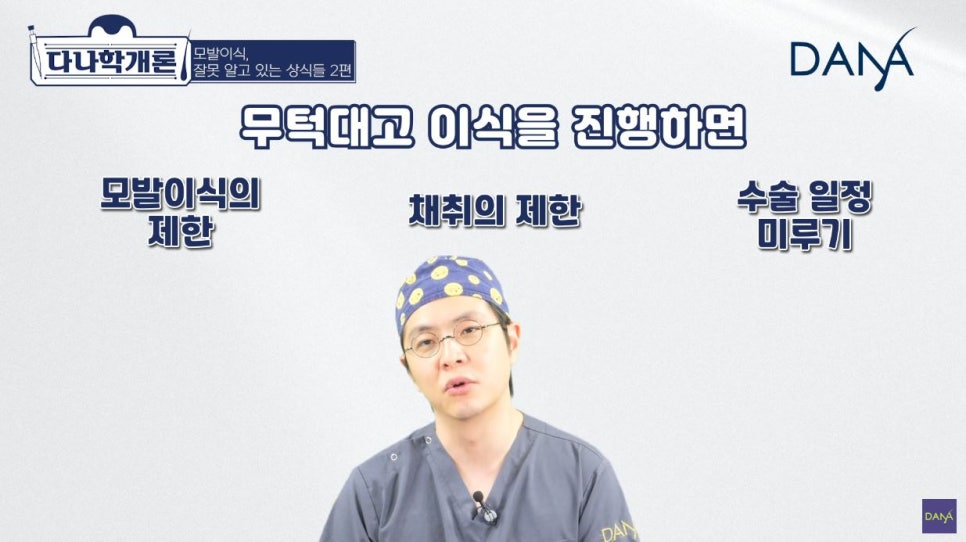
it may have some effect on graft survival,
and there may be limitations on the transplantation itself or on graft harvesting.
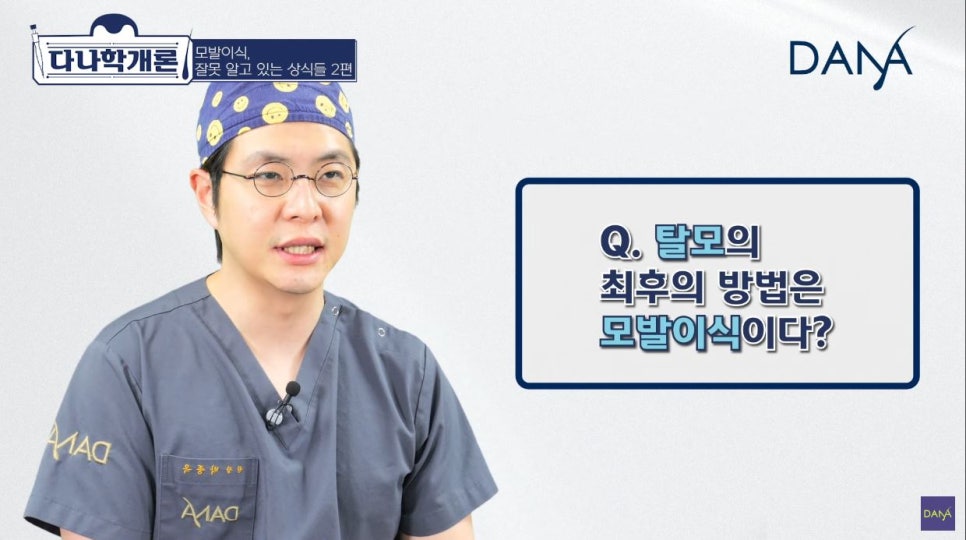
Q. Is the last resort for hair loss hair transplantation?
For people with advanced hair loss, the only way to cover the overall area is in fact
hair transplantation.
However, when people with hair loss actually visit the clinic,
it is not always the case that they immediately proceed with hair transplant surgery.
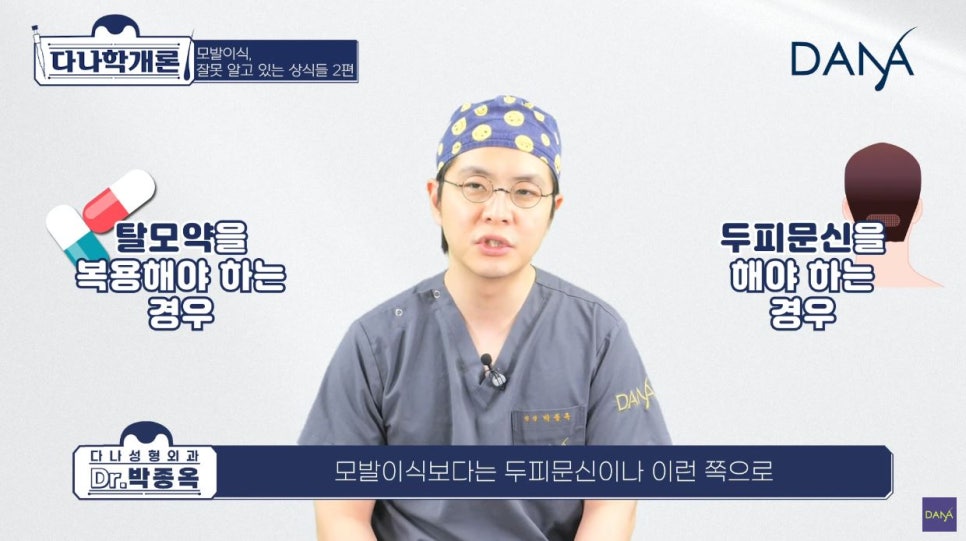
Some patients may need to start by taking hair loss medication first,
and there are also patients for whom treatment such as scalp micropigmentation may be a better option than hair transplantation.
So the idea that everyone with hair loss must undergo hair transplantation is not correct.
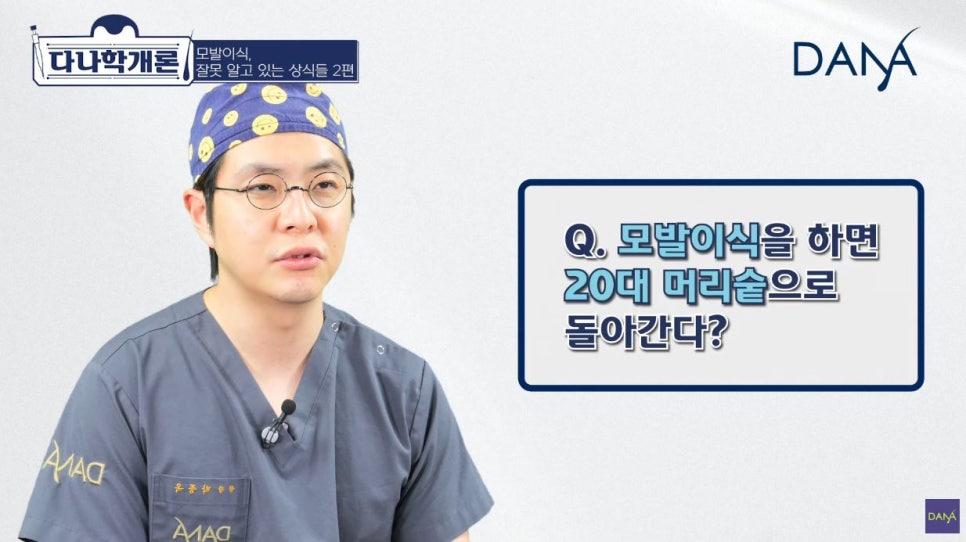
Q. If you get a hair transplant, will your hair return to the amount you had in your 20s?
This question reflects a misconception about patients' expectations 😅
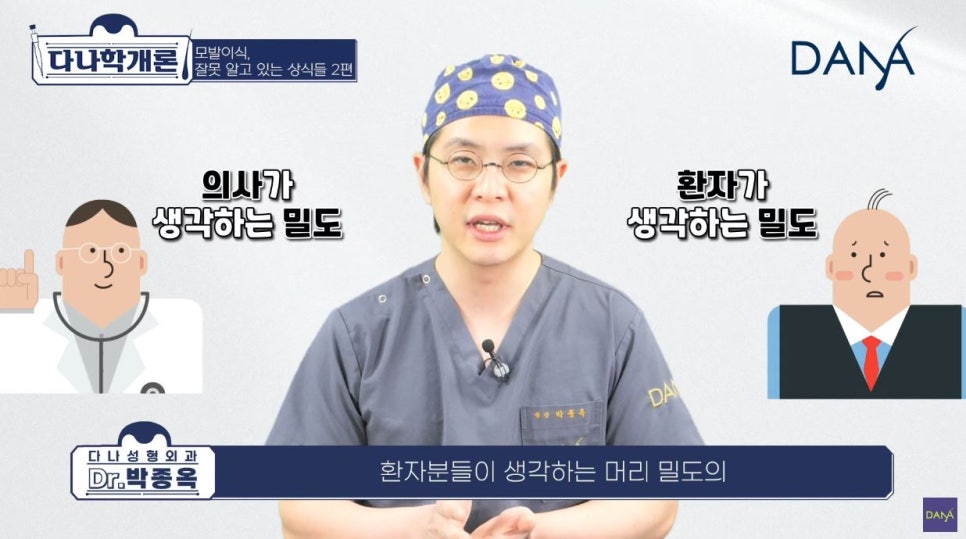
There is a slight difference between what doctors think of as hair density and what patients think of as hair density when they say their hair will return to the amount they had in their 20s.
Usually, when patients describe their hair as having a lot or a little,
the way they express it changes depending on how much of the scalp is visible.
When the hair in the back has slightly lower density,
making the front too dense can look unnatural,
so rather than targeting only the amount of hair someone had in their 20s,
we plan the transplant based on a density that matches the overall hair balance.
That is why surgery is not performed simply to make the hair look denser by increasing density as much as possible.
We prepared and discussed the second part of the common misconceptions about hair transplantation.
Hair loss is not only an external concern, but also a condition that can lead to emotional distress.
Rather than worrying or misunderstanding due to inaccurate information about hair transplantation,
we hope you can consult a specialist and find the method that suits you best to achieve fuller hair.
If you want more detailed information, please refer to Dana Plastic Surgery's YouTube channel!
https://www.youtube.com/watch?v=YHUISVdO4sA