Hello, this is Dana Plastic Surgery :)
Today, we’ll take some time to look at the types of hair loss treatment.
What kinds of hair loss treatments are there?
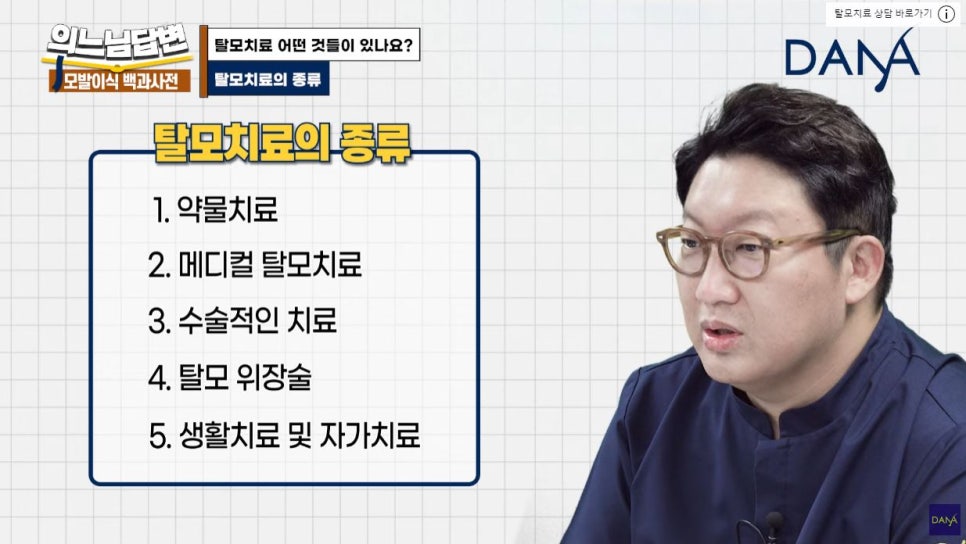
Hair loss treatment can be broadly divided into five categories.
-
Medication treatment
-
Medical hair loss treatment
-
Surgical treatment
-
Hair camouflage treatment
-
Lifestyle treatment and self-care
Medication treatment
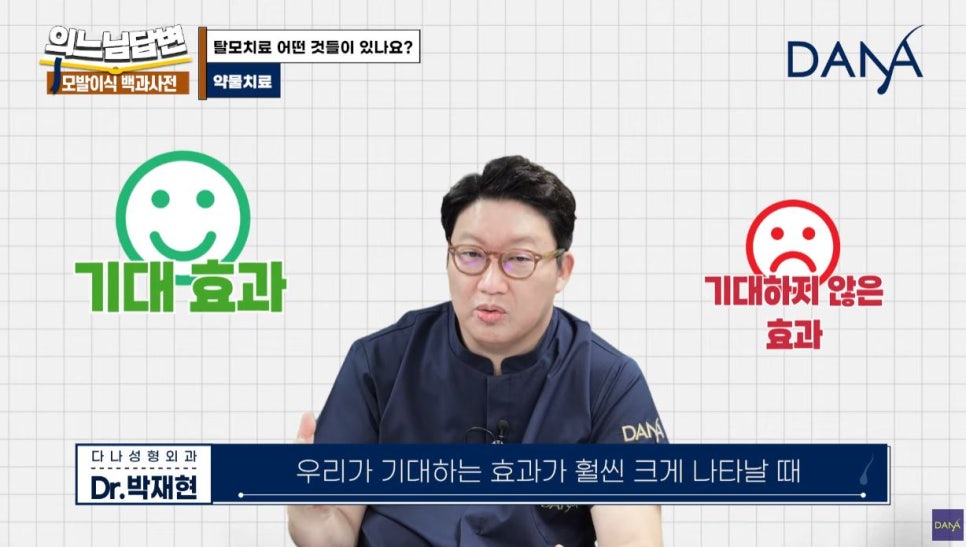
Medication treatment has both the effects we hope for and the effects we do not.
We take medicine when the effects we expect are always much greater than the side effects.
However, if the unintended effects (side effects) become too severe, we have to decide whether to continue taking it,
change the dose, or stop it.
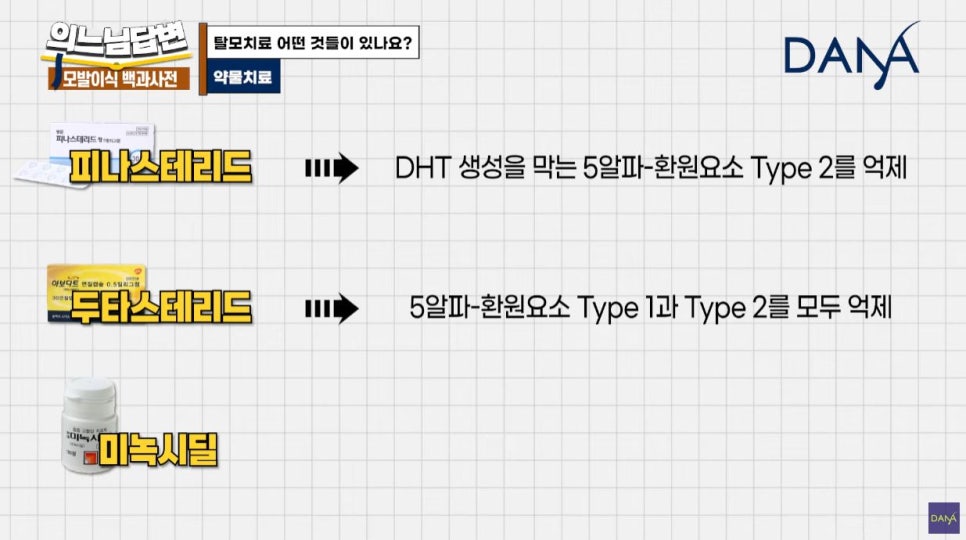
The representative medications taken by hair loss patients are
Finasteride
Dutasteride
Oral minoxidil
Finasteride inhibits type 2 5-alpha reductase, which blocks DHT production,
and dutasteride inhibits both type 1 and type 2 5-alpha reductase.
There is no major difference in side effects between finasteride and dutasteride.
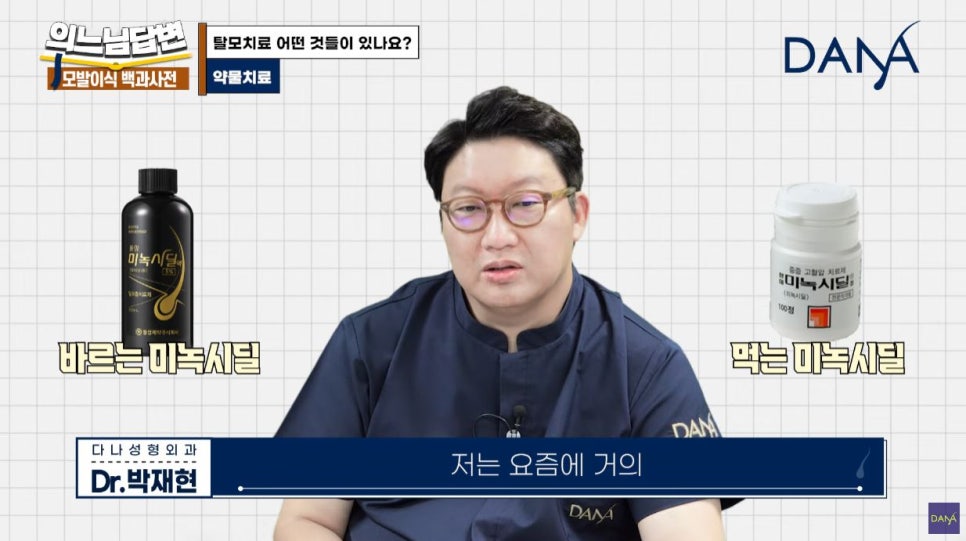
And the very well-known minoxidil
is divided into topical minoxidil and oral minoxidil.
At Dana Plastic Surgery, we recommend oral minoxidil in most cases.
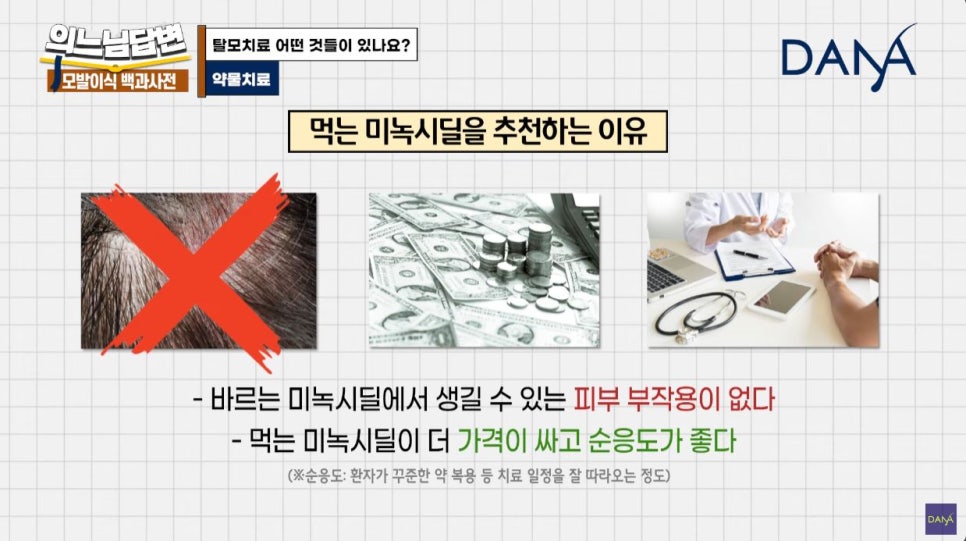
The reason we recommend oral minoxidil is
that it does not have the skin side effects that can occur with topical minoxidil,
and oral minoxidil is cheaper and has better adherence.
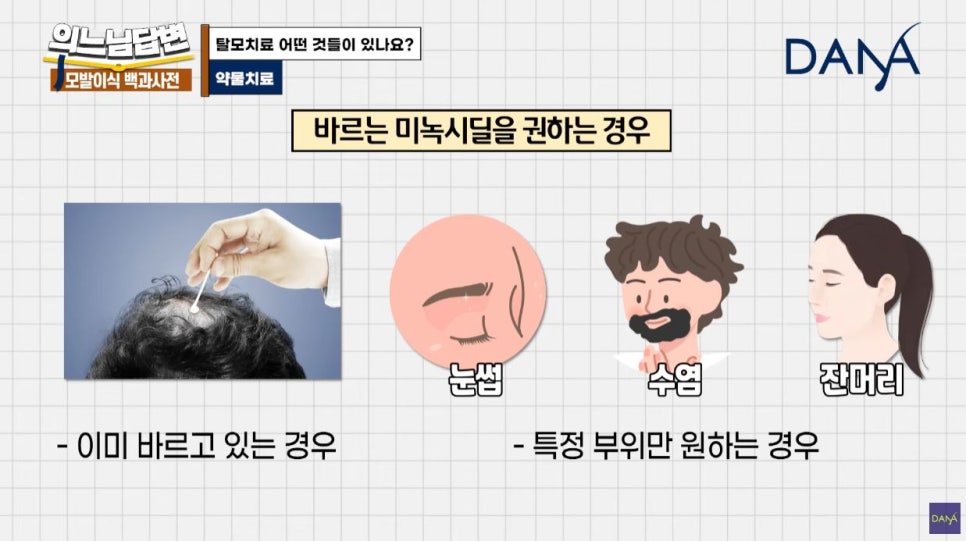
However, there are also cases where topical minoxidil is recommended.
For example, when the patient is already using it,
or when they want it to work only on a specific area.
For patients who hope that their eyebrows or beard will grow a little more, or
for women who have had hairline surgery and hope for a fine-hair effect,
topical minoxidil is recommended.
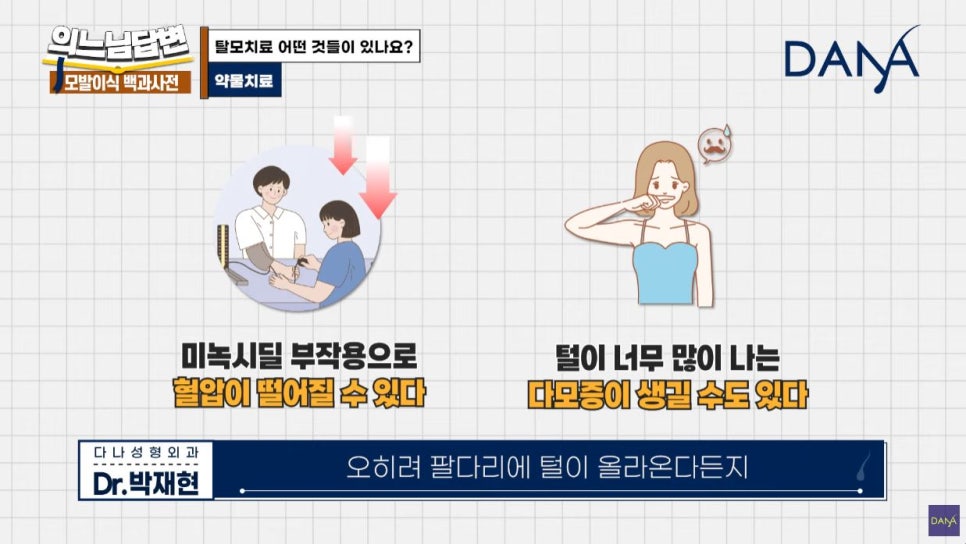
However, since minoxidil was originally a blood pressure medication, it may have side effects on the cardiovascular system.
It can cause orthostatic hypotension or lower blood pressure,
and because the effect of the medication may be too strong, hypertrichosis, in which too much body hair grows, can occur.
If side effects occur, stopping the medication will make them go away 100%.
Nutritional supplements
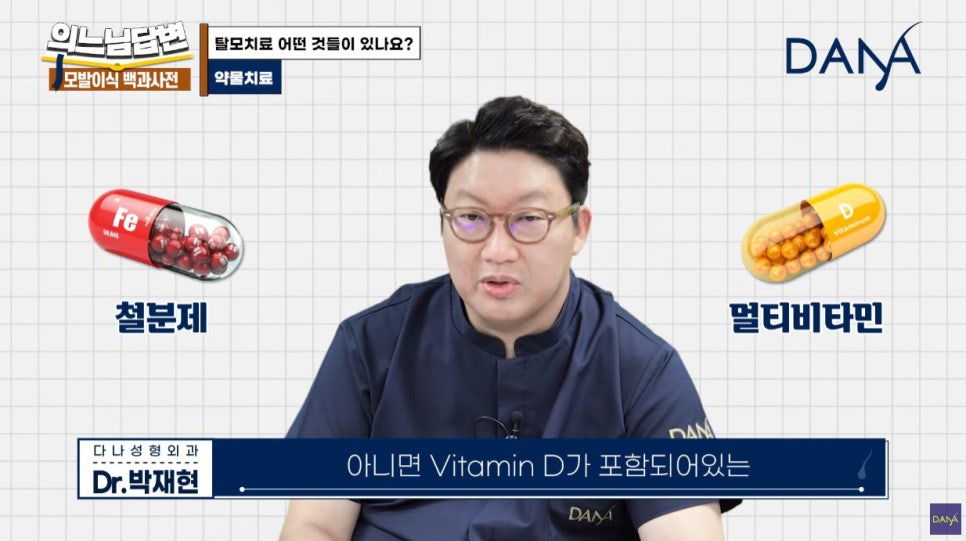
It is a good idea to take about one appropriate hair supplement.
If you have an iron deficiency, it is good to supplement with iron,
and taking a multivitamin that includes vitamin D is recommended.
However, the first thing to check is whether you actually have a deficiency
and whether that is truly the cause of the hair loss.
Medical hair loss treatment

Dana Plastic Surgery’s medical hair loss treatment
uses injections, lasers, and similar treatments to promote hair growth,
suppress the factors that cause follicle degeneration,
and help the hair grow well through treatments received at the clinic.
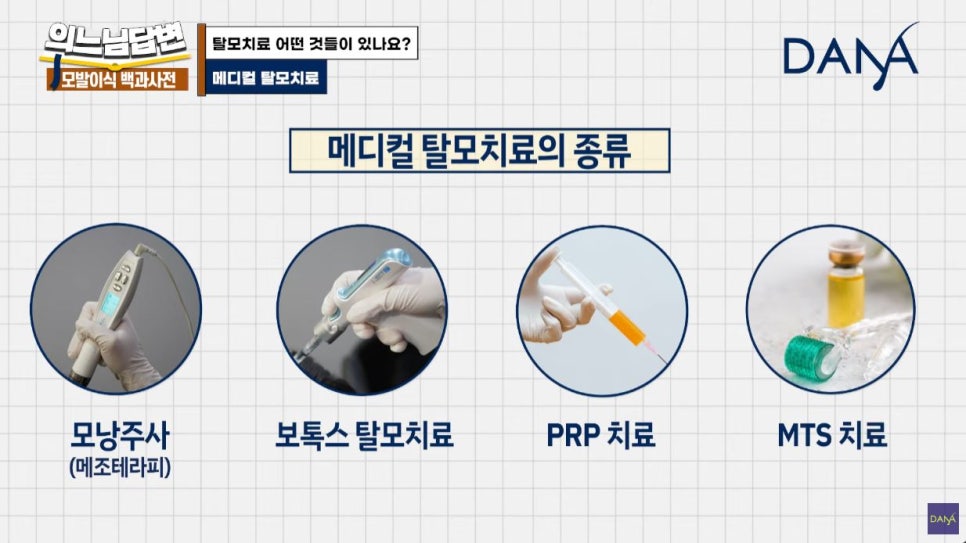
Representative injection treatments include
follicle injections (mesotherapy) / Botox hair loss treatment / PRP treatment / MTS treatment / low-level laser therapy (LLLT).
*At Dana, we recommend injection treatment more than MTS treatment.
Low-level laser therapy also helps considerably with hair growth.
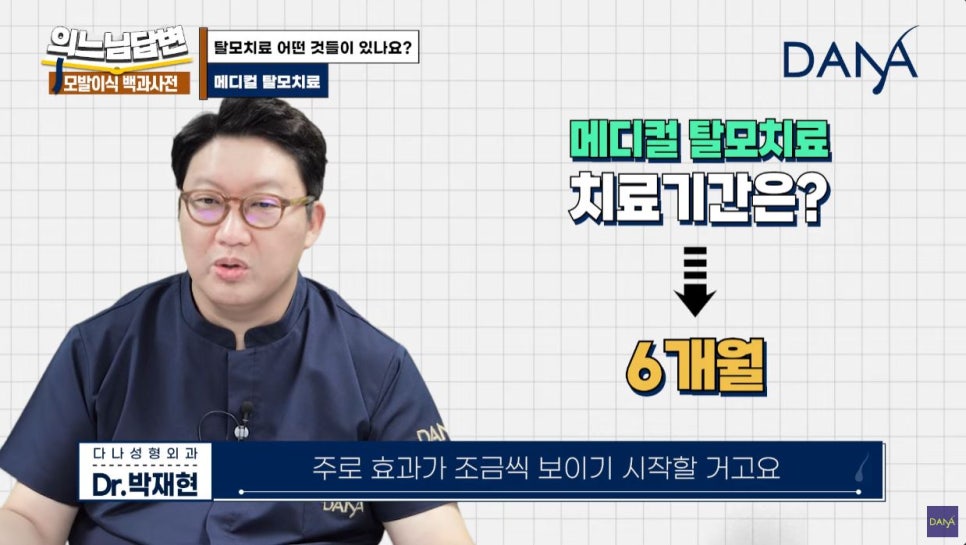
If you receive medical hair loss treatment at the clinic instead of surgical treatment,
how long should the treatment period be?
As a rule, we recommend 6 months.
If the effect appears quickly, it can show up in 2–3 months,
and if it appears slowly, you may see results after 3 months.
After medical hair loss treatment, we recommend extending it for another 6 months
or continuing the improved results with medication.
Today, we took some time to look at the types of hair loss treatment.
For more details, please refer to [Dana Plastic Surgery YouTube]! :)
https://www.youtube.com/watch?v=8hEfMWEfebo