Hello.
This is Dana Plastic Surgery.
Following the previous video, this time
let’s look at the problems with GQI!
What are the problems with GQI?

GQI is a morphological classification.
In particular, it includes the amount of fat tissue below the hair bulb
as part of the index evaluation criteria.
It assumes that the more fat tissue there is,
the better the graft takes and the better the follicle is.
However, this can be considered a clinically incorrect classification table.
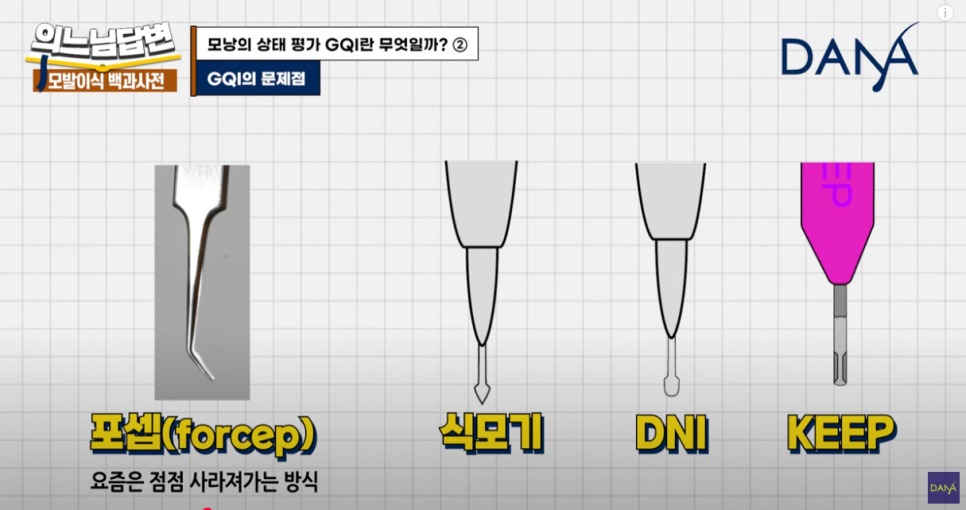
That may be somewhat true when using forceps,
but forceps are an increasingly outdated method these days.
There are now many convenient devices such as implanters, DNI, and KEEP,
and these devices are not a problem at all.


It says here that the most suitable follicle is one that is similar to a follicle harvested by incision and then separated under a microscope,
but the technique itself is wrong.

In the past, doctors believed that only pulling out follicles with fat attached underneath would produce better results.

However, according to research results,
the fat beneath the follicle does not contain any stem cells that are essential for graft survival.
In fact, being too bulky can sometimes make graft survival more difficult.
So the evaluation index itself, which judges follicles with more fat tissue morphologically as better follicles,
is wrong.
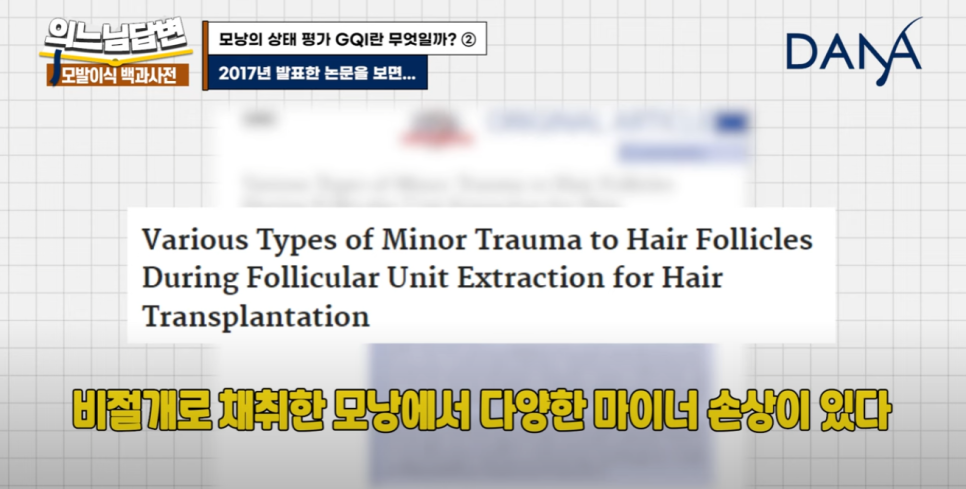
Looking at the paper I published in 2017,
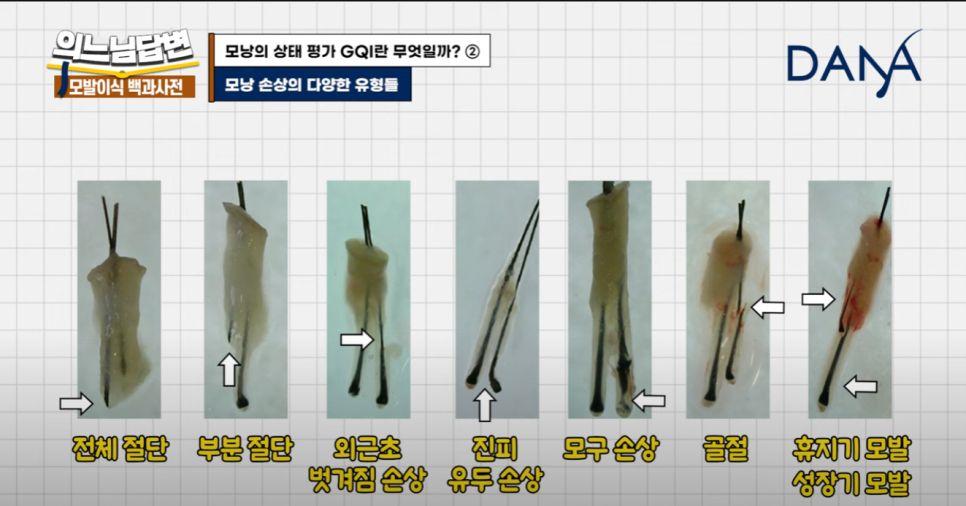
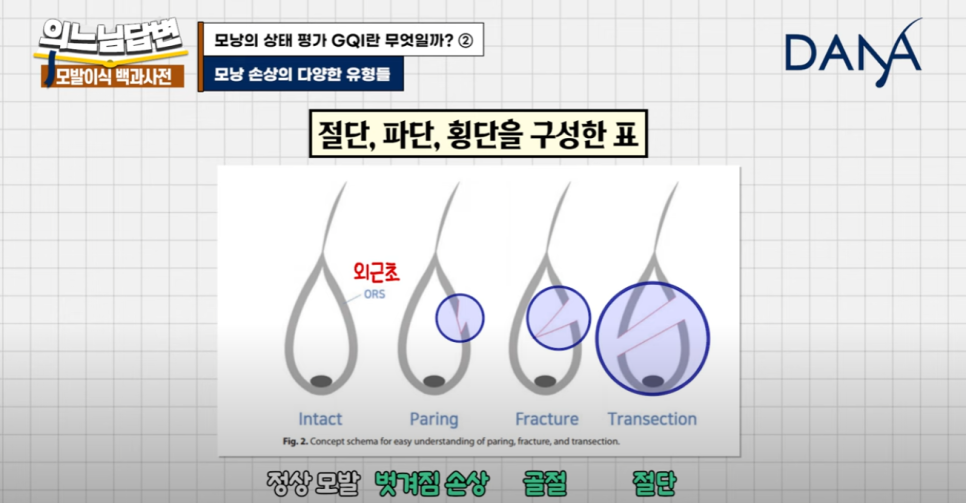
there are various minor injuries in follicles harvested by the non-incision method.
Before publishing this paper,
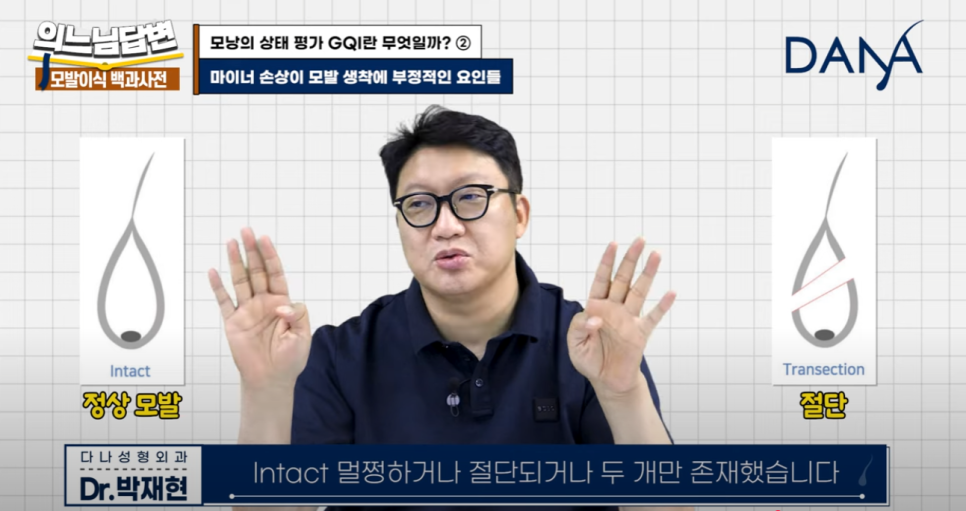
there were only two states: intact or cut.
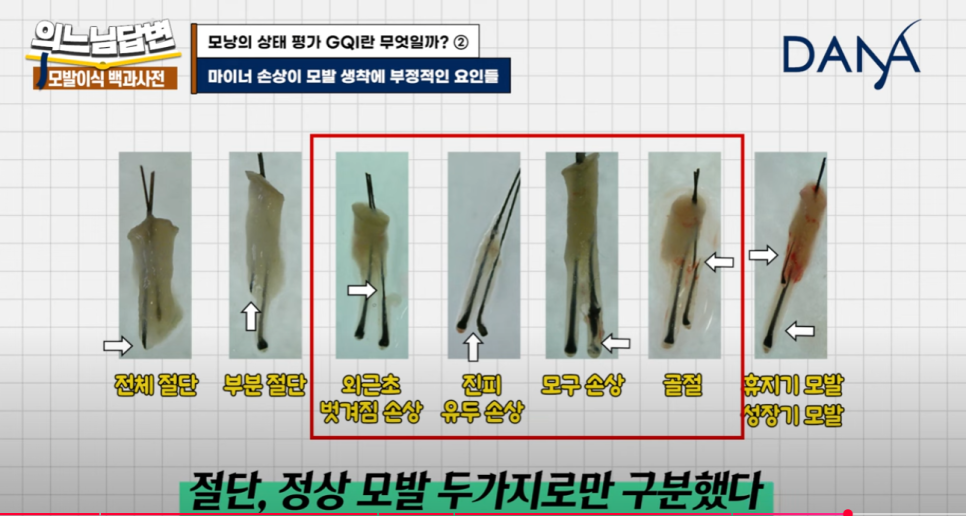
These kinds of minor injuries almost never appear in incision methods,
but they do appear only in non-incision methods.

In the past, doctors had the theory that compared with incision methods,
hair in non-incision methods is not as bulky, so graft survival could be lower.
I completely changed that theory.

I published a paper saying that minor injuries would have
an adverse effect on hair graft survival.
It is not the amount of fat tissue underneath that matters,
but rather whether these minor injuries are present or not that is more important,
that is what I explained.
To be continued in the next part..
https://www.youtube.com/watch?v=R9DF9_S7sNs