Hello!
We are Dana Plastic Surgery, a hospital specializing in hair transplant surgery!
One of the concerns many women have is whether it is possible to consider breast augmentation surgery and hair transplant surgery at the same time.
Right after breast surgery,
can you still get a hair transplant?
After breast augmentation surgery,
for implant settling and recovery, you should avoid lying face down for about 2 to 3 months so that the breasts are not pressed.
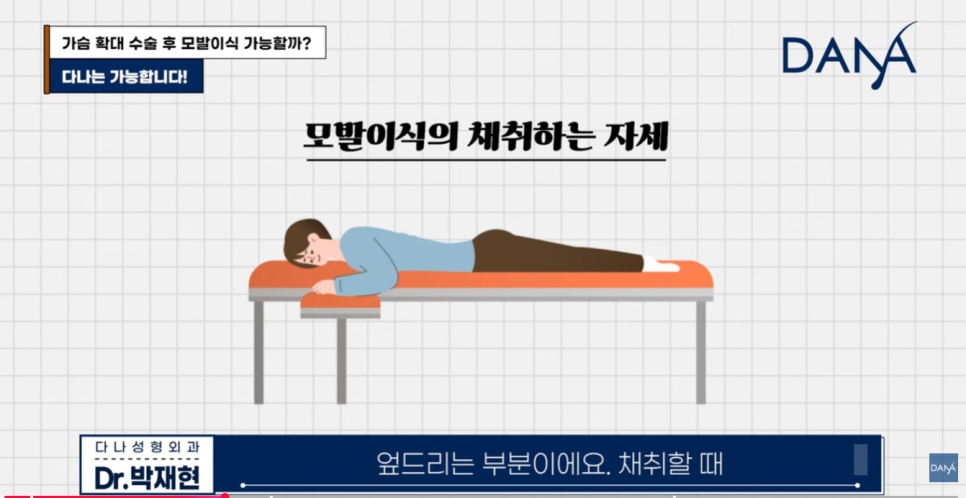
However, at hair transplant clinics,
when harvesting follicles, the patient is often in a face-down position.
So for patients who want a hair transplant after breast augmentation surgery,
the biggest concern is the face-down position.

At Dana, hair transplant surgery is possible after breast surgery!
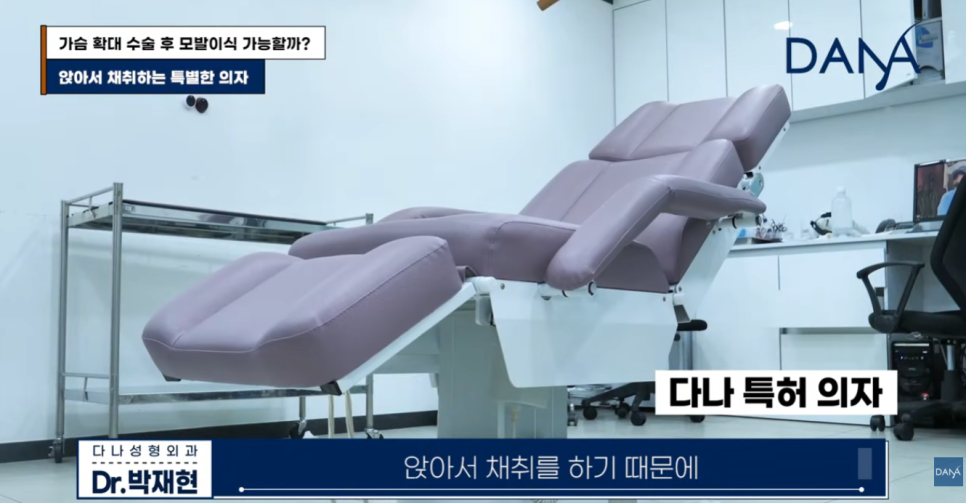
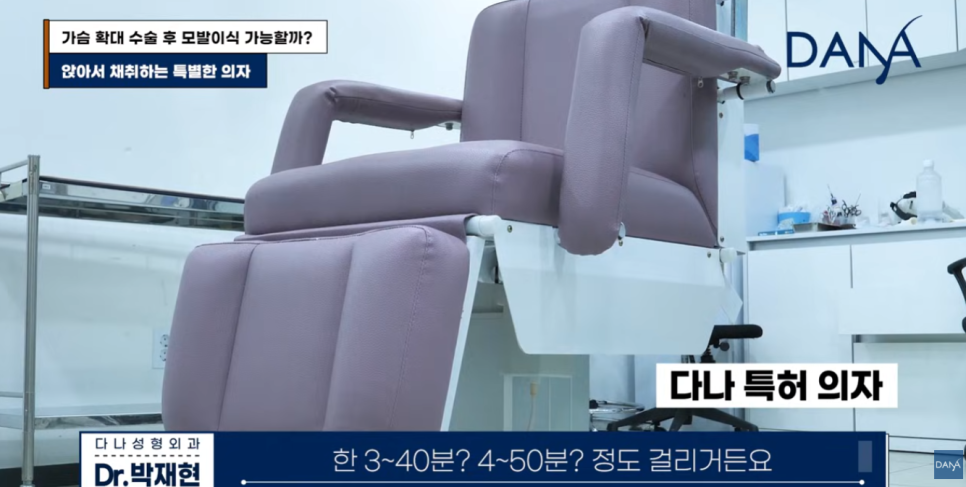
At Dana, during incision-based surgery,
because the procedure is performed in a patented chair,
the hair is harvested while sitting rather than lying face down,
so the breasts are not pressed at all.
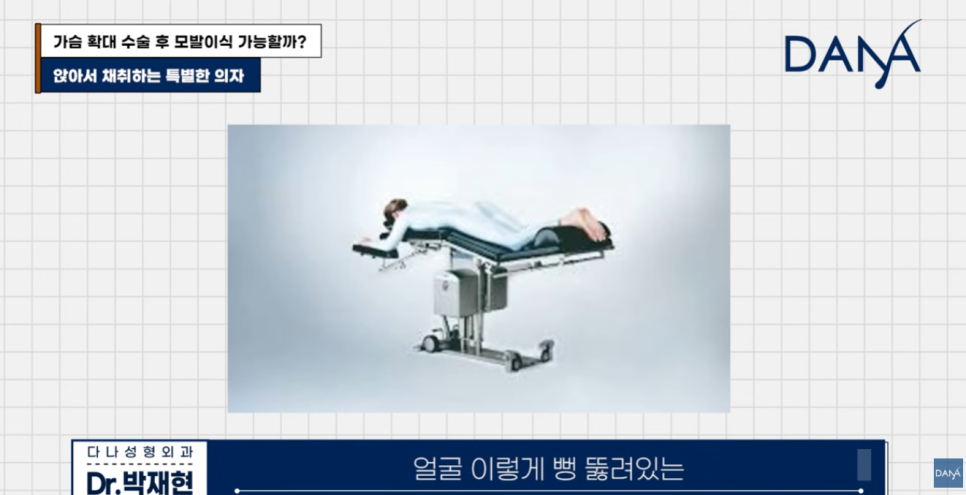
In most non-incision procedures, 95%
harvesting is done face down on a bed like the one above,
and non-incision procedures also take longer.
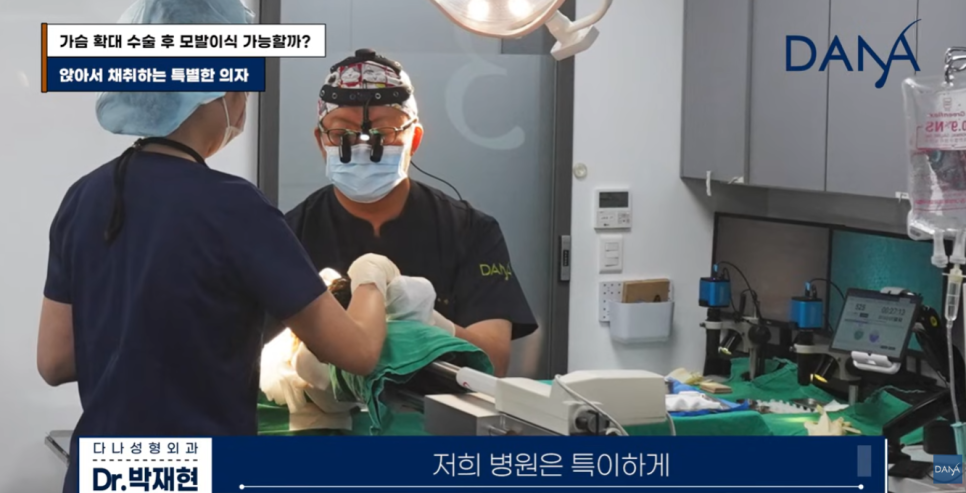
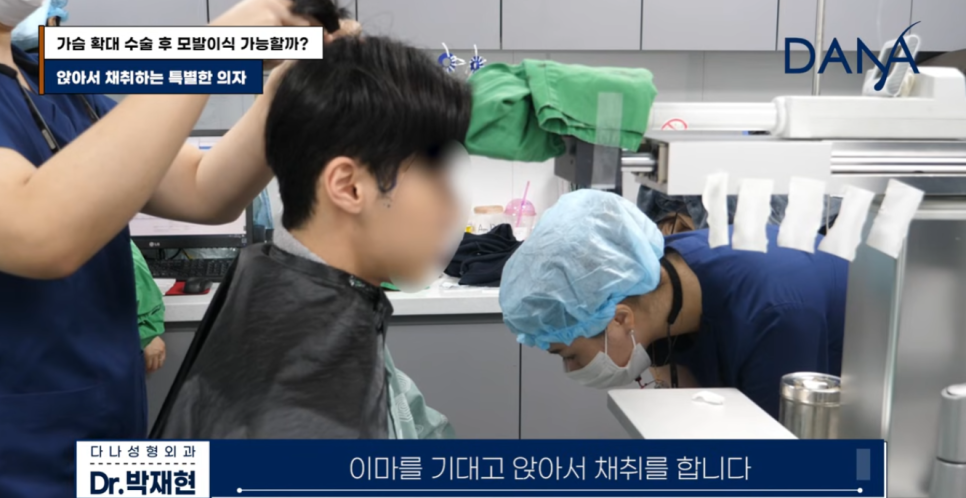
At Dana, as shown above, the procedure is performed by sitting upright and resting the forehead on a forehead support while harvesting.
So there is no chance of the breasts being pressed.
Also, when performing the transplant,
because it is done while lying on your back and looking at the ceiling,
the breasts are not pressed.
In addition to breast surgery,
after eye surgery or nose surgery,
lying face down can cause blood to rush toward the face and make swelling worse,
but the sitting-based harvesting method does not require worrying about such swelling either.
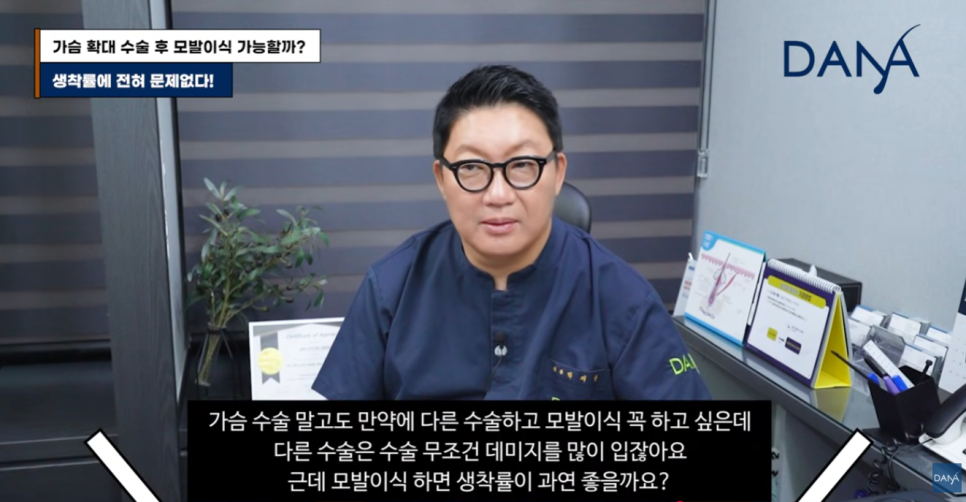
Q. I want to get a hair transplant after another surgery, not just breast surgery,
but if I get a hair transplant while my body is still damaged after another surgery,
will it affect the graft survival rate?

A. Unless you are usually physically weak or suffering from malnutrition,
I think getting a hair transplant within a few days after another surgery is not a major burden at all,
and there is no problem with the graft survival rate.
Patients who come for hair transplant surgery usually come because they want to improve their appearance,
so people with those concerns are rarely in a state of poor health to that extent,
so I don’t think there is anything to worry about.
https://youtu.be/NUbbDOFeA50?si=_agpqjycGcdXZlMR