Hello!
This is Dana Plastic Surgery Clinic, a hospital specializing in hair transplant surgery!
Many people decide to undergo a hair transplant or hairline correction to address their concerns about hair loss,
but as surgery approaches, there is one thing they worry about most.
That is the fear of hair transplant pain and anesthesia.
Today, we will provide an easy-to-understand overview of the differences, advantages, and disadvantages of local anesthesia and sedation for hair transplant surgery,
as well as the criteria for choosing the option that is right for you!
What Is the Difference Between
Local Anesthesia and Sedation?


Anesthesia for hair transplant surgery
is generally divided into local anesthesia and sedation.
General anesthesia is not used for hair transplant surgery.
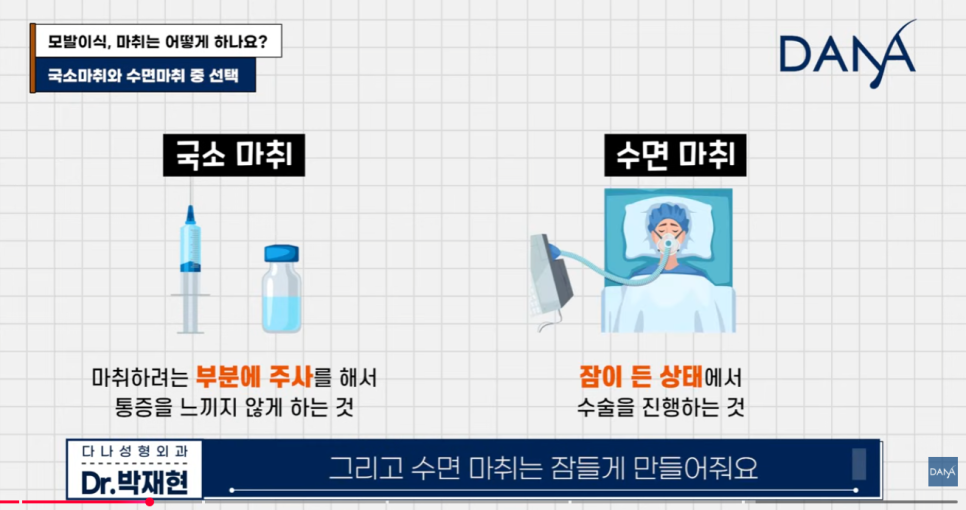
Local anesthesia involves injecting an anesthetic, such as lidocaine, only into the area being treated to eliminate pain.
You remain conscious.
With sedation, a sedative is administered so that you become lightly asleep, while local anesthesia is also performed.
Because you do not feel the pain and undergo the surgery while asleep,
one advantage is that you may wake up to find the surgery already finished, which can be psychologically very comfortable.

A disadvantage of local anesthesia is that
because hair transplant surgery takes a long time,
it can be uncomfortable if the local anesthesia begins to wear off during the procedure.
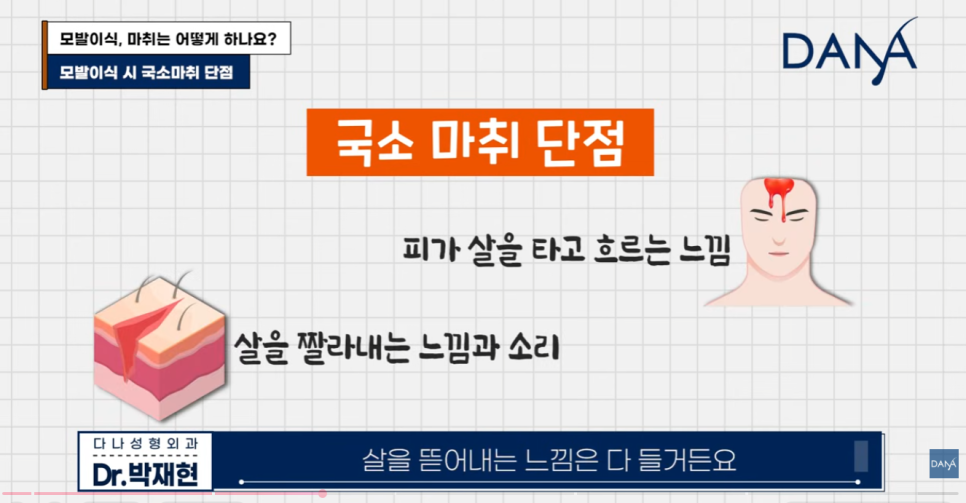
The second disadvantage
is the fear caused by sounds and sensations.
Even when anesthesia prevents you from feeling pain,
you can still feel the sensation of blood flowing over the skin
and hear and feel the sensation of skin being cut.
For many people, this can remain as a traumatic or frightening memory.
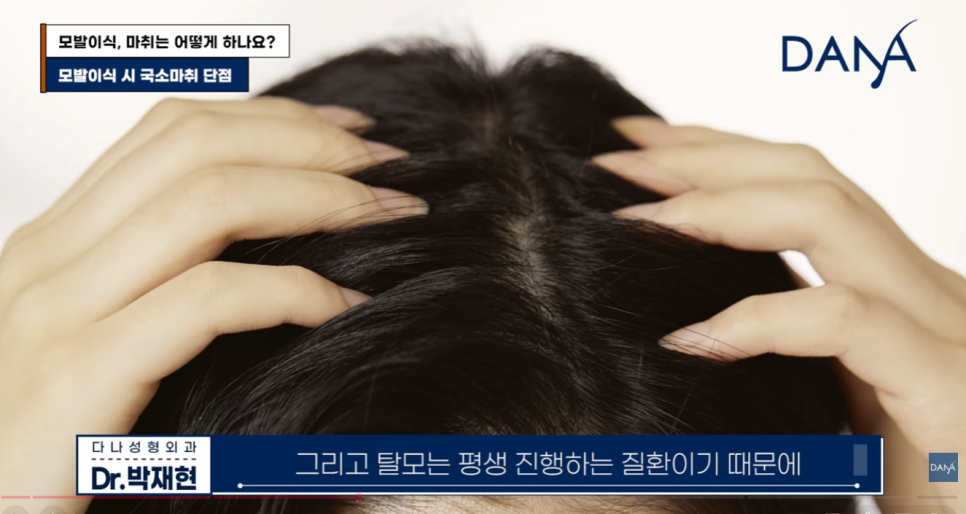
Also, because hair loss is a condition that can progress throughout life,
you may need a second or third surgery later on.
If you have frightening memories from your first surgery,
this can make subsequent surgery more difficult.
In this respect, sedation may be more helpful.
However, not everyone is eligible for sedation.

Therefore, we first allow you to choose
between local anesthesia and sedation,
and based on the doctor's assessment,
we recommend the type of anesthesia that is appropriate and possible for you.

[People Who May Need Sedation]
-
People who have a fear of operating rooms or are extremely afraid of injection needles
-
People who have a herniated disc or ankylosing spondylitis and find it difficult to lie on a firm operating table for a long time
-
People with panic disorder or tic disorders who find it difficult to keep their bodies still for an extended period
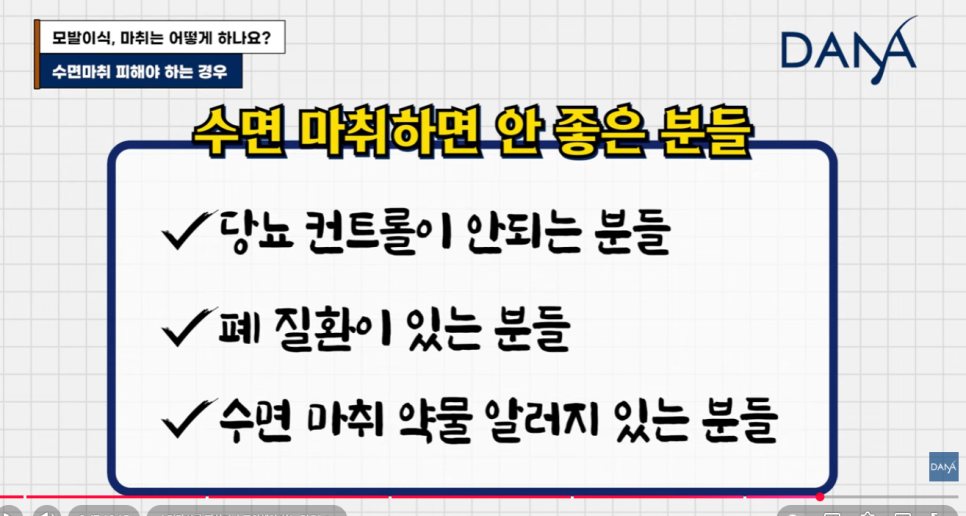
[People Who Should Not Receive Sedation]
-
People whose diabetes is poorly controlled or who have systemic health problems, such as chronic lung disease
-
People who are allergic to propofol, a sedative. People with soybean allergies should avoid sedation because of the propofol ingredient.
In such cases, the procedure is performed safely under local anesthesia.
In conclusion, no single anesthesia method for hair transplant surgery can be said to be universally superior.
The patient's individual scalp condition, degree of psychological fear, and presence or absence of underlying conditions must all be considered together.
For a safe and satisfactory outcome, we recommend choosing the safest, personalized anesthesia system for you through a thorough consultation with a specialist before surgery.