Hello!
This is Dana Plastic Surgery, a hospital specializing in hair transplantation!
If you are observing your progress after going through the dormant phase following hair transplantation,
you may have a concern that many people experience at least once.
It is the appearance of red, acne-like bumps on the hair or scalp—symptoms of folliculitis after hair transplantation.
Many people worry that the surgery may not have gone well,
or that this could reduce the graft survival rate or prevent hair from growing.
Today, we will explain the causes of folliculitis after hair transplantation,
as well as how to manage it.
Why does folliculitis occur after hair transplantation?
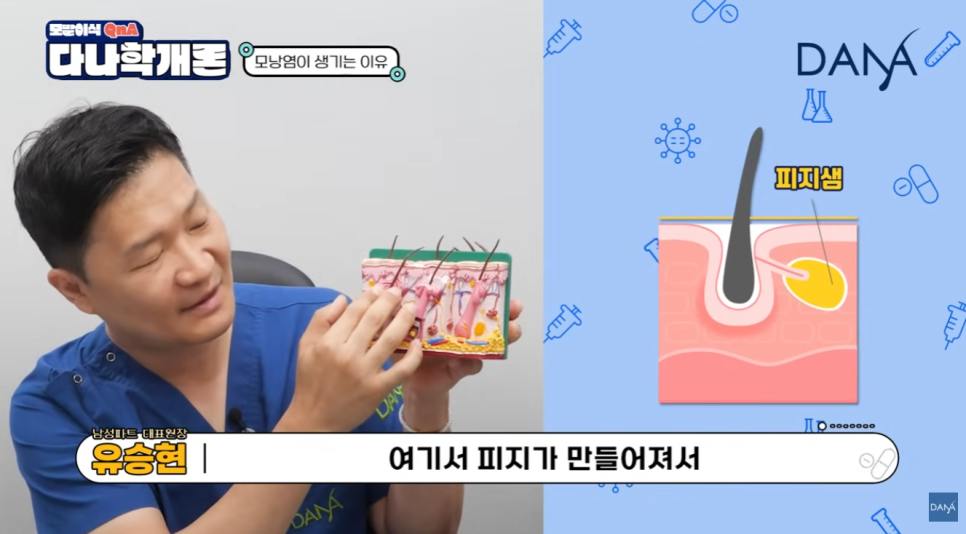
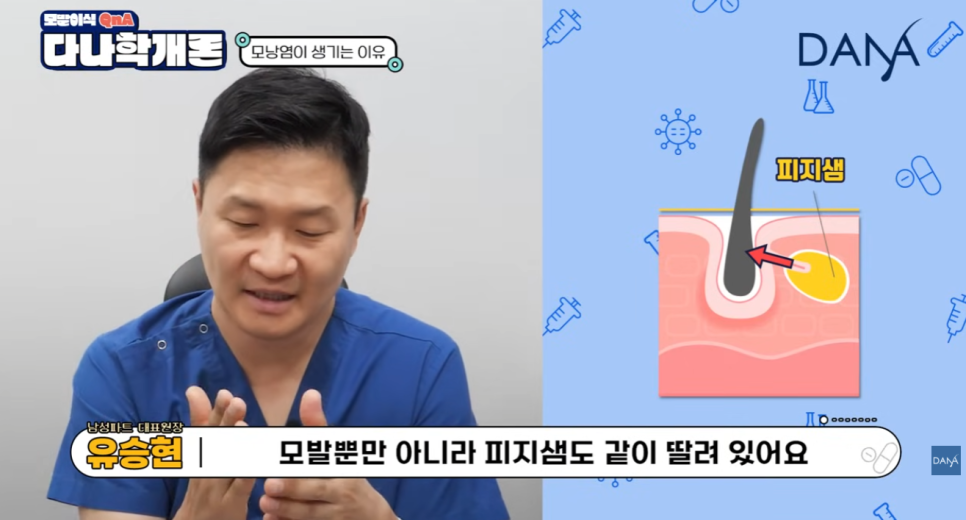
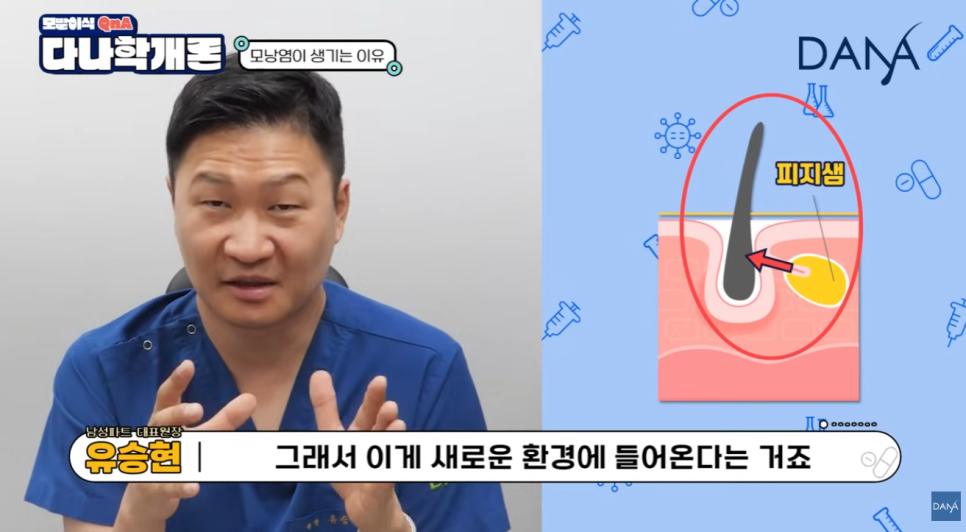
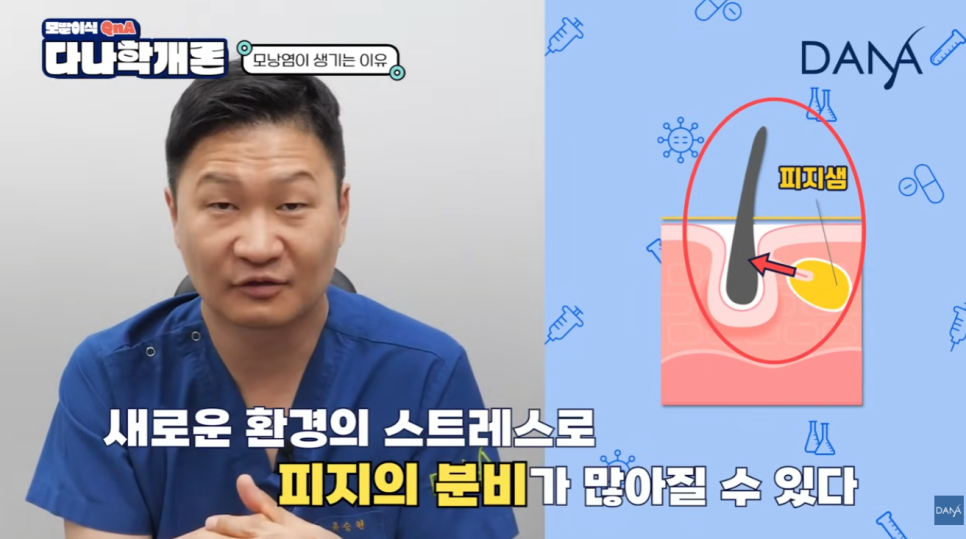
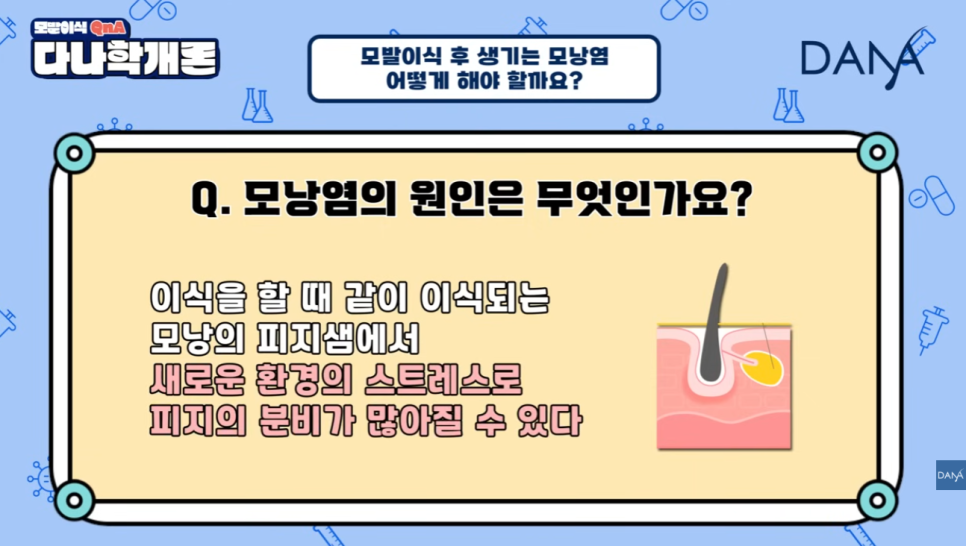
When hair is transplanted, it is not only the hair that is transplanted;
the sebaceous glands located beside it are transplanted as well.
As the follicles adapt to their new environment, they may become stressed,
which can cause sebum production to increase rapidly.
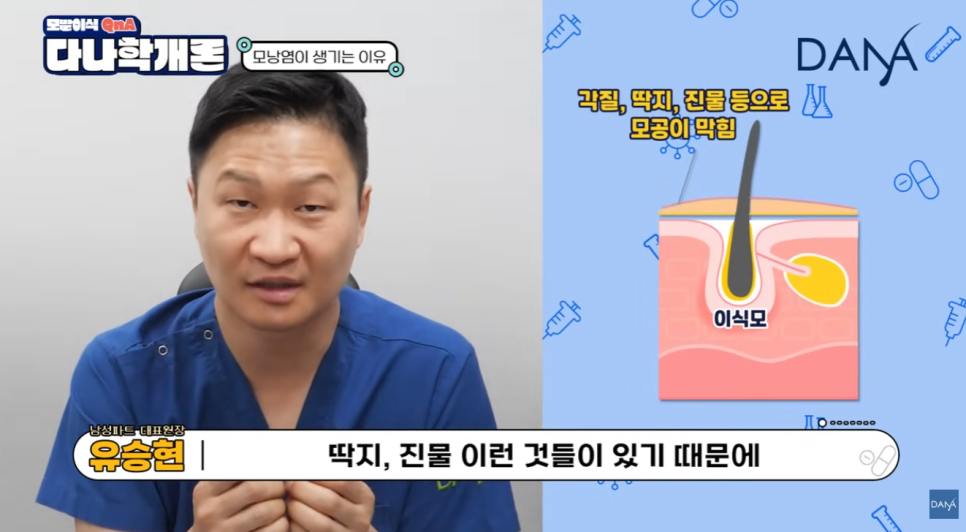
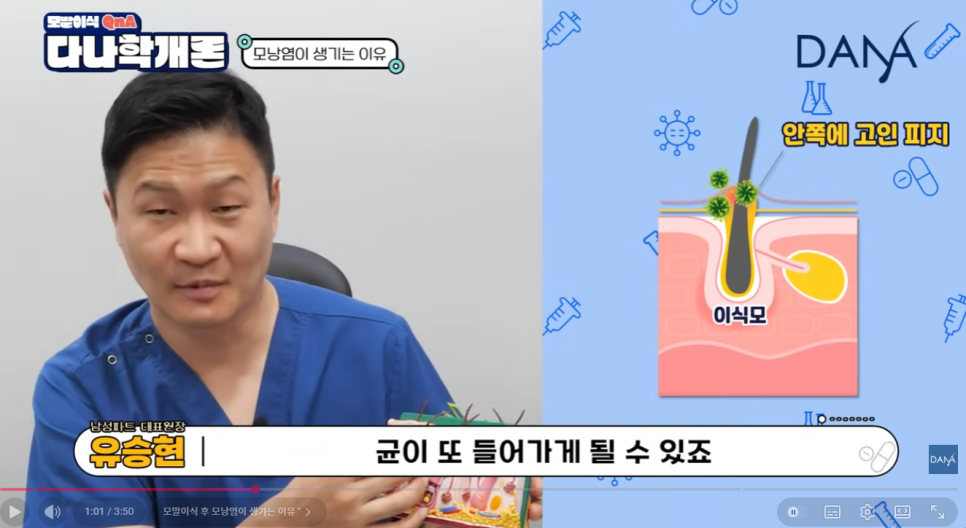
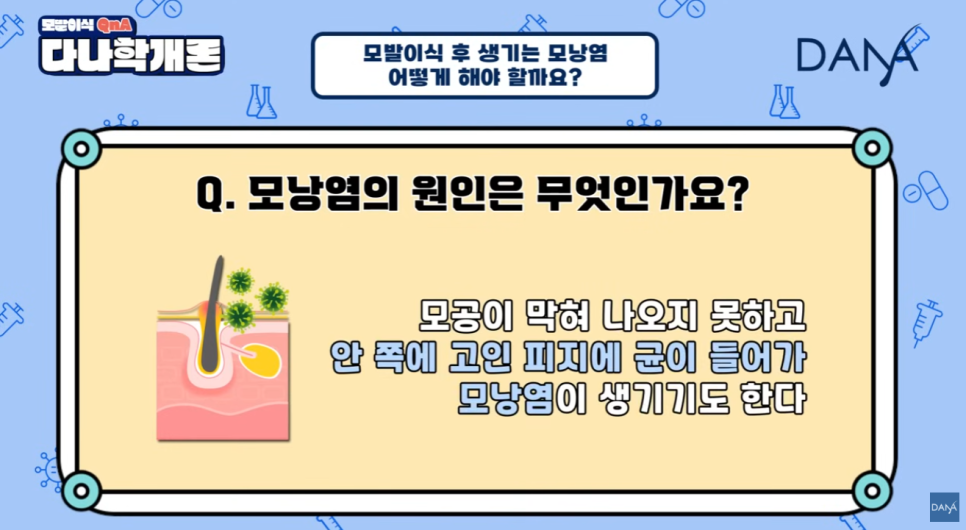
When pores become blocked by scabs, discharge, and dead skin, sebum can collect inside,
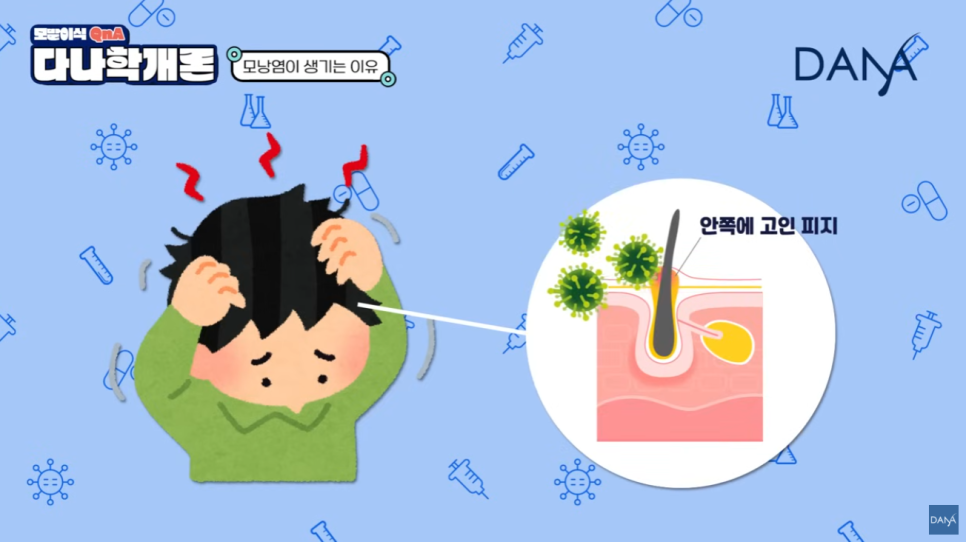
and bacteria may enter as well.
After surgery, the area may feel itchy, and because it can be fascinating to see the hair growing,
you may touch the surgical site frequently, allowing bacteria to enter.
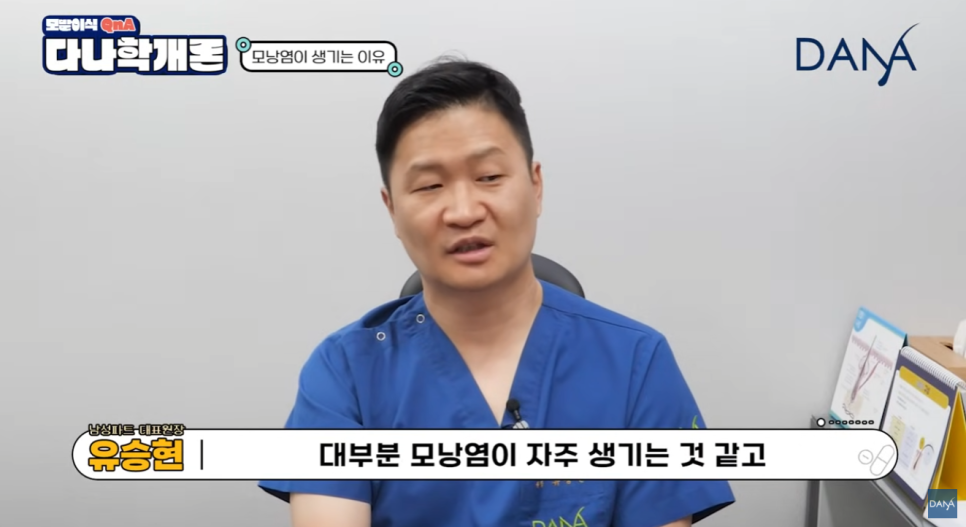
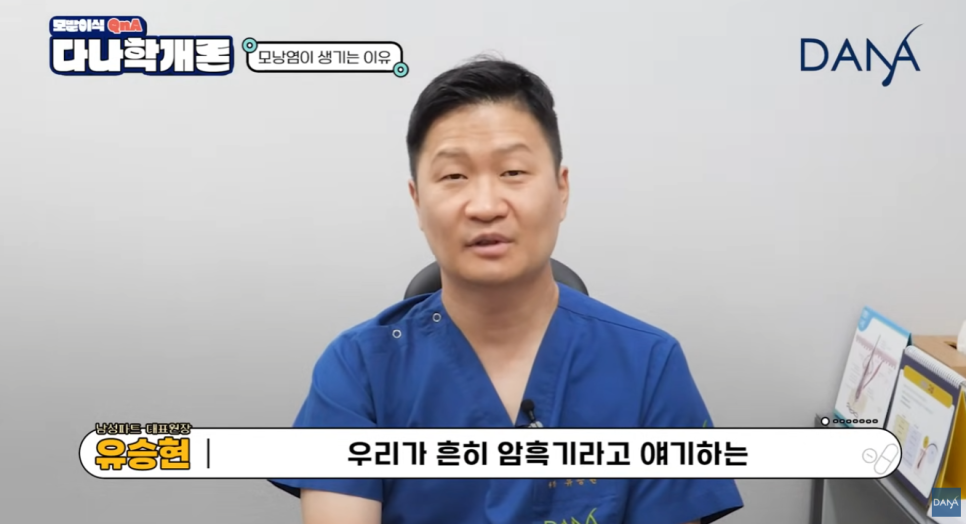
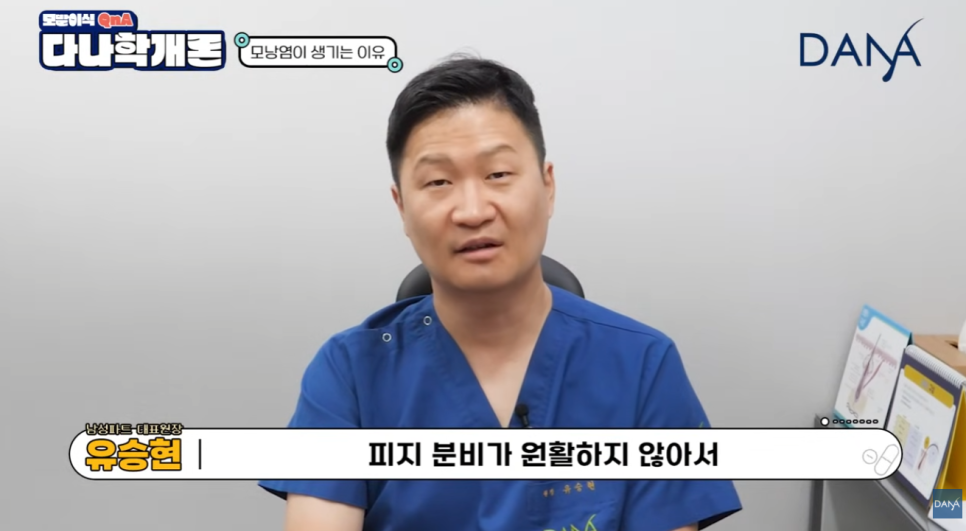
Folliculitis occurs particularly often during the dormant phase one to two months after surgery—the period when transplanted hair falls out and grows again—because sebum may not drain properly.
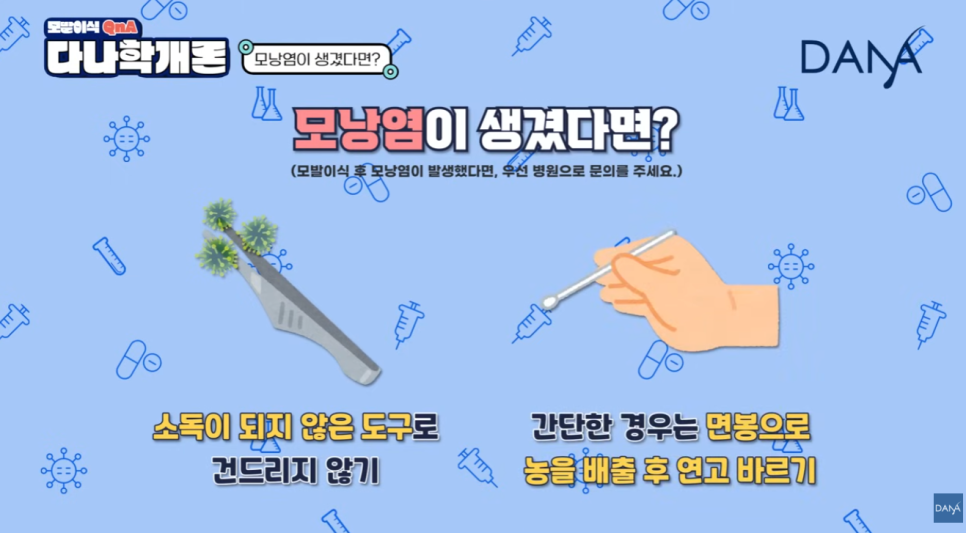
If folliculitis develops,
first contact the hospital,
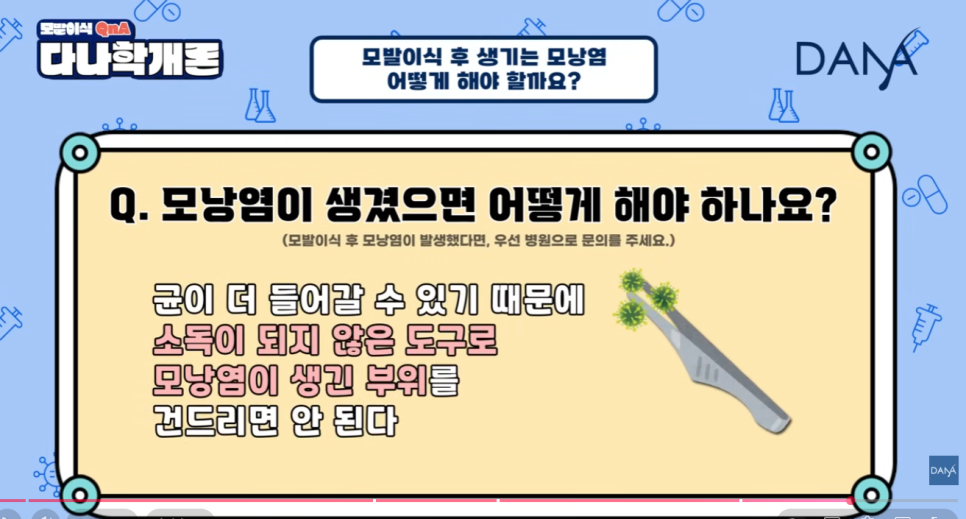
and never squeeze it with your hands.
You should also never touch it with an unsterilized tool.
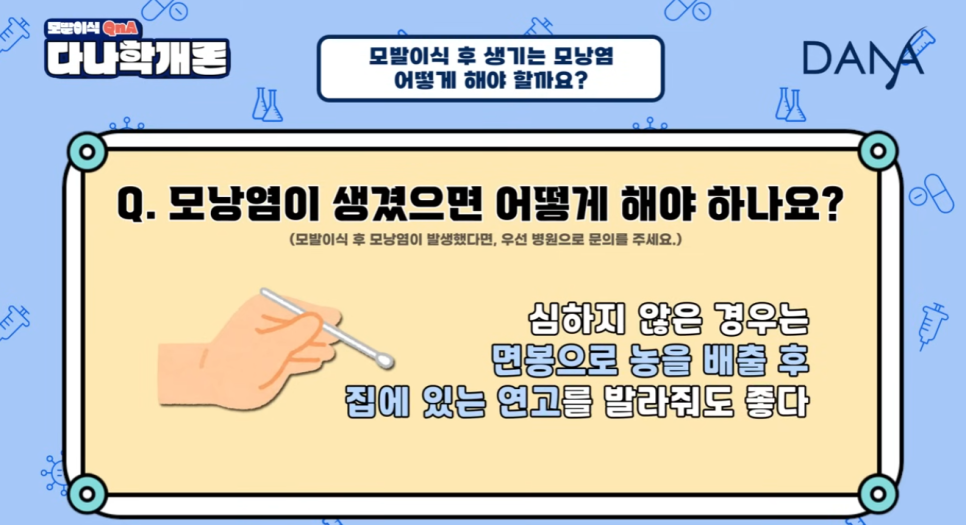
In mild cases, use a clean cotton swab to drain the pus,
and apply a small amount of an ointment such as Fusidin.
Does folliculitis affect graft survival?
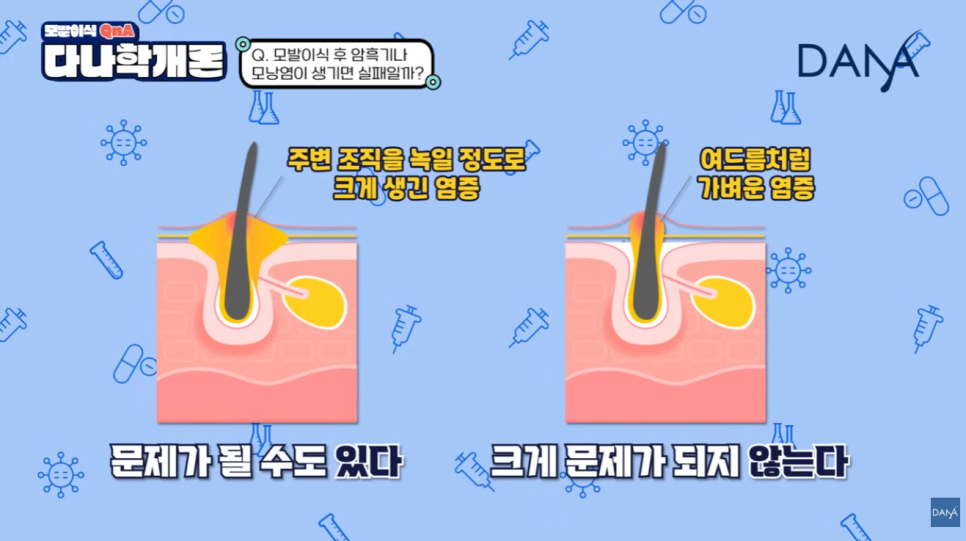
Typical folliculitis that appears as small, acne-like bumps usually develops briefly and then disappears,
so it does not kill the follicles or significantly affect the surgical outcome.
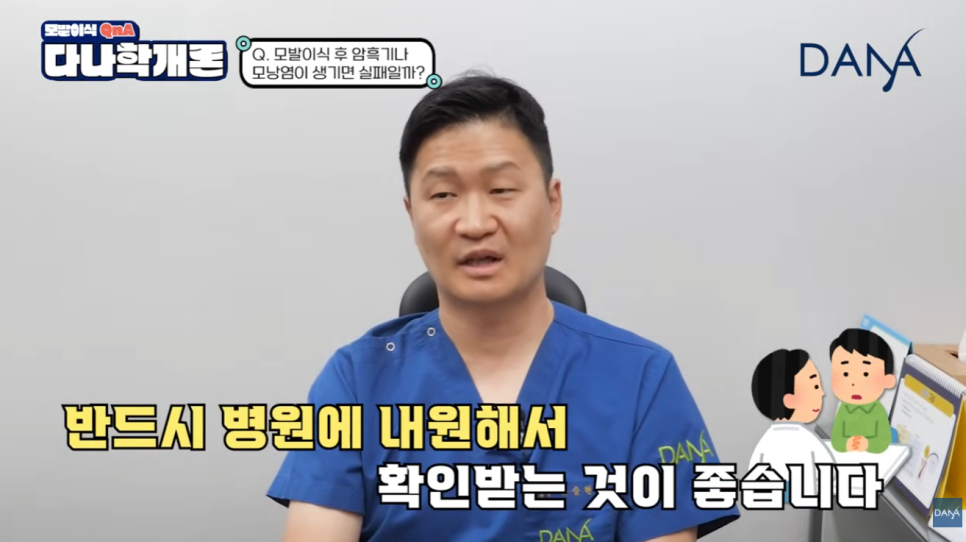
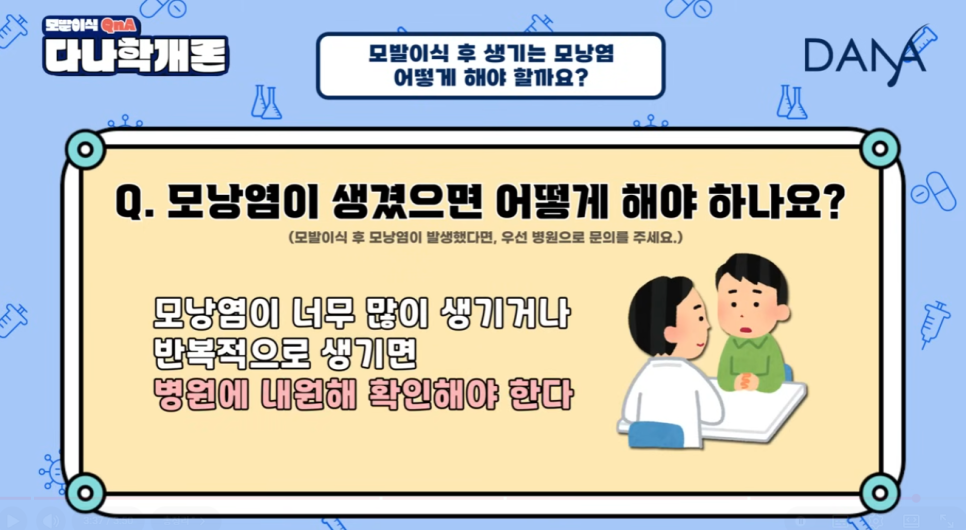
However, professional disinfection or appropriate treatment at a hospital is recommended if:
- Folliculitis occurs extensively in numerous areas rather than in just one or two spots;
- It continues to recur in the same location; or
- The inflamed area becomes significantly swollen and fills with pus, creating a risk of damaging the surrounding tissue.
In the cases above, it is safest to receive professional disinfection or appropriate treatment at a hospital.
Folliculitis after hair transplantation is one of the natural reactions that can commonly occur during the graft-settling process.
Please manage it properly,
and if you experience any unusual symptoms, we recommend contacting the hospital without hesitation!
https://www.youtube.com/watch?v=-afxqWMAW5s