Hello. This is LIFTON Dermatology.
Today, I’ll talk about blackheads, which many people are concerned about.
What are blackheads?
Blackheads are not actually a medical term; the formal name is an open comedo.
First, a comedo refers to sebum secreted by the sebaceous glands inside the pores that has hardened within the hair follicle.
When these comedones accumulate excessively inside the pores, the pores gradually expand, and once there is no more room to expand, they break through the pore and protrude outward.
The protruding sebum (comedones) meet air and oxidize, turning black. This is called an open comedo, or blackhead.
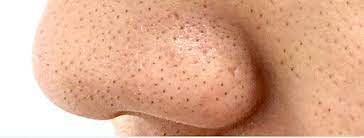
Some people dislike the appearance of blackheads and habitually squeeze them out at home, but this is not a good habit.
Squeezing comedones at home may feel satisfying, but the act of squeezing itself causes stress and an inflammatory response in the pores. If repeated squeezing continues, the pores can become fibrotic and remain permanently stretched, and in severe cases, they can develop into widened scars.
Therefore, it is best not to squeeze them at all, whether with your hands or a cotton swab.
Likewise, removing them with pore strips used at home is also not recommended, because it can widen the pores. Intensive treatments such as Aqua Peel performed at a care shop or clinic, if used to forcefully extract all the sebum from inside the pores, are also not desirable.
A safe way to remove blackheads at home?
I’ll explain home care methods you can try at home safely, without damaging or enlarging the pores.
First, apply a keratolytic ingredient that can soften sebum and dead skin cells (retinol, AHA, BHA), or a peeling gel or cleansing oil (oil has the property of dissolving sebum) to the area with blackheads. Then place a towel soaked in lukewarm water over the area and leave it on for about 5 minutes. After that, gently remove only the top part of the blackheads with a cotton swab, then wash your face as usual.
This will not completely remove blackheads, but if repeated, the amount of sebum will gradually decrease and the pores will slowly shrink.^^
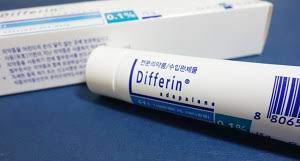 Differin Gel
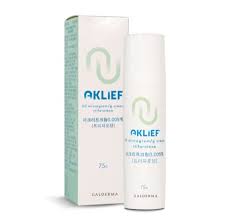 4th-generation retinoid Aklief
In fact, severe blackheads that are not well controlled with home care may require prescription retinoid topical medications (Differin, Aklief) from a clinic, or short-term oral medications that suppress sebum production (such as isotretinoin).
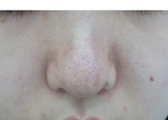 Before blackhead treatment
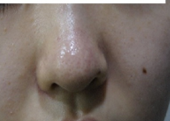 After blackhead treatment
These are photos of a patient who received about five treatment sessions. The patient improved after undergoing sebum-control treatment and pore-shrinking treatment together at 3-week intervals. If the patient had frequently squeezed blackheads at home and severe inflammation and fibrosis had developed around the pores, treatment would likely have been difficult.
Lastly, there are conditions that are not blackheads but look like blackheads.
The first is a condition called trichostasis spinulosa. It is not a blackhead; rather, fine hairs grow out through the pores, and it can be treated with hair removal treatment.
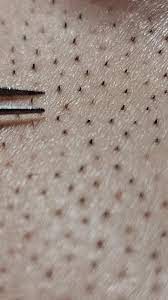 Trichostasis spinulosa
The second is a dilated pore of Winer. It looks like a blackhead, but it has a deep root and is a condition that can only be treated by surgical removal.
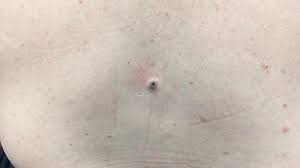 Dilated pore of Winer
That’s all for today. Thank you.^^