Hello, this is LIFTON Dermatology.
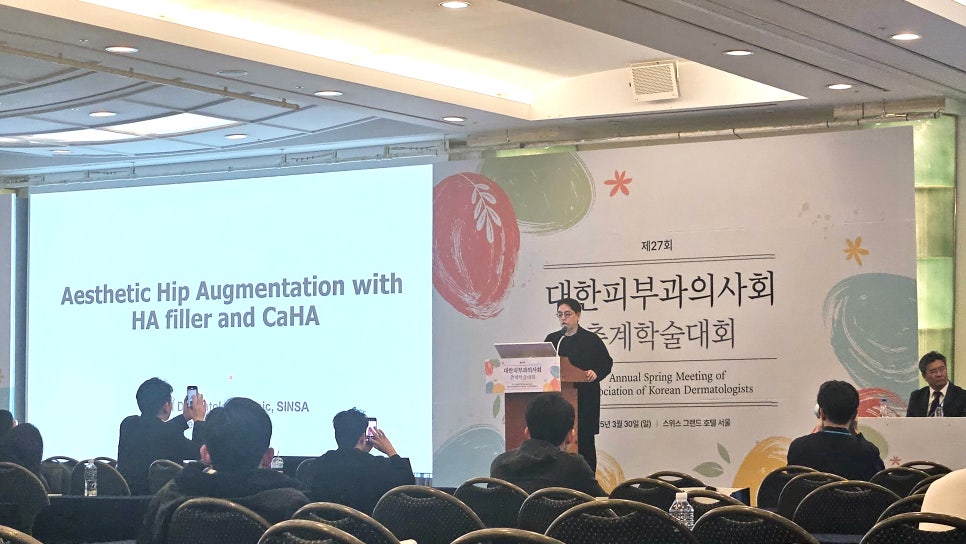
A little while ago, the 2025 Spring Academic Conference of the Korean Dermatological Association was held.
As the name suggests, the spring academic conference is a place where dermatology specialists from across the country gather to share procedure know-how and discuss trends.
At LIFTON Dermatology, I attended as the representative.

I attended this spring academic conference as a speaker.
The topic focused on buttock fillers and Radiesse, which have seen high recent demand, and it covered in depth the physical properties and safety of various fillers applicable to the buttock area, procedure protocols based on actual clinical cases, and the know-how accumulated through treatment.
These days, interest in non-surgical body contouring is increasing, so existing filler procedures centered on the face are also expanding into methods for correcting body shape.
Accordingly, this is also a topic drawing attention at academic conferences as a key issue.
Among body-contouring fillers, the main need for people interested in buttock fillers is improving hip dips.
Hip dips refer to the natural indentation that appears on both sides of the pelvis.
As we age, elasticity decreases and the retaining ligaments weaken, which often causes the buttocks to sag and creates pelvic indentations due to hip dips.
In theory, strengthening the surrounding muscles can improve hip dips, but in reality, even with a lot of gym training, it is not easy to significantly enlarge the muscles in that area.
As a result, many people come in with concerns because exercise has increased the overall volume of the hips, but the hip dip area remains hollow.
This can also be corrected by using a small amount of filler.
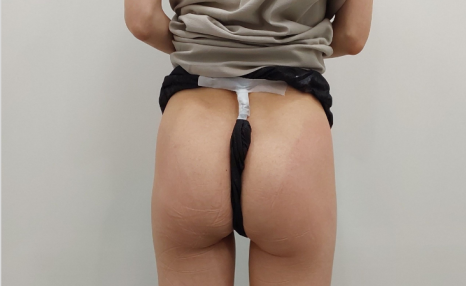
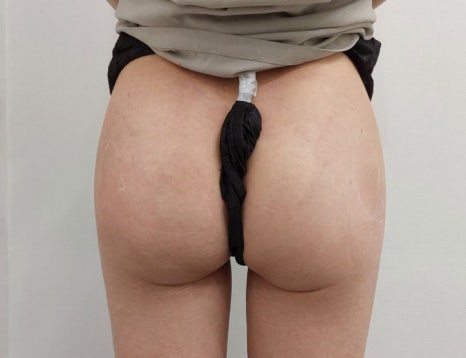
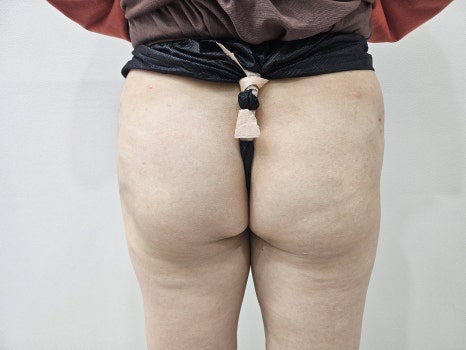
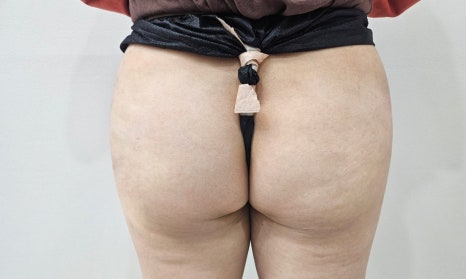
These are actual patients who received treatment at LIFTON Dermatology,
and I remember that they were extremely satisfied because their hip dips improved effectively.
These days, body-specific fillers have become available, making the procedure relatively easier,
but even before body fillers were introduced, many people came in to improve hip dips,
so we have accumulated a great deal of procedural know-how.
Based on our treatment experience and know-how,
the lecture focused on the following key topics.
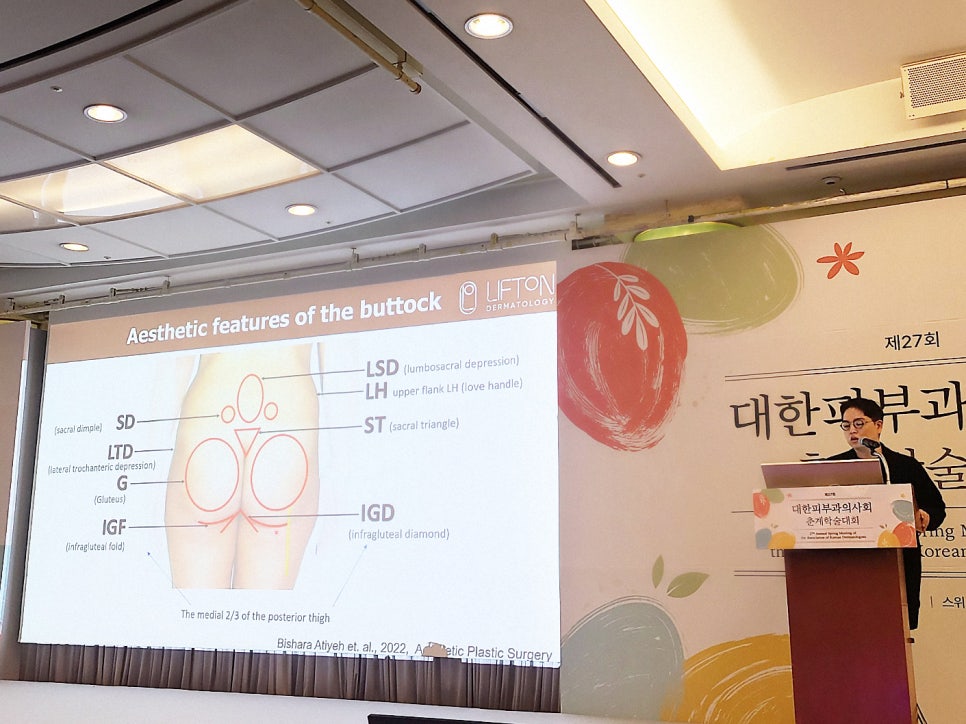
▪️Comparison of the components and physical properties of buttock fillers
The characteristics, advantages and disadvantages, and criteria for selecting suitable products among materials used in buttock fillers, such as
PCL (Polycaprolactone),
CaHA (Calcium Hydrosyapatite),
PLLA (Poly-L-lactic acid), and HA (Hyaluronic acid)
▪️Indications for treatment and patient selection criteria
A customized approach based on body type, skin condition, and expected outcomes
Design for natural results and cases in which hip dip treatment is not recommended
▪️Treatment techniques and layer selection
Techniques for large-volume injection and safety guidelines
In particular, through various cases encountered in actual clinical practice,
it was a meaningful time to share specific strategies that can improve patient satisfaction.


It was also a time when we were able to grow further by sharing not only my own know-how,
but also the know-how of other specialist physicians.
Going forward, we will continue to participate in academic exchange and research so that body filler procedures based on scientific evidence can be established,
beyond simple cosmetic effects.
We will continue striving to make LIFTON Dermatology a clinic that does so.
Thank you.