Hello. This is Lifton Dermatology.
If you are interested in lifting procedures, you have probably heard of Ulthera at least once.
Ulthera is a lifting device that performs treatment while viewing the SMAS layer with ultrasound, and it is a representative lifting device with proven safety and effectiveness in improving skin elasticity.
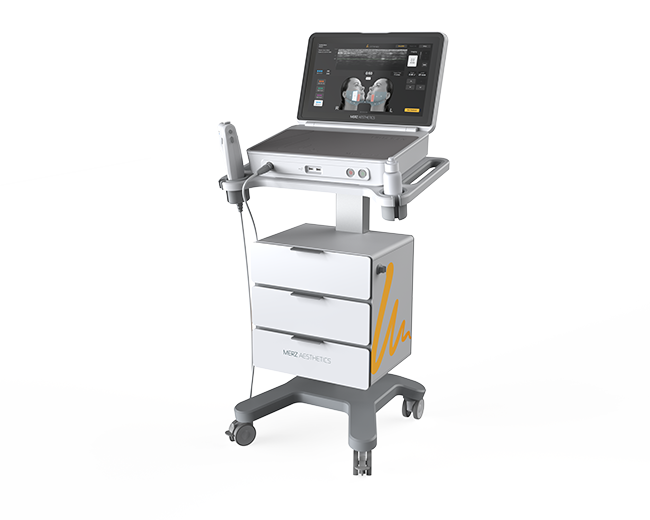
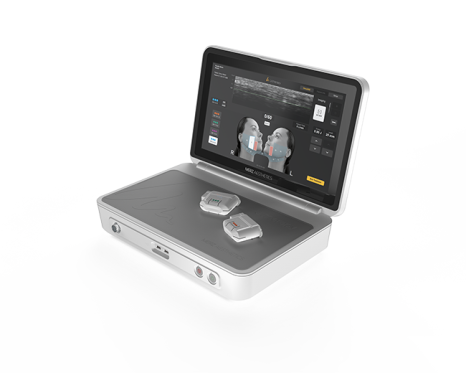
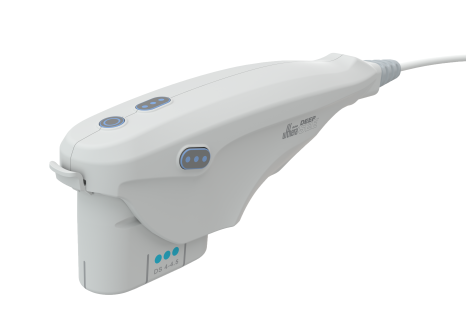
Recently, Ulthera Prime, an upgraded version of the existing Ulthera, was newly introduced.
At Lifton Dermatology, we adopted Ulthera Prime ahead of others and began treatments,
and after performing the procedures myself for about a month, I would like to share my thoughts on it.
Differences from the Existing Ulthera - The Evolution of Depth and Precision
The biggest change in Ulthera Prime is the expansion of observation depth.
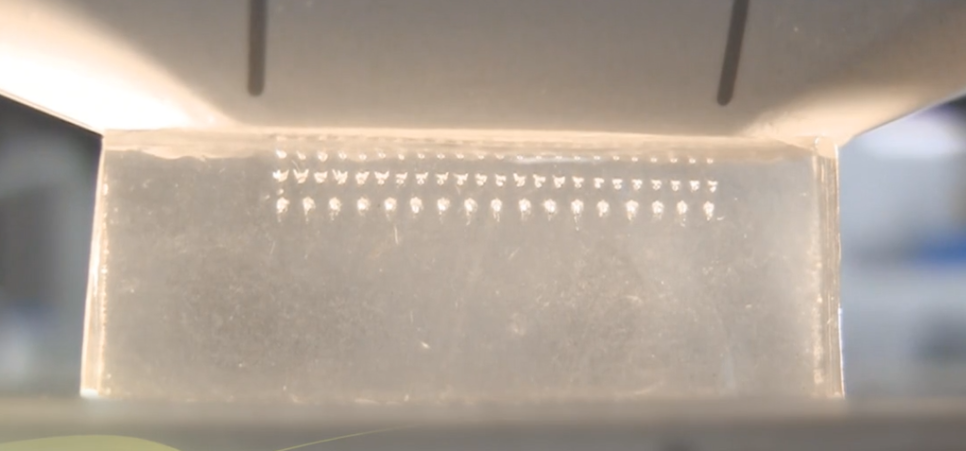
The existing Ulthera could only confirm and treat structures up to a depth of 4.5 mm.
While it differs from other lifting devices in that treatment can be performed while checking the skin layers, the fact that it could only confirm up to 4.5 mm made it difficult in many cases to precisely identify the SMAS layer in areas with deeper fat, such as below the cheekbone or along the lateral face line.
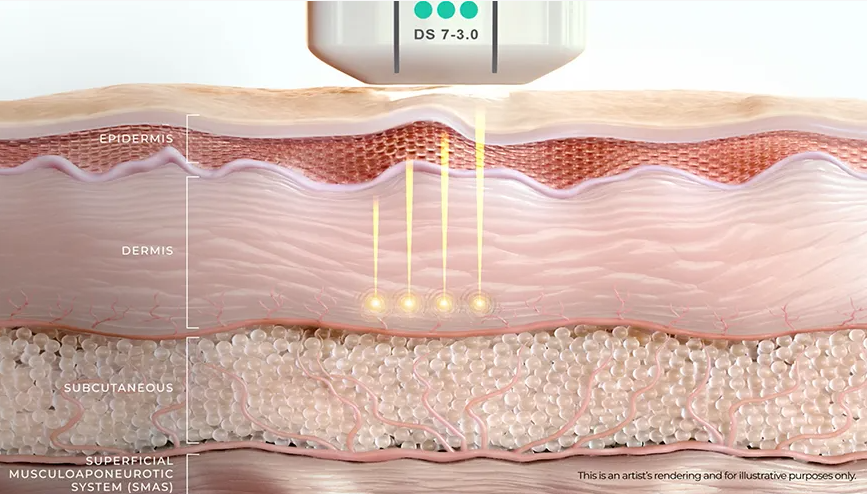
Ulthera Prime can observe up to 8 mm.
After using it myself, I could clearly feel that this difference in depth affects procedural accuracy.
This difference was especially noticeable in cases with thicker skin.
Even in cases with thicker skin or more severe sagging, I was able to identify the target layer more clearly and adjust treatment so that energy would not be wasted on unnecessary layers.
A Clearer Ultrasound Screen
The strength of Ulthera is that it is a lifting treatment performed while viewing the target.
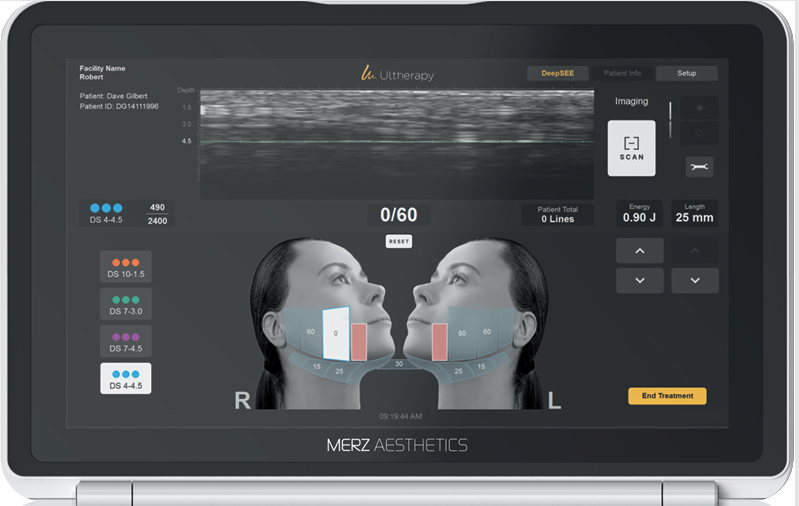
However, with the existing device, the low resolution often made the boundaries between skin layers unclear.
With Ulthera Prime, improvements in ultrasound resolution and screen size make it possible to clearly distinguish intermediate boundaries, blood vessels, and differences in the density of fat layers, allowing for more accurate targeting.
In addition, because the device is quick and intuitive to operate, it can help reduce treatment time and improve efficiency.
While performing treatments with Ulthera Prime, I once again felt that an upgrade in device performance is a tool that expands the practitioner’s field of view and judgment, and I think this is felt not only by me but also by the patients who receive treatment.
At Lifton Dermatology, many people who receive Ulthera regularly also visit us.
As one becomes more familiar with the procedure, there can be a tendency to simply increase the number of shots in order to improve results, but what really matters is not the number of shots, but the quality of the shots.
With Ulthera Prime, precise targeting is now possible, so even with the same number of shots, treatment effectiveness can be improved. Patients who receive Ulthera regularly and need detailed treatment have also shown high satisfaction.
However, no matter how upgraded the device is, the skill of the medical staff remains important for achieving satisfying results.
Even though the skin structure can be identified through the screen,
which layer to deliver energy to and how to adjust the angle,
and how to divide the number of shots and spacing,
ultimately depend on the practitioner’s anatomical knowledge, clinical experience, and judgment.
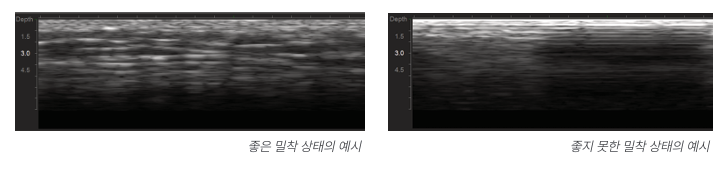
The ultrasound screen that appears when the transducer is applied to the skin can also vary depending on the medical staff’s level of skill.
When the transducer is placed on the skin, a white layer appears on the ultrasound screen. This line is the ultrasound image that shows the internal structure of the skin, and to obtain stable imaging, the direction and pressure of the transducer, as well as the degree of contact with the skin, must all be precisely adjusted.
In particular, for sound-wave-based devices like Ulthera, accurate energy delivery is difficult without a conductor (such as gel), and if the transducer direction is even slightly misaligned, the ultrasound can bounce back or become distorted, making it difficult to identify the exact anatomical structure.
Also, if it is pressed too firmly against the skin, the screen may move too quickly and the target layer may be missed.
In the end, to precisely analyze the skin condition and accurately target only the necessary layer, even the angle of the fingertips holding the transducer must be delicately adjusted.
These details clearly reveal differences between practitioners.

Ultimately, to fully bring out the performance of Ulthera Prime, experienced medical staff who thoroughly understand and can precisely handle the device are needed.
Lifton Dermatology provides more refined and reliable lifting results based on the clinical experience and know-how accumulated through direct treatment of numerous lifting cases.
Please experience the upgraded Ulthera Prime for yourself at Lifton Dermatology.