Hello, this is Lepton Dermatology.
On September 27, the ACCORD Symposium, where dermatology specialists gathered to share the latest insights, was successfully held.
This symposium was held under the theme of multidimensional treatment strategies for improving skin quality and safe clinical applications of CaHA, and I was also invited as a speaker to give a presentation.
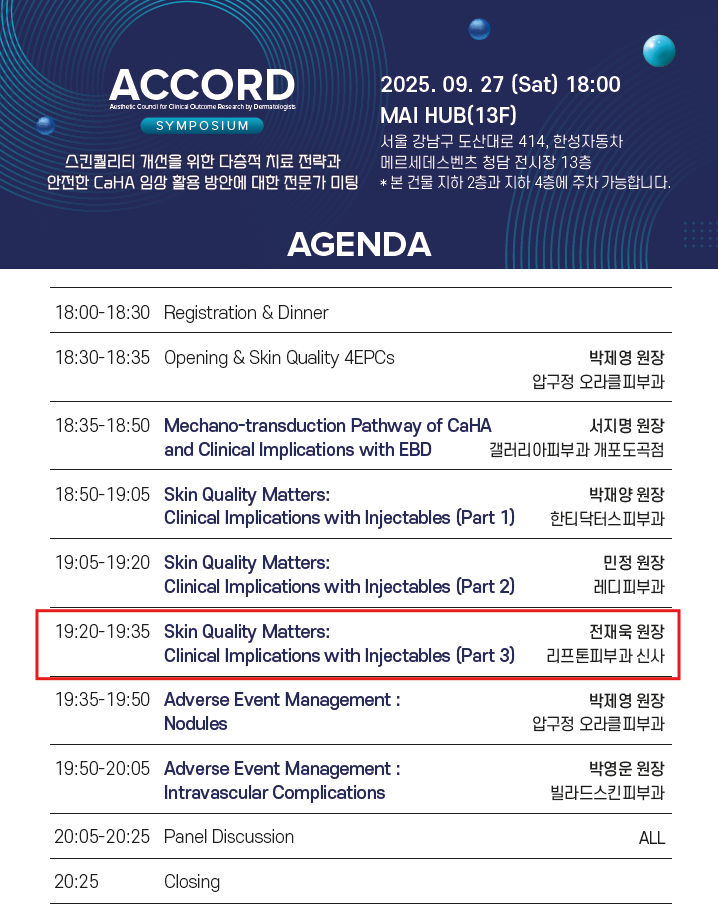
The Meaning of Skin Quality and Injectable Procedures
When most people think of fillers, they first imagine volume correction to fill in sunken cheeks or deep nasolabial folds.
In this presentation, however, I went one step further and talked about improving skin quality through fillers.
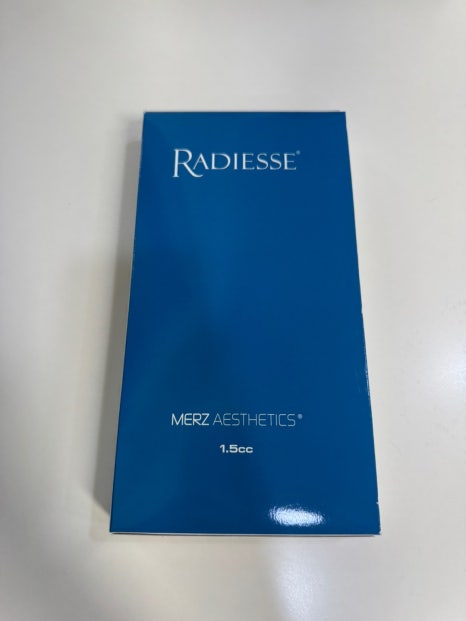
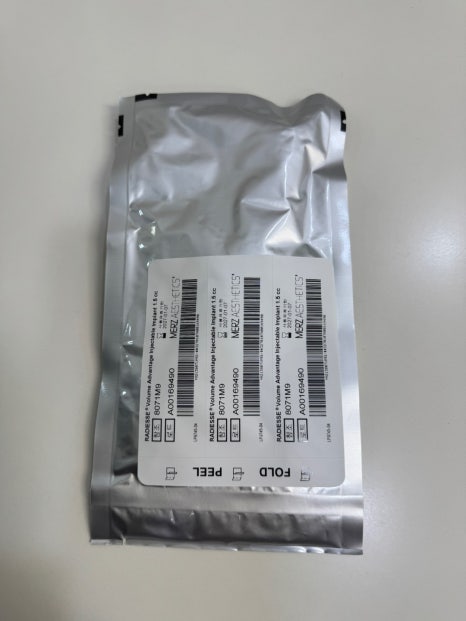
In particular, CaHA fillers can promote collagen production within the skin, so over time, the skin can become healthier and firmer on its own.
A major advantage is that they make it possible to achieve gradual improvement in skin quality and collagen regeneration, rather than simply providing immediate volume correction.
Dilution Recipes and Area-Specific Approaches
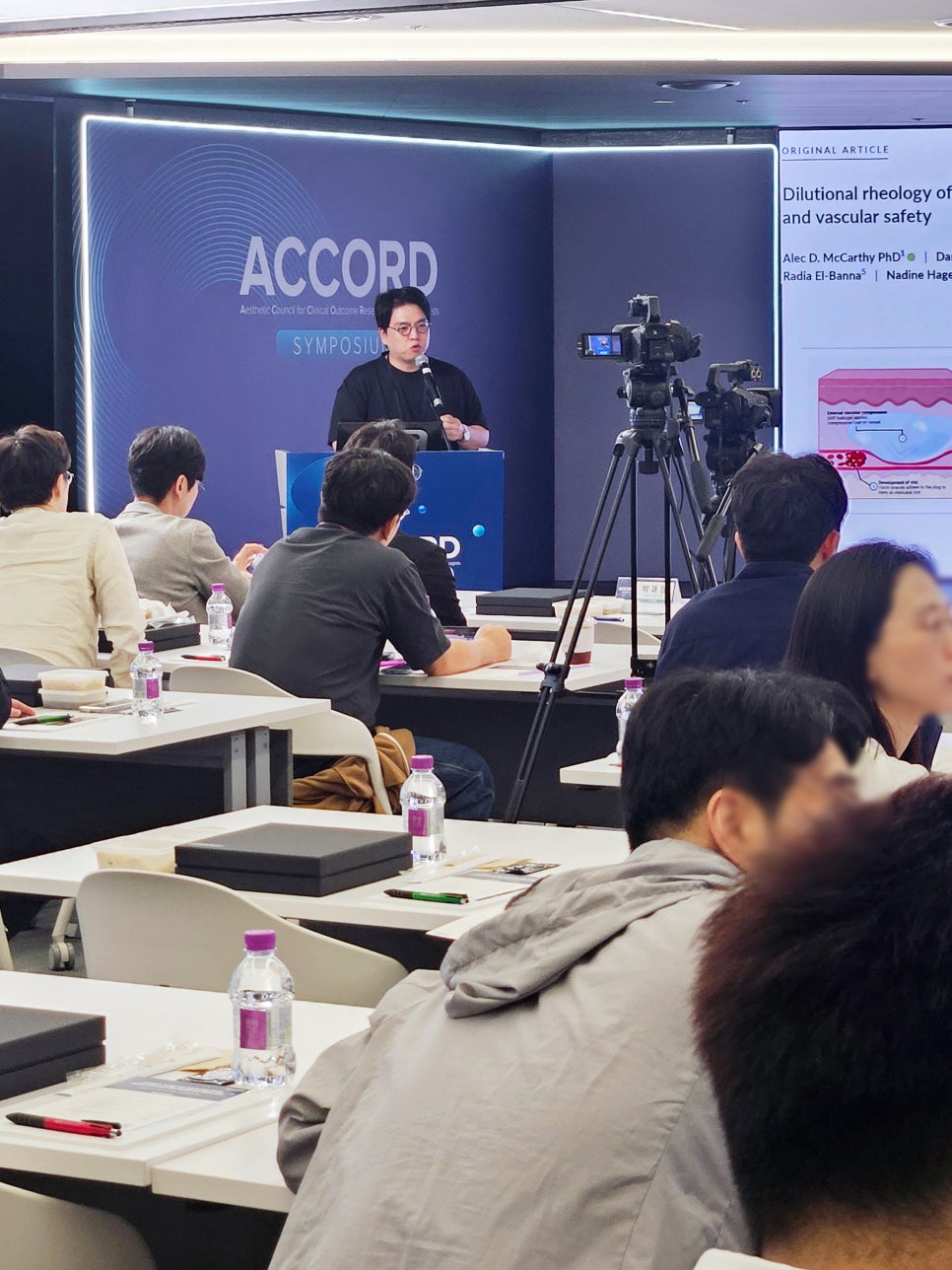
The key point I emphasized in my lecture was the dilution recipe.
Even with the same product, the results can differ completely depending on the dilution ratio, so dilution is not a simple process but a crucial step that determines the direction of treatment.

The goals can be broadly divided into cases where volume correction is needed, cases where fine lines and elasticity need improvement, and cases where the overall quality of the skin is being enhanced.
Based on each purpose, I shared the know-how I have organized from my clinical experience on how to adjust the dilution ratio and injection technique.
Principles for Safety
Safety is just as important as effectiveness.
One of the biggest risks of filler procedures is vascular complications, and to prevent this, it is essential to choose a safe layer based on anatomical knowledge.
For this purpose, I shared the principles I have followed in actual clinical practice.
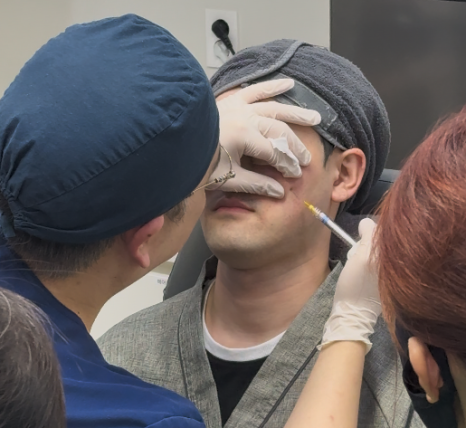
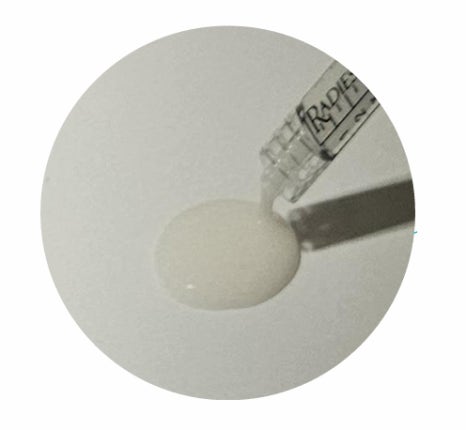
When injecting, I always proceed slowly with low pressure, and in areas at risk of vascular complications, I choose a deeper or more superficial safe layer. Also, before performing the procedure, I carefully analyze the patient’s skin thickness and skin condition, then create a customized plan and proceed accordingly.
By applying the dilution recipe while following these basic principles, it is possible to reduce side effects and reliably achieve the desired results.
A Time of Exchange and Growth
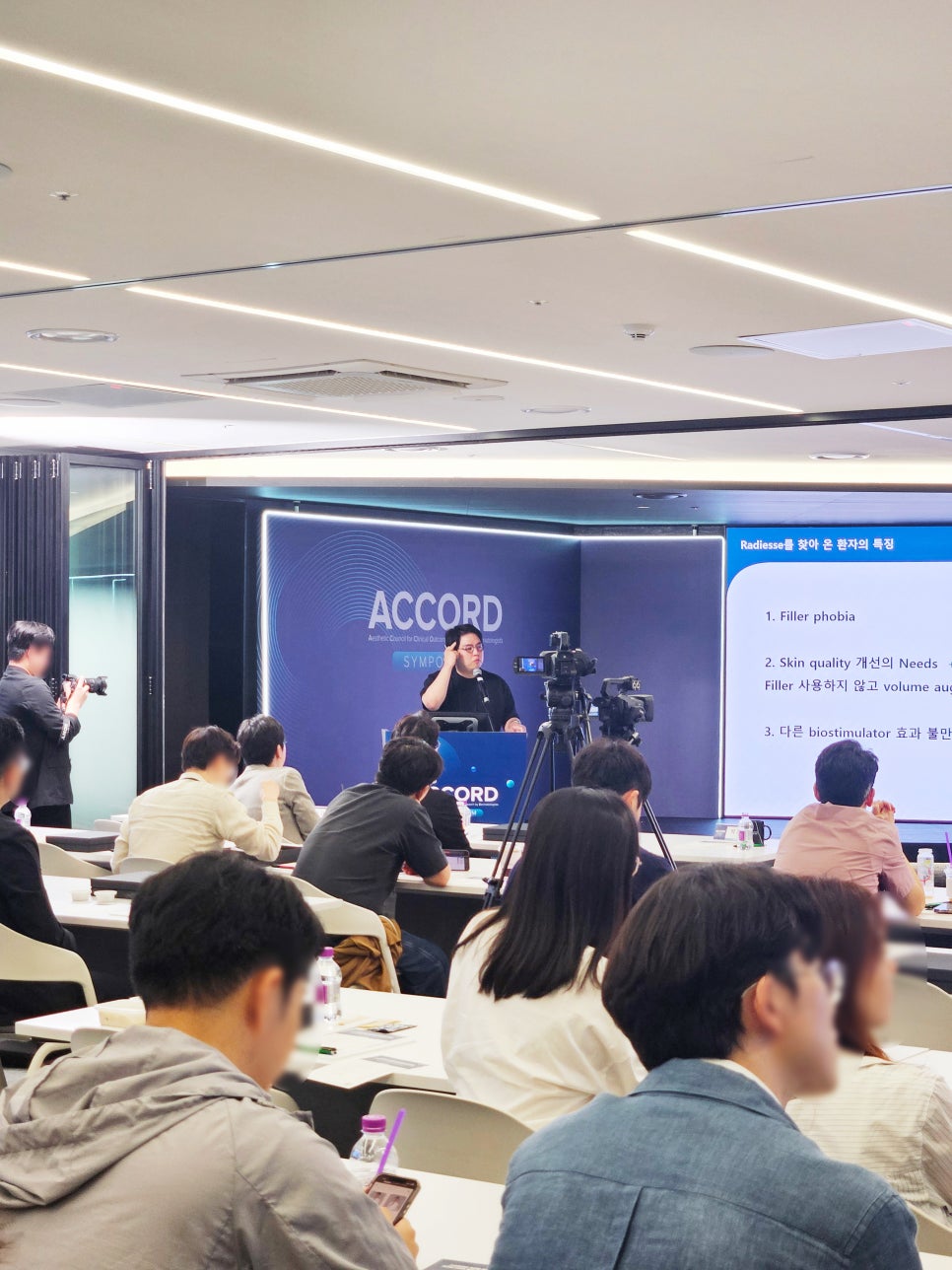
In the Q&A session that followed the lecture, various concerns and questions from actual clinical practice came up one after another.
I also answered honestly based on my own experience, and it became a time for us to learn from one another and grow.
This ACCORD Symposium was more than just a lecture; it was a valuable opportunity to share the experience and know-how I have accumulated in clinical practice and to engage in academic exchange.

Lepton Dermatology will continue to study the latest insights and reflect them in clinical practice in order to provide patients with safer and more satisfying care.
We will do our best to become a leading clinic in the fields of skin quality improvement and collagen regeneration treatment.
Thank you.