Bucheon Implant
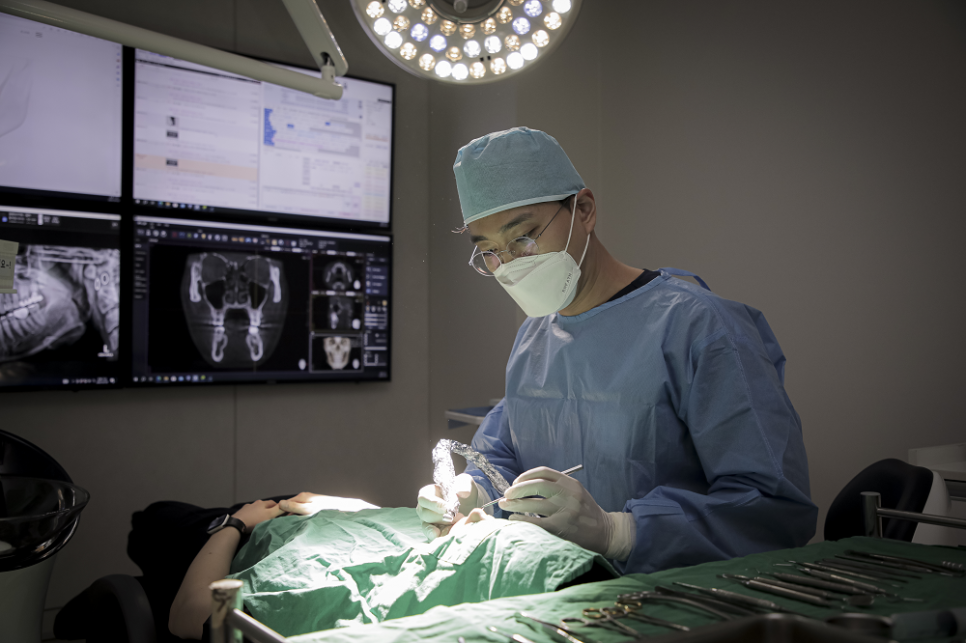
365 Seoul One Top Dental Clinic - Director Kim Geun-il
Hello.
I am dentist Kim Geun-il.
After providing dental care for a long time,
I have met many patients who come in with various discomforts related to their teeth or mouth.
Among them, I meet many patients who visit for implant consultation.
Some are receiving implant treatment for the first time,
and some had already undergone implant surgery,
then suddenly
came in looking worried, saying the implant was loose.
When we take an X-ray for examination,
in some patients, unfortunately,
the bone around the implant has significantly resorbed and the implant is loose,
and I have had to explain that the existing implant must be removed
and re-placed.
Today, I will look into cases where implant reoperation is needed
for patients like those above.
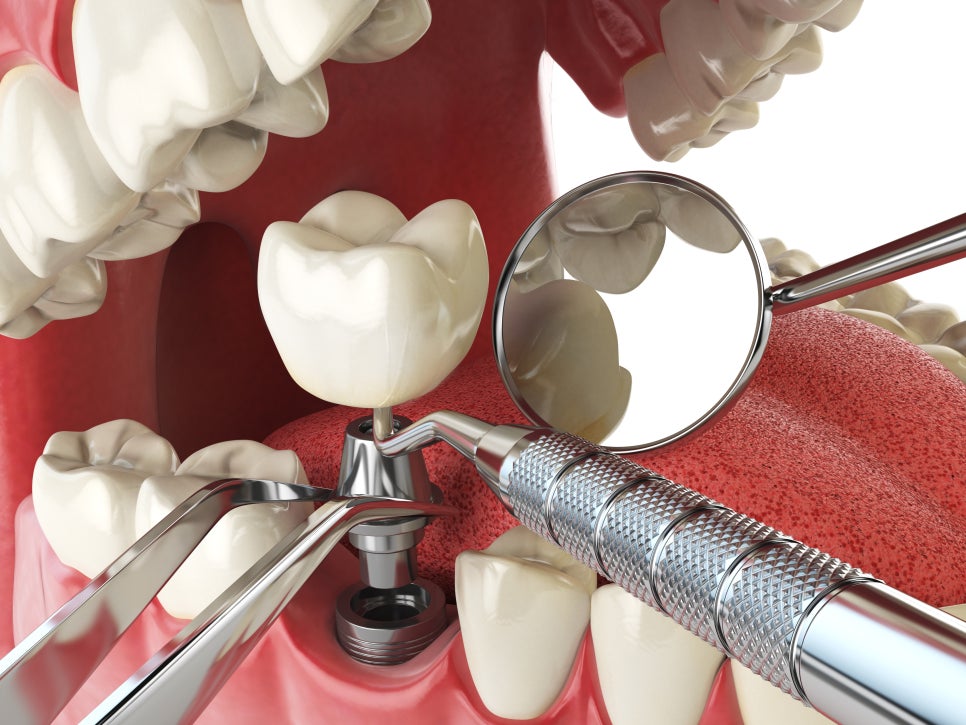
Implant reoperation requires identifying the cause - Bucheon Implant
When is implant reoperation necessary?
Bucheon Implant
Currently, implants are
introduced as the best treatment method
for patients with tooth loss,
but they do not show a 100% identical success result
for every patient’s case.
The 10-year survival rate of implants is
known to be over 90% on average,
which, conversely, means that roughly 5–10% of cases
can experience failure.
If the first implant surgery fails,
we need to identify the cause
and plan implant reoperation.
The causes of implant reoperation that can occur
in the early stage after implant placement and
after implant completion are as follows.
Main causes requiring implant reoperation
Bucheon Implant
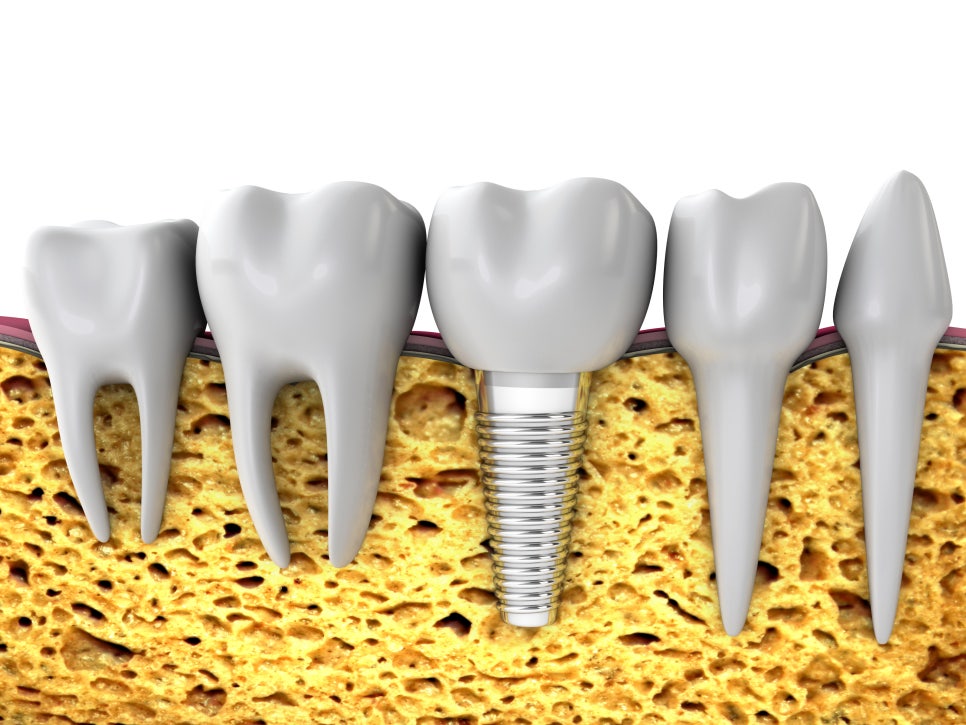
Bucheon Implant - In cases of early osseointegration failure, implant reoperation is necessary
- Early failure of osseointegration (Early Failure)
It occurs within the first 1 to 3 months after implant placement,
and typical signs include a loose implant, persistent pain, swelling or pus in the gums,
or bone loss around the implant on X-ray.
(1) When the bone quality around the placed implant is poor
Bone quality refers to the density of the bone,
meaning how hard and compact it is.
In normal bone, the outer part is hard
and the inside has a dense sponge-like porous structure,
showing a high level of strong bone density,
whereas
bone with poor quality has a looser mesh structure,
larger holes, and looks as if the inside is empty.
In such cases, because bone density is low,
it is more likely to break easily even with a small impact.
Depending on the bone quality at the implant placement site,
the state of osseointegration can also vary.
(2) Thermal injury caused by excessive drilling
During the process of placing an implant into the jawbone,
medical drills are used,
and heat is generated from friction,
so the procedure must be performed while adequately irrigating with water.
If the drilling is performed incorrectly by a clinician with insufficient implant surgery experience,
or if enough water is not supplied,
excessive heat is generated,
which can affect the surrounding bone cells,
and this can lead to early failure of osseointegration.
(3) Lack of primary stability
Primary stability is one of the important factors
in determining implant success.
If the implant is not firmly fixed when placed into the jawbone,
micromovement occurs,
and the osseointegration process with the jawbone does not proceed properly,
ultimately leading to early failure of osseointegration.
(4) Systemic factors such as smoking, diabetes, and osteoporosis
After an implant is placed, the patient’s systemic diseases
and lifestyle habits such as smoking and drinking
can also have a major effect on implant stabilization.
In patients with diabetes,
they are more vulnerable to inflammation and wound healing may be delayed,
and in particular, patients with osteoporosis
have relatively low bone density,
which can affect implant stability.
Smoking also reduces blood flow
and can greatly increase the risk of infection at the surgical site,
so quitting smoking is recommended,
and please be sure to follow the precautions given after implant surgery.
(5) Infection or sterilization failure
If a bacterial infection occurs in the area after implant surgery
and inflammation develops,
this also interferes with the implant osseointegration process.
Infections may occur because oral hygiene management is poor after surgery,
but they can also lead to infection if the sterilization process for surgical instruments is not properly performed.
Therefore, it is important to thoroughly sterilize the surgical instruments used
so that patients can receive implant surgery with confidence.
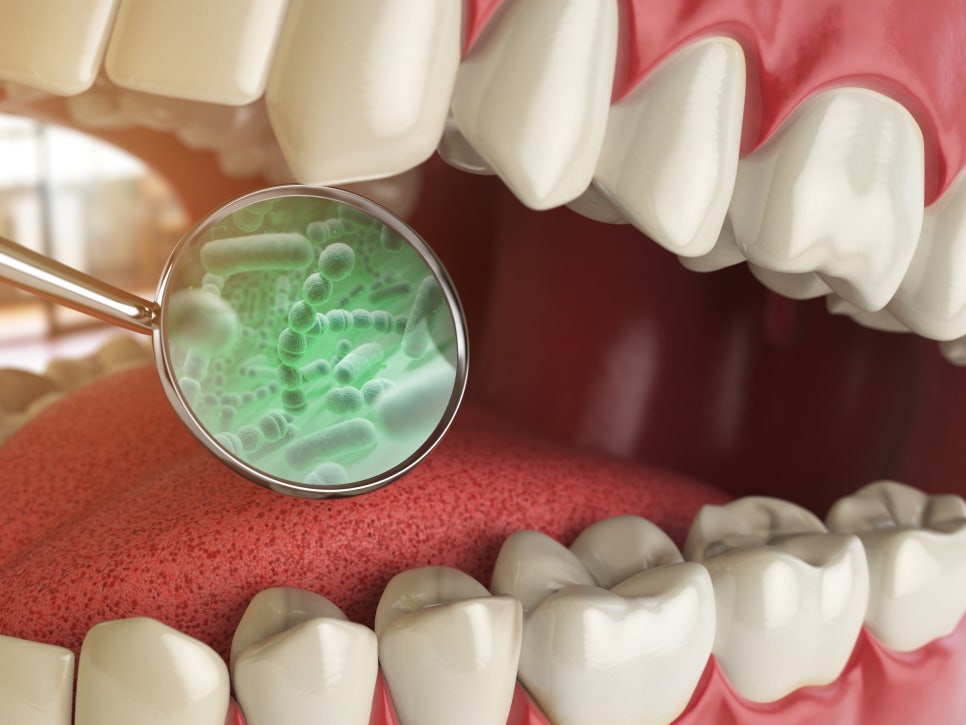
Peri-implantitis is the most common cause of reoperation - Bucheon Implant
- After implant treatment is completed
(1) Peri-implantitis
Peri-implantitis is inflammation that occurs around a placed implant,
and it is the most common cause of implant reoperation.
Even if the early risk factors after implant placement are safely passed,
if oral hygiene management is not properly maintained afterward,
plaque and bacteria accumulate around the implant due to poor oral hygiene,
attacking the gums and surrounding jawbone and inducing bone loss.
Therefore, it is essential to check through regular examinations
whether the implant is being properly maintained.
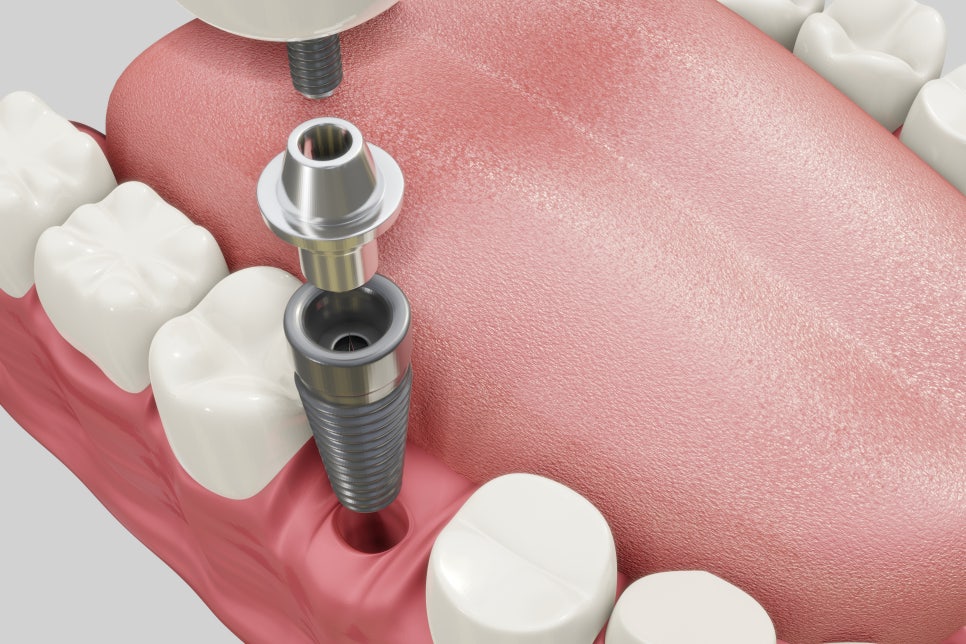
If excessive chewing force is applied to an implant, the implant screw and artificial root (fixture) can be damaged - Bucheon Implant
(2) Prosthetic problems
Although implants have chewing force similar to natural teeth,
if you eat a lot of tough or hard foods,
or if excessive force from teeth grinding or clenching continues to build up,
the screw inside the implant may become loose or break,
and in severe cases, the artificial root (fixture) may even tear.
Please avoid tough or hard foods as much as possible,
and if you have habits such as teeth grinding or clenching,
we recommend wearing a mouthguard device that can protect the teeth.
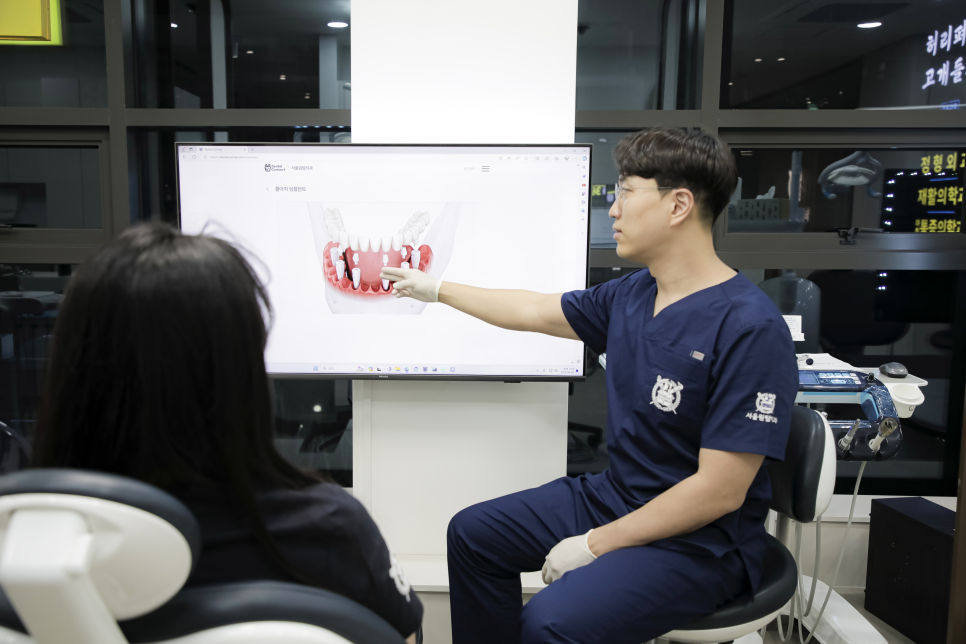
365 Seoul One Top Dental Clinic - Director Kim Geun-il
Implant reoperation must be approached carefully
Bucheon Implant
Implant reoperation is much more difficult.
If the existing implant must be removed
due to damage to the artificial root (fixture),
it is often fixed and does not move because it has undergone osseointegration.
In such cases, it is necessary to remove the surrounding jawbone,
and bone loss is inevitably accompanied during the process,
and depending on the patient’s case, the surgery may take longer.
If bone loss has occurred in the surrounding jawbone due to peri-implantitis,
or if bone removal is performed while removing the existing implant,
a greater amount of bone grafting may be needed
to restore the lost jawbone.
As the amount of bone grafting increases,
it takes longer to stabilize,
so the overall treatment period also becomes longer,
but it is best to wait sufficiently and confirm bone stabilization before attempting implant re-placement.
Previous image
Next image
Implant reoperation should be approached carefully - Director Kim Geun-il
365 Seoul One Top Dental Clinic has, over many years in Gangseo-gu,
met many patients and accumulated various implant clinical cases,
including implant reoperations.
Implant reoperation is a more difficult treatment than general implant surgery,
so I would like to emphasize that it is most important to understand the patient’s current symptoms well
and proceed through sufficient treatment consultation with medical staff who have abundant clinical experience.
This was dentist Kim Geun-il.
Thank you.
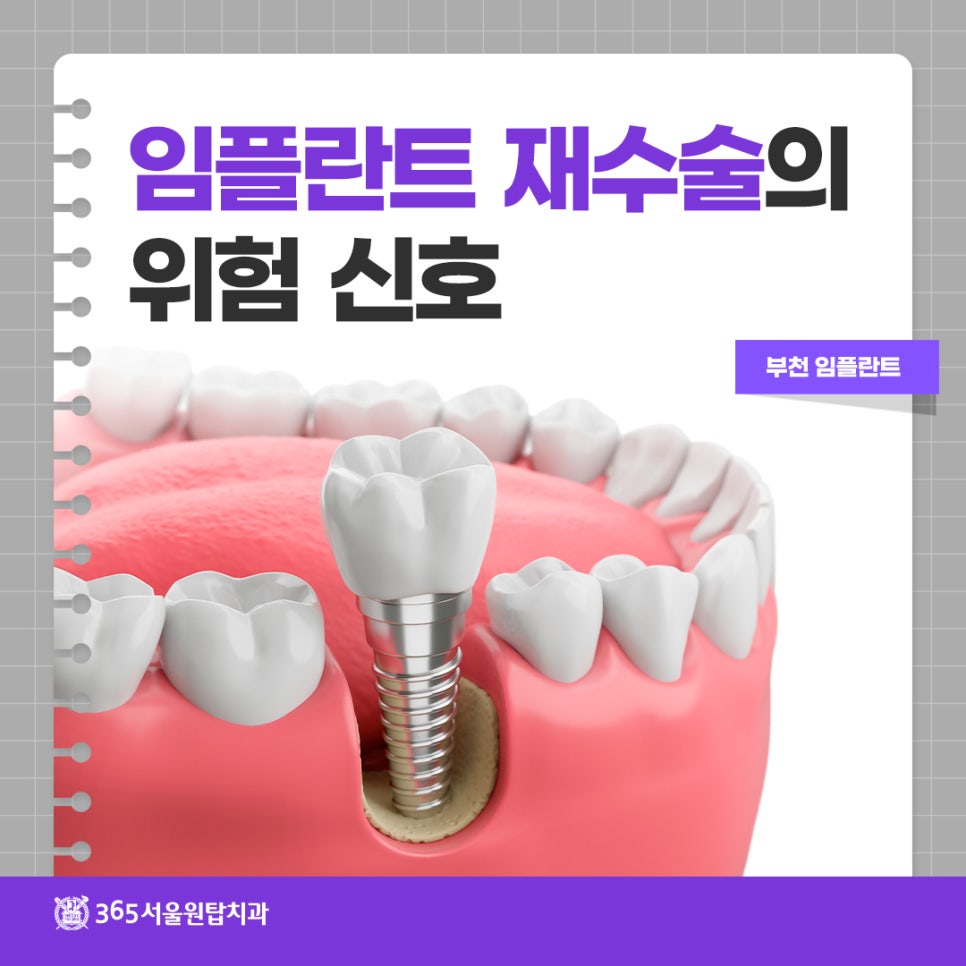
Bucheon Implant - Warning Signs of Implant Reoperation
365 Seoul One Top Dental Clinic - Bucheon Implant
This post was written directly by the chief director for the purpose of providing medical information to patients,
in compliance with Article 56, Paragraph 1 of the Medical Service Act.
-
Unauthorized reproduction and use of this material are prohibited.
-
Side effect notice: After treatment, side effects such as infection, inflammation, soft tissue complications,
bleeding, and sensory abnormalities may occur.
- Dental treatment may cause different side effects depending on the individual’s health condition,
so please be sure to consult with medical staff before making a decision.
Bucheon Implant
📍 365 Seoul One Top Dental Clinic
4th Floor, Dongmyeong M Building, 179 Gangseo-ro, Gangseo-gu, Seoul
Gangseo-gu Dental Clinic – 1 minute on foot from Exit 8 of Hwagok Station