Let me talk about peri-implantitis at a Yeomchang-dong dental clinic
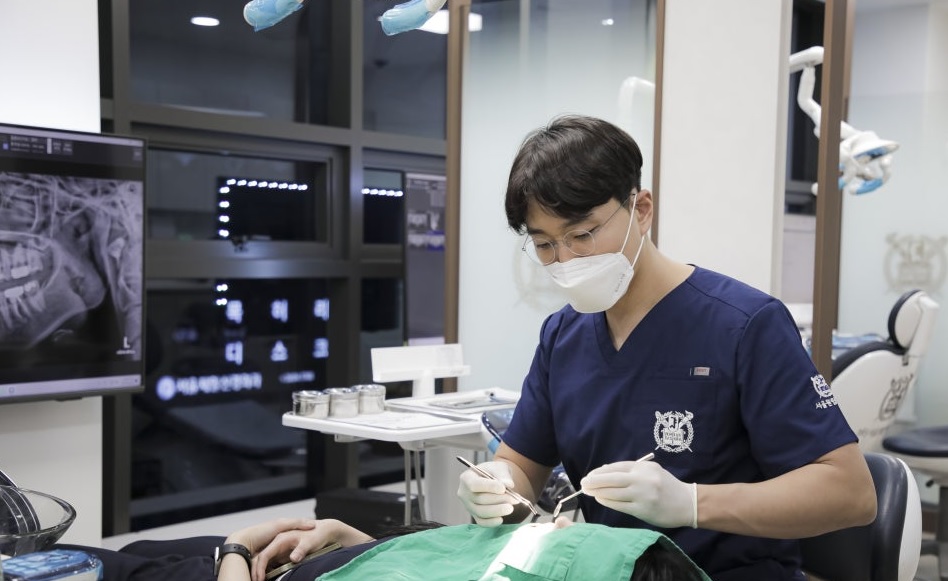 365 Seoul OneTop Dental Clinic Director Kim Geun-il
Hello.
I am dentist Kim Geun-il.
In Yeomchang-dong and other parts of Gangseo-gu,
many people visit our clinic for implant consultations.
Some are having an implant consultation for the first time,
and quite a few come because an implant treated at another clinic,
such as a Yeomchang-dong dental clinic,
has become loose.
If care is neglected after implant treatment,
the first problem to be concerned about is
peri-implantitis.
Peri-implantitis is a disease that develops in the gums
or bone around an implant,
and it is one of the side effects that can occur
after implant placement.
When conducting implant consultations,
after implant consultations, I often meet people who think
implants are exactly the same as natural teeth.
However, there is an important structural difference
between implants and natural teeth:
the presence or absence of the periodontal ligament.
Understanding this difference
is the starting point for preventing peri-implantitis.
So today, together with you,
I would like to talk about the differences
between implants and natural teeth.
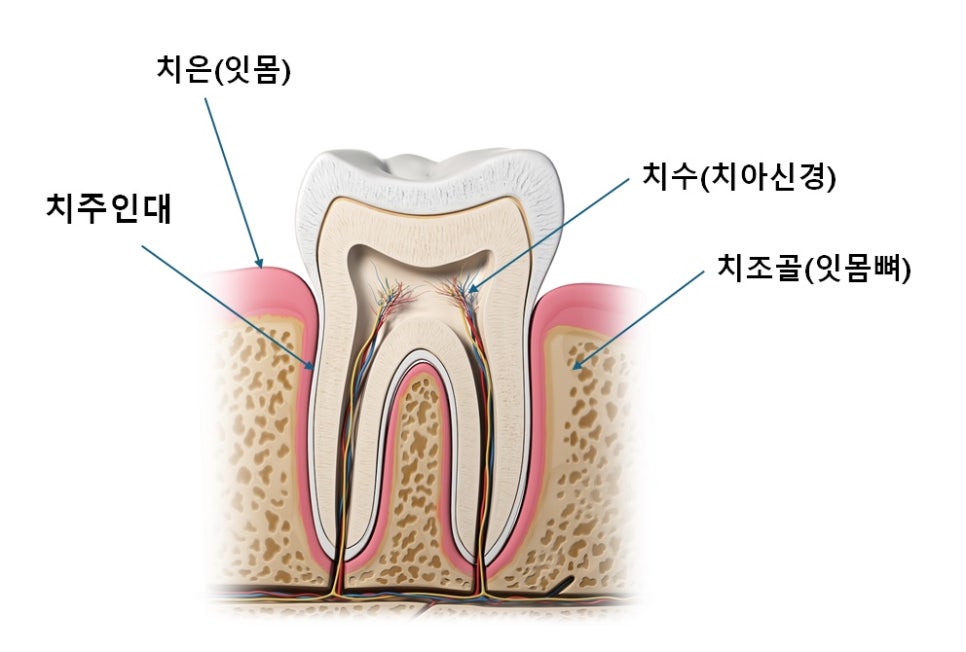 The role of the periodontal ligament in natural teeth is very important. Yeomchang-dong Dental Clinic will explain why.
The role of the periodontal ligament that protects natural teeth
Thanks to the periodontal ligament, natural teeth can quickly detect gum inflammation
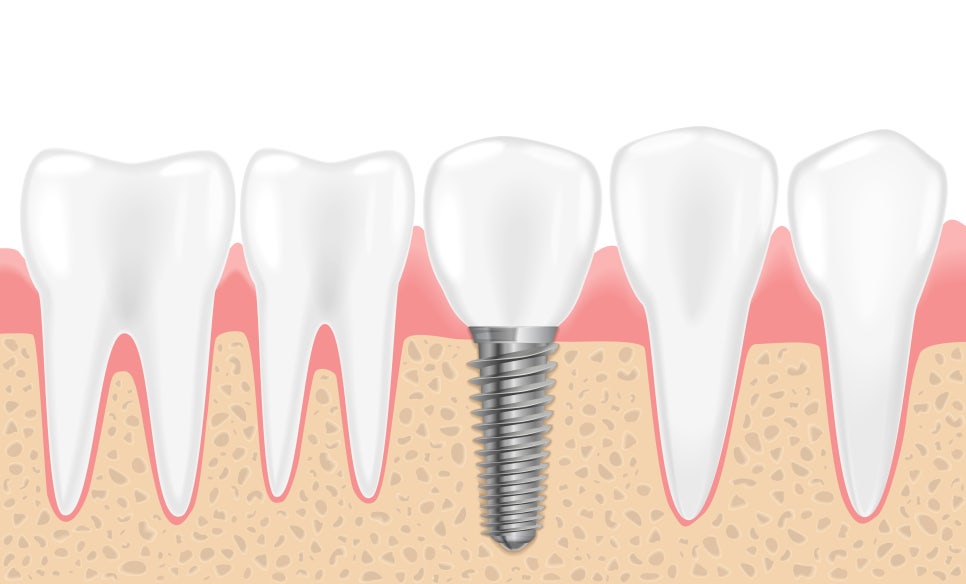
The biggest difference between implants and natural teeth
is the presence or absence of the periodontal ligament.
The periodontal ligament
includes the nerves and blood vessels
around the tooth and gums,
and refers to the tissue that connects
the tooth and the jawbone.
Natural teeth are not fixed directly
to the jawbone;
they are connected through the periodontal ligament.
Are you curious why the periodontal ligament,
which connects the tooth and the jawbone,
exists? The role of the periodontal ligament
can be summarized in three main points below.
• It cushions the impact that occurs while chewing
• It helps defend against inflammation or bacterial invasion
• It sends signals through pain when there is a problem
Thanks to the periodontal ligament,
natural teeth can be detected and managed relatively early
even if inflammation develops around the gums.
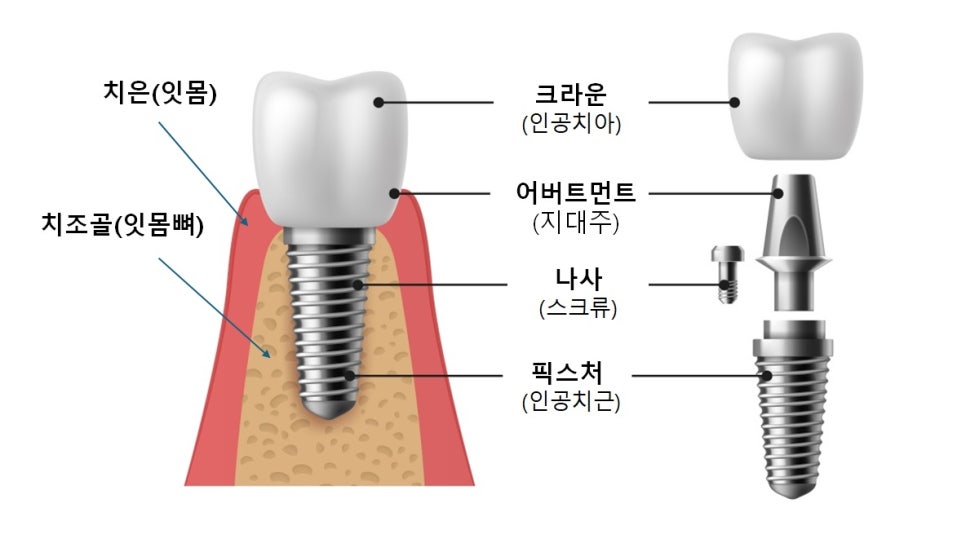 Did you know that implants do not have a periodontal ligament? Let Yeomchang-dong Dental Clinic explain
Implants do not have a periodontal ligament
I will explain the difference between implants and natural teeth at a Yeomchang-dong dental clinic. Please pay attention
As I mentioned, the biggest difference between implants and natural teeth
is the presence or absence of the periodontal ligament.
Because implants do not have a periodontal ligament,
the artificial root (fixture)
is directly connected to the jawbone.
As a result,
if inflammation occurs around the implant,
it can be transmitted directly to the bone without any cushioning effect.
That is why peri-implantitis can progress faster
than periodontal disease in natural teeth,
so more careful management is needed.
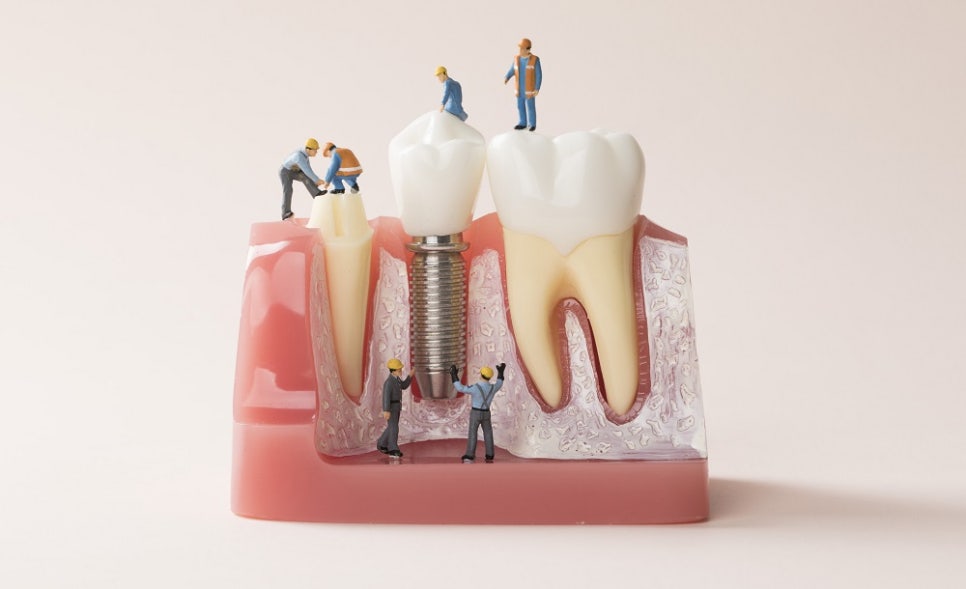 Why early management is important for peri-implantitis
Let Yeomchang-dong Dental Clinic explain why early management is important for peri-implantitis
Why early management is important for peri-implantitis
Let Yeomchang-dong Dental Clinic explain why early management is important for peri-implantitis
Peri-implantitis refers to a condition in which inflammation develops
in the gums and jawbone around an implant.
Peri-implantitis occurs in about 1 to 2 out of 10 implant patients,
and it is known as one of the relatively common side effects
that can occur after implant placement.
In the early stages,
it may appear as gum bleeding, mild swelling, and changes in breath odor,
and there are many cases with little to no pain.
However, by the time symptoms are noticed,
bone loss may already have begun,
and if the condition worsens,
the implant may become loose,
which can lead to a situation where the placed implant
has to be removed.
Therefore, early detection through regular checkups is important
for peri-implantitis.
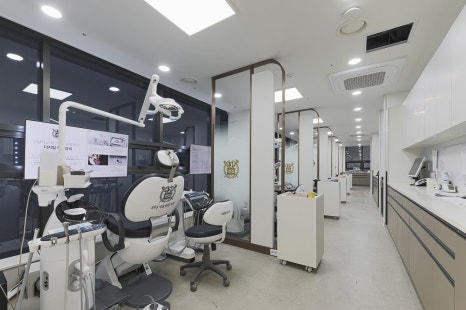
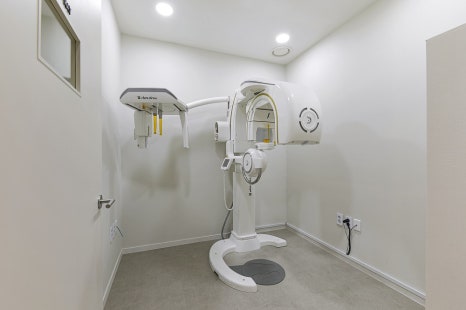 The best way to prevent peri-implantitis is to visit the dental clinic for regular checkups.
How to prevent peri-implantitis
The methods for preventing peri-implantitis are not difficult. Yeomchang-dong Dental Clinic will guide you
To prevent peri-implantitis,
we emphasize the importance of aftercare following the procedure.
You may already think this is the answer you know,
but that is exactly the correct answer!
• Regular dental checkups
• Checking the condition of the gums around the implant
• Proper tooth brushing and use of auxiliary oral care products
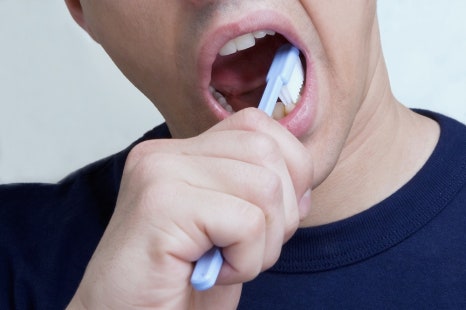
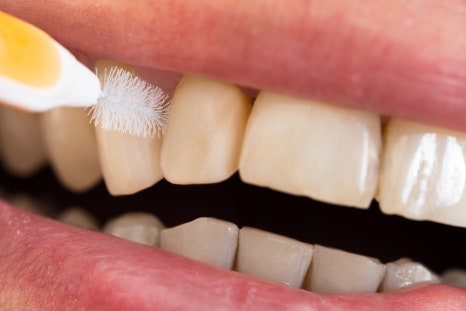 Proper tooth brushing and the use of oral care aids such as interdental brushes are very helpful in preventing peri-implantitis.
This basic care
is very helpful in making implants last longer.
Implants, care changes when you understand the structure
Let me tell you at Yeomchang-dong Dental Clinic about understanding tooth structure and preparing for peri-implantitis
Implants are called the second set of teeth,
and although they are the best treatment
for replacing natural teeth,
they are not structurally the same
as natural teeth.
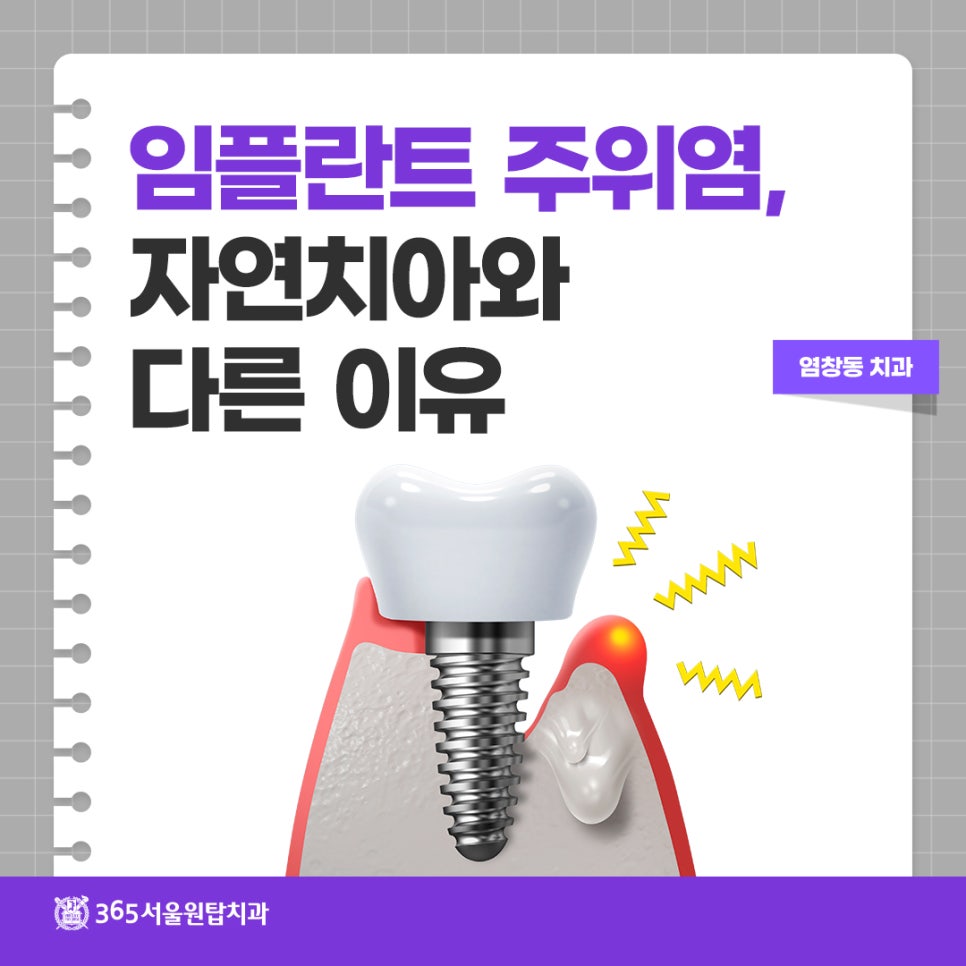
Especially the fact that there is no periodontal ligament
is the most important factor
we need to pay attention to in peri-implantitis management.
Even after implant treatment,
if regular checkups and consistent care continue,
the implant can be used more stably.
Understanding small differences
is the first step in protecting the lifespan of an implant.
Today, I covered a slightly more technical topic,
and I hope it was of some help
to your implant care.
This was dentist Kim Geun-il.
Thank you.
 Yeomchang-dong Dental Clinic _ Peri-implantitis
This post was written directly by the chief director for the purpose of providing medical information to patients, in compliance with Article 56, Paragraph 1 of the Medical Service Act.
- Notice of side effects: After treatment, side effects such as infection, inflammation,
disorders of soft tissue, bleeding,
and sensory abnormalities may occur.
- Dental treatment may produce different side effects depending on each individual's health condition,
so please be sure to consult with medical staff before making a decision.
- Unauthorized reproduction and use of this material is prohibited.
Yeomchang-dong Dental Clinic
📍 365 Seoul OneTop Dental Clinic
4F, Dongmyeong M Building, 179 Gangseo-ro, Gangseo-gu, Seoul
Dental clinic near Yeomchang-dong
1 minute on foot from Exit 8 of Hwagok Station