Ujangsan Station Dental Clinic: What to Do When an Implant Prosthesis Comes Loose
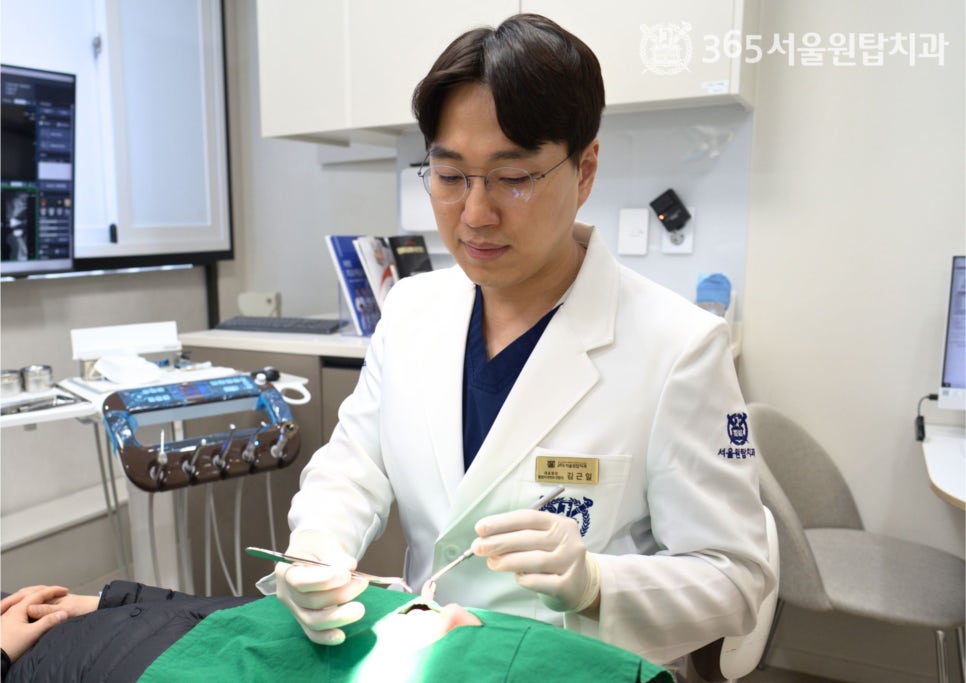
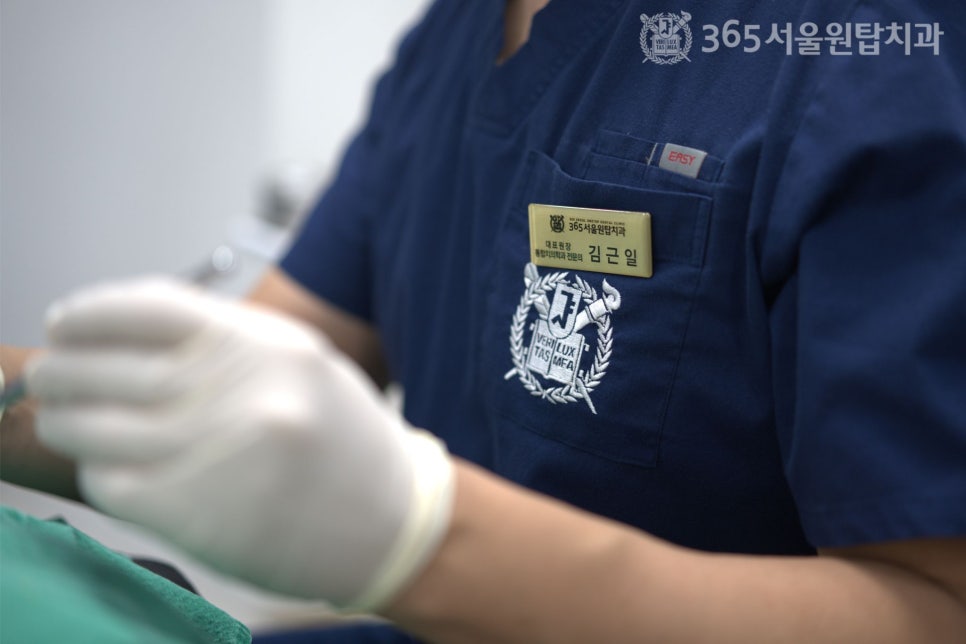
365서울원탑치과 Director Kim Geun-il
Hello.
I am Kim Geun-il,
Director of 365서울원탑치과.
A few years ago,
you may have gone through a difficult implant procedure at considerable expense,
only to find that the implant that had been perfectly fine in your mouth
suddenly becomes loose one day
or simply falls out, leaving you feeling alarmed.
Could something have gone wrong with the implant surgery?
Do you need to start over from the beginning?
You may be searching websites on the internet
because you are feeling anxious.
However, just because an implant prosthesis is loose or has fallen out
does not necessarily mean that the surgery
must be repeated from the beginning.
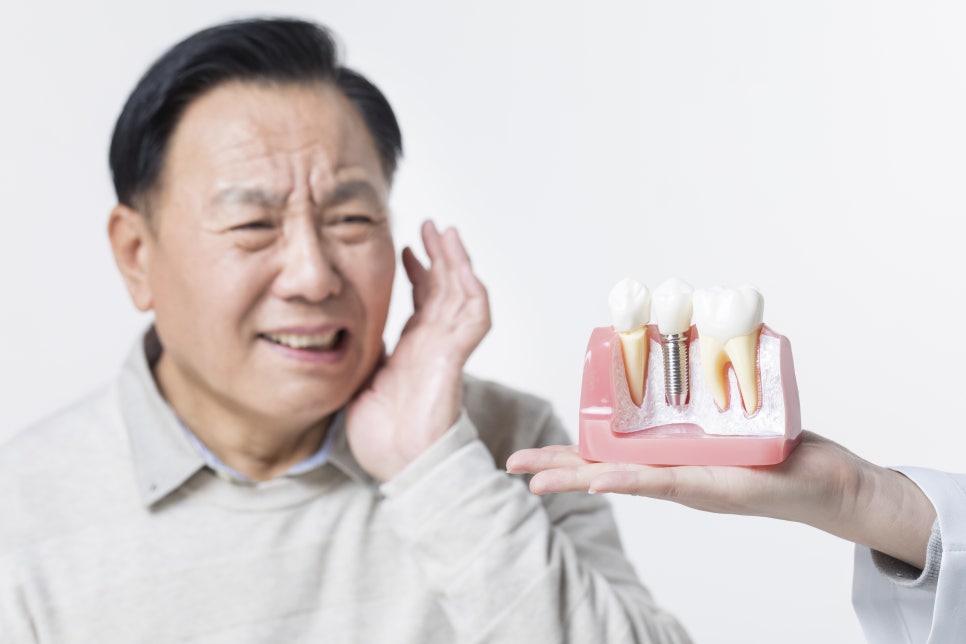
What are the common reasons an implant becomes loose or falls out?
Even when the sensation of looseness is the same,
the appropriate response can vary completely depending on the cause.
- When the implant connecting screw has become loose
This is usually the most common cause among symptoms of a loose implant,
and it can be resolved quickly when you visit a dental clinic.
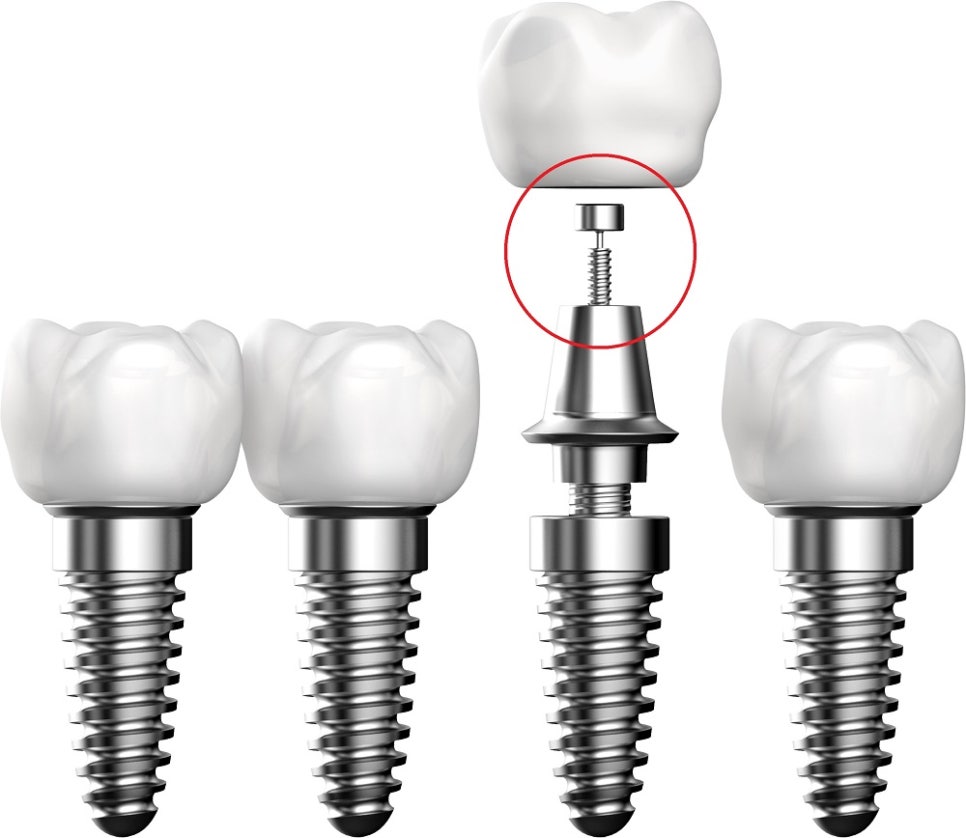
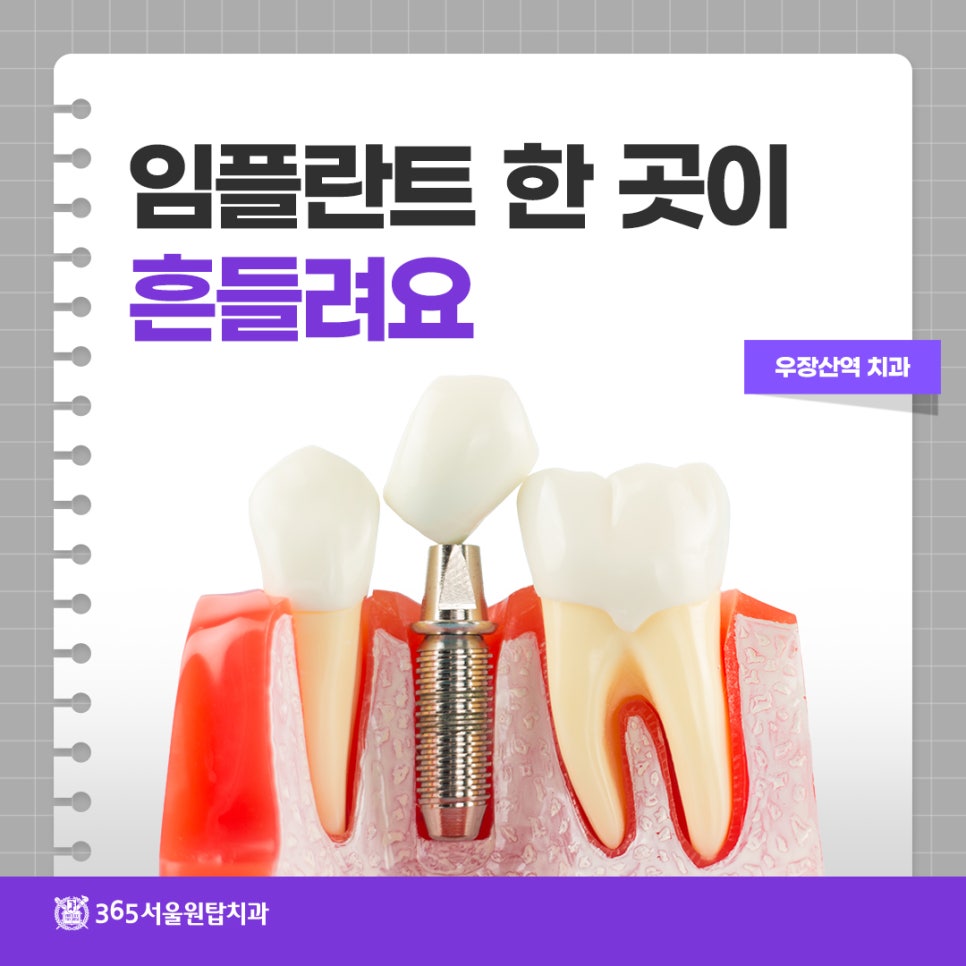
An implant connects the root placed in the bone
with the visible head, or prosthesis, using a screw.
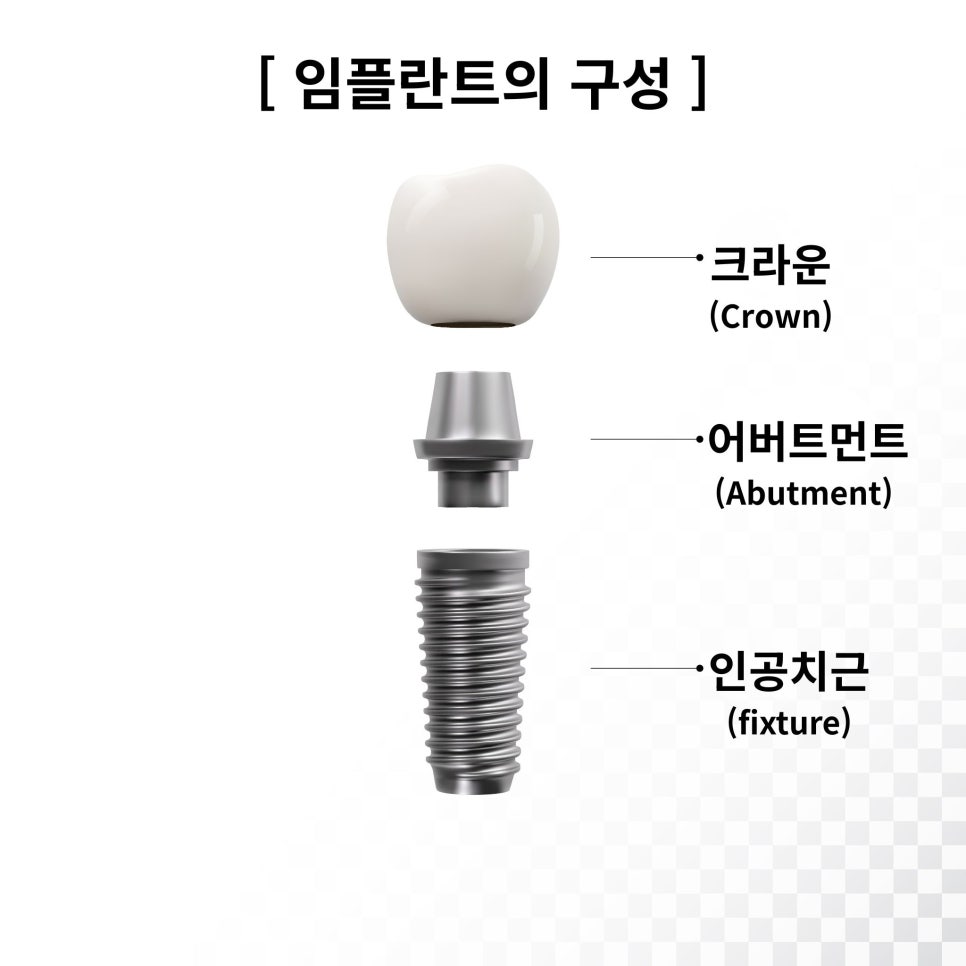
An implant consists of three main parts:
the artificial tooth root, abutment, and crown.
These parts are connected to one another by screw mechanisms.
When continuous force is applied while chewing,
these screws may gradually loosen.
The issue can often be resolved simply by tightening the screw again at a dental clinic,
so you can visit without excessive worry.
- When the adhesive securing the prosthesis (crown)
has dissolved
Over time, medical adhesive may dissolve in saliva and be washed away,
creating a gap.
If you eat while it is in this condition,
the prosthesis (crown) may suddenly become loose
or pop out.
If the prosthesis itself is determined to have no major problem,
the existing adhesive can be thoroughly removed
and the prosthesis can simply be bonded again.
A situation requiring you to visit a dental clinic as soon as possible
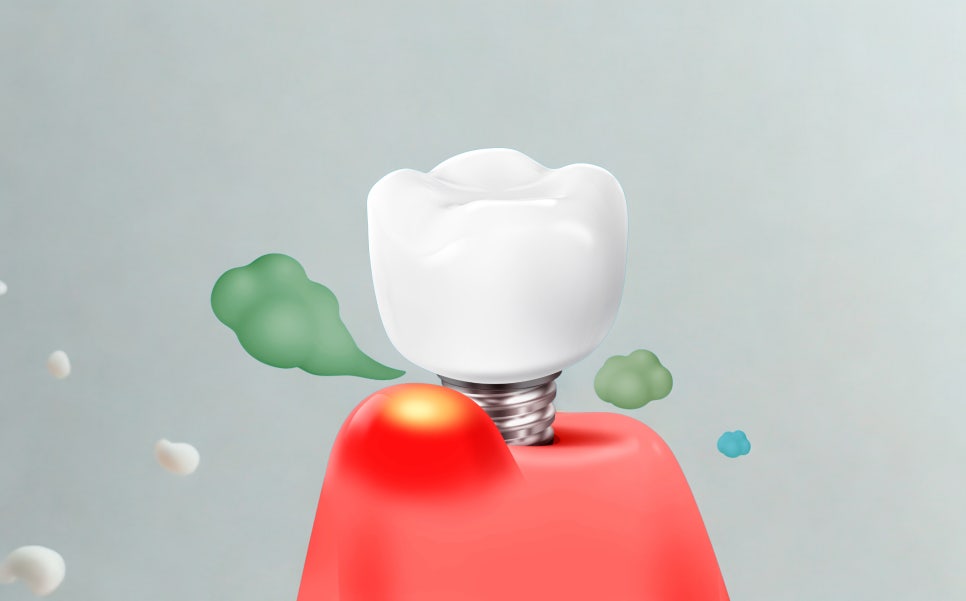
- Peri-implantitis, in which the bone around the implant deteriorates
In this case,
treatment is needed as soon as possible.
Unlike natural teeth, implants do not have nerves
or periodontal ligaments.
As a result, there may be little to no pain
until the bone has deteriorated.
If bleeding or swollen gums recur,
bad breath becomes severe,
or the entire implant feels loose,
the inflammation may already be serious.
In the worst case, the contaminated implant may need to be removed
and replacement implantation may need to be considered.
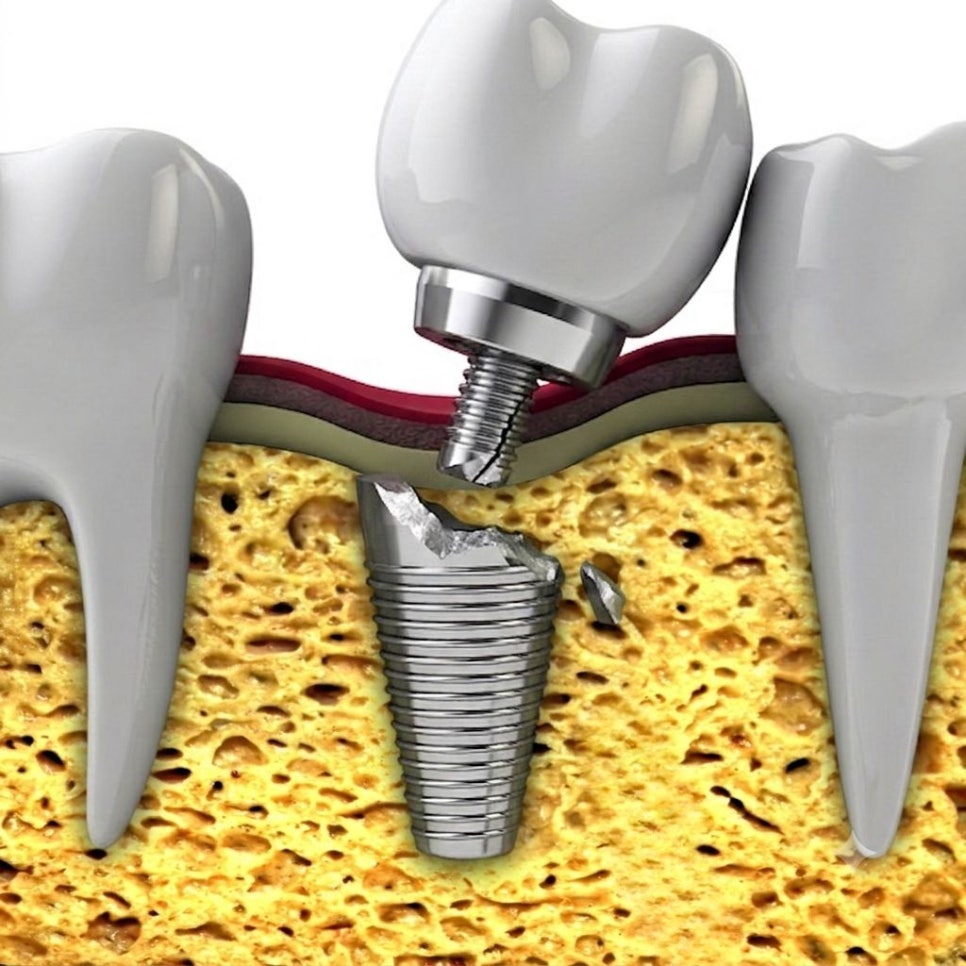
- Fracture of the internal screw or the “root” (fixture) within the bone
This refers to a case in which not only the screw has loosened,
but the internal post or artificial tooth root within the bone has fractured.
Implants are made of titanium and do not break easily.
However, if the implant is repeatedly subjected to significant force
from eating hard foods,
clenching your teeth while sleeping,
or grinding your teeth,
the implant may develop a crack or fracture.
If left untreated, the fractured titanium surface may also affect the surrounding jawbone.
Therefore, even if it does not hurt,
do not chew on that side under any circumstances
and visit a dental clinic immediately.
A hidden reason not to miss your implant checkup
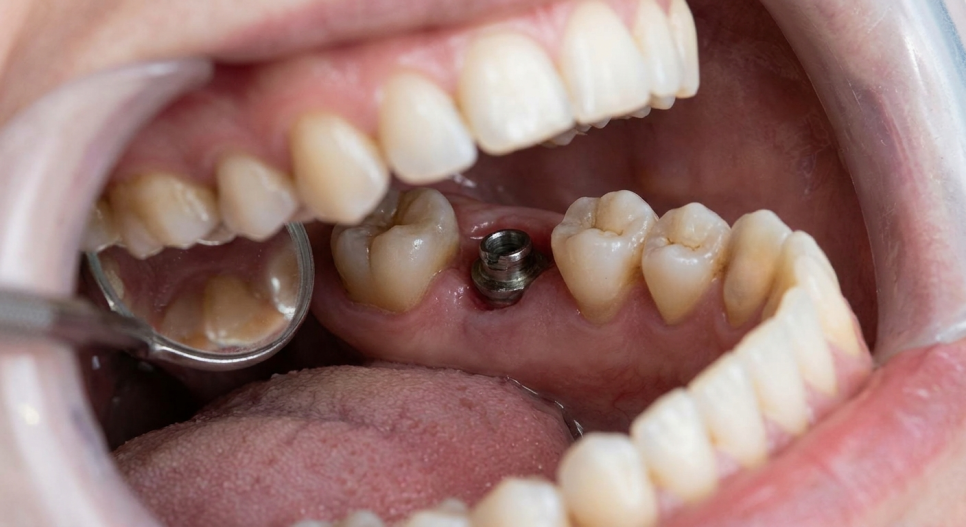
Sometimes, after a prosthesis falls out,
some patients leave it untreated because
it does not hurt right away
or
because they think, “I’m busy, so I’ll go later.”
However,
if the crown remains missing for a long time,
the surrounding natural teeth may gradually shift,
which can change the space available for the implant.
In such cases, the prosthesis may need to be modified
or remade,
which can result in an unexpectedly longer treatment period.
If your prosthesis has fallen out,
keep it safely in a zip-top bag so you do not lose it.
Before the surrounding teeth begin to move,
visit a dental clinic as soon as possible—no later than within a week.
This is the best way to protect both your time and your implant.
When an implant prosthesis comes loose or falls out, do not do the following.
• ❌ Do not try to put the fallen prosthesis back in by hand.
It may wear down or deform the internal connection
if you force it into place.
• ❌ Do not repeatedly touch the loose area
with your finger or tongue.
External stimulation may cause
the internal screw to loosen further.
• ❌ Never throw away the fallen prosthesis.
If it has not been deformed, treatment may be completed quickly
by bonding it again,
which can also save treatment time and cost.
※ Many people wrap it in tissue and accidentally throw it away,
so be sure to store it in a small container or zip-top bag.
For implants, as much as the surgery itself,
“how you respond and care for them afterward”
determines their longevity.
Even when the symptom is the same—a feeling of looseness—
the causes can vary widely,
from a minor case involving dissolved adhesive
to a case in which the teeth have shifted
and a new prosthesis must be made.
If you notice even very slight looseness
or your prosthesis has fallen out,
do not leave it untreated.
For your safety, visit a dental clinic promptly.
This was dentist Kim Geun-il.
Thank you.
📍 365서울원탑치과의원
4th Floor, Dongmyeong M Building, 179 Gangseo-ro, Gangseo-gu, Seoul
Ujangsan Station Dental Clinic / Hwagok Station Dental Clinic / Gangseo-gu Dental Clinic
1-minute walk from Exit 8 of Hwagok Station