Hello.
I am Kim Geun-il,
Director of 365서울원탑치과.
"Doctor, at some point after getting my implant,
it started to feel like food was gradually getting stuck.
Could there be a problem with the implant that was treated?"
After successfully completing implant surgery,
patients who were happy that all they had left to do
was enjoy comfortable meals
sometimes tell me, several years later,
about symptoms they suddenly notice
while sitting cautiously in the treatment chair.
A new tooth has replaced the missing tooth,
so it may seem as though everything should be comfortable,
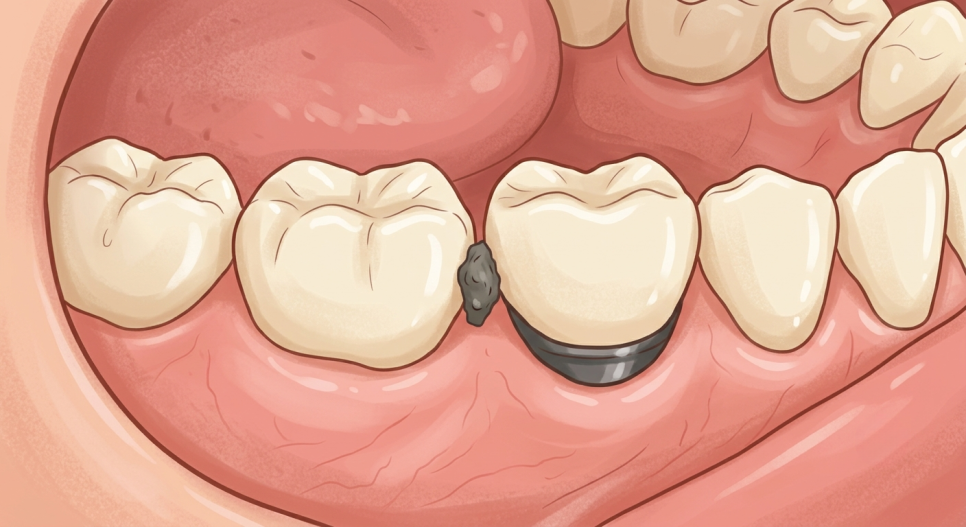
but once you become aware of food getting stuck little by little
every time you eat,
it can be extremely uncomfortable.
You may even have been frightened that
the implant had cracked
or had been placed incorrectly.
Today, I would like to explain
why food can get stuck after implant placement,
and how to resolve and manage the problem
when this happens.
Food getting stuck after implant placement can be a common occurrence.
You may have secretly worried
that something had gone wrong with the surgery.
It is not because the surgery was performed incorrectly.
It may be a natural occurrence caused by
the structure of our mouths
and the “difference between natural teeth and implants.”
There are three main reasons.
Natural teeth move, but implants are fixed in place.
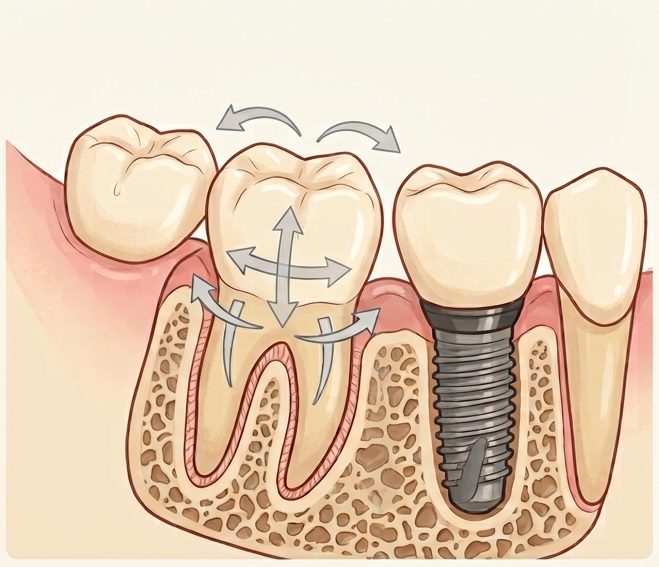
When we chew food,
our natural teeth move slightly back and forth
to distribute the impact.
However,
implants are firmly fixed to the bone
and do not move at all.
The issue is that when you chew,
the surrounding natural teeth may shift slightly
toward the implant,
causing a tiny gap to open temporarily.
Food can slip right into that gap.
Natural teeth gradually move forward as we age. (Mesial migration)
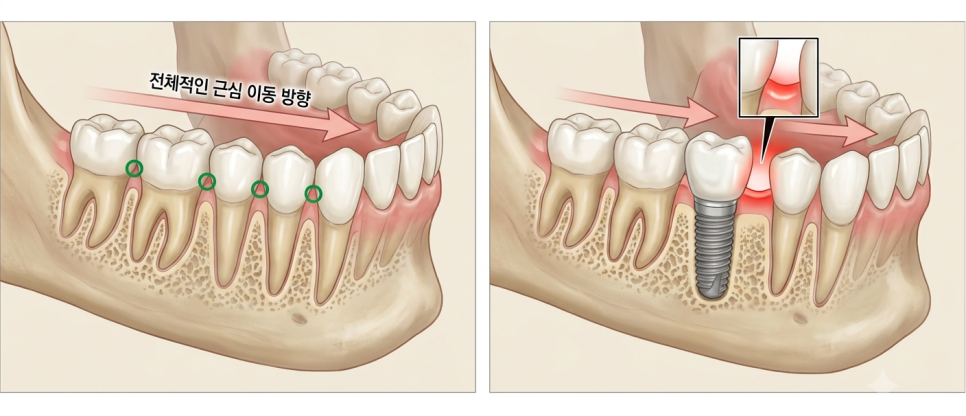
As people get older, all of their teeth
have a tendency to shift slightly forward.
This is called “mesial migration.”
Natural teeth move forward together,
so gaps do not easily form between them.
However, an implant stays firmly in place like a post,
so if the front teeth gradually move forward,
a gap may inevitably develop between them.
The difference in gum shape can also have an effect.
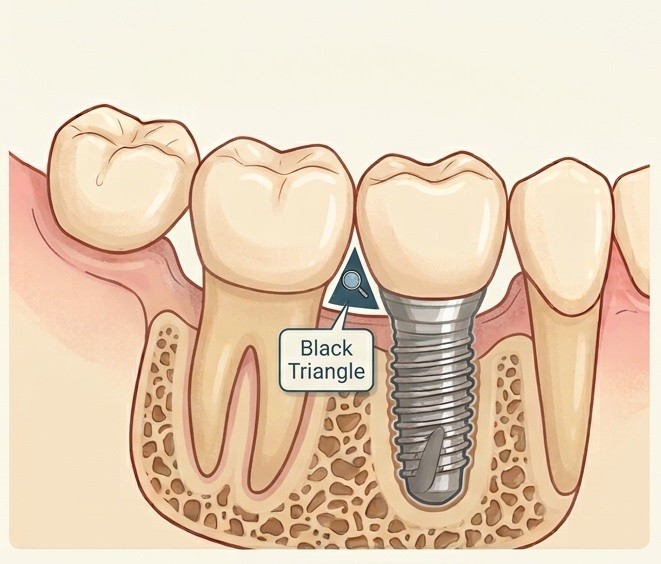
The gums around natural teeth
are filled in with a teardrop-shaped structure (the interdental papilla),
which helps prevent food from getting stuck.
By contrast, in an area where a tooth was missing,
the gum and jawbone have often already receded.
Even after an implant is placed,
the gums may not completely fill in as they did around the original natural tooth,
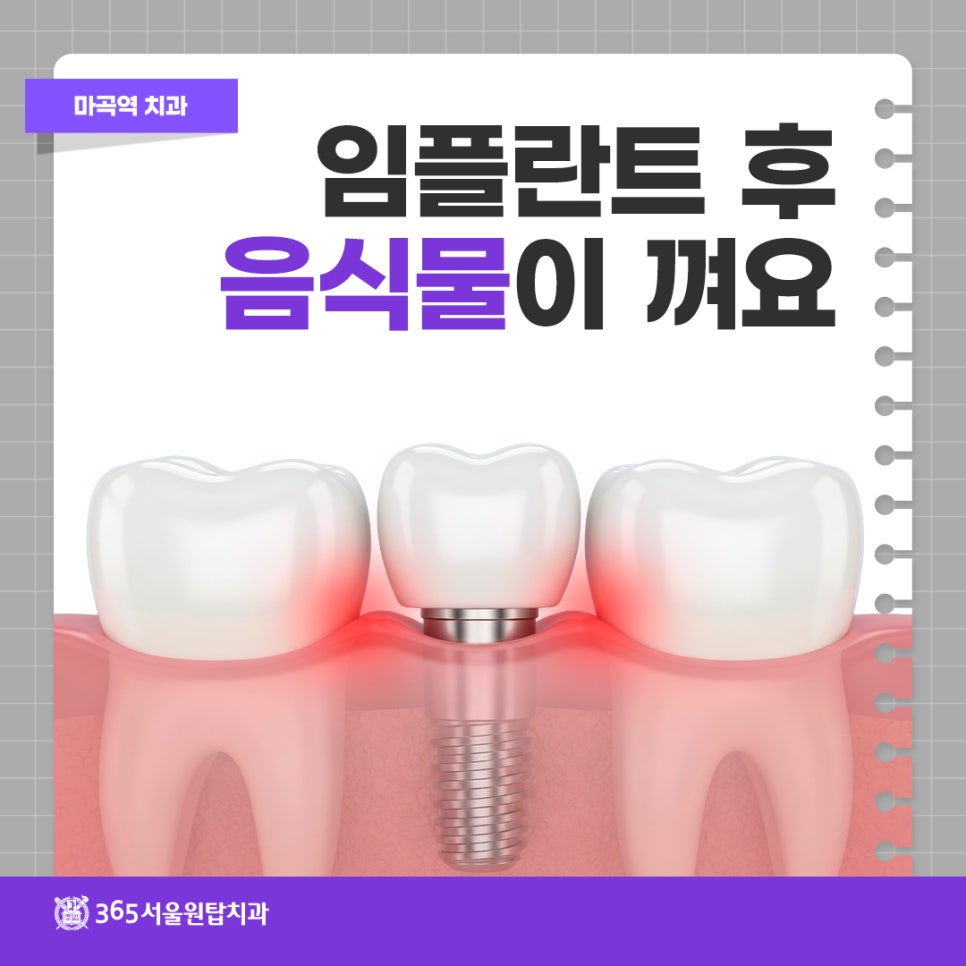
making it easy for a triangular empty space
(a Black Triangle)
to form between the teeth.
How can food getting stuck around an implant be resolved?
If the discomfort is severe enough to make daily life stressful,
you should visit a dental clinic.
Depending on the condition, the following options may be available.
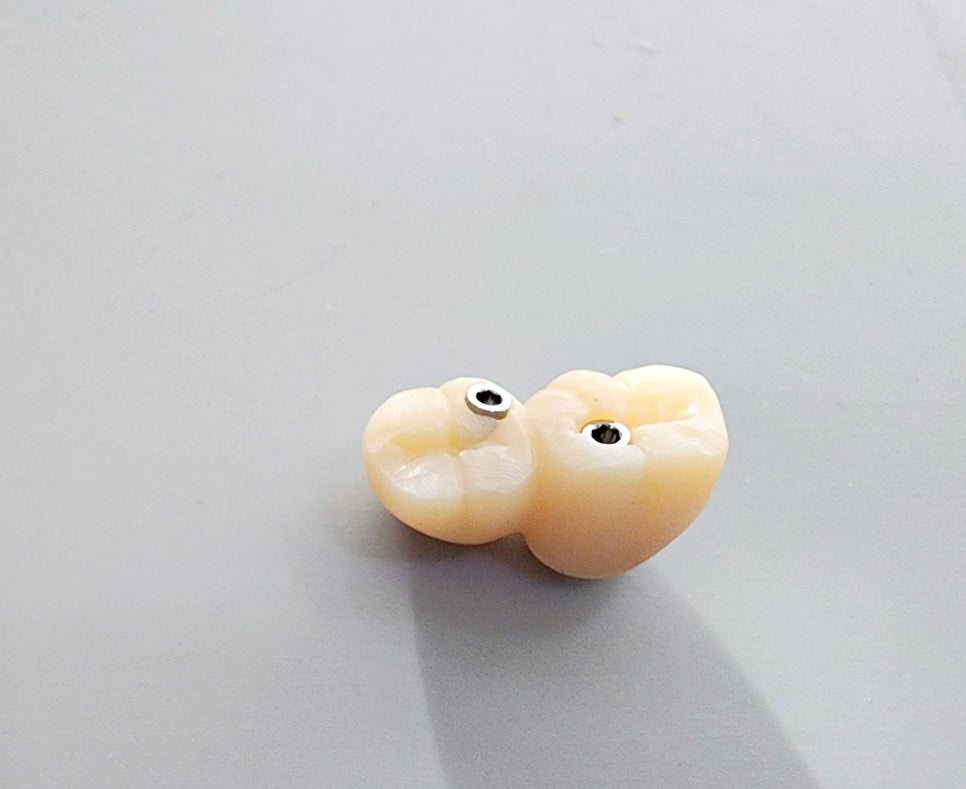
Modification or remaking of the implant crown
If the gap between the implant and the front tooth is too wide,
the implant crown can be removed
and modified by a dental laboratory to fill the gap.
Alternatively, a new crown can be made with a fuller,
snugger shape that matches the current alignment of the teeth.
This may significantly reduce the discomfort.
Treatment of the front tooth (composite resin/inlay)
If there is no problem with the implant restoration
but a gap has formed because the front natural tooth is worn
or has an unsuitable shape,
composite resin or an inlay may be used on the back of the front tooth
to fill the gap.
However, because we prefer methods that do not damage natural teeth whenever possible,
we do not automatically perform this treatment first.
How should an implant restoration be managed at home?
Even when the restoration fits tightly,
it may be difficult to completely prevent small amounts of food
from getting stuck due to the structure of the area.
There are actions you should never take
and care that you should be sure to perform.
❌ Never use a toothpick!
Using a toothpick from a restaurant to poke at the area
can cause the gums to recede
and is a shortcut to making the gap wider.
In addition, a sharp, pointed toothpick
can injure the gums around the implant
and cause inflammation.
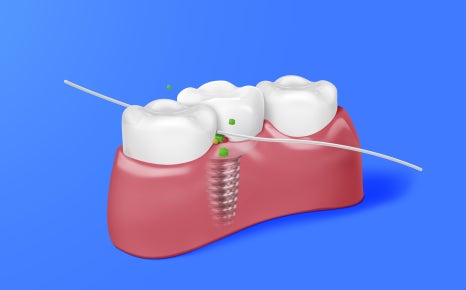
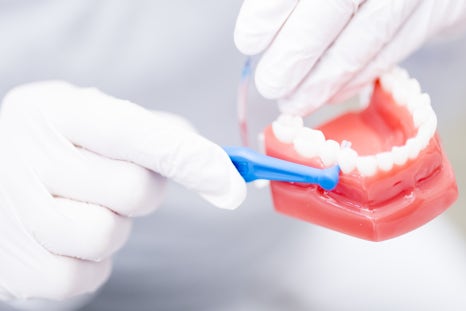
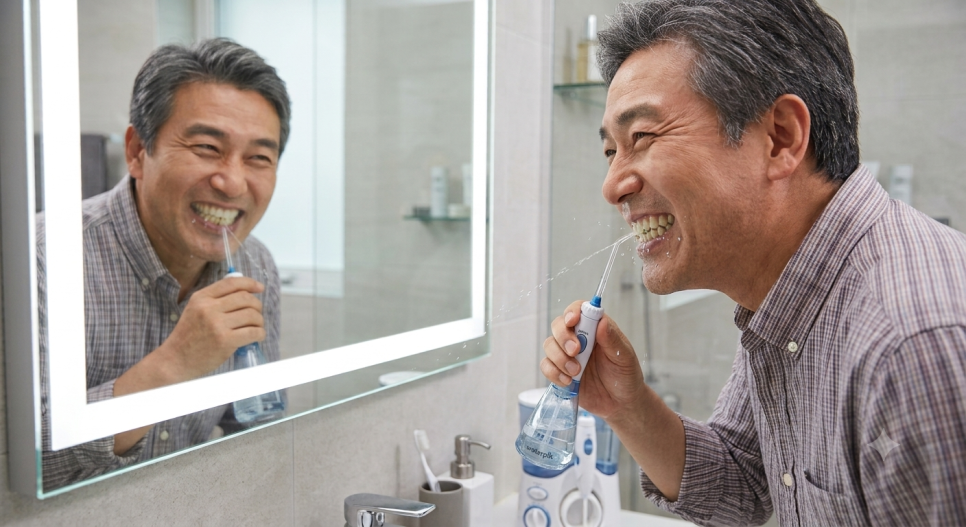
⭕ Use dental floss, interdental brushes, and Waterpik (oral irrigator)
For patients with implants,
dental floss, interdental brushes, and Waterpik are essential.
We recommend asking your dentist to suggest an interdental brush
that matches the size of your gap
and gently cleaning the area after every meal.
However, if cleaning after every meal is difficult,
we advise you to make sure to clean between your teeth thoroughly
before going to bed.
Implants require ongoing care!
An implant treatment does not end when the implant is placed.
Its longevity depends on “how you care for it from that point onward.”
If food getting stuck is left untreated,
it can progress to a periodontal disease called “peri-implantitis,”
which may cause the implant that was carefully placed
to become loose.
If you experience discomfort, do not simply tolerate it
or try to solve it on your own with a toothpick.
Please visit us comfortably at any time.
We will carefully check the condition of your restoration
and help you use your valuable implant
comfortably for as long as possible.
I hope you have a day filled with healthy smiles.
This was dentist Kim Geun-il.
Thank you.
📍 365서울원탑치과의원
4th Floor, Dongmyeong M Building, 179 Gangseo-ro, Gangseo-gu, Seoul
Magok Station Dentist / Gangseo-gu Dentist / Hwagok Station Dentist
1-minute walk from Exit 8 of Hwagok Station