Gangseo-gu Dental Implants: Why Treatment Duration Differs Between Upper-Jaw and Lower-Jaw Implants
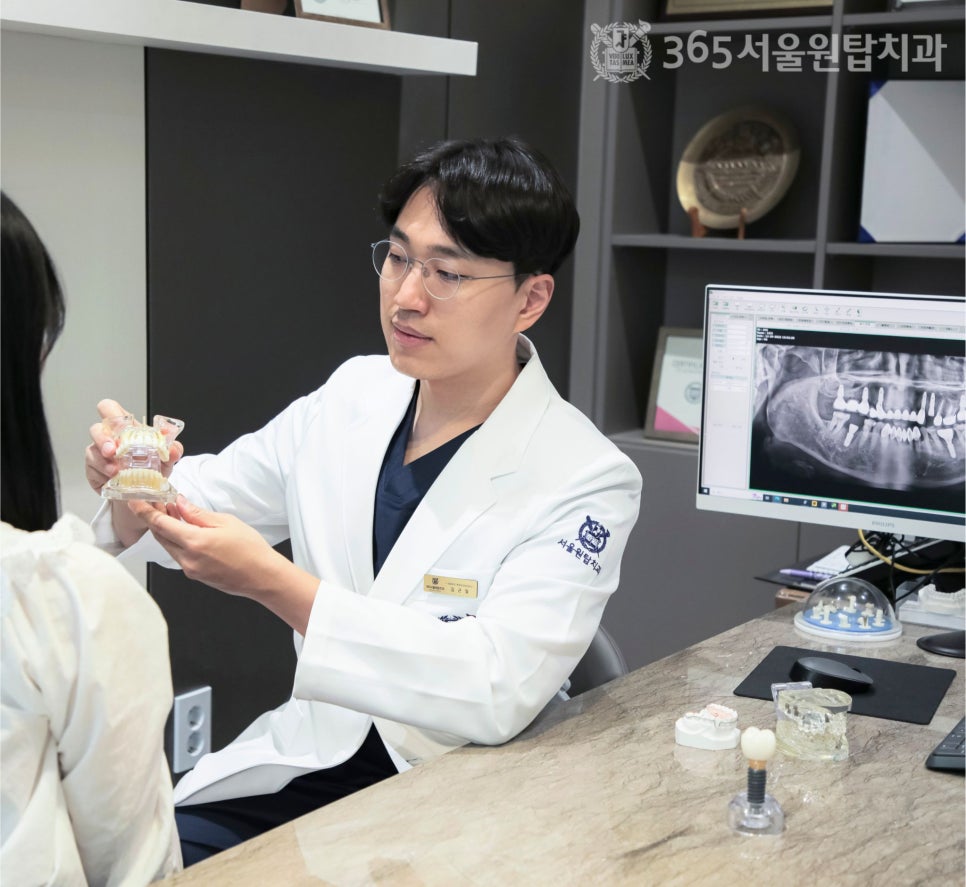
Director Kim Geun-il of 365서울원탑치과
Hello.
I am Kim Geun-il,
Director of 365서울원탑치과.
One of the questions I receive most often during implant consultations is as follows:
Doctor,
My friend had an implant placed
and finished treatment in just three months,
so why does mine take six months?
It is perfectly understandable to be curious when the treatment period differs even though the implants are the same.
The reason for the difference in treatment duration
is not that the treatment was performed incorrectly,
but rather the difference in the anatomical structures
of the upper and lower jaws.
Let me explain the essential time required for an implant to bond firmly with the bone in an easy-to-understand way.
Question 1) What is the difference between the upper and lower jaws?
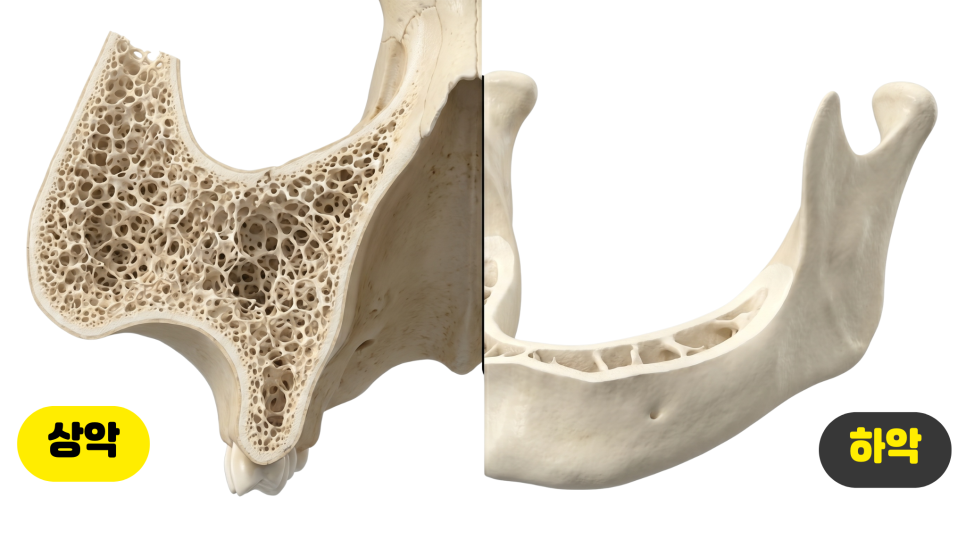
The biggest difference is bone density.
The lower jaw is made of very hard bone, similar to marble, to withstand chewing forces, so it provides good initial stability.
In contrast, the upper jaw consists of bone with many porous areas inside, similar to basalt.
Just as a nail will wobble when driven into soft wood,
an upper-jaw implant requires a longer waiting period until the bone fills in densely around the implant post.
Question 2) Why does treatment take longer when the maxillary sinus is involved?
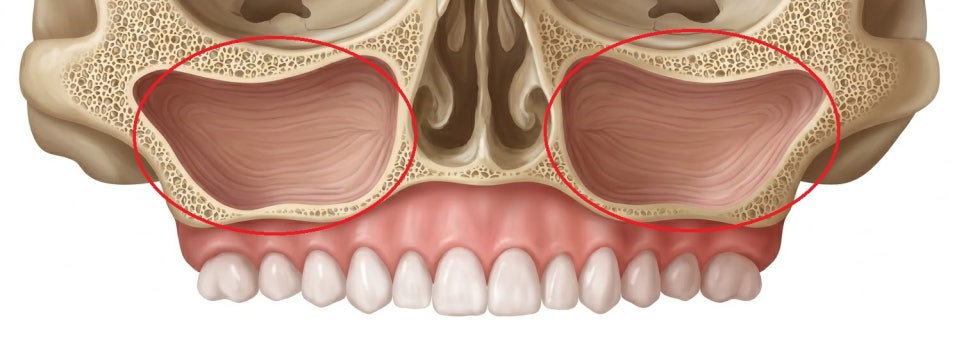
Above the upper molars is an empty space called the maxillary sinus, marked by the red circle.
As people age or as more time passes after tooth loss,
this space descends and the bone becomes thinner.
In such cases, a sinus lift, which fills in the insufficient bone, is essential.
Because additional time is needed for the grafted bone to fully harden into the patient's own bone, the treatment period becomes longer.
Question 3) Does the amount of blood supply also affect treatment duration?
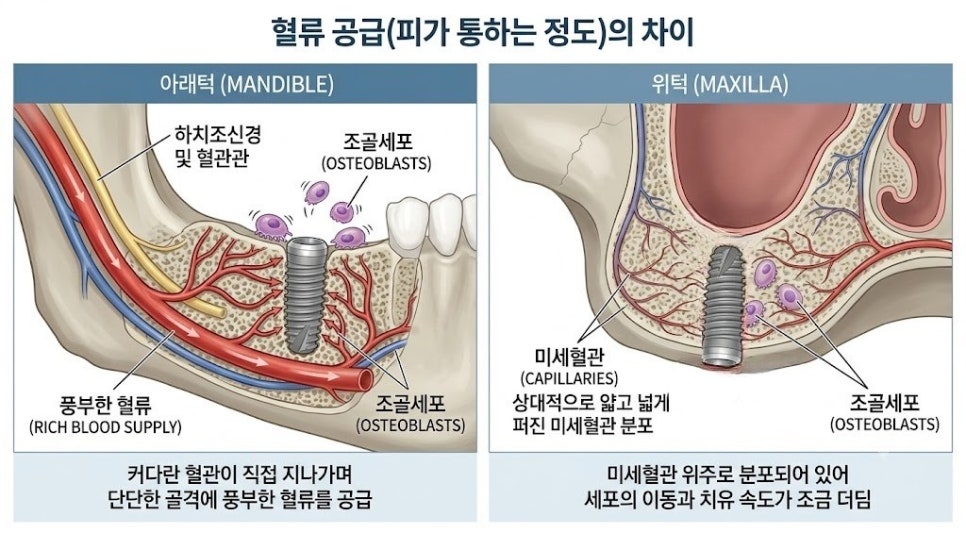
For the bone to bond firmly, osteoblasts in the blood must be active.
The lower jaw has major blood vessels running through it, so its blood flow is smooth.
However, the upper jaw is relatively more reliant on a network of small blood vessels, so cell movement and the healing process are relatively slower.
In other words, healing in the upper jaw progresses more slowly because of the body's blood-flow environment.
Question 4) Can upper-jaw implant treatment be completed more quickly?
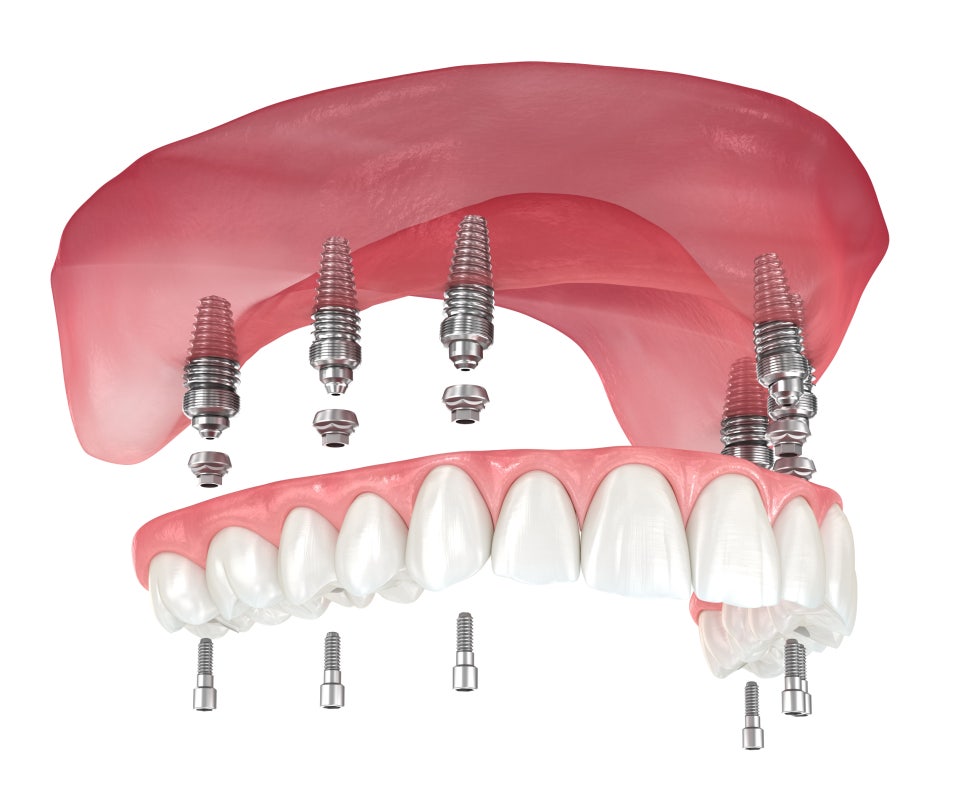
The key to implants is not “fast completion,”
but “durability that lasts a lifetime.”
Therefore, there is no need to feel rushed simply because upper-jaw implant treatment takes longer.
If an implant placed in soft bone is used too soon,
the bone and implant post may not bond properly,
creating a significant risk of the implant becoming loose within a short time.
Based on the data, allowing sufficient time for the bone cells to bond completely is the safest shortcut to preventing complications and repeat surgery.
Question 5) How can I determine the optimal treatment period for me?
Every patient has different bone density and oral conditions.
As medical technology has advanced, digital equipment can now be used to precisely measure a patient's bone condition before implant surgery.
We check whether the patient's bone can adequately support the implant
and determine the safest timing for placing the prosthesis accordingly.
A quick comparison of upper-jaw vs. lower-jaw implants
| Category | Upper-jaw implants | Lower-jaw implants |
|---|
| Average treatment period | Approximately 5–6 months (additional time if bone grafting is required) | Approximately 2–3 months |
| Bone characteristics (density) | Soft and porous (sponge/basalt-like) | Dense and hard |
| Anatomical features | Higher frequency of bone grafting because of the maxillary sinus (empty space) | Mainly hard cortical bone, with major blood vessels passing through |
| Key point | “Wait sufficiently until the bone becomes firm” | “Complete treatment quickly based on strong initial stability” |
I hope this has helped answer some of your questions about why implant treatment periods differ.
While treatments that can be completed quickly are certainly important,
I always provide care with the patient's next 10 years in mind.
I will continue to be dentist Kim Geun-il,
providing care while always keeping the fundamentals in mind.
Thank you.
📍 365서울원탑치과의원
4th Floor, Dongmyeong M Building, 179 Gangseo-ro, Gangseo-gu, Seoul
Gangseo-gu dental implants / Hwagok Station dentist / Gangseo-gu dentist
A 1-minute walk from Exit 8 of Hwagok Station