365 Seoul One Top Dental Clinic, Director Kim Geun-il
Hello.
I am Kim Geun-il,
Director of 365 Seoul One Top Dental Clinic.
When I talk with patients in the treatment room,
the way each person describes their tooth pain
is remarkably different.
Some people are startled by cold water,
while others complain of pain so severe
when eating hot stew
that they have to put down their spoon.
“Doctor,
my molar becomes so sensitive when I drink cold water
that it is difficult to bear.
Doctor,
my tooth throbs and hurts unpleasantly
when I eat hot soup.
Is it okay to just leave it this way?”
Just by hearing about this “difference in pain depending on temperature,”
dentists can predict what kind of problem
the nerve inside the gums may currently have.
I will explain the scientific difference
between pain triggered by cold and hot water,
and whether it is really okay to leave the condition untreated.
“Sensitive” when drinking cold water—there is still an opportunity.

Temporary sensitivity or a sharp twinge
when eating cold food
is one of the most common types of pain
seen in dental clinics.
This means that the nerve inside the tooth
is still very much alive
and is responding sensitively to external stimulation.
- Main causes
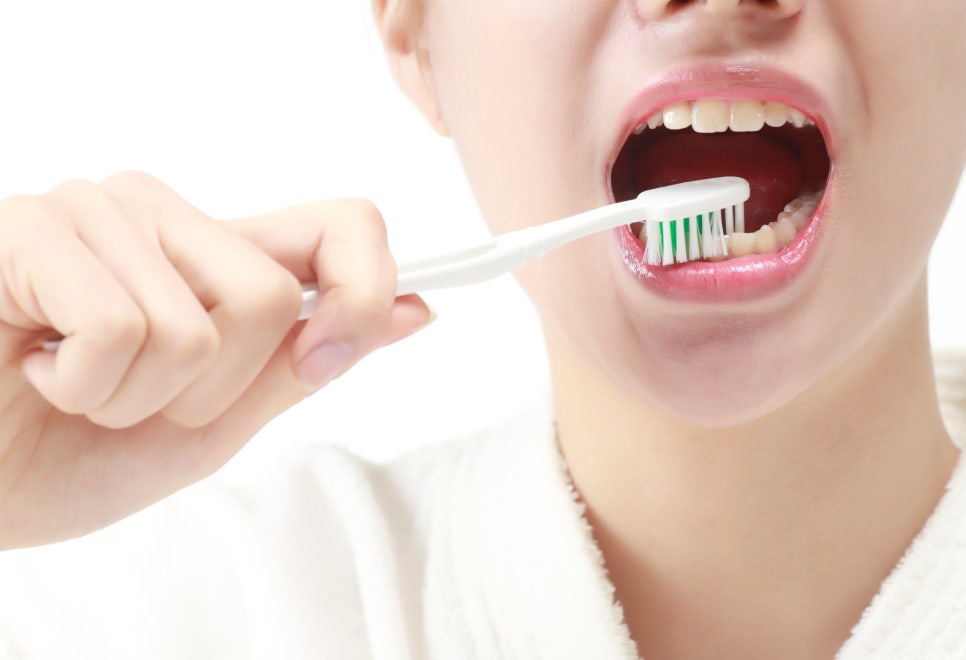
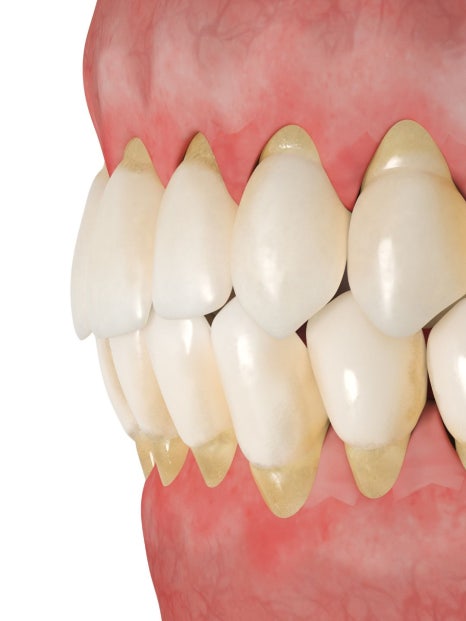
Incorrect brushing or
clenching habits can cause cervical abrasion,
in which the neck of the tooth becomes worn away;
early-stage decay limited to the outer surface (enamel);
or temporary root exposure immediately after scaling.
- Condition of the nerve
The tooth is sensitive only temporarily when stimulated,
and once the cold water disappears from the mouth,
the pain usually goes away within 1–2 seconds.
Fortunately, in these cases,
the tooth nerve still has enough ability to recover on its own.
This is a stage at which the tooth can still be saved.
- Treatment methods
A simple treatment, such as filling the worn area
with a material like composite resin,
or treating minor decay,
can often resolve the problem easily
while preserving the nerve.
“Throbbing” when drinking hot soup—please come to the dentist right away.

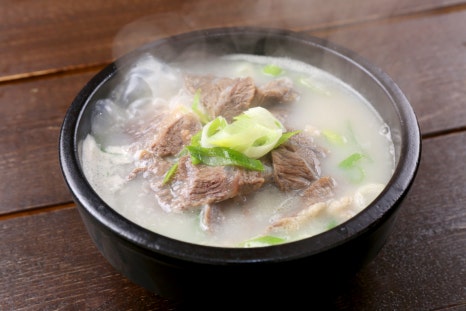
On the other hand, if your tooth throbs
or you feel a dull ache
when it comes into contact with hot coffee or soup,
this is the exact opposite situation.
In this case, it is more than simple sensitivity:
the pain may continue for several minutes,
or you may even have the unusual experience
of needing to hold cold water in your mouth
for the pain to finally subside.
Unfortunately,
these symptoms are a sign that a problem has developed
in the tooth nerve
and that it may be difficult for it to recover.
Because hot-induced pain cannot be completely resolved
by taking medication,
we strongly recommend visiting a dental clinic promptly.
The anatomical cause of pain from heat
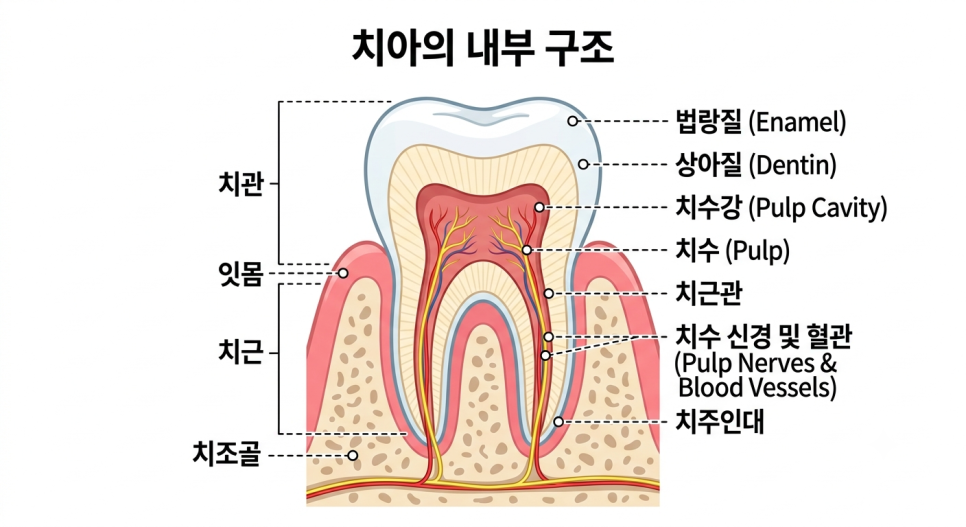
When the nerve tissue called the pulp,
located inside the tiny chamber within the tooth (the pulp chamber),
enters the stage of “nerve necrosis”
due to infection caused by severe decay or trauma,
decay gases are produced inside the tooth.
When hot food touches the tooth,
heat conduction causes the gas inside the tooth
to expand rapidly.
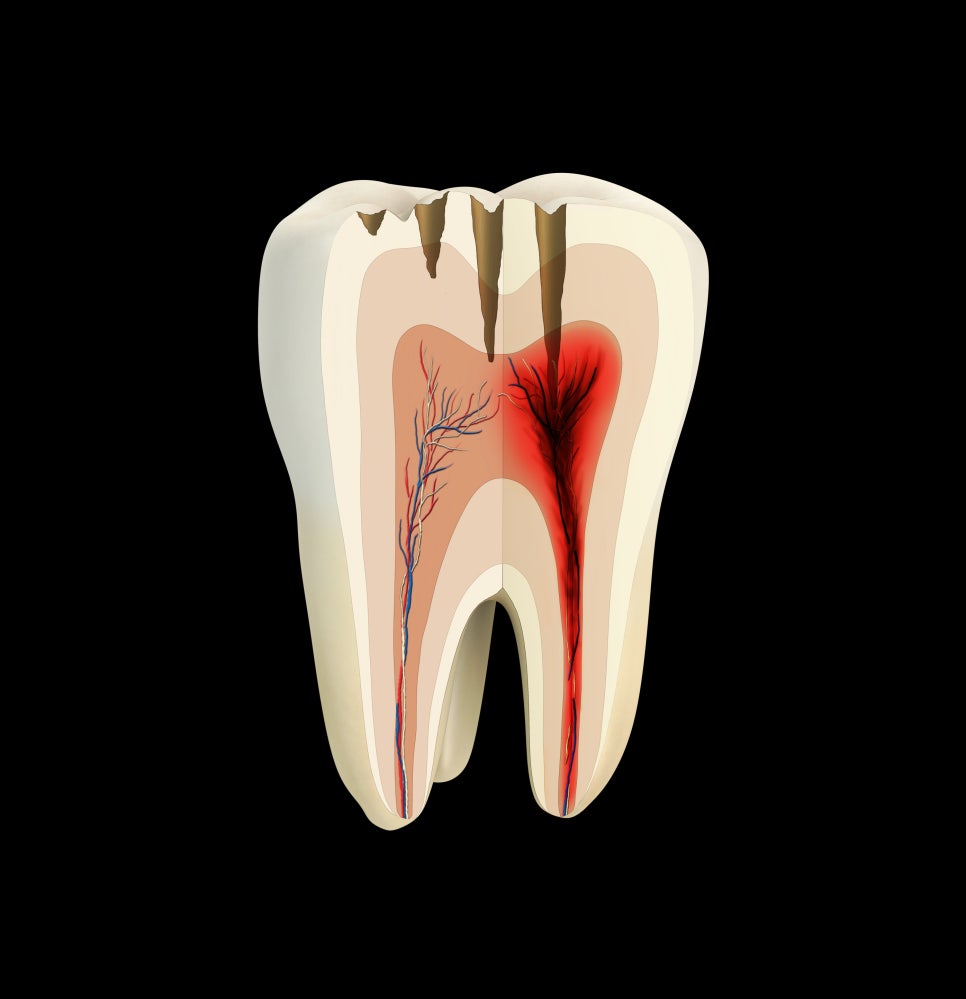
However, because the expanded gas cannot escape
through the hard outer shell of the tooth,
the internal pressure rises extremely high
and presses on the nerve.
Many patients visit the dentist at this point,
complaining of unbearable tooth pain.
If this stage is left untreated, the gas and inflammation
can flow through the opening at the end of the tooth root,
destroy the surrounding jawbone (alveolar bone),
and form an abscess.
- Condition of the nerve
The tooth nerve has reached the point of no return,
where it can no longer recover on its own.
Even at rest, it may be accompanied by severe throbbing,
pulsating pain intense enough to prevent sleep at night.
- Treatment method
Before it is too late, root canal treatment is essential
to completely clean out the necrotic nerve tissue
inside the tooth.
If even this timing is missed,
you may face the unfortunate situation
of being unable to save the tooth
and needing an extraction followed by an implant.
Self-check chart for your teeth based on pain
| Category | Response to cold water (sensitive tooth) | Response to hot water (throbbing tooth) |
|---|
| Nature of pain | Tingling and sharp sensation | Throbbing, dull, constricting pain |
| Duration of pain | Disappears within 1–2 seconds after the stimulus is gone | Continues for several minutes or longer even after the stimulus is gone |
| Risk level | 🟡 Caution (early- to mid-stage warning) | 🔴 Warning (red flag) |
| Condition of the nerve inside the gums | The nerve is alive and has become sensitive | The nerve is decaying or has already become necrotic |
| Expected treatment | Glass ionomer (GI)/composite resin filling or simple decay treatment | Root canal treatment followed by crown restoration, or extraction |
Who may find today’s information helpful
Today’s summary about temperature-related tooth pain
may serve as a particularly helpful guide
for the following people.
- People who have been putting off treatment,
holding back the pain with painkillers while thinking,
“It will probably stop after being sensitive for a little while.”
because they keep noticing unusual signals
in a particular area while eating.
- People who want an accurate diagnosis of their current condition
instead of visiting a place that recommends extraction and implants unconditionally.
No matter how well an implant is made,
it is clearly different from the natural teeth
handed down to us by our parents.
If you come in when your teeth are sensitive to cold water,
you may be able to protect them with a simple treatment.
Even if you come in when hot soup causes pain,
careful root canal treatment may allow the tooth to be saved
without extraction.
Pain is the most valuable signal your body sends you.
Instead of worrying, “Is it okay to leave it this way?” and putting it off,
please visit a dentist as soon as the signal appears.
This was dentist Kim Geun-il.
Thank you.
📍 365 Seoul One Top Dental Clinic
4th floor, Dongmyeong M Building,
179 Gangseo-ro, Gangseo-gu, Seoul
Gayang Station Dental Clinic / Gangseo-gu Dental Clinic / Hwagok Station Dental Clinic
1-minute walk from Exit 8 of Hwagok Station