Hello.
I am Kim Geun-il, director of 365서울원탑치과.
When patients have their first implant consultation,
their greatest concern is often
that it is a treatment they have never undergone before,
which can naturally make them feel very afraid.
They also tell us that they become increasingly worried
about the possibility of a problem occurring during implant surgery
or side effects developing after surgery.
What if the implant is placed incorrectly?
I am worried that the nerve might be touched
during surgery and cause a problem.
Because an implant must be used
for at least 10 years once it is placed,
inserting it in the exact position without even a 1 mm error
is crucial to determining the success and lifespan of the surgery.
In the past, the gums had to be incised
primarily based on the clinician’s experience and judgment,
but recently, “3D digital implants,” which use
advanced 3D equipment to minimize placement errors
and improve safety, have become widely adopted.
Today,
I will explain in an easy-to-understand way
the principles and advantages of digital implants,
which help reduce treatment errors.
How Do 3D Digital Implants Reduce Errors?
Digital implants are also called
computer-analyzed implants
or navigation implants.
With conventional implants, clinicians often examined only
two-dimensional X-ray images and directly incised the gums
to determine the placement position.
In this case, there were limitations
in identifying from multiple angles in real time
the nerve canals hidden inside the gums
or the width of the bone.
In contrast, 3D digital implants
undergo the following two advanced processes
to reduce errors.
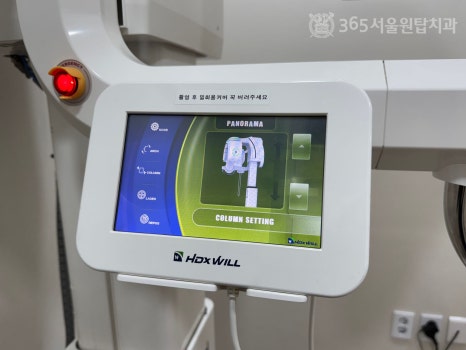
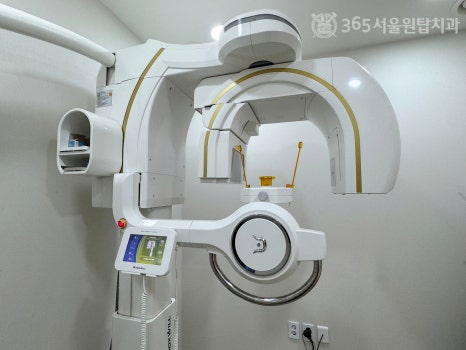
- 3D CT & Intraoral Scanner 3D Analysis
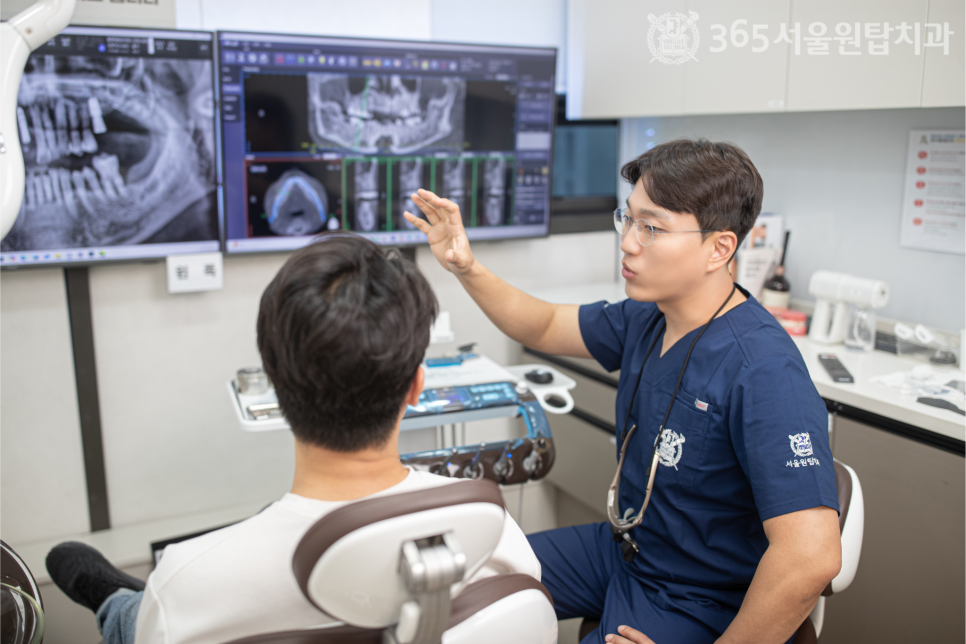
The patient’s teeth, the thickness and density of the jawbone,
and the locations of major nerve canals
are rendered as three-dimensional images.
Even internal gum structures that cannot be seen with the naked eye
are examined in detail to the 0.1 mm level.
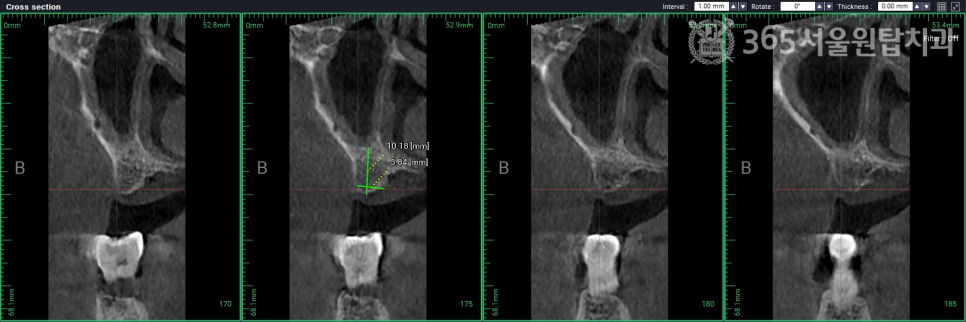
Photographed at 365서울원탑치과 on 2024.06.18 / Example image for reference
- Computer-Assisted Simulated Surgery (3D Simulation)
Before surgery,
the implant is placed in advance within a computer program.
The optimal placement angle, depth, and position are determined beforehand
so that the implant can be placed in the strongest area of the jawbone
while safely avoiding the nerve canals.
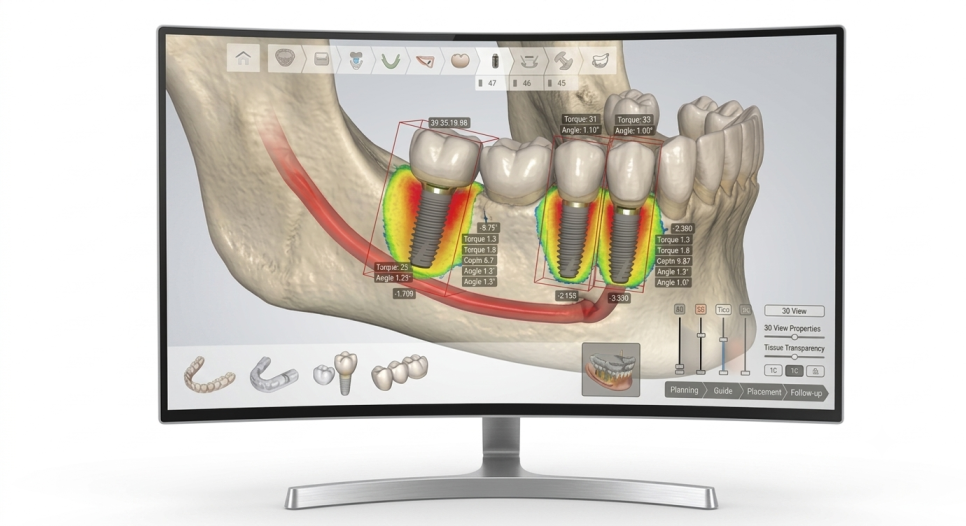
Three Changes for Patients When Treatment Errors Are Reduced
① Minimized Risk of Nerve Damage and Side Effects
Because placement proceeds only along the precisely calculated path,
the risk of side effects, such as touching major nerve canals
or damaging adjacent teeth,
is significantly reduced.
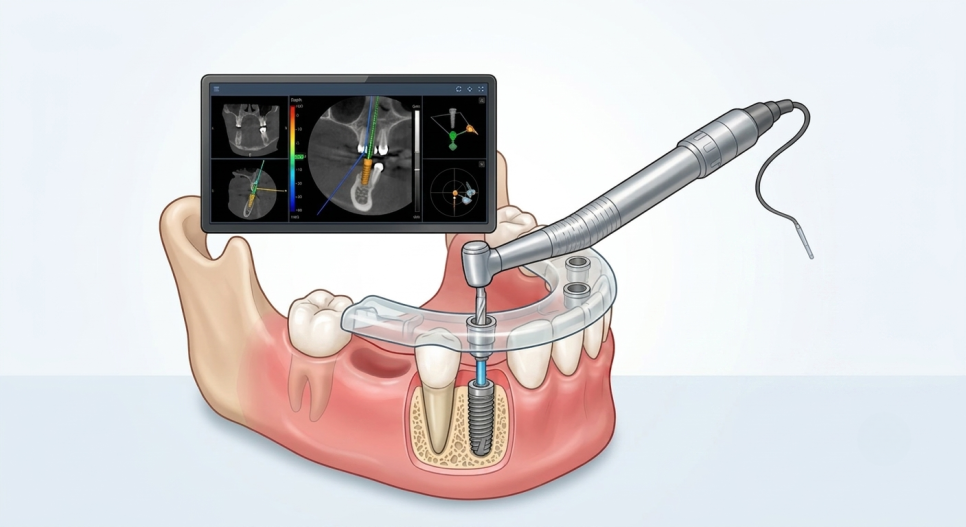
② Less Pain, Swelling, and Bleeding Through “Minimal Incision”
A “customized surgical guide” is used
to make only a small opening at the position
directed by the computer and place the implant.
Therefore, there is no need to make a wide incision in the gums
or stitch them closed,
resulting in much less pain and swelling after surgery.
③ Longer Implant Lifespan Through Improved Placement Precision
The implant is placed at the correct angle
in the firmest area of the jawbone,
which evenly distributes chewing forces.
This reduces the likelihood of the implant becoming loose
or inflammation developing around it,
helping you use it comfortably and healthily for a long time.
Consider Digital Implants If You:
-
Are very concerned about side effects or failure during implant surgery
-
Have a difficult case with weak jawbone or challenging placement conditions
-
Have a systemic condition such as diabetes or high blood pressure and are concerned about surgery involving significant bleeding
-
Want to reduce pain and swelling and return to your daily routine quickly
Good results are achieved only when an accurate diagnostic system is combined with experience.
3D digital implants
can produce the best results when the precision of advanced equipment
is combined with the clinician’s expertise
in carefully analyzing 3D data
and developing a personalized treatment plan.
If you want comfortable and safe implant treatment
without worrying about surgical errors,
please visit a dental clinic equipped with
3D CT and a digital precision analysis system
for a detailed consultation.
This was dentist Kim Geun-il.
Thank you.
📍 365서울원탑치과의원
4th Floor, Dongmyeong M Building, 179 Gangseo-ro, Gangseo-gu, Seoul
Sinwol-dong Dentist / Gangseo-gu Dentist / Hwagok-dong Dentist
Hwagok Station Exit 8, a 1-minute walk