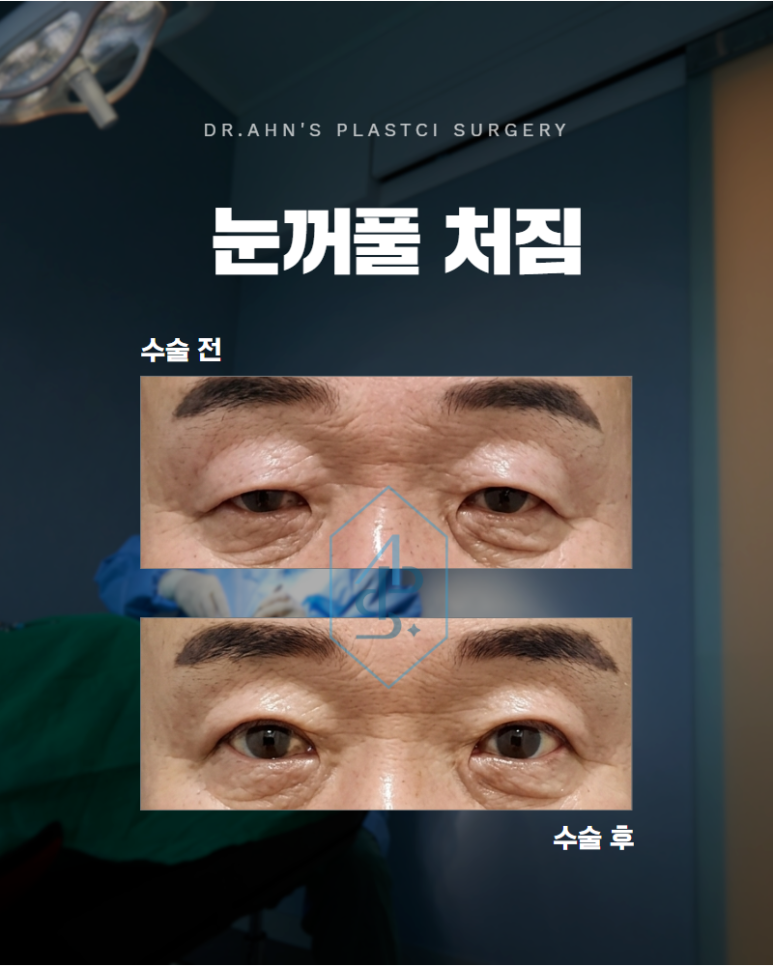
“People told me I should lift my forehead because my eyes look droopy.”
During consultations, there are quite a few people who come in after being advised elsewhere to get a brow lift.
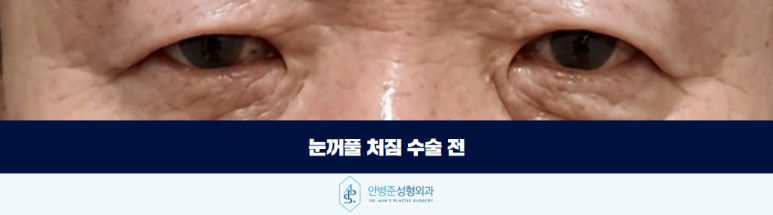
But when you look closely at the eyes, the cause is often not the forehead itself, but the drooping of the eyelids.
What should be checked first in this case is the position of the eyeball and the distance from the eyebrow.
If these two factors are not properly analyzed, improvement can be difficult.
 The distance from the eyebrow comes first
When evaluating drooping eyelids, it is advisable to first check the distance between the eyebrow and the eye.
If this distance is within the normal range, there is no need to lift the forehead.
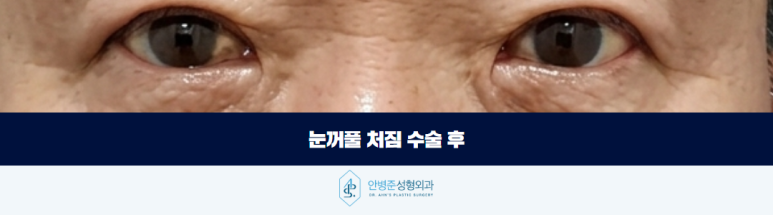
In many cases, improvement can be achieved sufficiently with excision surgery that removes excess, sagging skin.
The heavy, covered look becomes much clearer as well.
On the other hand, if the distance to the eyebrow is already narrow, the situation is different.
In that case, removing only the skin may make the eyebrow appear to droop even lower.
That is why a brow lift and double eyelid surgery are sometimes considered together.
Ultimately, the method for improving drooping eyelids depends on the eyebrow position.
 The degree of eyeball recession is also an important criterion
Another important factor is eyeball recession.
When the eyes are set deeper in, the same amount of sagging skin can look more severe.
In such cases, lifting the forehead unconditionally can cause the eyebrows to rise too much and create a stronger impression.
The eye area may even appear as if it is being opened too forcefully.
Not everyone with drooping eyelids needs a brow lift.
A decision can be made only by looking at the eyeball position, eyebrow distance, and the amount of excess skin together.
If this balance is overlooked, the face may look unnatural after surgery.
 When a brow lift can look awkward instead
What happens if the forehead is lifted when the distance to the eyebrow is already normal?
As the eyebrows are pulled higher, the forehead looks wider and the eyes take on a strained, wide-open appearance.
A person may want clearer-looking eyes, but the result can instead become a sharper image.
These changes are not easy to get used to over time.
That is why, when evaluating drooping eyelids, we always first check whether a brow lift is truly necessary.
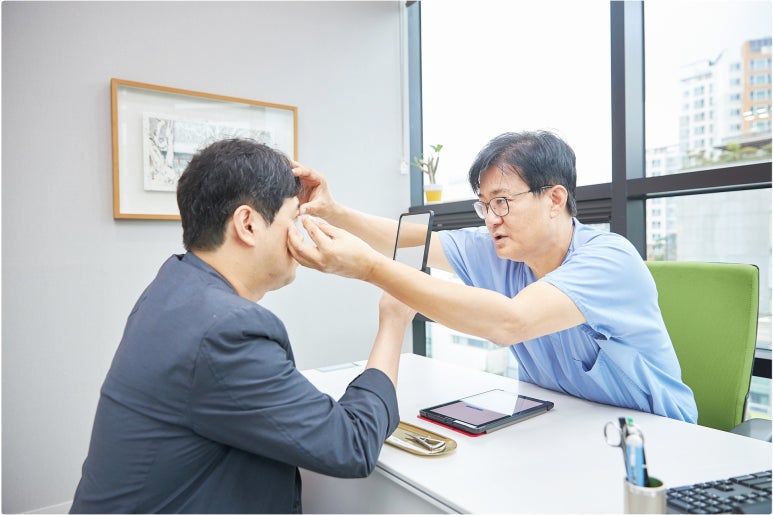 It is better to avoid unnecessary lifting.
Reducing only within the necessary range leads to more natural results.
Drooping eyelids may seem like a simple issue of stretched skin, but in reality, structural factors are involved as well.
The eyebrow position, depth of the eye socket, skin thickness, and the strength used to open the eyes all need to be considered.
Only then is it possible to create a clear change without going overboard.
The surgical method is decided after first analyzing the structure of the eyes.
If a brow lift is needed, the reason must be clear; if not, excision surgery alone may be sufficient.
Improving drooping eyelids is not about making a big or excessive change, but about balance.
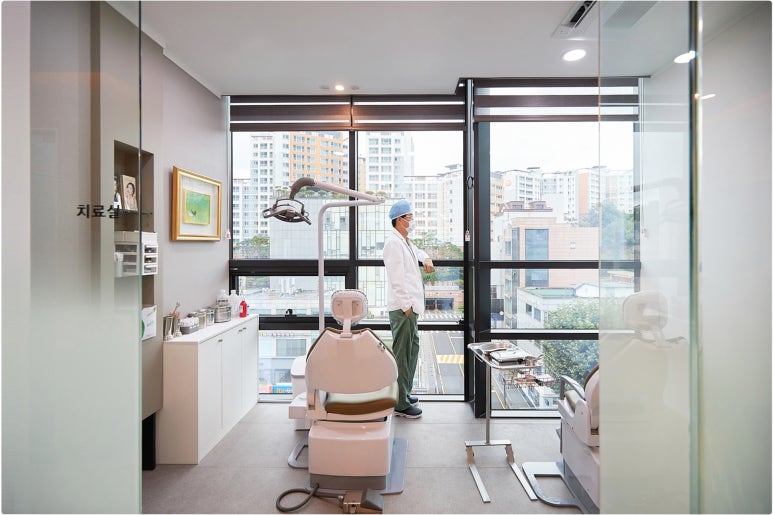
Natural-looking eyes are not forced upward.
An eye shape that has been adjusted in line with the structure looks comfortable and lasts longer.
If drooping eyelids are a concern, first check the positions of the eyebrows and eyeballs with a board-certified plastic surgeon.




Previous image
Next image