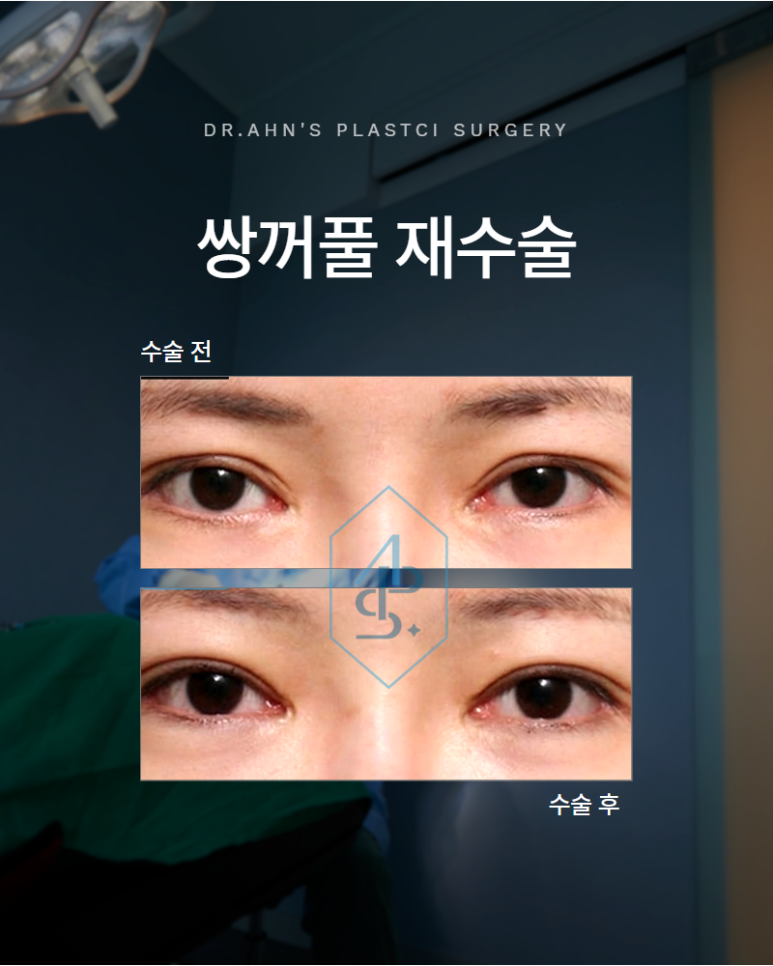
Hello, I’m Ahn Byung-jun, the chief director of Ahn Byung Jun Plastic Surgery Clinic.
There is something I often hear during revision surgery consultations.
"I had surgery once, then twice, but I still wasn’t satisfied, so I came here."
When people say this, you can feel the traces of long 고민 in their expression.
I think the reason people considering double eyelid revision surgery look for a good clinic is because they want a place that can properly identify the parts missed in the previous surgery.
So today, I’ll talk about what process revision surgery follows and what points you should look at.
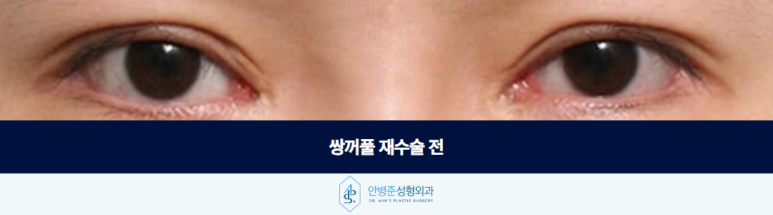 The first thing to understand is why revision surgery is difficult
The eyes that are having surgery for the first time and the eyes that have already had surgery once or twice have different structures.
As surgeries are repeated, adhesions form inside the skin and scar tissue accumulates.
These adhesions often interfere with the movement of the eyelid-opening muscle and distort the shape of the line.
That is why revision surgery is not simply a matter of correcting the line; it starts with organizing the traces of the previous surgery.
The existing line must be incised and the adhesions released first for the eyes to move naturally.
If you simply cover a new line over the old one without this process, it may become thicker or create another asymmetry.
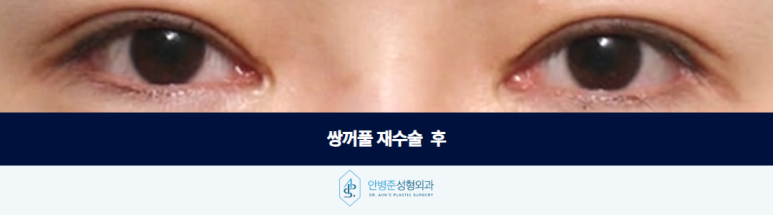 After multiple surgeries, even more careful design is needed
When consulting for revision surgery, some people come in after having had surgery three or more times.
In such cases, a natural line may form even without creating a separate new double eyelid line.
This is because the scar tissue left in the skin from repeated surgeries itself can serve as the line.
So after releasing the adhesions and restoring muscle movement, the procedure may be done in a way that gently guides a natural line to form.
In this way, clinics that are good at double eyelid revision surgery know that creating a new line unconditionally is not always the right answer.
I believe they must be able to suggest the direction that suits each person.
Why the two eyes should not be approached in exactly the same way
One easily overlooked part of revision surgery is the individual difference between the left and right eyes.
The left and right sides can differ in skin thickness, the degree of adhesion, and muscle strength.
If the same method is applied identically to both sides, asymmetry may become even more noticeable.
In other words, the delicacy of a board-certified plastic surgeon plays an important role in balancing both eyes.
That is why, in double eyelid revision surgery, you need the know-how to look at the left and right sides separately and together.
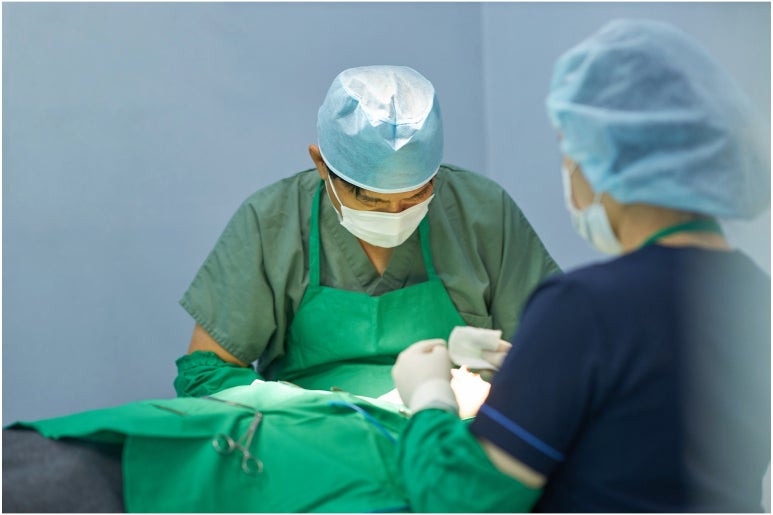 The recovery process after revision surgery should be viewed as longer
Swelling tends to last longer after revision surgery than after the first operation.
This is because tissue that has already had surgery one or more times may show blood circulation and tissue reactions differently from the first time.
Usually, the outline begins to emerge gradually over 2 to 4 weeks, and it is better to consider the results stable after 6 months.
During recovery, one side may subside faster or temporarily feel asymmetrical.
In general, this is often part of the natural recovery process.
Looking for a clinic that is good at double eyelid revision surgery ultimately means looking for a place that can accurately read the condition of your eyes.
Based on 25 years of experience focusing on eye surgery, I carefully examine the current structure of the eyes and strive to preserve a natural result.
If you have concerns from a previous surgery, please find a solution that suits your eyes through a consultation.




Previous image
Next image