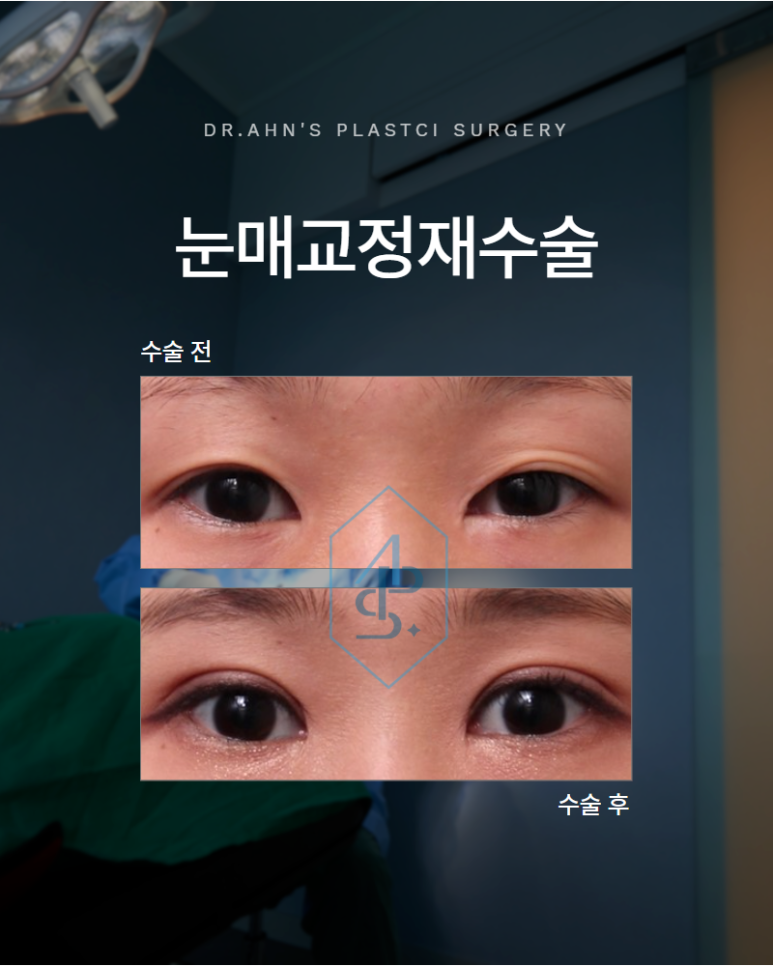
Hello. I’m Ahn Byung-jun, the chief director of Ahn Byung-jun Plastic Surgery Clinic.
There are patients who visit us saying, “I had double eyelid surgery a few years ago, but the line has come loose,” or “My eyes have started looking sleepy again.”
These are cases where the surgery was done with the buried suture method, but over time the line has weakened or come undone.
If this condition is approached by simply re-establishing the line, the same problem may recur before long.
When planning revision eyelid correction surgery, it is important to first check whether there is also a problem with the strength of eye opening, in addition to the loosened line.
 What causes the line to loosen after the buried suture method?
The buried suture method creates a double eyelid line by fixing it with sutures without making an incision in the skin.
It has the advantage of being relatively simple and allowing for quick recovery, but over time the fixed sutures can become loose or come undone.
It tends to loosen more easily in cases with a lot of eyelid fat, thick skin, or a habit of rubbing the eyes frequently.
When the line loosens, the double eyelid may look faint or disappear on one side.
If weak eye-opening strength is also present, the sleepy appearance of the eyes becomes even more noticeable.
Unless both of these issues are improved together, it is difficult to achieve a satisfying result even after revision surgery.
 Key criteria in revision eyelid correction surgery
The first step in a revision consultation is to carefully examine the current condition of the eyes.
It is necessary to determine whether, in the state where the line has loosened, the levator muscle’s strength is actually weak or whether the cause is skin sagging.
If the eye-opening strength is sufficient and only the line has loosened, the approach can be to re-fix it through an incision.
On the other hand, if the muscle itself has weakened and the eyes do not open properly, eyelid correction surgery should be performed together.
In this way, revision eyelid correction surgery is a process of deciding the direction while also considering the functional condition of the eyes.
Why an incision is necessary in buried suture revision surgery
In eyes where the line has loosened once, adhesions are often already formed inside the skin.
If the buried suture method is used again to fix it in this condition, the adhesed tissue becomes an obstacle, making it highly likely that the line will loosen again.
Therefore, in revision surgery, it is more stable to approach the procedure by making an incision, organizing the existing adhesions, and fixing a new line.
For example, if five years after buried suture surgery the line has loosened and the eyes look sleepy, combining revision surgery with eyelid correction surgery can lead to a more fundamental improvement.
If the existing adhesions are released and the strength of the eye-opening muscle is also reinforced, the line can settle more stably and the eye shape can become more defined.
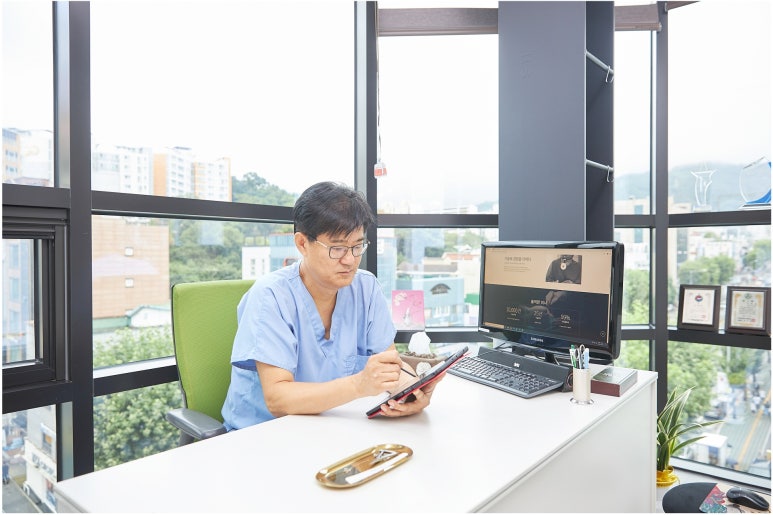 What is recovery like after surgery?
Revision eyelid correction surgery may show a different tissue response from the initial surgery.
Swelling may last a little longer, and in the early stage the degree of eye opening may feel different between the two eyes.
In most cases, however, this naturally stabilizes during recovery.
It is best to allow for more than two months until the line settles properly and the eye shape stabilizes.
It would be nice if improvement could happen in one procedure, but due to various variables, there are cases where the result falls short of what was hoped for, and revision surgery is eventually desired.
That is why many people visit my clinic after having buried suture surgery elsewhere because the line has loosened or their eyes look sleepy again.
Please check through a consultation with an experienced board-certified plastic surgeon whether the issue is simply with the line or whether there is also a problem with eye-opening strength.


Previous image
Next image