Hello. I am Dr. An Byeong-jun, chief director of 안병준성형외과.
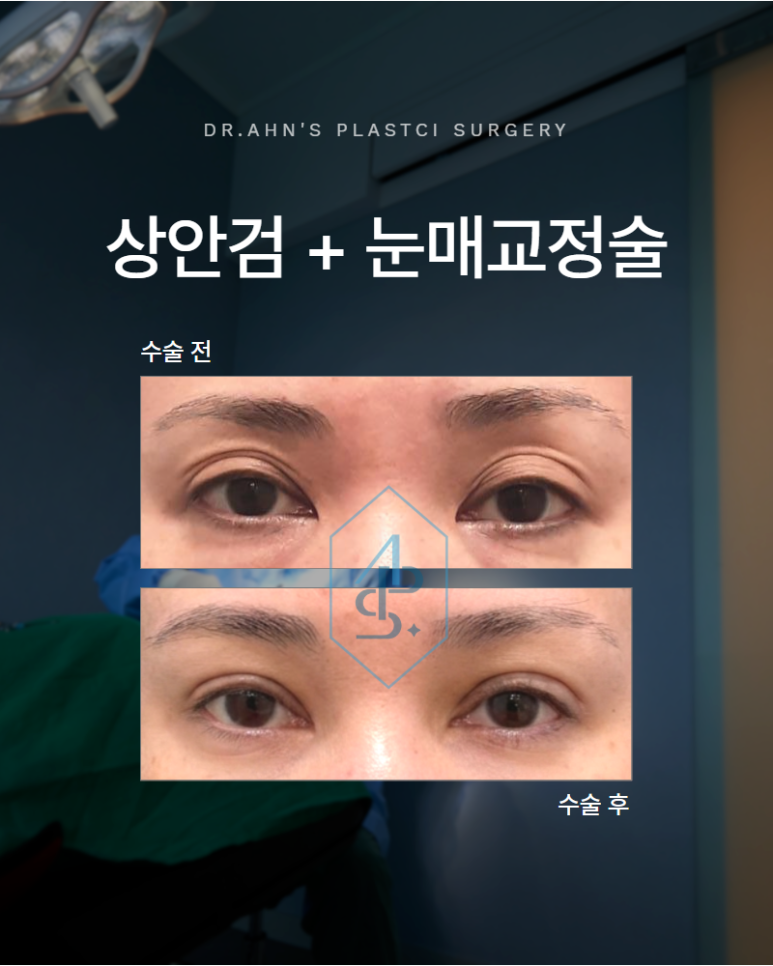
When I consult with patients about their eyes, I more often encounter cases where several factors are intertwined than cases involving only one issue.
The upper eyelids may be drooping, the muscles responsible for opening the eyes may be weak, and the eyelids may also appear hollow.
For these patients, recommending only upper blepharoplasty or performing only eye-opening correction means that the result addresses only half of the concerns.
Today, I would like to explain how we determine the sequence and approach when several issues overlap.

When Drooping Skin and Weak Muscles Occur Together
If the skin of the upper eyelid is lax and the muscles used to open the eyes are also weak, removing only the excess skin may not be enough.
This is because the eyes may still not open fully even after the excess skin is removed.
In such cases, upper blepharoplasty is performed to address the lax skin and fat, while eye-opening correction is performed at the same time to strengthen the levator muscle.
Addressing the skin and strengthening the muscles in the same surgery can reduce the recovery process to one period and allows the eyelids and eye shape to settle into better balance.

Why Use Lower-Eyelid Fat
There is often fat that protrudes beneath the eyes.
Rather than simply removing this fat, one option is to access it through the conjunctiva, preserve the amount needed, and move it to hollow areas of the upper eyelids.
Because this method uses the patient's own tissue, it reduces the need to harvest fat from another area.
By reducing excess fat beneath the eyes while also filling the hollow areas of the upper eyelids, it is possible to improve both the upper and lower eyelids in a single surgery.
Points to Consider When Grafting Fat into Hollow Eyelids
When the upper-eyelid area is hollow, adding fat can create a softer overall appearance.
However, the amount grafted must be determined carefully.
The eyelids are thin and delicate tissues, so too much fat can instead make the eyes look heavy and unnatural.
If an appropriate amount of fat is added while strengthening the muscles through eye-opening correction, the result can be eyes that open clearly while maintaining natural volume.
Allow for a Longer Recovery When Combining Several Procedures
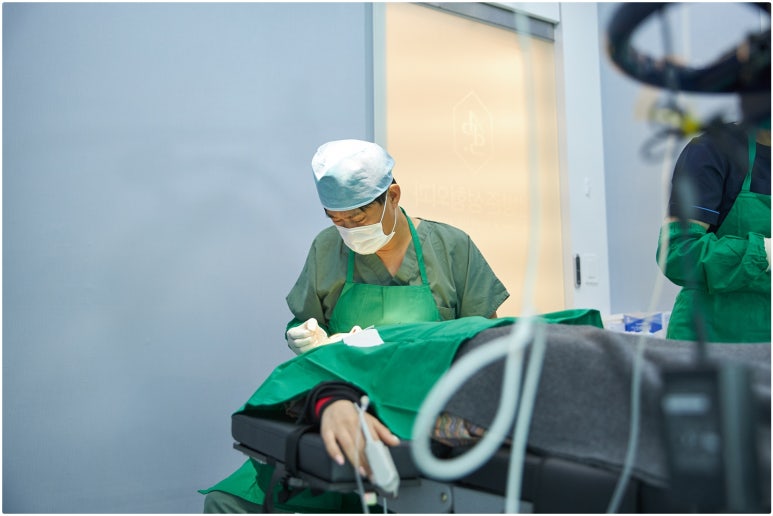
When upper blepharoplasty, eye-opening correction, and fat grafting are performed together, initial swelling and bruising tend to last longer than with a single procedure.
In particular, because the grafted fat must settle and undergo partial absorption, it is too early to judge the result based on its initial appearance.
There may be differences in the recovery speed between the two sides, and it is also common for swelling to remain longer on one side.
This is part of the natural recovery process, and the sides gradually become more symmetrical over time.
A stable final shape can be assessed after approximately six months, taking fat graft survival into consideration.
When eyelid drooping, reduced muscle strength, and insufficient volume occur together, rather than trying to improve everything with a single procedure, it is important to consider which combination will create the most natural result.
If you are considering upper blepharoplasty and eye-opening correction together, please consult a board-certified plastic surgeon for a thorough analysis of your eyes.



Previous image
Next image