Hello. I am Ahn Byung-jun, medical director of 안병준성형외과.
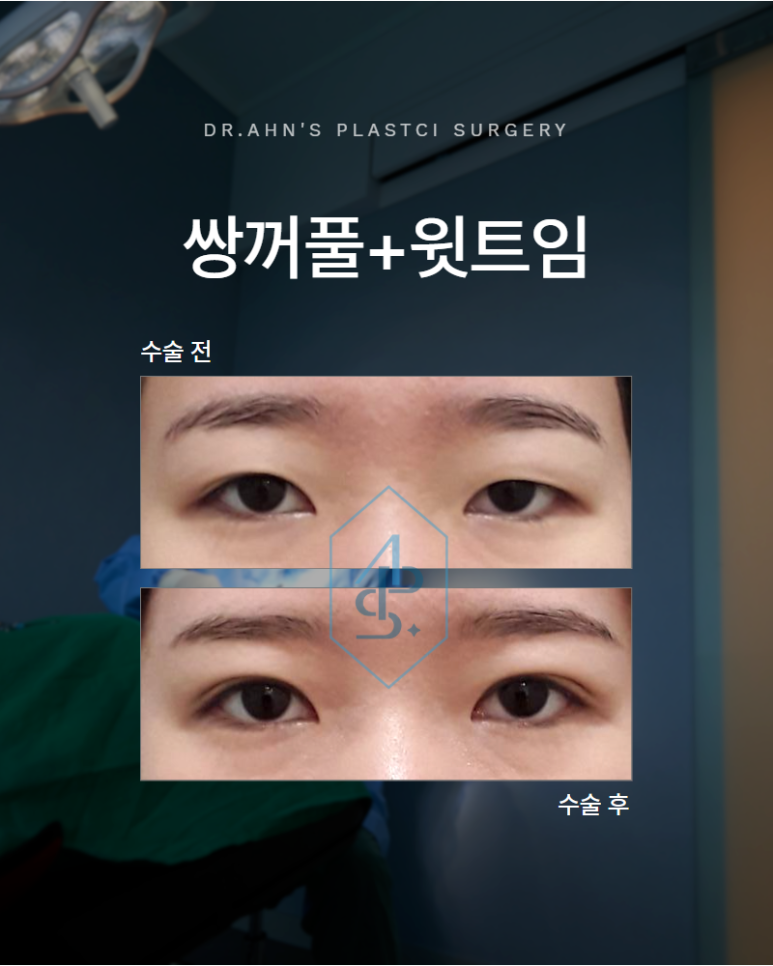
More and more people are seeking consultations after being diagnosed with ptosis elsewhere due to drooping eyelids.
In some cases, people are diagnosed with ptosis simply because they frequently use their eyebrows or their eyes appear half-closed in photos.
Compared with Westerners, East Asians tend to have relatively thicker eyelid fat and skin. As a result, it is common for the eyes to look droopy even when the condition is actually pseudoptosis.
If this pseudoptosis is not properly identified and the approach involves eyelid correction, you may instead experience discomfort caused by overcorrection.
Therefore, if you are considering a double-eyelid upper incision, I recommend first examining the causes of why your eyelids appear droopy.
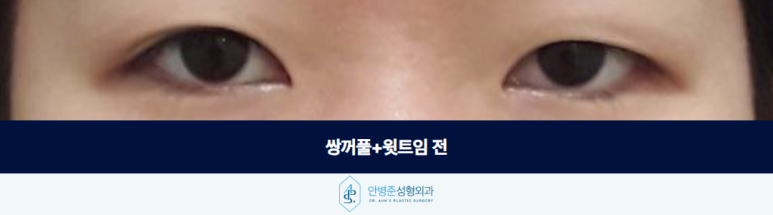
Not All Drooping Caused by Aging Is Ptosis
As we age, it is a natural change for drooping to become more noticeable as the skin of the eyelids loses elasticity.
When this drooping becomes more severe, it can obstruct the upper part of the visual field. To compensate, people may unconsciously develop a habit of raising their eyebrows.
When this process is repeated, forehead wrinkles deepen, and the eyes may also appear increasingly strained when opened.
The problem is that these outward appearances alone are often taken to indicate reduced function of the levator muscle—in other words, true ptosis.
Using the eyebrows may simply be a natural compensatory action to secure the visual field and may be unrelated to the strength of the muscle itself.

Drooping Eyelid Skin Needs to Be Trimmed, Like Altering a New Pair of Trousers
When the legs cannot be lengthened to adjust the fit of a newly purchased pair of trousers, the excess fabric at the hem must be cut and altered.
The eyelids can be approached according to a similar principle.
When stretched eyelid skin covers the pupil, the first step is to remove the excess skin rather than adjust the force used to open the eyes.
If eyelid surgery is performed together with excision of the drooping skin, the previously covered pupil can become naturally visible, creating a much more open appearance.
On the other hand, if eyelid correction is also performed when the levator muscle is functioning normally, the eyes may become larger than necessary or retain an unnatural, overly open appearance.
Why Use a Double-Eyelid Upper Incision?
The inner-corner area is one part that may not improve simply by removing drooping skin.
When thick skin covers the area above the inner corner, the width where the crease begins may appear narrow, making the eyes look confined or stuffy.
In this case, performing a double-eyelid upper incision together can remove excess skin around the inner corner, widen the starting point of the crease, and make the eyes look clearer and more open.
Because this procedure does not involve the muscles, recovery is generally less burdensome than with eyelid correction.
Why Careful Examination Is Necessary
Even when the eyes look similarly “droopy,” the appropriate surgical method differs depending on whether the issue is excess skin or reduced levator muscle function.
If these two causes are not distinguished, surgery may be extended beyond what is necessary, increasing only the recovery period and overall burden.
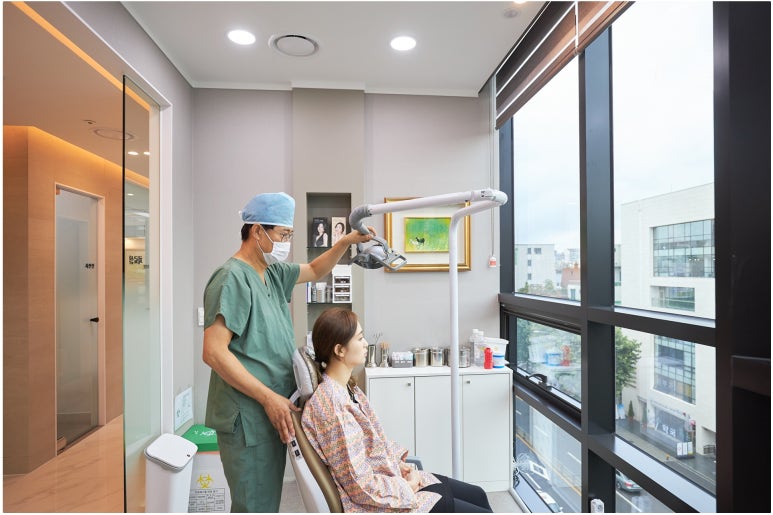
For this reason, I measure the degree of eyelid drooping while holding the forehead muscles still and also check the actual strength of the levator muscle.
It is difficult to distinguish pseudoptosis based solely on the habit of frequently using your eyebrows or on self-diagnosis through online searches.
Therefore, I hope you will not conclude on your own that you have ptosis.
Some eyes can be sufficiently improved with only a double-eyelid upper incision, while other eyes genuinely require eyelid correction.
Find a board-certified plastic surgeon with extensive experience and undergo an examination to determine which solution you actually need.






Previous image
Next image