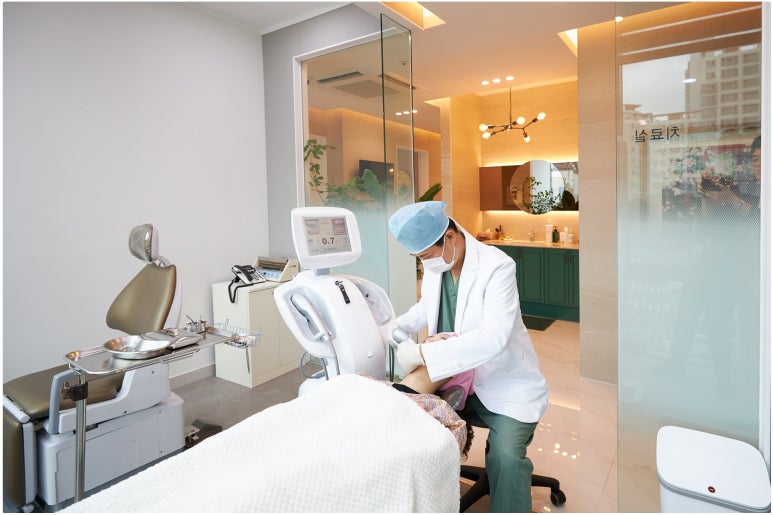
Hello. I am Ahn Byung-jun, the director of Ahn Byung-jun Plastic Surgery.
Quite a few people visit me after having consultations elsewhere.
They often say, “I was told that I need ptosis correction, but I want to confirm whether it is really necessary.”
As the scope of the procedure becomes more extensive, the cost also increases, so it is natural to want to reconsider whether the surgery is truly necessary.
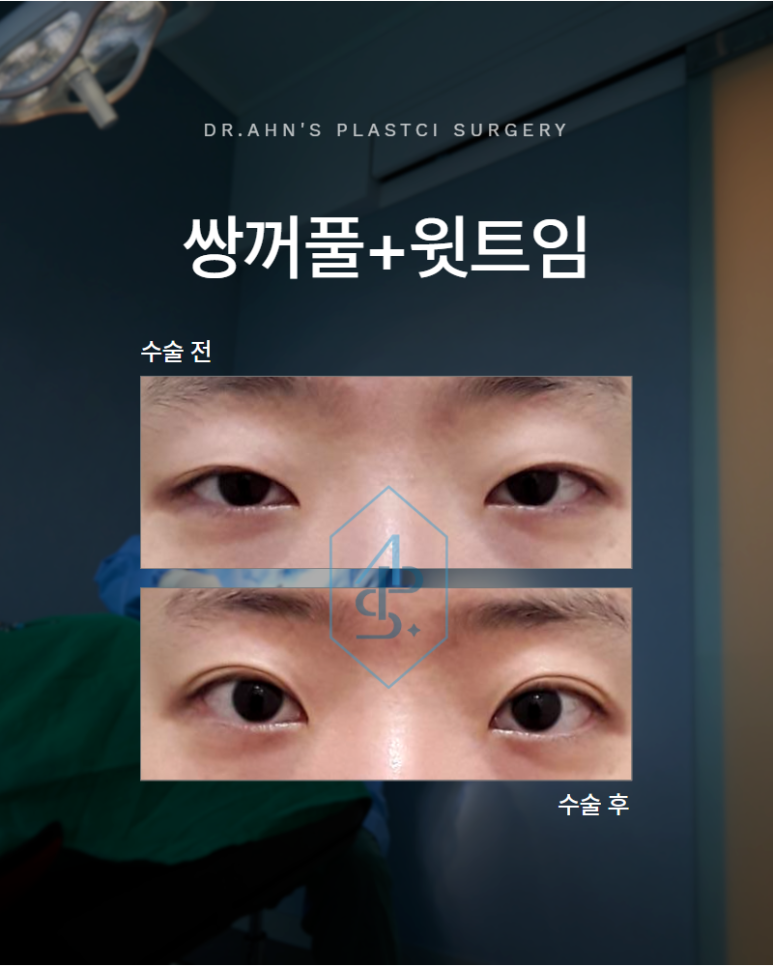
In quite a few cases, examination shows that the levator muscle function is normal, but ptosis correction was recommended because the eyes appear droopy.
This condition is called pseudoptosis, and upper canthoplasty alone can be sufficient to produce a satisfactory result.
Different diagnostic criteria lead to different solutions
Even when looking at the same eyes, one clinic may describe the condition as ptosis, while another may call it simple skin sagging.
These differences can easily arise when a judgment is based only on appearance without objective criteria.
For this reason, I do not reach a conclusion based solely on visual findings. Instead, I also check objective measurements.
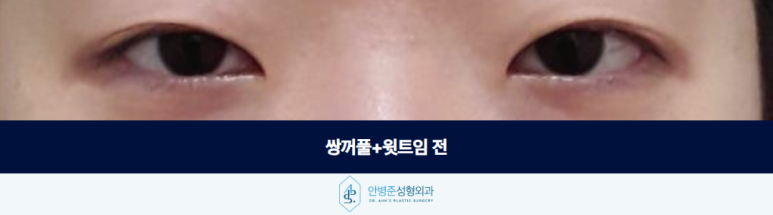
One representative method is to measure the distance between the center of the pupil and the upper eyelid while the eyes are open and looking straight ahead.
If this measurement falls within the normal range, it means that the levator muscle itself is functioning properly, so the cause of the drooping appearance should be sought elsewhere.
Why is pseudoptosis so common?
The eyelids of East Asians often have a thicker layer of fat and a structure in which the skin covers the eyes more generously than in Westerners.
As skin elasticity also decreases with age, the upper eyelids can appear heavy and lowered, regardless of muscle function.
If the eyebrow heights differ from side to side or one eye appears particularly difficult to open, the condition can easily be mistaken for ptosis even when there is no actual functional impairment.
These differences can be distinguished by examining the eyebrow height and the pattern of forehead wrinkles together.
When upper canthoplasty is sufficient and when it is not
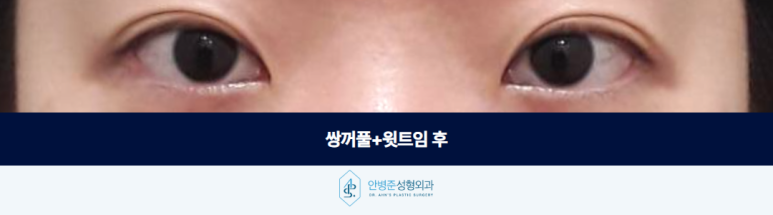
If the levator muscle function is normal and the skin around the inner corner of the eye is thickly covering the area, making the starting point of the crease look narrow, upper canthoplasty alone can make the eyes look more open and refreshed.
Because this procedure involves removing or adjusting the skin around the inner corner of the eye to widen the crease, recovery is generally less demanding than with ptosis correction, which directly involves the muscle.
However, if it is clearly apparent that the forehead muscles are being used excessively, the condition may be closer to actual ptosis, in which case ptosis correction may also be necessary.
Although both conditions may look similar on the surface as “droopy-looking eyes,” the appropriate solution differs depending on the underlying issue.
The recovery process proceeds as follows
Immediately after upper canthoplasty, swelling and redness may remain around the inner corner of the eye.
As the swelling subsides over one to two weeks, the crease gradually begins to settle into place.
After about a month, many people feel that their eyes open much more easily, and the scar at the inner corner of the eye also tends to fade naturally over time.
If you have been advised to undergo ptosis correction, we recommend visiting several clinics for evaluation rather than making a hasty decision.
By first determining whether the levator muscle function is normal, you can avoid undergoing ptosis correction unnecessarily.
Some eyes can be adequately treated with upper canthoplasty alone, while others genuinely require ptosis correction. It is not too late to make a decision after consulting with a board-certified plastic surgeon.




Previous image
Next image