Hello. I am Ahn Byung-jun, director of Ahn Byung-jun Plastic Surgery.
When searching online, many people conclude on their own that they have ptosis because they frequently raise their eyebrows or strain their foreheads.
I also often see people come to the consultation room believing that these signs indicate ptosis.
However, when we actually examine their eyes, the cause is often sagging eyelid skin rather than ptosis.
The surgical approach differs depending on the diagnosis, so it is important to begin with the correct assessment.

Eye-shape correction is not appropriate in every case
By way of analogy, if a thick curtain hangs down over a window, you cannot see outside.
In that situation, you do not replace the window itself—you simply raise the curtain.
The same applies to sagging eyelid skin.
If the problem is that sagging skin is covering the pupil, the first step is to address that skin.
In this situation, eye-shape correction, which strengthens the muscles, is like replacing the window itself when all that was needed was to raise the curtain.
In particular, compared with people of Western backgrounds, people of East Asian backgrounds often have thicker eyelid skin and accompanying sagging.
When this sagging skin covers the pupil, it creates a narrow-eyed, sleepy appearance.
If double-eyelid surgery is performed while removing the sagging eyelid skin, more of the previously covered pupil becomes visible, giving the eyes a much more open appearance.
A sufficient result can be achieved without eye-shape correction.
Not everyone who uses their eyebrows has ptosis
Using the eyebrow muscles to open the eyes is widely known as a typical sign of ptosis.
However, the same pattern can also occur when sagging eyelid skin feels heavy.
You may raise your eyebrows to overcome the weight of the sagging skin, and as this process is repeated, wrinkles can develop on the forehead.
If all of these signs are judged to be evidence of ptosis and eye-shape correction is performed, there is a risk of overcorrection.
Overcorrection can make the eyes appear excessively pulled, or leave you feeling uncomfortable because the eyelids do not descend sufficiently when you close your eyes.
When sagging skin is the cause, strengthening the muscles first may result in surgery based on an incorrect understanding of the underlying cause.
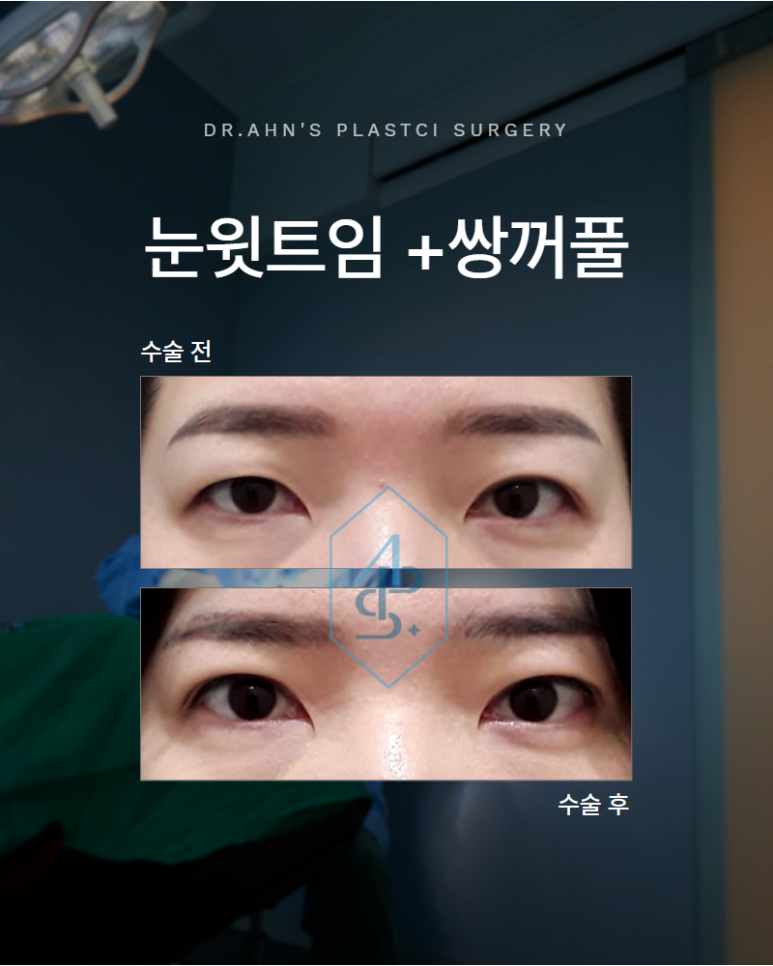
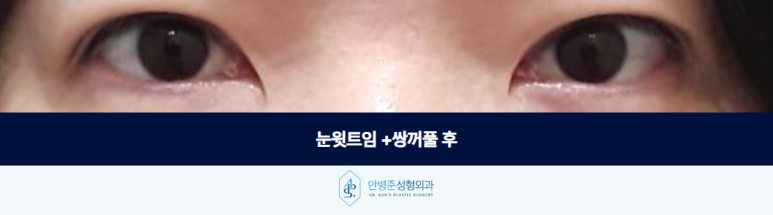
A case adequately treated with upper eyelid opening and double-eyelid surgery
When sagging eyelid skin is accompanied by a narrow horizontal eye width, combining the procedure with upper eyelid opening surgery can produce a more natural result.
Upper eyelid opening surgery involves adjusting the skin at the inner corner of the eye to increase the eye's horizontal length.
After removing the sagging skin, a double-eyelid crease is created, and the horizontal width is improved with upper eyelid opening surgery, allowing more of the pupil to be naturally revealed.
The goal is not so much to make the eyes larger as to naturally restore the visibility of the pupil that had been covered.
If you do not have ptosis, the eye contour can be improved effectively without excessive eye-shape correction.
It is not advisable to decide on eye-shape correction based solely on the feeling that your eyes look less open.
You can determine whether the cause is sagging skin, insufficient muscle strength, or a combination of both only by examining the eyes directly.
Rather than reaching a conclusion through self-diagnosis or online searches, the process should begin with a careful assessment of the eye structure.
Avoiding unnecessary eye-shape correction is a sensible way to reduce the likelihood of revision surgery.









Previous image
Next image