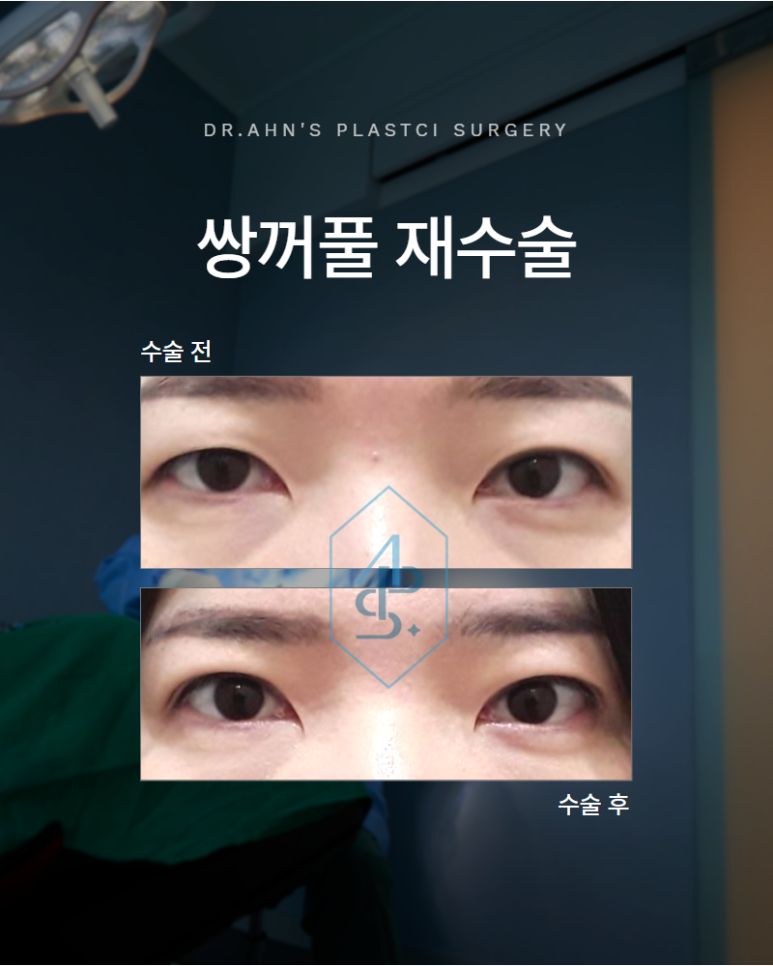
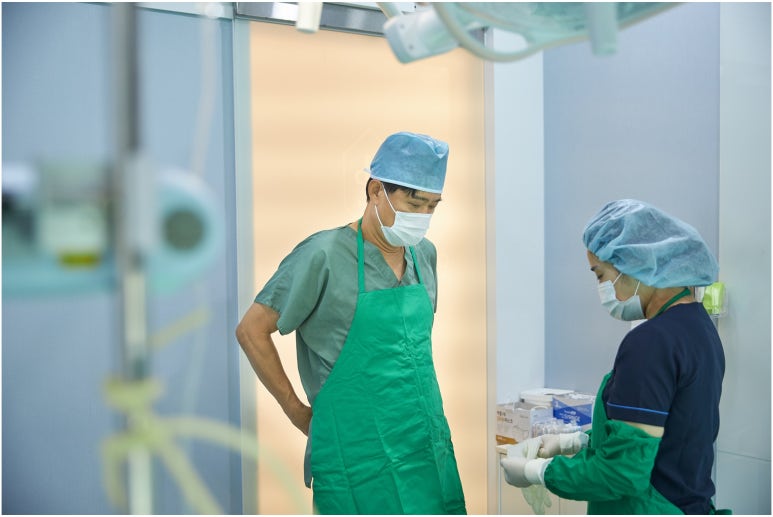
Hello. I am Ahn Byung-jun, director of Ahn Byung-jun Plastic Surgery.
Some people say the following during consultations for double-eyelid revision surgery:
> “I was told at another clinic that I have ptosis. They said I needed ptosis correction surgery.”
However, when I examine their eyes directly, quite a few do not actually have ptosis.
In these cases, drooping skin is covering the pupil—what is known as pseudoptosis—but they were diagnosed with true ptosis and advised to undergo ptosis correction surgery.
I will explain why this happens and how the two conditions can be distinguished.
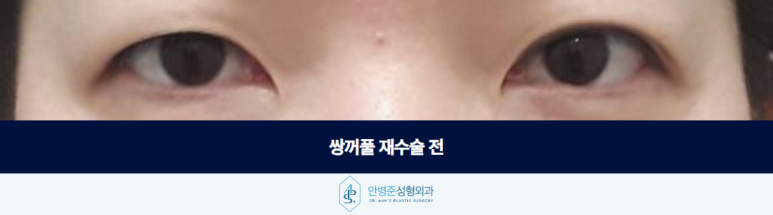
What Is Pseudoptosis?
Ptosis is a condition in which the eyelid cannot be raised sufficiently because the muscles that open the eye—the levator muscle or Müller’s muscle—are themselves weak.
Pseudoptosis, on the other hand, occurs when the muscles are functioning normally but drooping eyelid skin covers the pupil.
Both conditions can make the eyes look smaller and give them a sleepy appearance, so they can be difficult to distinguish from photographs alone.
However, the solutions are completely different.
Pseudoptosis can be improved by removing the excess, drooping skin.
True ptosis requires ptosis correction surgery to strengthen the muscles.
Confusing the two can lead to unnecessary surgery and, ultimately, revision surgery.
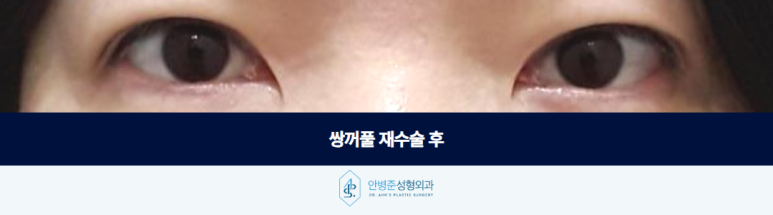
What Problems Can Occur When Ptosis Correction Is Applied Incorrectly?
Performing ptosis correction surgery when pseudoptosis is present carries a risk of overcorrection.
Because the main problem was drooping skin, strengthening the muscles can make the eyes look excessively pulled open or leave discomfort because the eyelids do not close completely when blinking.
Correcting this condition requires another operation.
I encounter cases like these fairly often during consultations for double-eyelid revision surgery.
This revision surgery could have been avoided if the approach had focused on removing the drooping skin from the beginning.
If Drooping Skin Is the Cause, Double-Eyelid Revision Surgery May Be Sufficient
In cases of pseudoptosis, the procedure involves removing the drooping skin while creating the double-eyelid crease at the same time.
As the weight of the skin is reduced, more of the pupil becomes visible and opening the eyes feels easier.
The habit of using the forehead or eyebrows to open the eyes also naturally decreases.
The fact that these changes can be achieved sufficiently without ptosis correction surgery
is something I emphasize during consultations for double-eyelid revision surgery.
The eyes can become clearer and more defined simply by removing the excess skin.
Sometimes Both Conditions Are Present
Of course, there are also cases in which drooping skin and mild ptosis occur together.
In such cases, we first remove the excess skin. If the eyes still do not open sufficiently, ptosis correction is performed only to the extent needed to address the remaining issue.
A balanced result can be achieved without overcorrection only by evaluating the muscle condition after resolving the drooping skin.
Deciding to strengthen the muscles through ptosis correction from the outset is like choosing surgery before the condition has been properly assessed.
Concluding that someone has ptosis simply because their eyes appear less open may be premature.
The same applies to using the eyebrows or developing forehead wrinkles.
All of these symptoms can also be caused by drooping skin.
Distinguishing pseudoptosis from true ptosis
is the important first step in determining the appropriate approach for double-eyelid revision surgery.





Previous image
Next image