Among eye plastic surgeries,
upper and lower eyelid surgery is
a procedure that can improve both
functional recovery and appearance
at the same time.
But just as important as the surgery itself
is post-recovery care.
Swelling, bruising, pain,
scarring, and whether revision surgery is needed…
All of these can change depending on
how you take care of yourself after surgery.
<Recovery Period and Common Symptoms>
- Initial swelling is
at its worst between days 3 and 5,
and then gradually goes down.
- Bruising varies from person to person,
but it usually subsides in about
1 to 2 weeks on average.
- Tightness,
a foreign-body sensation, or slight stinging
are natural recovery responses.
- Sutures are
typically removed between days 5 and 7,
and full recovery takes
about 4 to 6 weeks.
<Precautions in Daily Life>
-
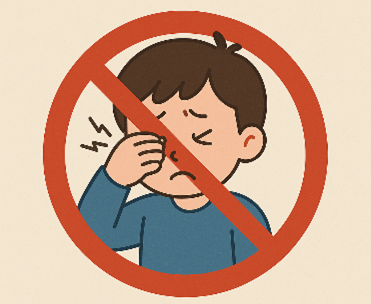
Do not rub or touch the surgical area
-
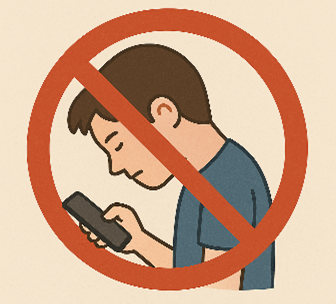
Avoid bending your head down
(such as bending over to wash your face or do laundry)
-
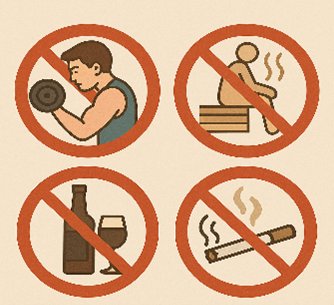
Avoid excessive exercise, sauna, jjimjilbang, alcohol, and smoking for about 2 weeks
-
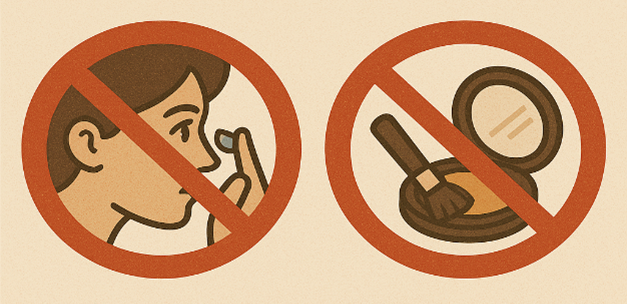
Contact lenses should be stopped for 2 weeks,
and makeup is allowed only from 3 days after suture removal
→ When putting on or removing contact lenses,
you need to pull on or rub the eyelids.
Right after surgery,
there are sutures at the incision site,
so these actions can
lead to wound opening, bleeding, or infection.
→ If makeup products seep into the
incision site before it has fully closed,
recovery may slow down,
or it may leave pigmentation or scars.
✱A quick note here!✱
🔍 Why shouldn't you bend your head down?
- Worsening swelling and bruising due to increased blood flow
When you bend your head down,
blood flow moves toward the head,
which can make swelling or bruising
at the surgical site worse.
- Risk of bleeding
Right after surgery, blood vessels
have not yet fully stabilized,
so if blood pressure rises suddenly,
bleeding around the sutures may occur
or it may lead to internal bleeding (bruising).
- Risk of wound opening and scarring
When you bend forward,
pressure is placed on the eyelids,
which can cause the wound to open
or put tension on the stitched area,
making scars more noticeable.
- Discomfort due to increased intraocular pressure
Bending your head down or
performing movements that strain the eyes
can temporarily raise intraocular pressure,
causing eye stinging, a foreign-body sensation, pain, and more.
<Taking Prescribed Medication and Cold/Hot Compresses>
- Take the prescribed antibiotics and pain relievers
without skipping any doses
- For the first 2 to 3 days after surgery,
use cold compresses, and after that switch to warm compresses
to help reduce swelling
→ Compresses constrict blood vessels,
suppressing bleeding, bruising, and swelling.
In particular, immediately after surgery,
an inflammatory response begins,
so cold compresses are very effective at
reducing worsening swelling or bruising.
→ Once recovery has progressed to some extent,
it is important to switch to warm compresses
to promote blood circulation.
This helps tissue recovery and
faster removal of waste products
within bruising and swelling.
- When applying ointment, wash your hands well,
and apply only a small amount to the prescribed area
→ Applying more ointment
does not make it work better.
Instead, too much can form a barrier on the skin,
which may interfere with wound breathing or medication absorption.
In particular, because eyelid skin is
thin and sensitive,
the risk of side effects such as pimples,
heat rash, or irritant contact dermatitis may be higher.
Conclusion: More important than the surgery itself is 'recovery care'
Upper and lower eyelid surgery is
not just about improving the eye shape;
it is a procedure that can even change quality of life.
But the results depend on
how you care for yourself after surgery.