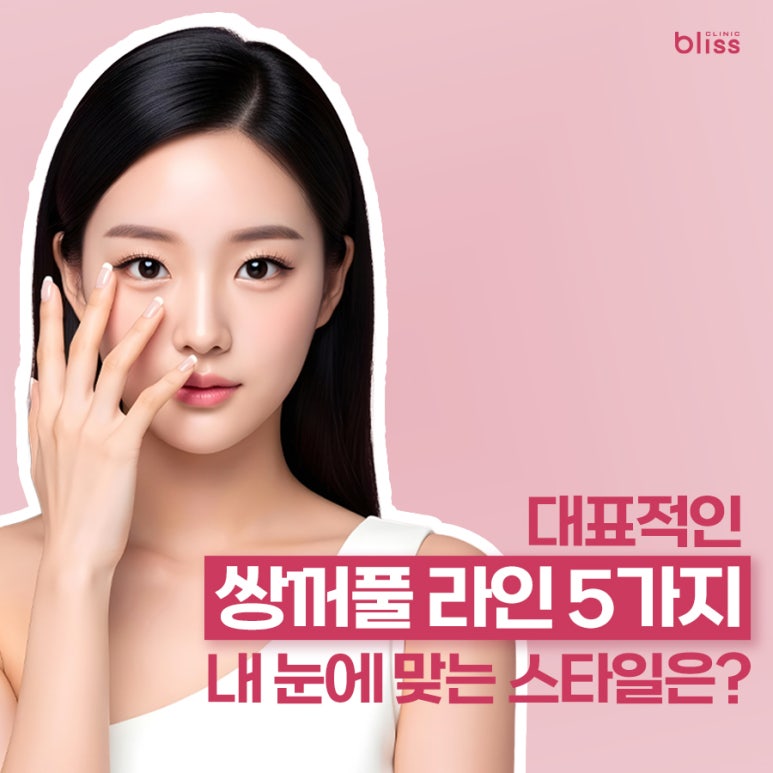
When researching double-eyelid surgery,
terms like
‘inline’, ‘outline’, and ‘in-out line’
can feel somewhat confusing.
“Exactly how are these lines different,
and which line would suit my face?”
is a concern many people have.
To solve this, the first step is to
accurately understand the types of double-eyelid lines
and the characteristics of each.
👁️ Representative Double-Eyelid Line Types
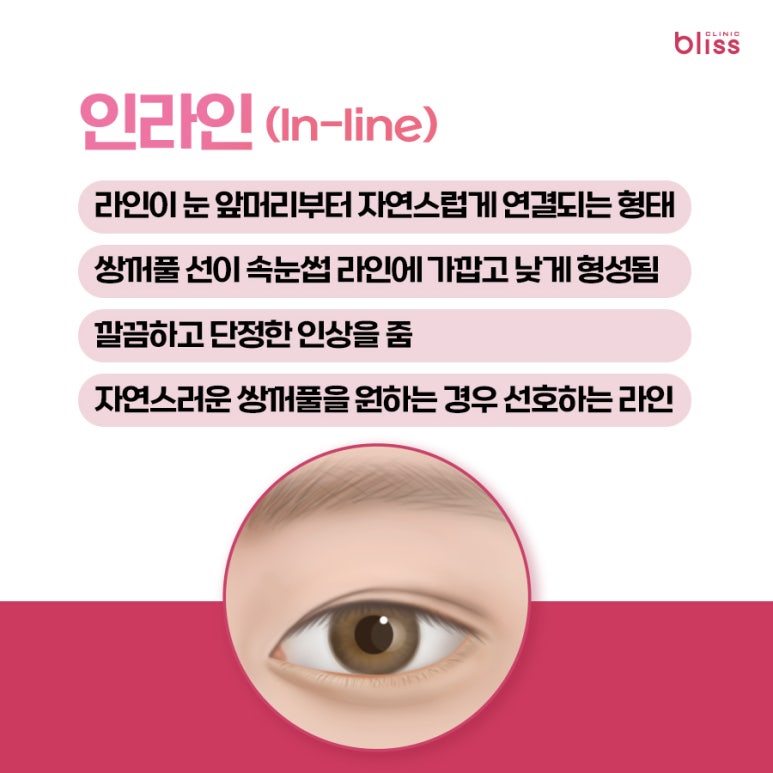
✨ Good fit for
Inline
- When the eyes look sharp or strong
and you want to soften that impression
- When you want a natural,
subtle change
- For students or office workers who need
a neat impression more than a flashy one
in everyday life
- When you do not often wear makeup
or prefer light makeup
🧑⚕️ Important points during surgery
- If the epicanthic fold is severe,
combining this with epicanthoplasty is necessary
to achieve a natural inline.
- Results may vary depending on
skin thickness and the amount of
fat on the upper eyelid.
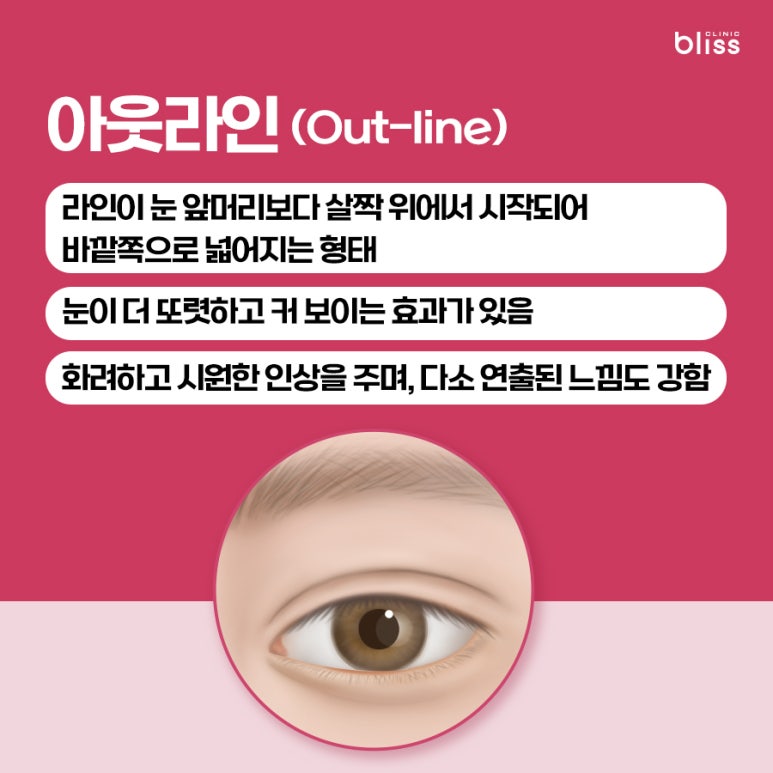
✨ Good fit for
Outline
- When you are concerned that
your eyes look small
- When you want a clear,
large-looking eye shape
- When you enjoy bold makeup
🧑⚕️ Important points during surgery
- If there is a lot of fat on the upper eyelid
or the skin is thick,
forcing an outline can create a line
that looks unnatural and puffy.
- On the other hand,
if the skin is thin,
the outline may stand out too much
and give an artificial impression.
▶ Therefore, the key is to adjust the line height
to match the condition of the eyes
- If an outline is designed while
the epicanthic fold remains,
the front part of the line may look pinched
or awkwardly bent.
In such cases,
epicanthoplasty (medial canthoplasty)
should be performed together to make
the line flow more naturally.
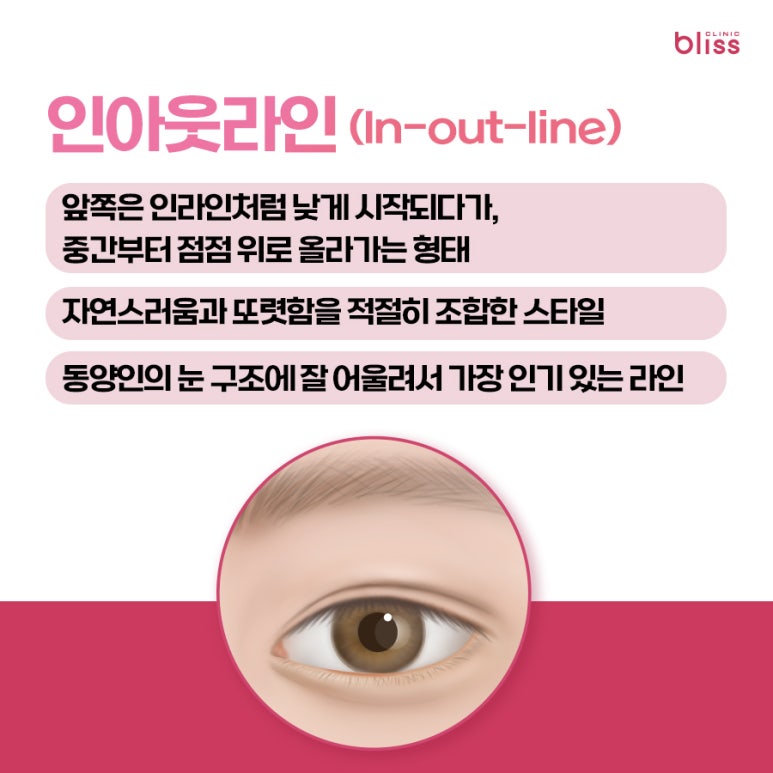
✨ Good fit for
In-out line
- When an inline feels too neat,
and an outline feels too strong,
it is a suitable middle option
- When you want an impression that is
soft yet defined
🧑⚕️ Important points during surgery
- Whether epicanthoplasty is combined
depends on the degree of the epicanthic fold.
(If the epicanthic fold is too severe,
the front line may be compressed,
resulting in an awkward line
instead of an in-out line)
- The line height must be adjusted
depending on the thickness of the upper eyelid
and the amount of fat.
If the line transition is not smooth,
it may look pinched
or unnatural.
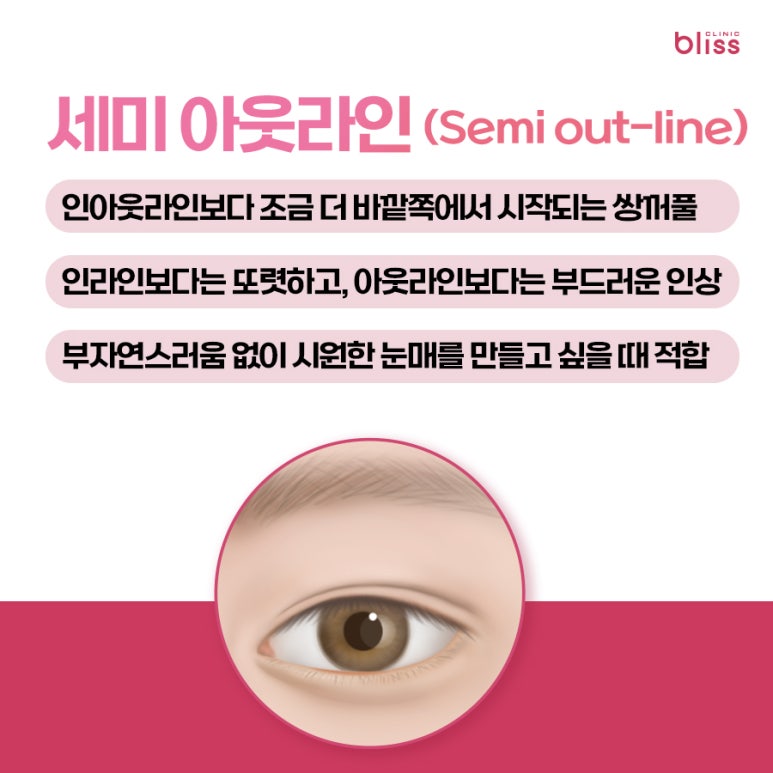
✨ Good fit for
Semi-outline
- When an inline feels too subtle,
and an outline feels
somewhat excessive,
it is suitable for those who want a middle ground.
- When you want both naturalness
and sophistication
🧑⚕️ Important points during surgery
- If the line is too high or
has a sharp angle,
it may look like an outline,
- On the other hand,
if it is set too low,
it may lose its presence
and look like an inline.
- The line often starts
slightly above the inner corner of the eye,
so if the epicanthic fold is severe,
the line may be compressed,
creating an unnatural, pinched appearance.
Therefore, it is important to carefully decide
whether to combine it with epicanthoplasty
(medial canthoplasty).
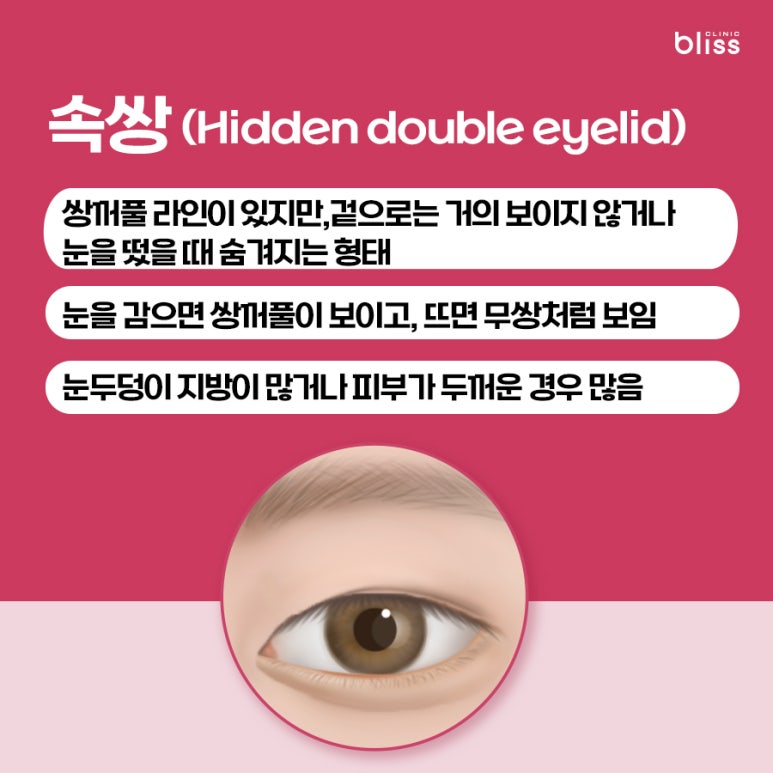
✨ Good fit for
Hidden double eyelid
- Suitable when you want to keep the cool,
clean look unique to a monolid
while adding just a little more depth,
- It suits those who want a subtle double eyelid
that looks like ‘their own eyes’
rather than one that is obvious.
🧑⚕️ Important points during surgery
- If the line is too thin,
the surgical effect may be
almost nonexistent.
Before surgery,
be sure to clarify the level of
‘presence’ you want
through line simulation.
- If there is a lot of fat on the upper eyelid
or the skin is thick,
a low line like a hidden double eyelid
may loosen over time,
or may not fold at all.
A hidden double eyelid gives a natural,
soft impression rather than dramatically
changing the eye shape.
- If the eyes are small
or look sleepy,
a hidden double eyelid alone
may not be enough to improve the eye shape.
The thinner and lower the line,
the weaker its retention tends to be,
so after surgery, rubbing the eyes,
swelling, and skin elasticity can cause it
to loosen easily,
which is why an incision method with stronger
fixation is generally recommended.
A double-eyelid line is
more than just making a line on the eye.
Because the most natural and beautiful line varies
depending on each person’s eye condition,
including the eye structure, amount of fat,
skin thickness, and epicanthic fold.
Therefore, rather than deciding that one line is
simply ‘good’ or ‘bad,’
it is most important to accurately understand
the style that suits your own eyes,
and make the decision after 충분히 consulting
with a specialist.