You can also check it out in the video.
After childbirth and exclusive breastfeeding,
What criteria should be used to choose breast surgery in middle age?

There are quite a few middle-aged women who undergo breast surgery. As a result of childbirth, breastfeeding, and aging, volume decreases and sagging occurs, changing the shape of the breasts. As middle-aged women continue to remain active in society and many still want to maintain a beautiful, toned figure, interest in middle-aged breast surgery is steadily increasing.
However, many people spend a long time worrying, or give up because of the prejudice of wondering whether they should have breast surgery at this age. In fact, the people who are more satisfied after breast surgery than younger patients are those who have had middle-aged breast surgery.
Today, I’d like to organize how to change naturally to suit your current body and the differences from the 20s.
Understanding changes in my body
Changes in breast shape as we age are not a special abnormality, but a natural phenomenon that appears over time.
The breasts are not a fixed structure like bones; their shape is maintained by skin, tissue, and elasticity, so they are relatively more affected by aging.
Especially after the age of 40, reduced collagen and declining skin quality can weaken the support that holds the breasts up, making them appear to droop downward or causing a decrease in upper fullness. Although this varies depending on each person’s body type, lifestyle habits, childbirth experience, and other factors, it is a process that can naturally occur in anyone.
Therefore, rather than viewing these changes as simply a problem, it is important to understand them accurately and make a plan suited to the current condition. Middle-aged breast surgery requires a customized approach that considers skin elasticity, tissue condition, and overall balance, rather than simply supplementing volume. When performed based on these factors, more natural and satisfying results can be expected.
Middle-aged breast surgery methods
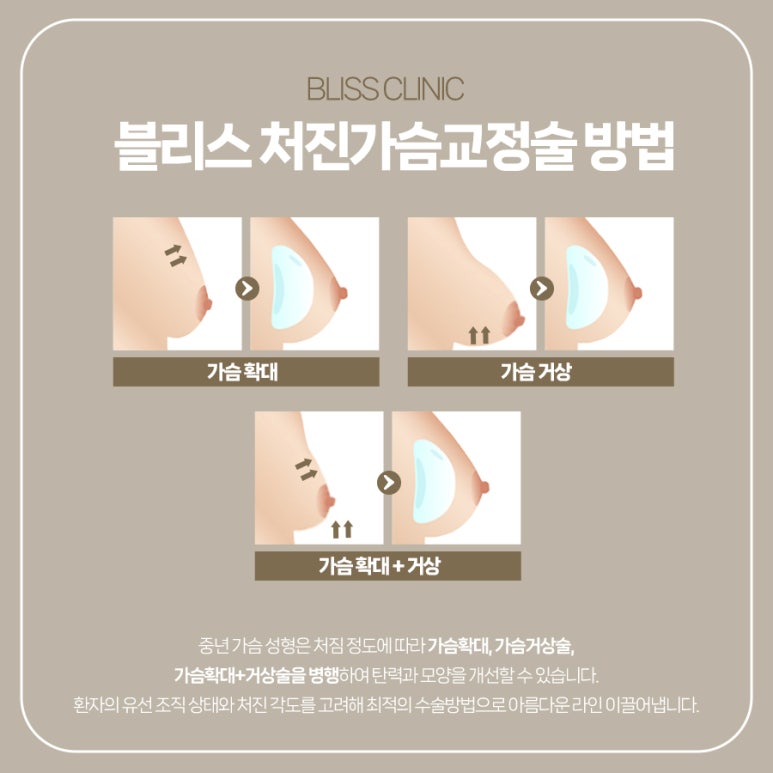
The breast changes that appear after childbirth, breastfeeding, and entering middle age are not simply a matter of size, but the result of multiple factors such as the degree of sagging, skin elasticity, and tissue condition. Therefore, when considering middle-aged breast surgery, accurately analyzing the current shape of the breasts should come first. In particular, the degree of sagging should be judged based on factors such as where the nipples are positioned relative to the inframammary fold and how much excess skin remains, and the surgical direction should be determined based on that.
Surgical methods can be broadly divided into breast augmentation, breast lift, and a combination of both methods, and these are performed as customized procedures depending on the individual’s condition.
If sagging is not severe and volume loss is the main concern, implant insertion alone can provide both volume and a natural lifting effect. However, if sagging is pronounced, a lift procedure that removes stretched skin and pulls the breasts upward is necessary. If volume supplementation is also needed, the procedure should be performed by applying augmentation and lifting at the same time so as not to create an unnatural result. Therefore, it is important to comprehensively understand the current stage of sagging and body type. As a result, the experience and skill of the medical team can lead to significant differences in outcomes, so through sufficient consultation, accurately understanding your own condition and carefully reviewing even the detailed aspects becomes an important criterion for expecting natural and satisfying middle-aged breast surgery.
Is recovery slower after middle-aged breast surgery?
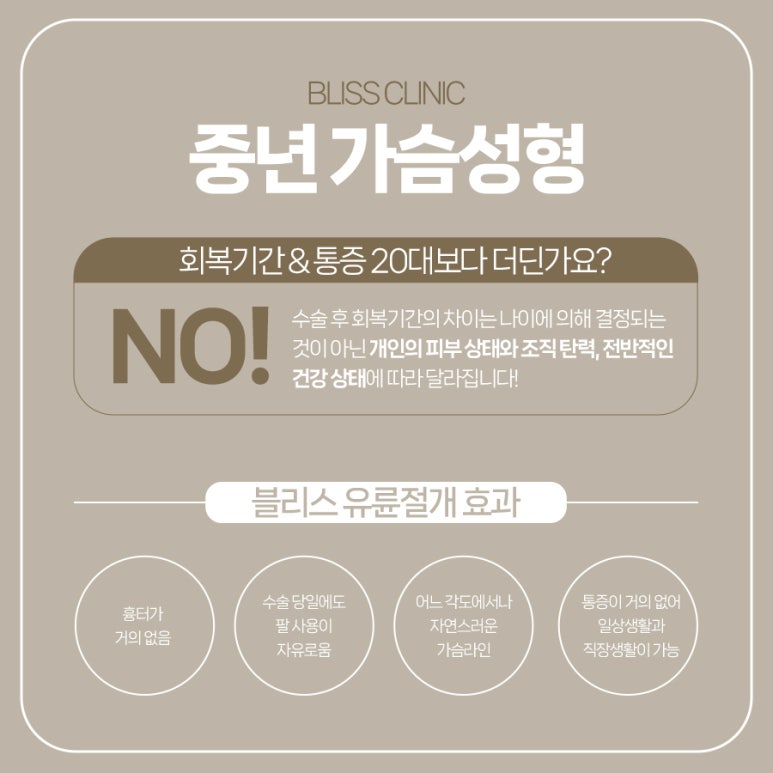
When considering middle-aged breast surgery, many people worry first about whether recovery will be slower than in their 20s. However, recovery speed is determined less by age alone and more by individual skin condition, tissue elasticity, and overall health. In fact, even among people of the same age group, differences in skin elasticity can greatly affect recovery response, so it is difficult to determine recovery based on age alone.
After middle age, skin elasticity may decrease and tissue may become more stretched, so these factors should also be considered when planning surgery. In addition, because vascular elasticity and the responses that appear during recovery can vary from person to person, it is important to sufficiently check the current condition of the body before surgery. The speed of recovery, as well as bruising and swelling, can appear in various ways regardless of age, so postoperative care can become just as important as the middle-aged breast surgery itself.
Expectations from middle-aged breast surgery
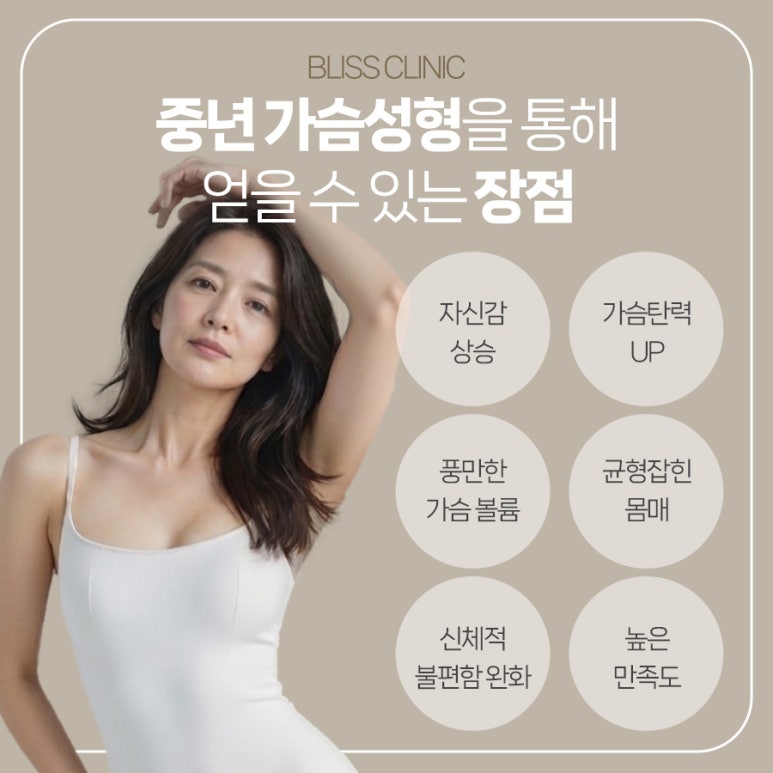
One of the important parts of considering middle-aged breast surgery is how realistically you set your expectations after the operation.
Younger patients often want to be satisfied with everything, including touch, shape, size, and trends, but middle-aged patients tend to approach it with a more objective understanding of their body type, skin condition, and recovery process.
In particular, after middle age, various factors such as reduced skin elasticity, tissue changes, recovery speed, and the possibility of scarring all come into play. Rather than pursuing excessive volume or drastic changes, it is important to aim for a natural and balanced result.
If surgery is planned based on these realistic expectations, satisfaction with the results is often higher. Accepting the recovery process as part of the overall journey, not just the surgery itself, can also be seen as a key factor that affects satisfaction with middle-aged breast surgery.
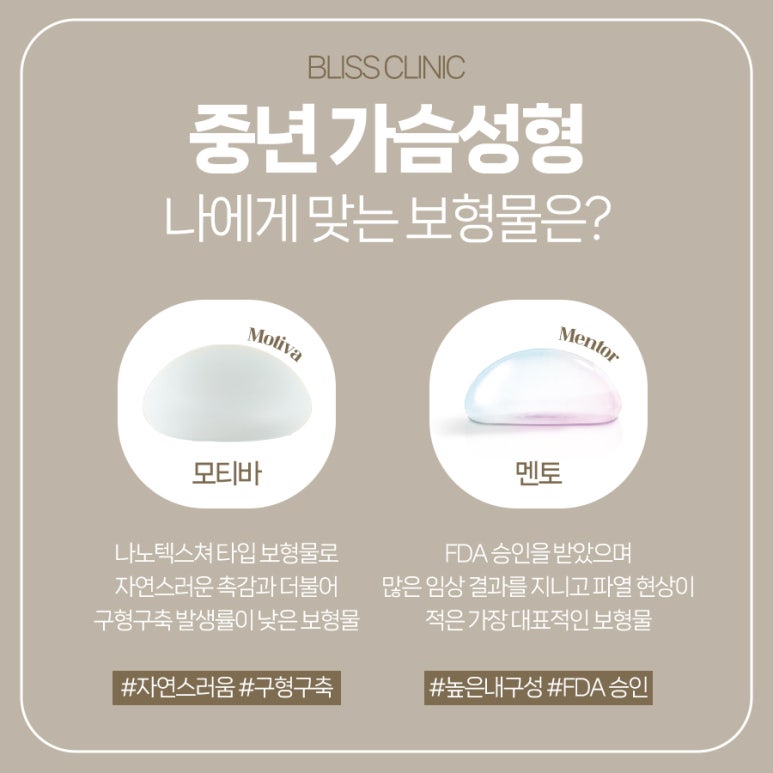
Implants and incision methods
Middle-aged breast surgery should focus less on creating dramatic change and more on how naturally and harmoniously the current condition can be improved. To do this, a customized plan that sufficiently considers the individual’s body type, skin thickness, and tissue volume is necessary, and a more cautious approach is required when selecting implants.
After middle age, the skin often becomes thinner and elasticity decreases, so using implants that are too large or too firm can make the contours stand out and create unnatural results. Therefore, it is important to choose a size and shape that suit the body type.
Recently, various implants and surgical methods have made it possible to expect improvement while reducing burden. One such method, the areolar incision approach, is sometimes considered a way to reduce stress on the tissue and alleviate concerns about scarring. However, rather than being applied the same way in every case, suitability may vary depending on the individual’s skin condition. Therefore, before middle-aged breast surgery, it is advisable to make the decision only after sufficient consultation.
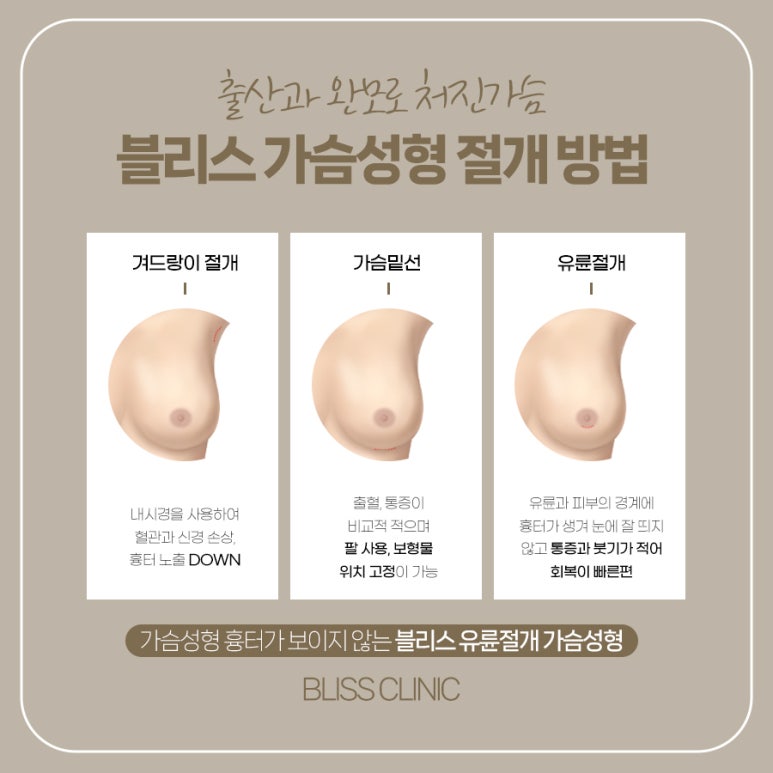
The standard for middle-aged breast surgery is not to match a past appearance or an ideal image, but to decide based on your current physical condition and life balance.
Rather than overly noticeable changes, natural restoration of proportion and stable recovery can be said to be the important areas.
When approaching the procedure with harmony over size and stability over change, satisfaction can also increase. From this perspective, middle-aged breast surgery after childbirth and exclusive breastfeeding is not simply a choice to turn back time, but a process of organizing the changes in the body that naturally come with age so that they suit the present you.
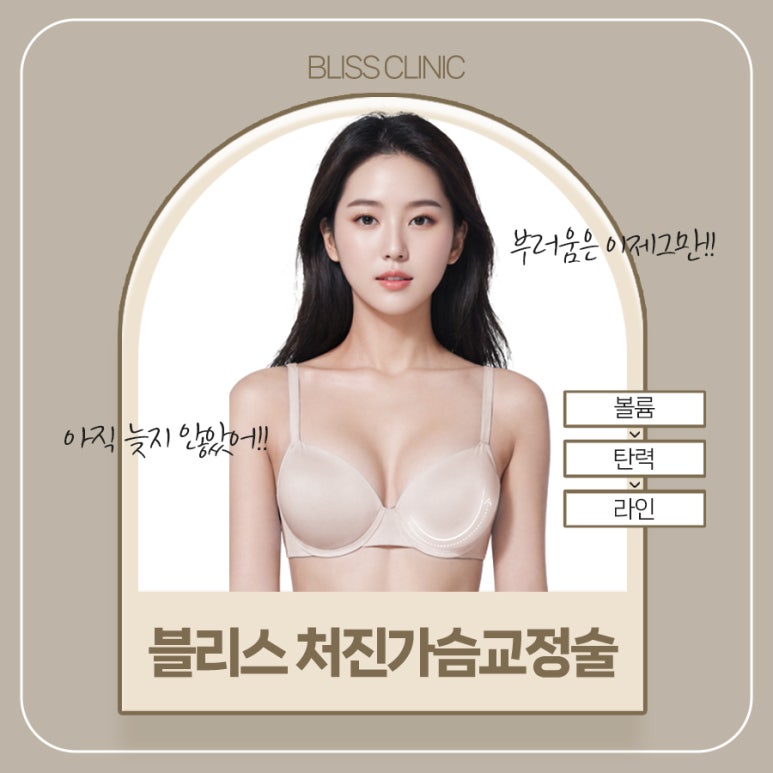
When you accurately understand your current condition and approach it carefully with a realistic plan suited to that condition, it can lead to a more natural and comfortable result.