You can also check it out in the video.
Under-Eye Fat Repositioning Pain: How Long Does It Last After Surgery?
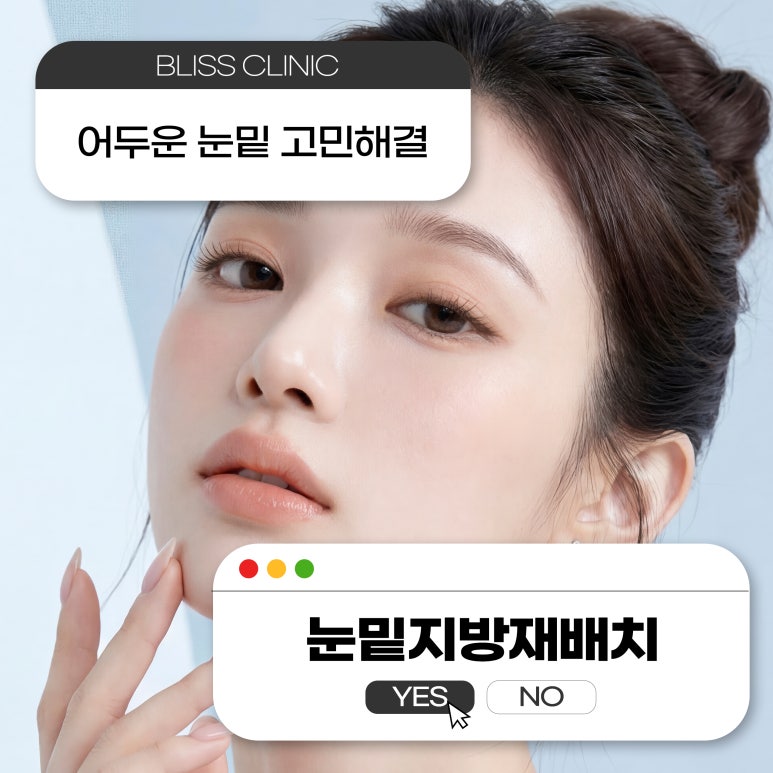
As you go about your daily life, you naturally find yourself looking in the mirror often.
At some point, you may notice a change where the area under your eyes looks more bulged and prominent than before.
These changes can alter your overall impression and lead to stress.
When the area under the eyes protrudes and casts a shadow beneath it, you may look more tired than you really are, or appear somewhat drained rather than lively.
If people around you say things like, “You look tired” or “You look older than before,” it can leave you feeling self-conscious and less confident.
For these reasons, many people consider under-eye fat repositioning surgery. However, because the skin around the eyes is especially thin and sensitive even on our face, concerns about pain and the recovery process naturally come along with the 기대 of surgery.
In this article, we will take a closer look at the degree of pain and the recovery period after under-eye fat repositioning surgery.

Degree of pain in under-eye fat repositioning
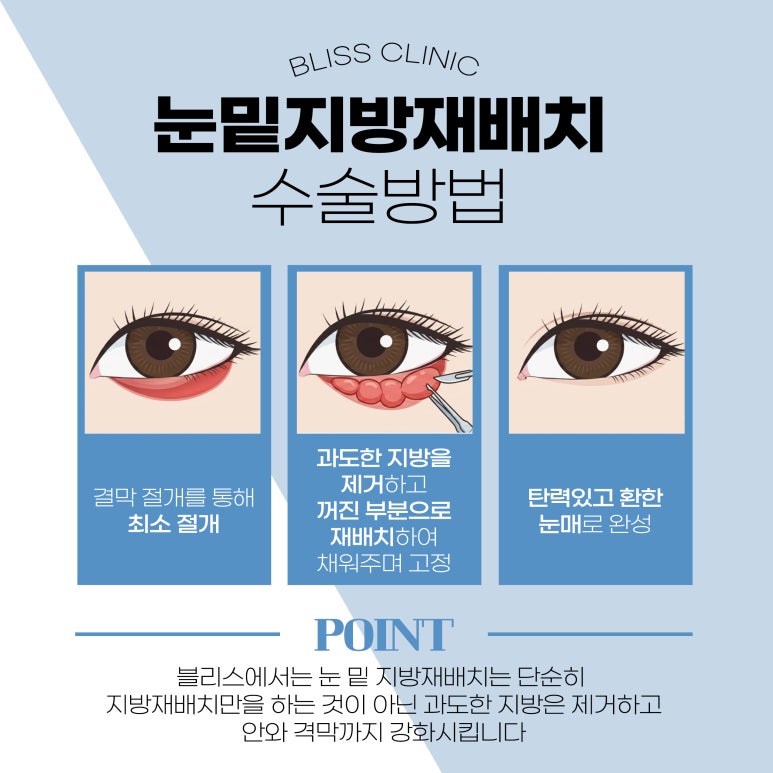
Under-eye fat repositioning is relatively limited in incision size, and because it is usually performed through the inner conjunctival side rather than the outer skin, it is not classified as a highly painful surgery.
The first stage of under-eye fat repositioning pain can be considered the anesthesia stage.
At our clinic, we combine sedation anesthesia and local anesthesia so the procedure can be performed in a more comfortable state while reducing the patient’s tension. Since local anesthetic is administered around the eyes after the patient has already fallen asleep under sedation anesthesia, it is rare to feel pain at the moment the needle goes in.
When the anesthesia effect gradually wears off, a slight heaviness, a foreign-body sensation, and a pulling feeling around the eyes are the main symptoms that appear.
These symptoms rarely develop into pain severe enough to make daily life difficult.
Most patients describe it not as “pain,” but rather as heaviness around the eyes or a feeling of pressure from inside, like a sense of swelling. This is a natural reaction that appears as the surrounding tissues are temporarily stimulated during the process of repositioning the fat through the conjunctiva and securing the stretched orbital septum tissue to the periosteum. The throbbing or dull aching sensation was generally at a level that could be well controlled with the painkillers prescribed by the clinic.
Changes in pain
Even after under-eye fat repositioning surgery is completed safely, the first 48 hours are the most important period for preventing internal bleeding and encouraging stable recovery. Depending on how this period is managed, the comfort of the recovery process can change.
Under-eye fat repositioning pain is usually felt most noticeably on days 2 to 3 after surgery, and after that it gradually decreases, with discomfort easing over time.
In most cases, after about one week, the discomfort felt in daily life is greatly reduced, but minor discomfort or residual symptoms may continue for another 1 to 2 weeks.
Occasionally, in external conditions such as strong wind or dry weather, the area around the eyes may feel sensitive; however, these symptoms also often improve naturally over time.
Of course, recovery speed varies from person to person, but overall recovery generally follows a similar course. It takes about 1 to 2 months for the tissue to fully stabilize and settle into place. During this period, you may occasionally feel a slight pulling sensation or unfamiliar feeling, but these gradually disappear naturally as time passes.
Why differences occur between individuals
Even for the same surgery, the degree of pain felt can vary greatly from person to person.
Under-eye fat repositioning pain can also feel different depending on an individual’s pain sensitivity, overall condition, and the specific details of the surgical method.
Some people feel it as only mild discomfort, while others may react more sensitively and feel the discomfort more strongly.
These differences are not a special problem but a natural individual response, so there is no need to worry too much about how you feel.
In addition, if the skin around the eyes is especially thin or sensitive, the reaction to stimulation may feel stronger.
Depending on the range of fat movement and whether any additional procedures are performed, the level of discomfort you feel can also vary.
For example, unlike a case where only the process of simple fat removal is performed, if the fat repositioning process is included, the stage of reconstructing the tissue is added, and a foreign-body sensation or discomfort may be felt for a little longer.
Furthermore, the degree of swelling or pain felt can also vary depending on postoperative care methods, so lifestyle habits and how well you manage recovery are important factors as well.

For pain relief
During the recovery period, it is important to follow a few daily care guidelines well in order to reduce pain and hope for a faster recovery.
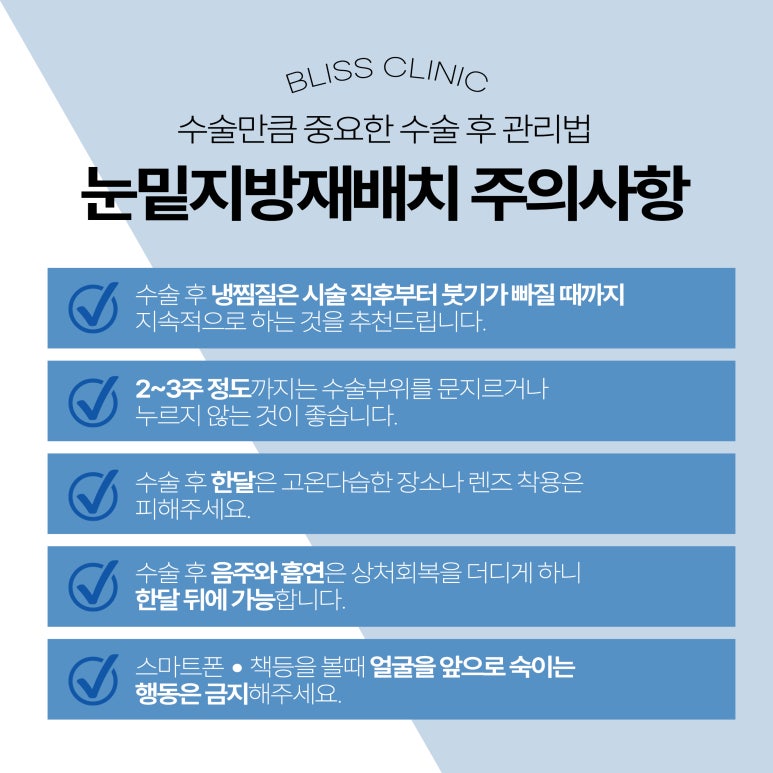
First, using the cold compress packs provided by the clinic appropriately to lower the temperature around the eyes can help ease nerve stimulation and reduce pressure and pain caused by swelling to some extent.
For the first 3 days after surgery, it is advisable to remain as stable as possible, and it is better to avoid bending your head down or engaging in strenuous physical activity.
Even when looking at a smartphone or reading a book, it is necessary to pay attention to your posture so as not to put strain on the eyes.
Also, bending your head deeply to tie shoelaces, lifting heavy objects, or straining too much in the restroom can increase intraocular pressure and cause discomfort or pain, so caution is needed.
When washing your face, you should be careful not to let water directly touch the surgical area, and after washing, gently pressing with a soft towel to remove moisture rather than rubbing is helpful in reducing irritation.
Diet management is also an important factor. Spicy foods and salty foods can worsen swelling and make pain feel stronger, so it is best to avoid them as much as possible.
Instead, eating foods rich in protein and fruits containing plenty of vitamin C can have a positive effect on the recovery process.
Sleeping posture also affects recovery, so rather than sleeping on your side, it is better to lie flat on your back. Keeping the pillow slightly elevated at about 10 to 15 cm can help reduce swelling and discomfort.
Exercise is safest to avoid for about 2 weeks.
On the other hand, light walking can be started the day after surgery without difficulty.
For safe results with under-eye fat repositioning
Vague concerns about pain after under-eye fat repositioning are a natural feeling shared by many people preparing for the procedure.
Especially since it is a surgery performed in a sensitive area, anxiety about pain and the recovery process may come to mind first.
However, the pain actually experienced is often much milder than expected, and if proper care and guidance are followed, recovery generally proceeds within a manageable range. To reduce such anxiety, it is most important to understand accurate and sufficient information in advance. Because the procedure is performed under local anesthesia, pain during the surgery is felt very little in most cases, and the recovery process can also proceed without major burden on daily life if individualized care is provided.
Ultimately, what matters is understanding the recovery process and pain management methods clearly through sufficient consultation before the procedure.
If you make a careful decision with safety as the top priority and follow the systematic guidance of the medical staff, pain after under-eye fat repositioning can also be managed at a sufficiently controllable level and can lead to a more stable result.