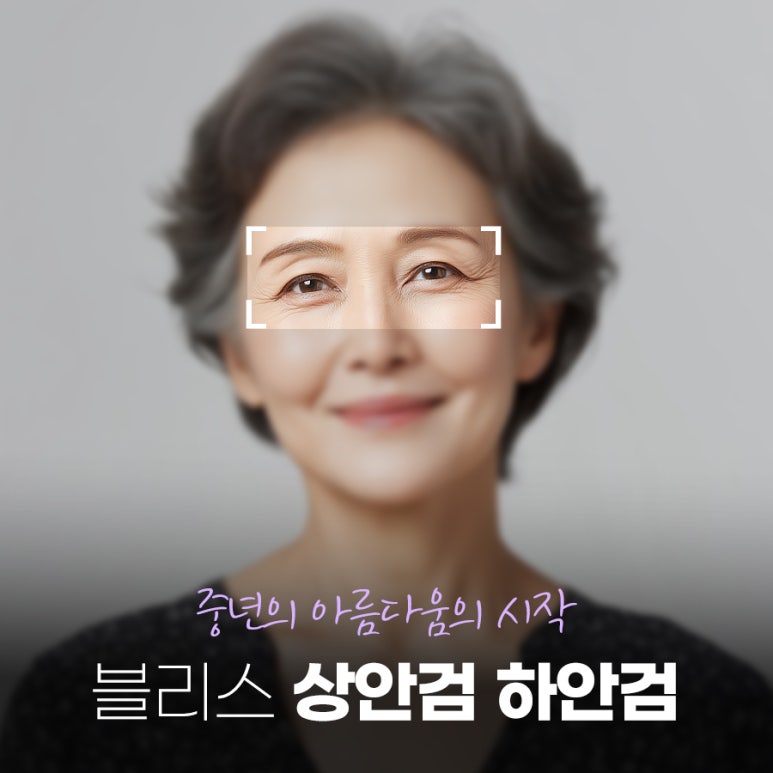
The area around the eyes is one of the first parts of the body to show signs of aging, naturally increasing interest in upper and lower eyelid procedures. In fact, many people begin to feel that their expression looks dull and tired even when they are not sleepy or fatigued. At first, it is easy to think this is simply a matter of physical condition, but over time, people may begin to wonder whether these changes are the result of accumulated loss of skin elasticity.
Generally, from around their 30s, more people begin to feel as though their upper eyelids are gradually becoming heavy and drooping. After their 40s, many also become concerned about changes in the area beneath the eyes.
When changes in both the upper and lower eyelids appear at the same time, it can be difficult to determine which area should be improved first or whether it would be appropriate to address both together.
Therefore, it is especially important to accurately assess the condition of the individual’s eyes, the degree of drooping, and the extent of the areas requiring improvement before establishing an appropriate plan.
Today, we will look at the changes in facial expression caused by drooping eyelids and examine the differences between upper and lower eyelid procedures, focusing on the criteria that should be considered.
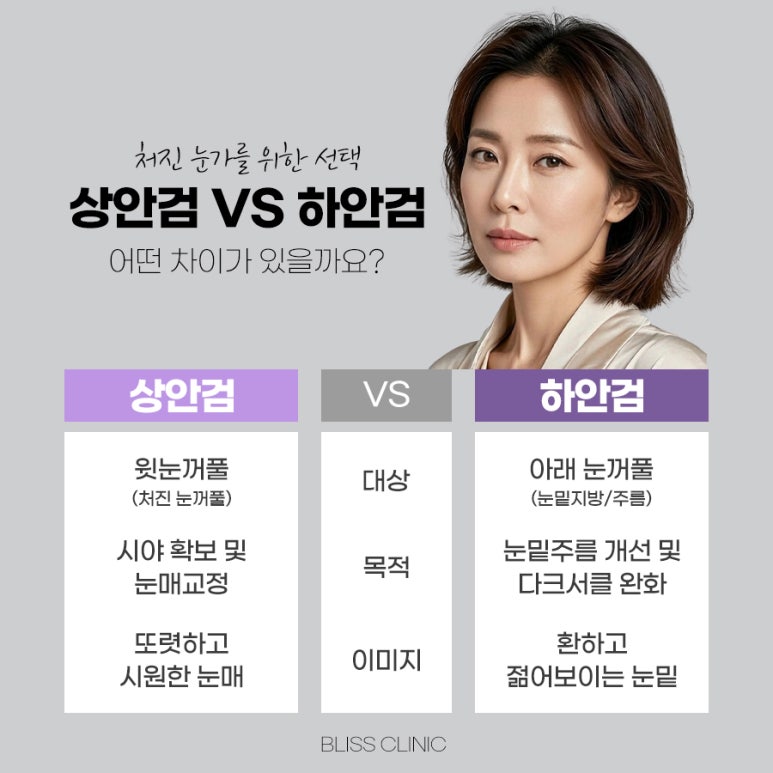
Upper and Lower Eyelids: Concepts and Differences
The terms upper eyelid and lower eyelid are used to distinguish the structures above and below the eyes, respectively. The approach also varies depending on the pattern of changes caused by aging.
The upper eyelid generally refers to the area where drooping of the upper eyelid, blurring of the double-eyelid crease, and prominent skin wrinkles occur. In contrast, the lower eyelid is closely associated with factors that create a tired appearance, such as bulging fat beneath the eyes, reduced skin elasticity, and fine wrinkles.
Because the changes that occur differ depending on the location, it is necessary to understand and distinguish the characteristics of each area.
Approaches to the Upper Eyelid
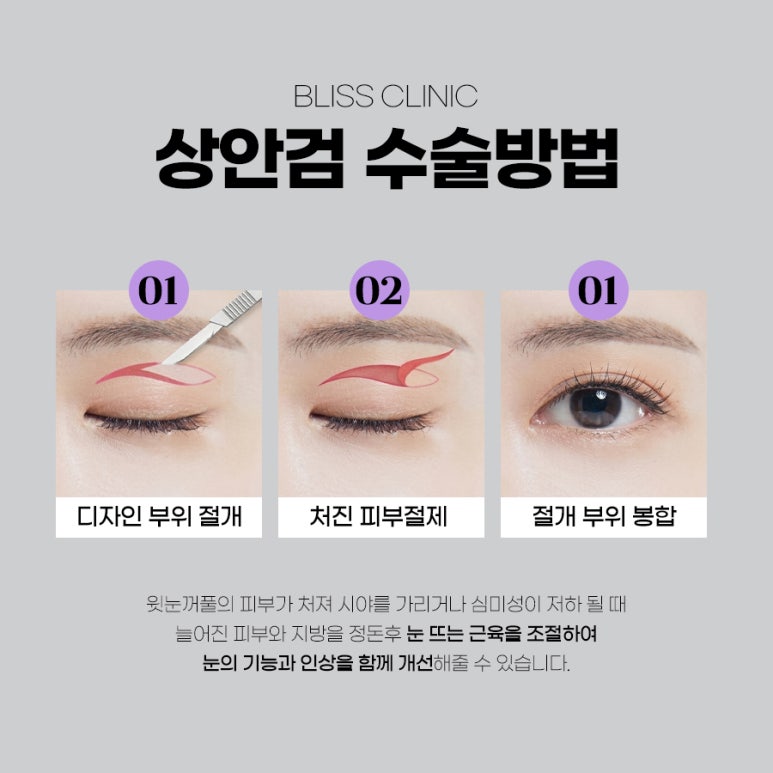
The upper eyelid concerns drooping and other changes in the upper eyelid, which often progress as the skin gradually descends and covers the eye. When these changes occur, the eyes may appear smaller than they actually are because the eyes look less open, and the expression may appear more tired and lacking in energy. In some cases, people also report that their vision feels restricted because the eyelid covers the upper part of the pupil.
When this condition persists, people may unconsciously develop a habit of raising their eyebrows by using their forehead muscles. This can lead to a series of changes in which forehead wrinkles become more pronounced. Therefore, the approach needs to consider not only the skin itself but also the functional aspect of opening the eyes.
During upper eyelid improvement, loose skin may be removed within an appropriate range. If the strength used to open the eyes has also weakened, corrective treatment to compensate for this may be performed at the same time. This can reduce the effort required to open the eyes and help create a feeling of more natural visual openness. As the overall eye contour becomes more defined, the expression may also appear clearer and more vibrant.
Characteristics of the Lower Eyelid
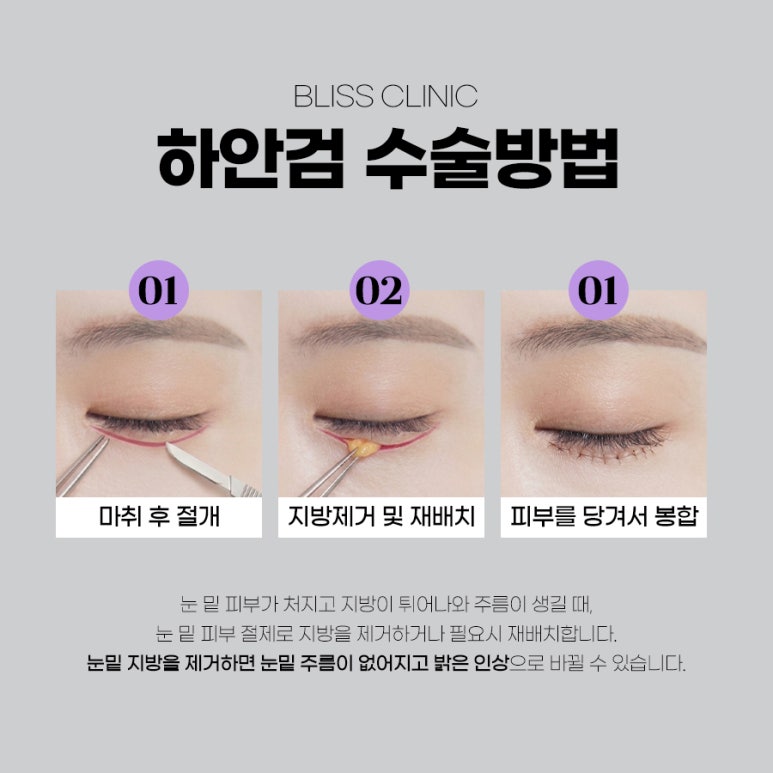
The lower eyelid concerns age-related changes beneath the eyes. It is one approach to improving drooping around the eyes, but it has structural characteristics that distinguish it from the upper eyelid. The area beneath the eyes is affected not only by the skin but also by the fat layer and ligament structures, so the changes tend to be relatively complex.
In particular, as time passes, fat beneath the eyes may move forward and appear bulging. Conversely, a hollow-looking shadow may form as a result of reduced fat, making the face appear tired. When reduced skin elasticity is added to this, fine wrinkles may make dark circles appear even more pronounced. Thus, it is important to understand the lower eyelid not as a single problem but as a structural change in which shifts in fat position, skin drooping, and loss of volume act together. Rather than judging the condition only by its outward appearance, it is necessary to first examine the state of the underlying tissues.
During lower eyelid correction, the protruding fat may be repositioned with consideration for its shape rather than simply removed. Loose skin may also be appropriately trimmed to create a smoother eye contour. This can help create a more organized overall eye area and may contribute to a lively, natural-looking youthful appearance.

How the Approach to Improving Drooping Eyes Varies by Age
Aging around the eyes does not suddenly begin at a specific point; it gradually appears in different ways depending on age. Therefore, it is important to understand the appropriate criteria for each period. In particular, from the 30s through the 60s and beyond, the direction of change and improvement strategies for the upper and lower eyelids gradually differ.
People in their 30s may not yet be considered to be in an advanced stage of aging, but subtle changes often begin to become noticeable toward the latter part of this decade. In the upper eyelid, the skin near the outer corner of the eye may begin to droop slightly, making the double-eyelid crease appear narrower than before or causing makeup to smudge more easily. Beneath the eyes, changes often appear as a subtle shadow rather than prominent fat. At this stage, a conservative approach focused on reducing the burden of treatment, maintenance, and prevention is generally considered instead of a large incision.
In the 40s, changes around the eyes become more noticeable, leading many people to consider improvement. In the upper eyelid, drooping skin may gradually cover the pupil and interfere with vision. A habit of relying on the forehead muscles when opening the eyes may also develop, increasing the likelihood that wrinkles will deepen. At the same time, fat beneath the eyes may protrude forward, while a hollow line forms below it, making the overall expression look tired or stern. During this period, it is important to restore structural balance rather than simply remove excess tissue. With appropriate correction, the eyes may appear more defined and the expression may become softer than before.
For people in their 60s and beyond, functional discomfort often becomes more prominent in addition to cosmetic concerns.
As drooping of the upper eyelid becomes more severe, it may restrict the field of vision or cause discomfort due to skin irritation. The lower eyelid may also undergo changes that affect the overall facial expression as elasticity decreases significantly and deep wrinkles develop. At this stage, it is important to consider correction over a broader area along with stable fixation. Approaches involving both the area beneath the eyebrows and the eyelids may also be used. In lower eyelid correction, careful fixation is essential to help prevent the eyelid from turning outward. Thus, fully understanding the changes and characteristics that appear around the eyes at each age and establishing an approach suited to the individual’s condition are important criteria when addressing drooping eyes.
Overall Harmony Is More Important Than Improving Only One Area
Many people also wonder what changes may occur when the upper and lower eyelids are considered together.
If only the upper eyelids are improved, changes in the lower eyelids may appear relatively more prominent. Conversely, when only the area beneath the eyes is treated, drooping in the upper eyelids may stand out more. For this reason, examining both areas together can help balance the eyes as a whole and may lead to a more natural and harmonious expression. To reduce any awkwardness or contrast that may result from improving only one area, it is important to take an overall balance into account.
In addition, the degree of eyelid drooping, the condition of the fat beneath the eyes, and skin elasticity vary greatly from person to person. Rather than applying the same method to everyone, it is necessary to carefully reflect each individual’s circumstances. Even among people in the same age group, eyelid thickness, muscle strength, and fat distribution can all differ. Accordingly, the precision of this analysis may affect satisfaction with the result.

When considering surgery, the recovery process is also an important factor. When the upper and lower eyelids are treated together, some people feel that the time-related burden is reduced because they go through the recovery period only once. When the procedures are performed separately, however, they may notice the difference of having to experience the recovery process twice.
Swelling or bruising may occur during the early period, so it is advisable to consider the overall schedule and convenience as well.
If you are considering both upper and lower eyelid procedures, fully understanding the characteristics and differences of each procedure and organizing an approach suited to your condition may help you achieve a more satisfactory result.