You can also check it in the video.
Customized Solutions for Successful Breast Augmentation with Pectus Carinatum or Pectus Excavatum

When considering breast augmentation, many people focus on the type or
size of the implant, but the most important foundation determining the
actual shape of the result is the individual's rib cage structure.
The shape of the rib cage varies from person to person,
and particularly when skeletal characteristics such as
pectus carinatum or
pectus excavatum are present,
a more precise approach than standard surgical methods is required.
These structural differences can affect the shape and balance of the breasts,
making a customized plan important.
In this post, we will examine the characteristics of pectus excavatum and pectus carinatum
and take a detailed look at safe and natural breast augmentation methods
that take these factors into consideration.

Implant Approaches for Pectus Excavatum and Pectus Carinatum
The position and shape of breast implants are significantly influenced not only by gravity and
tissue, but also by the angle and structure of the rib cage bones.
Pectus Carinatum
The sternum and costal cartilage are sunken inward, making the center of the chest
appear indented. As a result, the implant may shift inward,
or a natural cleavage line may not form.
Pectus Excavatum
The sternum protrudes forward, causing the breasts on both sides to
tend to spread outward. This can make it difficult for the implants to move toward the center
and cause them to appear more widely distributed.
Uniform dissection that does not account for these skeletal characteristics
may lead to an unnatural result in which the gap between the breasts is excessively wide
or they are positioned too close together.
Therefore, a customized plan is needed: the rib cage structure should be
accurately analyzed through a detailed preoperative evaluation, and the appropriate implant
and dissection range should be determined for each individual.
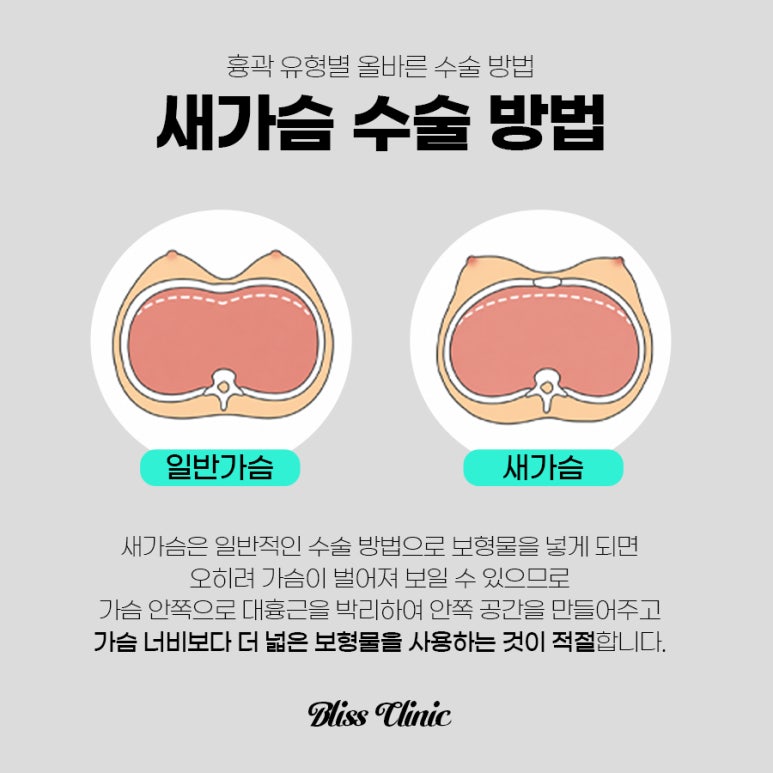
Dissection Strategy and Implant Selection for Pectus Carinatum
Pectus carinatum can make the gap between the breasts appear wide
and may cause the implants to shift outward. In such cases,
simply inserting the implants is not sufficient. To create the central space more precisely,
adequate medial dissection is important so that the breast tissue can be guided naturally
toward the center. At the same time, the extent of lateral dissection should be appropriately
limited to prevent the implants from being pushed outward along the slope of the rib cage
and to secure stable support.
It is also important to select an implant shape and size that can naturally fill the breast contour
and create central volume, rather than choosing a small implant. This can help achieve
more balanced cleavage and a closer-fitting silhouette.
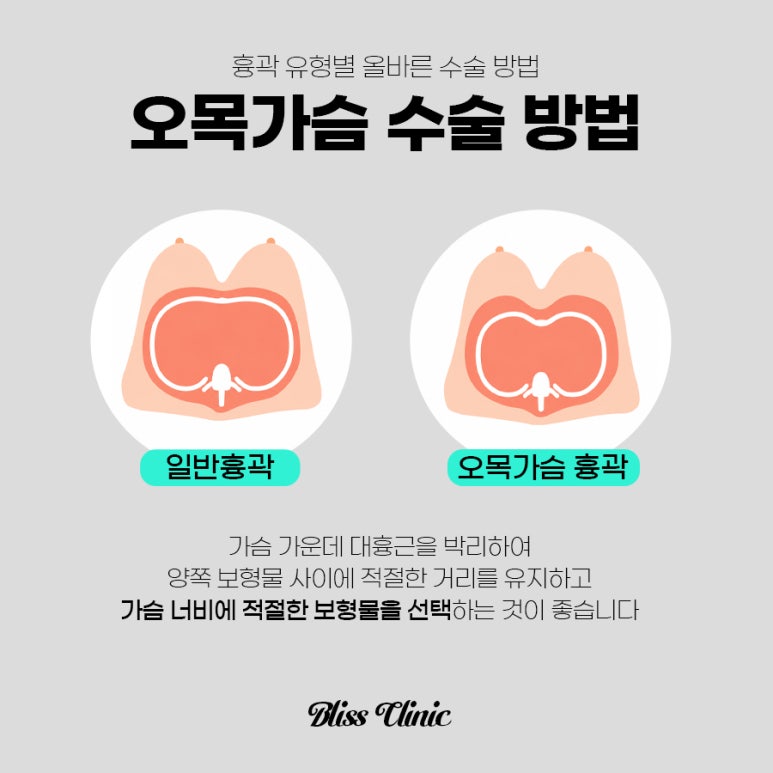
Dissection Range and Design Strategy for Pectus Excavatum
Pectus excavatum is characterized by an inwardly sunken sternum,
which creates a strong tendency for the implants to be pulled toward the center.
In this case, excessive medial dissection can bring the implants too close together
and may cause symmastia, in which the breasts appear to be joined as one.
Therefore, it is important to minimize central dissection. As the tissues stabilize over time,
some natural alignment toward the center may occur. Rather than aiming from the outset
for excessive volume or overly close central positioning, it is preferable to select
an implant size suited to the structure of the rib cage.
It is also helpful to secure sufficient lateral space and design the implants so that they
spread naturally and form balanced contours. After surgery, maintaining the use of
compression garments sufficiently can help stabilize the implants.

Achieving a Natural Shape
When the implants settle naturally along the slope of the rib cage,
excessive upper-pole fullness is less likely to show, allowing the overall breast line
to flow together smoothly and creating a more ideal contour. The quality of breast augmentation
is not determined simply by increasing volume. It also depends on harmonizing
fluid movement that falls naturally with gravity when standing and spreads gently to both sides
when lying down, together with a texture that feels close to natural tissue.
It is important to closely analyze each individual's rib cage structure, particularly
skeletal characteristics such as pectus excavatum and pectus carinatum,
and create a customized design to address them.
Through this approach, an artificial appearance can be reduced from every angle
and a balanced silhouette can be achieved.
In addition, positioning the implants while taking the slope of the rib cage into account
can help reduce the possibility of complications such as excessive upper-pole fullness,
rotation, or deformation. Ultimately, a precise surgical plan tailored to the specific condition
is the key to a natural and satisfactory result.

The Importance of Customized Breast Augmentation
Breast augmentation is not simply a procedure of inserting implants.
It can be viewed as the precise design of a new space suited to the patient's skeletal environment,
namely, their rib cage.
In cases involving structural variables such as pectus carinatum or pectus excavatum,
the surgeon's experience and judgment are particularly important. The surgeon must carefully
assess tissue tension and responses during surgery while finely adjusting the extent of dissection.
Accurately analyzing each individual's rib cage shape and establishing a surgical plan accordingly
are key factors in improving both safety and satisfaction with the results.
Therefore, it is advisable to consult with a specialist with sufficient clinical experience
and make a decision based on a customized approach suited to you.

If you have concerns related to the structure of your rib cage or want a more
natural and harmonious volume, we recommend discussing the appropriate approach for you
thoroughly through a comfortable consultation.