If you have tried various cosmetics and procedures
for skin improvement but have not noticed changes
as significant as you expected,
it is natural to become interested in pure collagen Retigen.
"What exactly is the principle behind the Retigen procedure?"
"Will there really be noticeable effects?"
"Could there be any side effects?"
These are concerns that often come along as well.
So, in this post, we will honestly summarize the effects of
Retigen collagen, the level of discomfort, and
possible side effects that may occur.
The Core Principle of Retigen: Atelocollagen
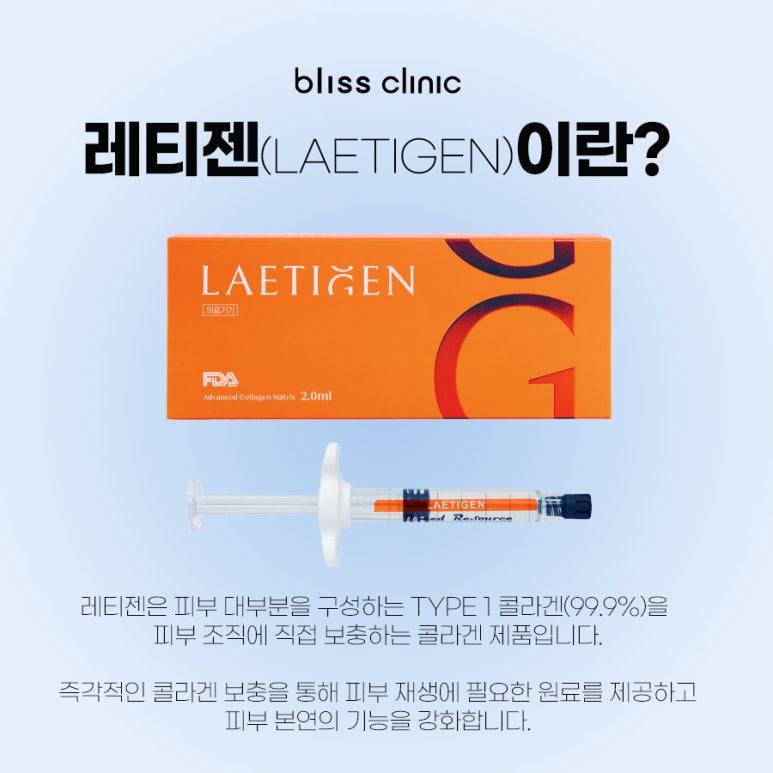
Retigen is a skin booster based on 99.9% high-purity type 1 atelocollagen
(Atelocollagen).
Type 1 collagen is a primary component of the dermal layer of our skin
and plays a role in supporting skin structure and elasticity.
Retigen is designed to precisely refine a substance with a structure similar to human collagen
into microscopic particles and deliver it deep into the skin.
Atelocollagen is characterized by having unnecessary immune-triggering elements removed,
which enhances its safety and allows it to act more stably in the skin.
In particular, because its particles are extremely fine,
they spread evenly and adhere throughout the skin layers, making this
a procedure focused not simply on adding moisture,
but on improving skin texture and strengthening its foundation of elasticity.
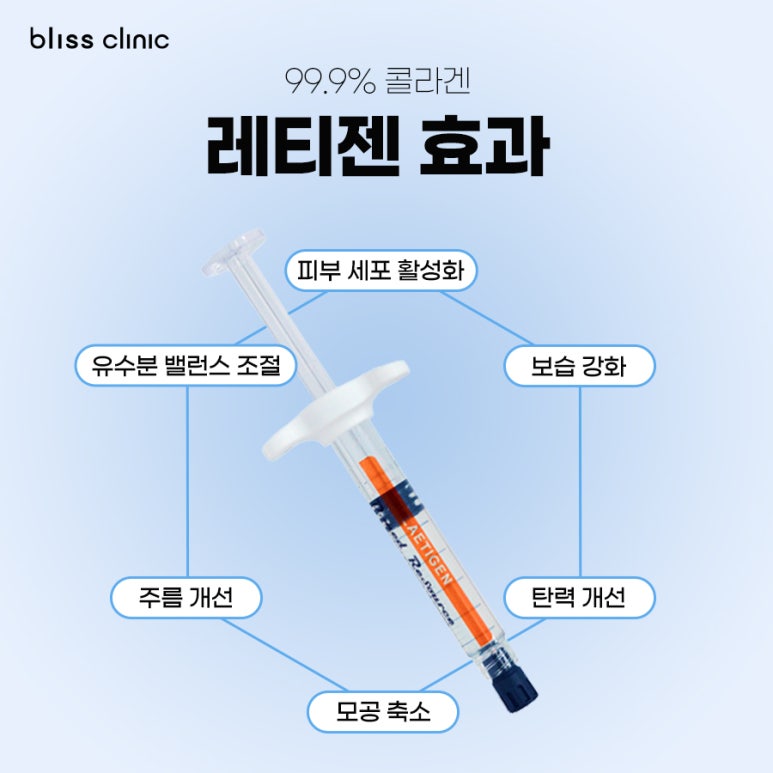
Retigen’s Gradually Emerging Effects
Rather than producing a noticeable change immediately after the procedure,
Retigen is the type of treatment in which the skin’s condition gradually improves
over time.
Usually, after one to two weeks, many people feel that their skin texture
has become smoother and more refined, while around three to four weeks,
many notice a difference in elasticity and feel.
It then continues to work within the skin for approximately six months,
gradually increasing its density and elasticity.
Because it strengthens the skin’s structure rather than filling the surface,
the results are natural and not excessive.
It is best to expect a gradual improvement over time rather than rapid changes.
Differences in How Skin Boosters Work
Rejuran uses PN derived from salmon
and works by enhancing the skin’s own regenerative capacity,
while Juvelook uses PDLLA to induce collagen production in the body,
with gradual improvement expected over time.
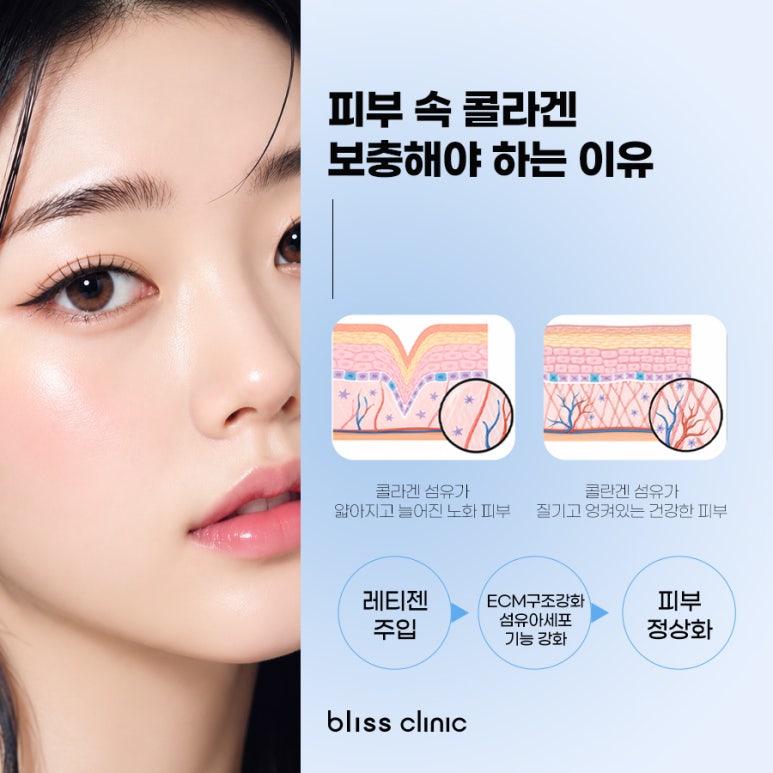
In contrast, the key feature of Retigen is that rather than waiting for this
“production process,” it directly supplies the skin with
99.9% high-purity atelocollagen.
In other words, it does not depend on the speed at which the skin produces collagen on its own,
but immediately replenishes the collagen needed to stabilize the structure.
Through this process, it quickly reinforces the skin’s
ECM (extracellular matrix), strengthening the foundation of elasticity,
and can be viewed as helping reduce the time gap between recovery
and regeneration.

Level of Discomfort
Retigen is a skin booster procedure that directly injects collagen,
rather than delivering intense energy to the skin like a laser or radiofrequency treatment.
Therefore, overall skin irritation and the sense of burden are relatively low,
and it is known as a procedure that even people with sensitive skin can try comfortably.
However, because it is performed by injection,
the slight stimulation or stinging sensation when the needle enters
may be felt differently by each person.
In addition, the level of discomfort can vary depending on skin thickness,
skin condition, and pain sensitivity, so it is important to have a thorough consultation
before the procedure and adjust the method and intensity
to suit the condition of your skin.

Side Effects and Recovery After a Retigen Procedure
Temporary swelling, redness,
or minor bruising may occur after a Retigen procedure, and the skin may
feel different from usual due to irritation caused during the injection process.
However, these reactions are generally part of the normal recovery process
and often subside naturally within a few days.
Because Retigen does not use intense energy,
it is relatively low in burden, but individual reactions
may vary depending on a person’s skin condition and overall condition.
Therefore, an accurate skin assessment and customized planning before the procedure are important.
In particular, if you have sensitive skin or allergic reactions,
it is necessary to make a safe plan through a thorough consultation.

Retigen is a procedure that may help address concerns associated with natural skin changes over time,
such as reduced elasticity, rougher skin texture,
and diminished vitality.
The important thing is not to turn back the clock,
but to maintain and improve the current condition of the skin in a healthy way.
The procedure usually takes approximately 20–30 minutes and involves relatively little recovery burden,
with a return to daily activities possible on the same day.
Generally, around three treatments are recommended,
and changes lasting for approximately six months or longer may be expected afterward.

In summary, Retigen is a skin booster that may help improve various skin concerns overall,
including dryness, fine lines, and reduced elasticity,
and may be one option for those considering ways to improve their skin condition.