You can also check it out in the video.
Do Breast Implants Need to Be Replaced Every 10 Years?
Recommended Implant Types and Methods

As time passes after breast augmentation surgery,
many people begin to wonder whether the implants inserted into their bodies need to be replaced at least once.
During consultations, we are often asked, “Do breast implants absolutely need to be replaced every 10 years?” Since implants are sometimes described as consumable products that need to be replaced over time, this can create a vague sense of anxiety.
However, implants used in the past and those used today differ significantly in terms of structure and durability. Therefore, determining when to replace an implant based solely on the passage of time may not be appropriate.
In this article, we will take a detailed look at implant longevity and proper maintenance methods.

Implants Are Not Permanent
Breast implants are devices made of medical-grade silicone and inserted into the body. They are designed to provide a high level of durability. However, no product officially guarantees “permanent use.”
The FDA (U.S. Food and Drug Administration) and major manufacturers likewise state that the possibility of replacement should be kept in mind after a certain amount of time. In other words, implants are closer to semi-permanent devices, but they are medical devices that may undergo changes over time.
They are generally known to last approximately 10 to 20 years in many cases. However, this is only an average range, and significant differences may occur depending on an individual’s physical condition, lifestyle, and postoperative care.
Regular examinations are also recommended to check the condition of the implants, even when there is no particular discomfort.
Understanding before surgery that implants are not permanent can make an important difference in subsequent care and in responding to any problems that may arise.
In recent years, however, advances in manufacturing technology and the accumulation of clinical data have significantly improved implant surface treatments and material stability.
As a result, an increasing number of implants remain in good condition without any notable problems even after many years, making it even more important to assess each individual’s condition.
When to Replace Breast Implants
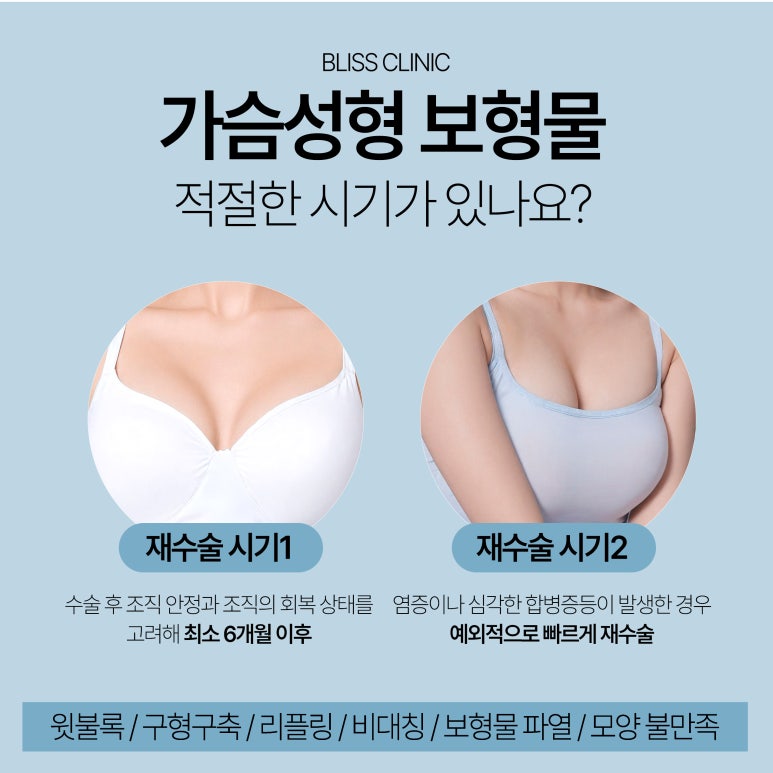
This naturally raises the question: “Do breast implants absolutely need to be replaced once 10 years have passed since breast augmentation?”
Saline implants and early silicone implants commonly used from the 1990s through the early 2010s were generally less durable than current products. This made it easy for the perception to develop that replacement should be considered after a certain period.
In fact, when an implant remains inside the body for a long time, its durability may decrease compared with that of a new product. However, cohesive gel implants, also known as “cohesive gel” or “CoGel” implants, currently used for breast augmentation have greatly improved material cohesion and shell stability, and have developed into structures capable of lasting for an extended period when there are no particular problems.
Therefore, “10 years” is not an absolute standard. The key factor in determining whether replacement is necessary is not the amount of time that has passed, but the current condition of the implant.
Replacement should be considered when signs of abnormality such as the following appear:
✔️ Implant rupture or damage
✔️ Deformity caused by severe capsular contracture
✔️ Implant displacement or asymmetry
✔️ Changes in feel or an abnormal appearance
✔️ Decreased personal satisfaction
If changes like these are identified, it is advisable to consider revision breast surgery or implant replacement.
The important point in implant replacement is not a fixed period of time, but accurately checking the current condition and taking appropriate action based on the findings.
How Implant Replacement Differs from the First Surgery
Breast implant replacement, or revision surgery, differs from initial breast augmentation in several ways, and its overall level of difficulty is also considered higher.
This is because the procedure is not simply a matter of changing the implants. The condition of the tissues altered by the previous surgery and various other factors must also be taken into consideration.
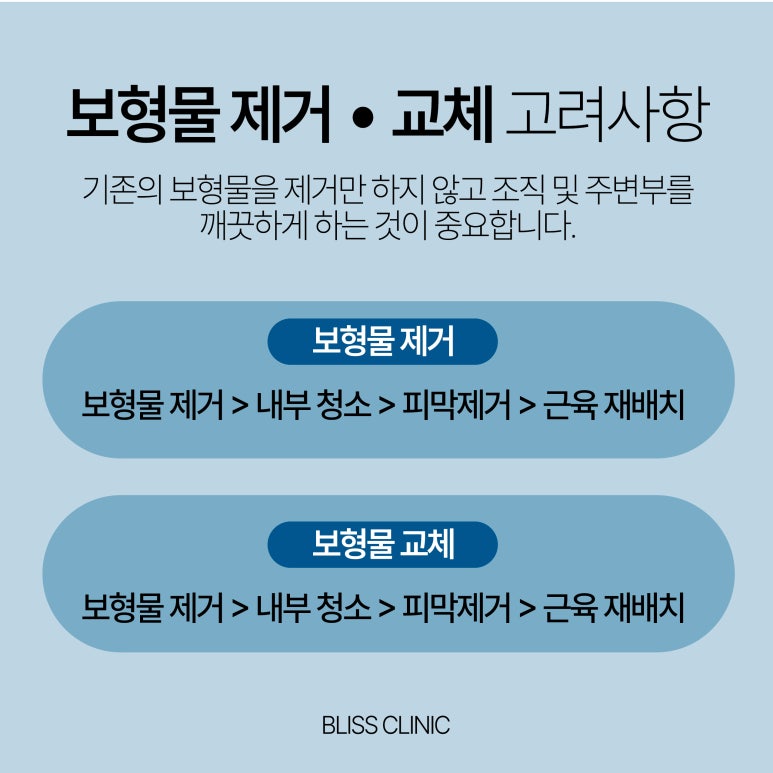
First, it is necessary to determine how to manage the capsule that has formed around the existing implant.
Depending on the circumstances, a new implant may be inserted while leaving the capsule in place. If the capsule is in poor condition, a capsulectomy, or complete removal of the capsule, may be performed. The appropriate approach varies depending on the current tissue condition, the presence of inflammation, and the degree of contracture.
In addition, the tissues surrounding the area where the implant has been positioned for a long time may have become thinner or looser. This tissue environment can make the outcome more difficult to predict than with the initial surgery, and the recovery process may also take longer.
During revision surgery, it is also fairly common for the implant placement position to need to be changed. If the existing pocket cannot be used as it is and a new space must be created, the surgical plan becomes more complex and requires a highly precise approach. However, it is not necessary to remove the capsule in every case. If there are no unusual findings and the patient simply wants to change the size or shape, it may be possible to leave the capsule in place or adjust only part of it and replace the implant alone.
Because the approach to implant replacement surgery can vary considerably depending on each individual’s condition, it is important to plan carefully through a thorough consultation with a specialist who has extensive experience in various revision procedures.
Incision Methods for Breast Implant Replacement
One of the main concerns for many people considering breast implant replacement is scarring.
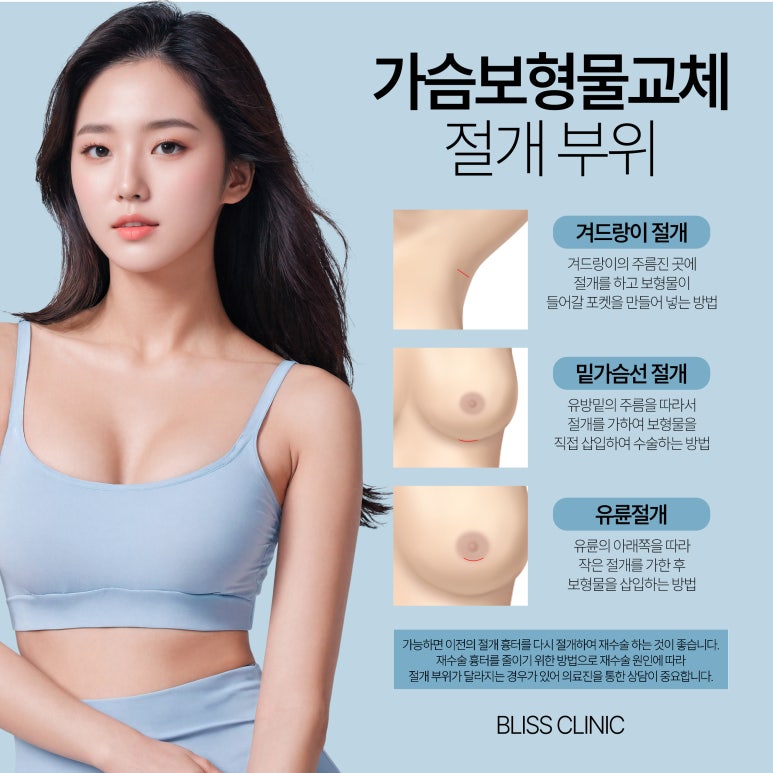
For this reason, many patients ask whether they can choose the incision site themselves. In actual surgery, the specialist considers the patient’s breast shape, skin condition, and previous surgical history as a whole, then determines the safest access route while minimizing the burden of scarring. The incision methods used for implant replacement can broadly be divided into the armpit, the inframammary fold, and the areola, each with different characteristics.
First, an axillary incision does not directly incise the breast area, which can reduce visible scarring. It may also help preserve nipple and breast sensation, allowing for a natural-looking result.
An inframammary incision is the most commonly used method. It provides good visibility, allowing the surgery to be performed more safely. It is frequently selected for revision surgery and more difficult cases because it offers good access and enables precise replacement.
An areolar incision is made along the area surrounding the nipple, allowing the scar to be naturally concealed along the boundary between different skin tones. It also places relatively less strain on arm movement after surgery, which can make returning to daily activities more convenient.
Because each incision method has distinct advantages and disadvantages, it is important to choose the appropriate method based on the current condition and the purpose of the surgery, rather than deciding solely according to personal preference.
Achieving Satisfying Breast Augmentation Results
To increase satisfaction with breast augmentation, it is important to consider not only the surgery itself, but also the medical team’s experience, the surgical method, and postoperative care as part of the overall process.
Dr. Dooyoung Oh, a plastic surgery specialist at Bliss Clinic, provides one-on-one customized designs tailored to each individual’s body shape and proportions, based on expertise accumulated through a variety of breast surgery and revision cases.
During surgery, FULL HD high-resolution endoscopic equipment is used to examine the internal structures in detail. This helps minimize tissue damage and bleeding and allows the implant pocket to be formed more safely and accurately.
As a result, this plays an important role in creating a natural and balanced shape.

Bliss Clinic also performs breast augmentation through the relatively more technically demanding areolar incision method.
When the conditions are suitable, this method is highly preferred because it may eliminate the need to choose another incision approach. Since the scar is not easily noticeable, it can reduce psychological stress. In addition, the implant position can be adjusted more precisely, which is advantageous for naturally completing left-right symmetry and the overall breast contour.
The recovery process after surgery also has a significant impact on the final result. Our clinic operates private single-patient recovery rooms to help reduce the risk of infection and support recovery in a more comfortable and stable environment.
We also focus on speeding recovery and preventing complications through a systematic postoperative care program.

If you are considering breast surgery, it is important not to focus only on size, but to determine through a thorough consultation the volume and contour that suit your body shape.
For more satisfying results, thorough consultation and planning with an experienced specialist may be among the most important factors.