
As we enter the era of 100-year lifespans, the number of middle-aged and older adults taking care of their appearance is increasing. For this reason, procedures that improve overall facial wrinkles, such as deep nasolabial folds, sagging facial lines, and neck wrinkles, are gaining attention for a more youthful look that appears younger than one's age.
A popular procedure for improving facial wrinkles and sagging is lifting with threads and laser devices. Because the procedure time is short and there is no incision, it places less burden on the patient, making it popular not only among middle-aged and older adults but also among people in their 20s and 30s. However, the results are somewhat modest and the duration is also short, so it has the drawback of requiring repeated procedures at regular intervals. A facelift is a wrinkle-improving surgery that addresses these limitations of lifting procedures.
�
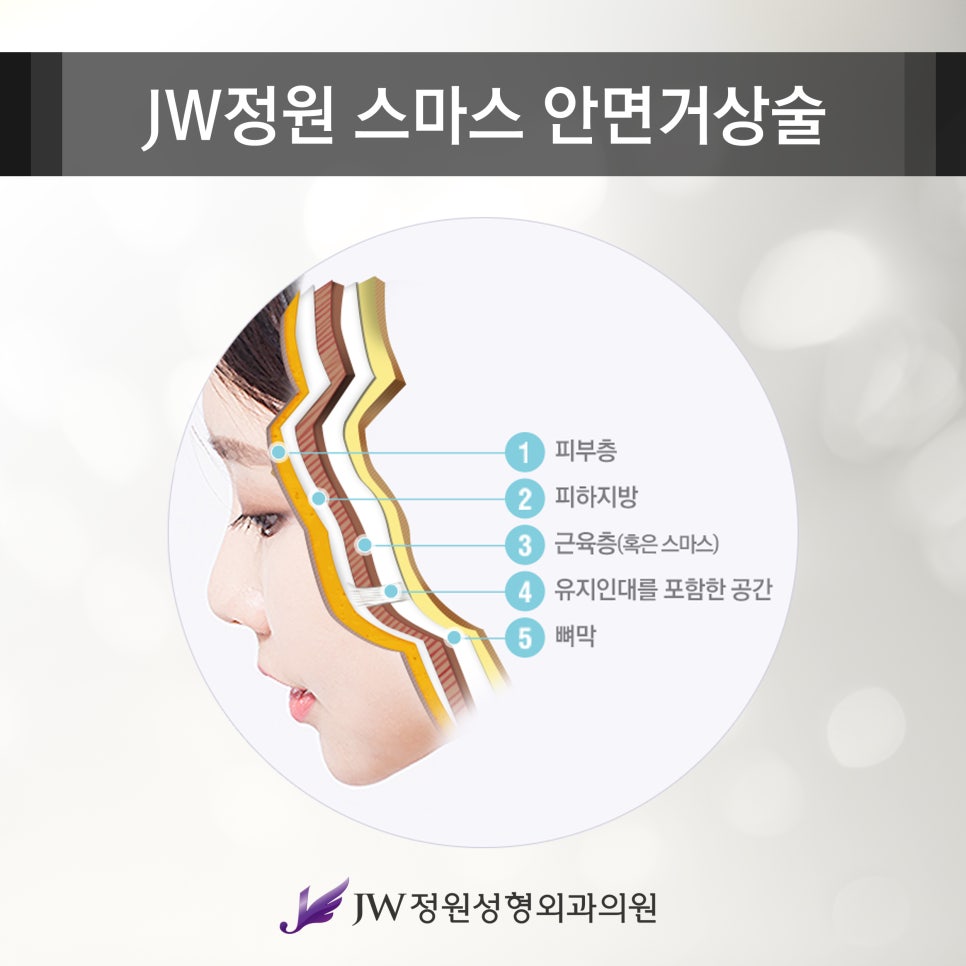
The face is made up, from the outside in, of the skin layer, subcutaneous fat layer, muscle layer, the space containing the retaining ligaments, and the periosteum. A facelift is a surgery that separates the retaining ligaments to tighten the SMAS (superficial musculoaponeurotic system) layer, which includes the muscle layer beneath the fat layer, allowing for more definite wrinkle improvement and longer-lasting results.
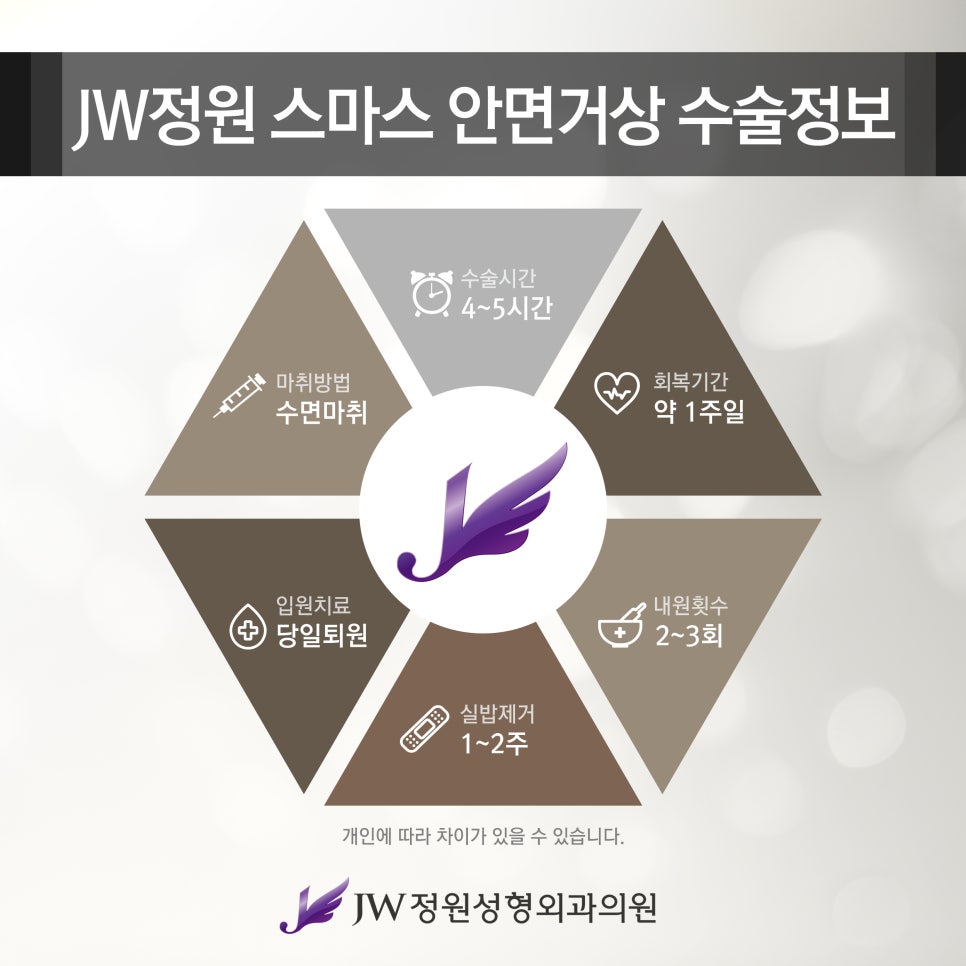
Unlike laser lifting or thread lifting, a facelift requires an incision and the operation time is relatively long, at about 4 to 5 hours. Therefore, in order to achieve more effective and satisfying surgical results, it is especially important to carefully choose the medical team and plan the surgical method that is right for you.
�
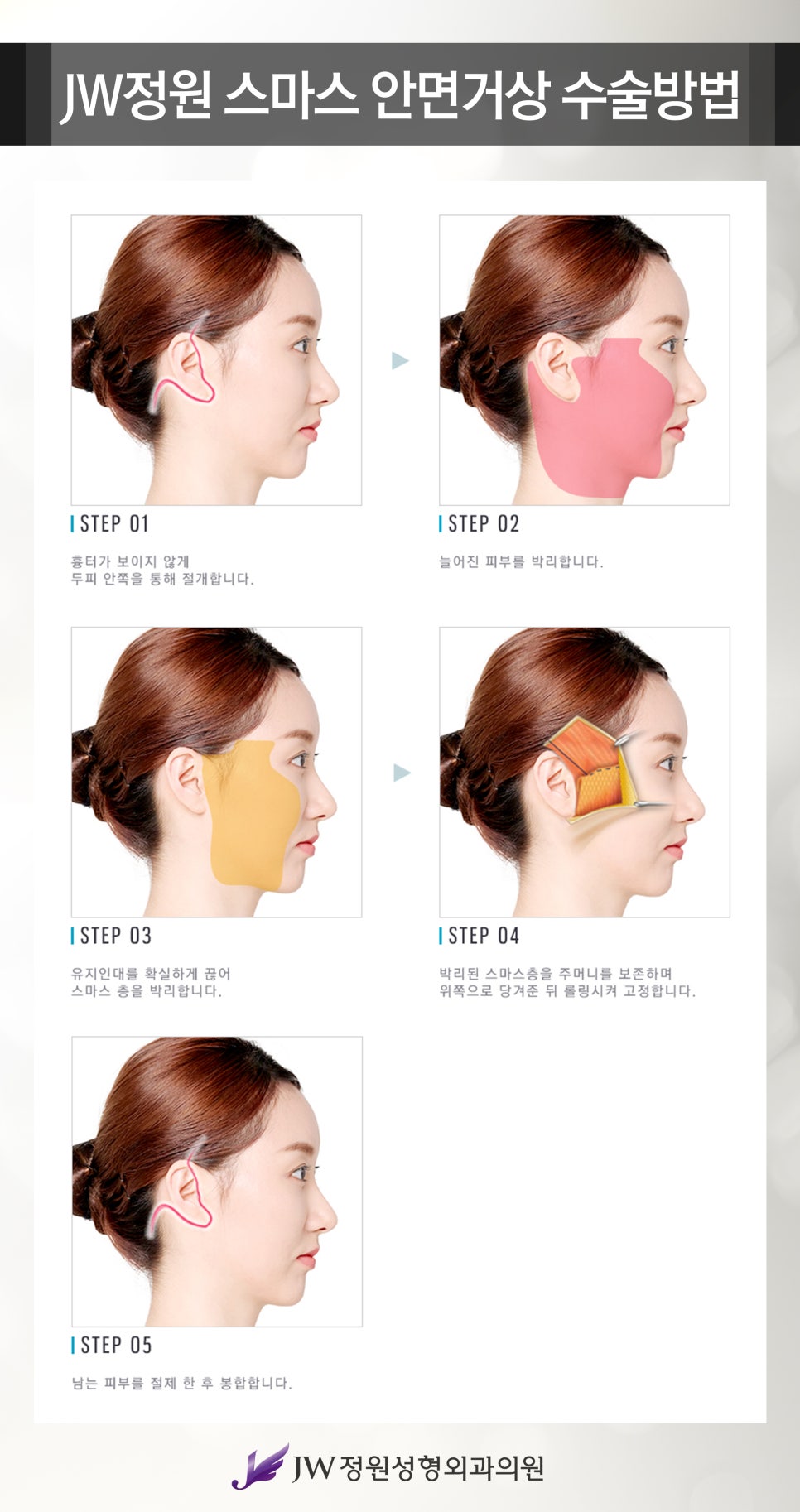
Facelift procedure
-
An incision is made inside the scalp and along the ear's natural crease toward the back so that the scar is not visible.
-
The sagging skin and the SMAS layer are deeply dissected.
-
The loosened retaining ligaments are excised.
-
The dissected SMAS layer is pulled upward, rolled, and fixed in place.
-
After removing the excess skin, the incision is closed.
�
Facelift surgery: Key points to check before surgery!
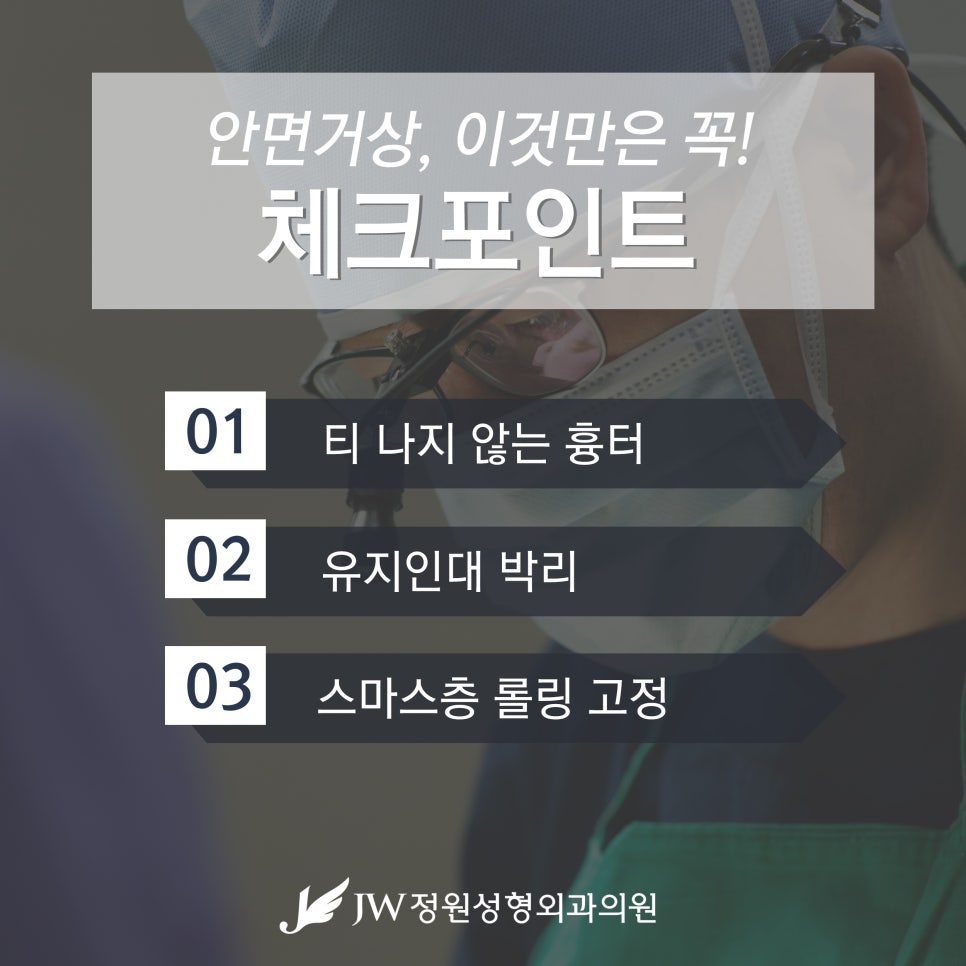
Scar that is not noticeable
A facelift is a surgery that improves wrinkles and sagging facial lines spread widely across the face, so the incision area tends to be large. A small incision cannot produce a definite lifting effect, which is why the surgery is performed with a wide incision and deep dissection. Because of this, many people worry about the scar left after surgery. JW Garden Plastic Surgery's SMAS facelift lifting minimizes visible scarring by using an incision method along the scalp and the ear's natural crease, extending behind the ear.
Retaining ligament dissection
The face has retaining ligaments that connect the skin, subcutaneous fat, and muscle layer to the bone. These ligaments help keep various tissues in their proper positions, but as we age, they also loosen, causing the skin and other tissues to sag downward.
During a facelift, the retaining ligaments must be cut to achieve a more definite and long-lasting effect. If the retaining ligaments are not excised, the SMAS layer cannot be tightened well, making it difficult to improve nasolabial folds, cheek sagging, and wrinkles around the mouth. Since the retaining ligaments are located deep within the skin and many nerve branches pass nearby, they are also difficult to excise properly. This is precisely why the extensive experience and refined skill of the medical team are so important.
Rolling fixation of the SMAS layer
A facelift is not simply about lifting sagging skin; the SMAS layer located deep within the skin must be tightened to achieve a fundamental improvement in wrinkles and sagging. JW Garden Plastic Surgery's facelift uses a method in which the remaining part of the tightened SMAS layer is not removed but instead rolled and then fixed in place. This method has the advantage of tightening the SMAS layer more firmly, increasing fixation strength, and maintaining the improvement in sagging for longer. In addition, the rolled portion can be positioned to suit each individual's face, providing a volumizing effect at the same time.
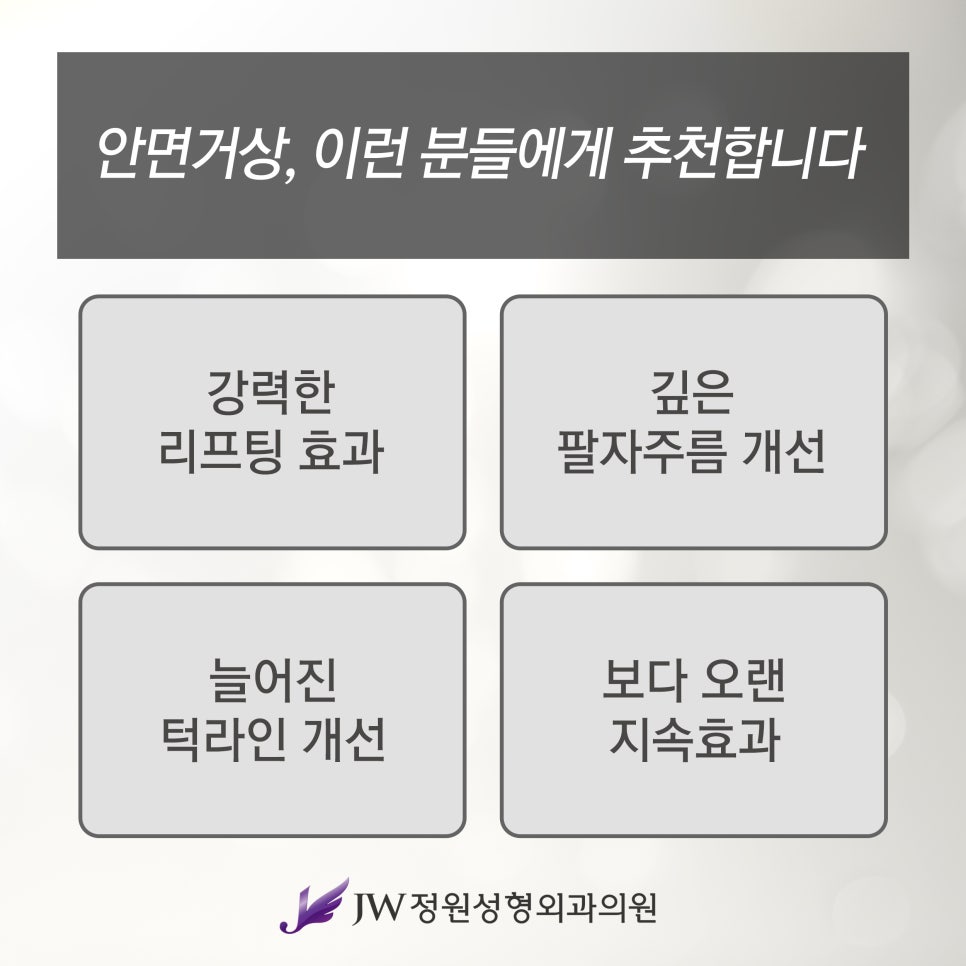
A facelift can be partially performed depending on the extent of sagging or wrinkles. If you want a stronger lifting effect than laser lifting or thread lifting, are concerned about deep nasolabial folds and neck wrinkles, or want to improve a sagging jawline and an overall drooping facial line, a facelift can provide effective and satisfying improvement.
�
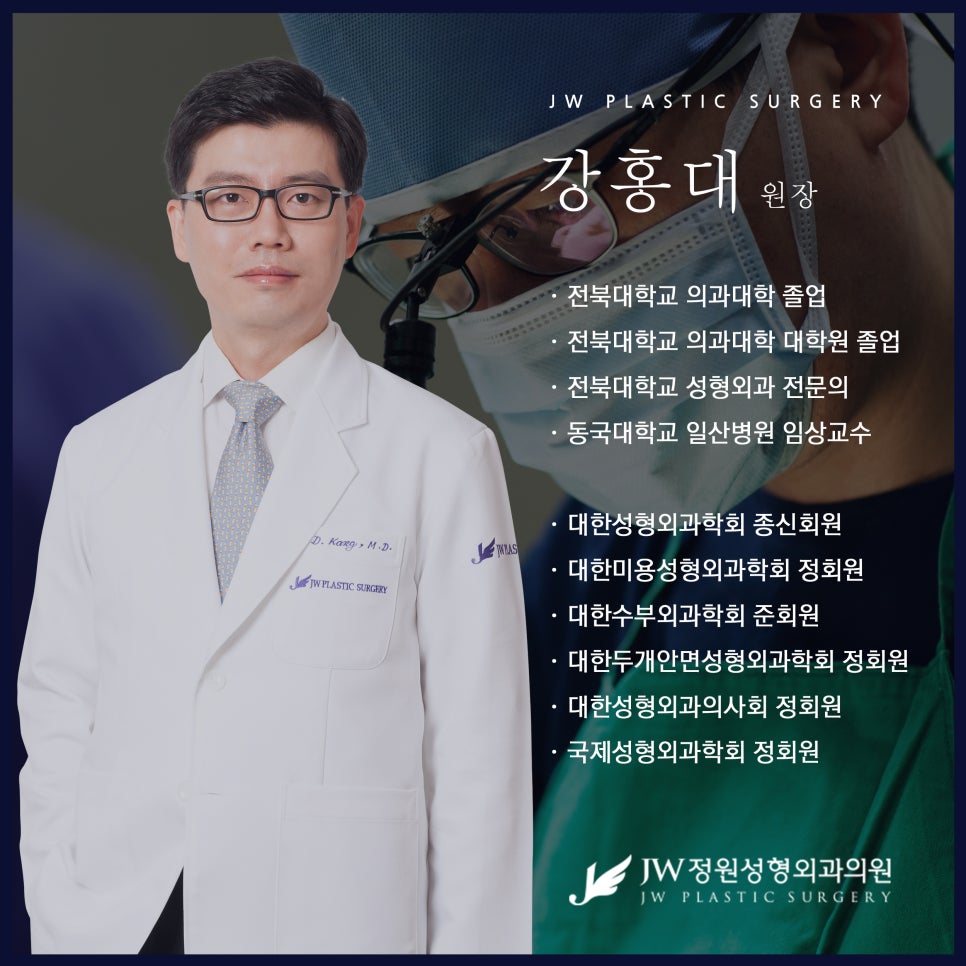
All surgeries may have side effects. In the case of a facelift, side effects such as simple hematoma or scarring may occur, and side effects such as facial nerve damage can also occur. To prevent these side effects, choosing the medical team and the hospital is of the utmost importance. A plastic surgeon with long experience and refined skill should carry out the surgery with an accurate diagnosis and the appropriate surgical method to reduce the risk of side effects. Director Kang Hong-dae of JW Garden Plastic Surgery, who focuses on youthful plastic surgery, is leading to stable and satisfying results through customized surgical plans and proprietary techniques.
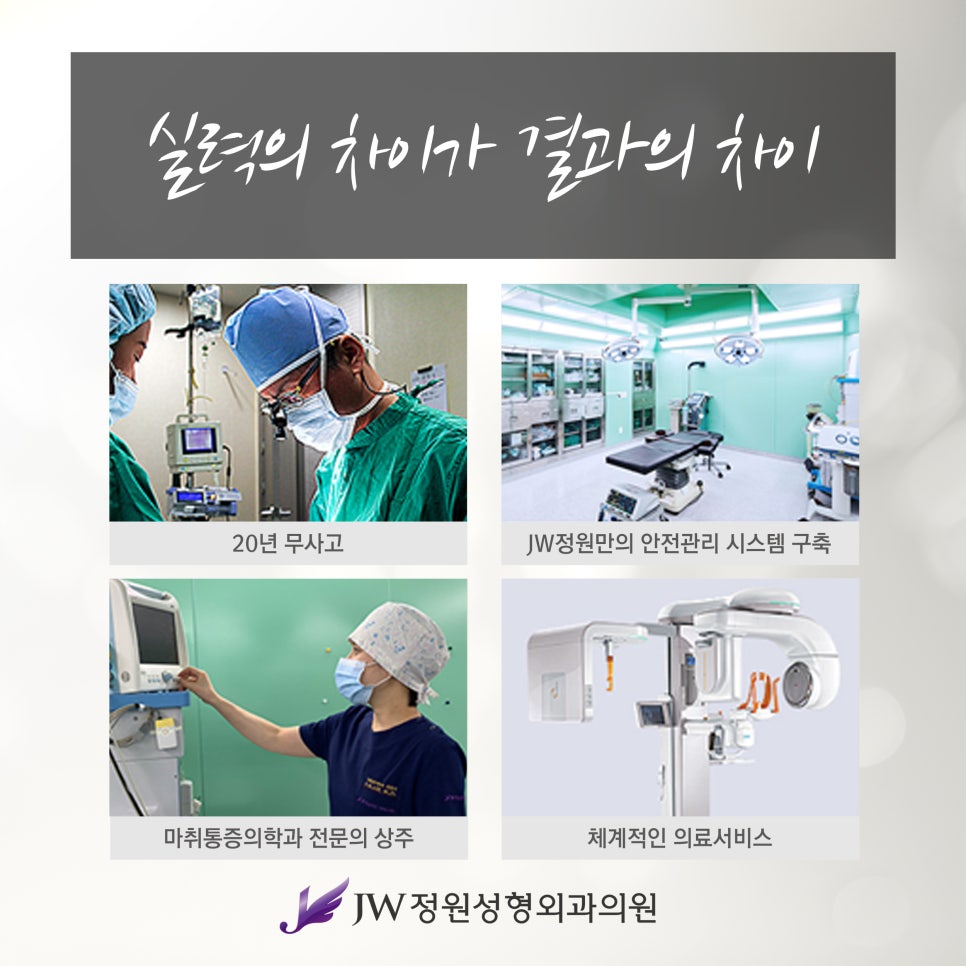
With 20 years of accident-free experience, JW Garden Plastic Surgery has established various safety management systems based on a thorough commitment to safety so that patients can undergo surgery with peace of mind. It also provides personalized medical services from preoperative testing to postoperative care.
▲ Clicking will connect you to a KakaoTalk consultation.

*Surgical procedures may have side effects such as bleeding and infection depending on the individual.
�
�


�