Hello :)
JW Plastic Surgery Clinic,
where results speak for themselves.

Because the nose plays a role in creating a major change in appearance
with even a small alteration,
many people undergo rhinoplasty.
However, there are also increasing numbers of people who experience stress due to side effects
from undergoing nasal surgery without 충분한 consultation and a surgical plan tailored to their condition.
What are the symptoms of a contracted nose?

One of the 대표적인 side effects of rhinoplasty
is contracted nose deformity.
Contracted nose can occur due to inflammation, multiple surgeries,
or individual predisposition,
and refers to a condition where the nose becomes hard and short after surgery,
leading to contracture deformity.
If, after rhinoplasty, the nose feels pulled or tight,
if its shape becomes distorted or the tip turns up,
exposing the nostrils too much,
or if the nose does not move and feels hard,
you may suspect contracted nose.
What causes a contracted nose?

Contracted nose or contracture deformity can occur due to inflammation,
excessive scar tissue formation from overly frequent revision surgeries,
or, constitutionally, when the capsule formed around silicone thickens and contracts.
A contracted nose must be corrected by identifying the cause
and performing an appropriate revision rhinoplasty method.
Because this is a highly difficult and delicate surgery,
it is best to visit a clinic specializing in contracted nose cases.
How is a contracted nose treated?
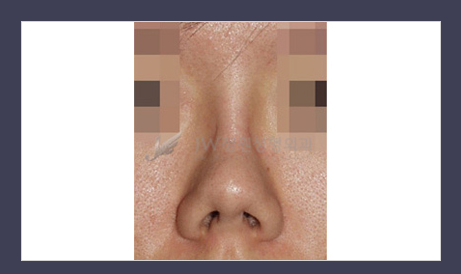
There are three key points in re-correcting a nose affected by contracture.
First, enough scar tissue must be removed
and adhesions released from inside the contracted nose.
This first step is the most important,
and it requires advanced skill and experience.
Next, the alar cartilage of the elevated nasal tip
is repositioned along the length of the nose
so that it is corrected to its original length and position.
Finally, autologous cartilage is grafted and fixed
in order to stably maintain the repositioned alar cartilage.
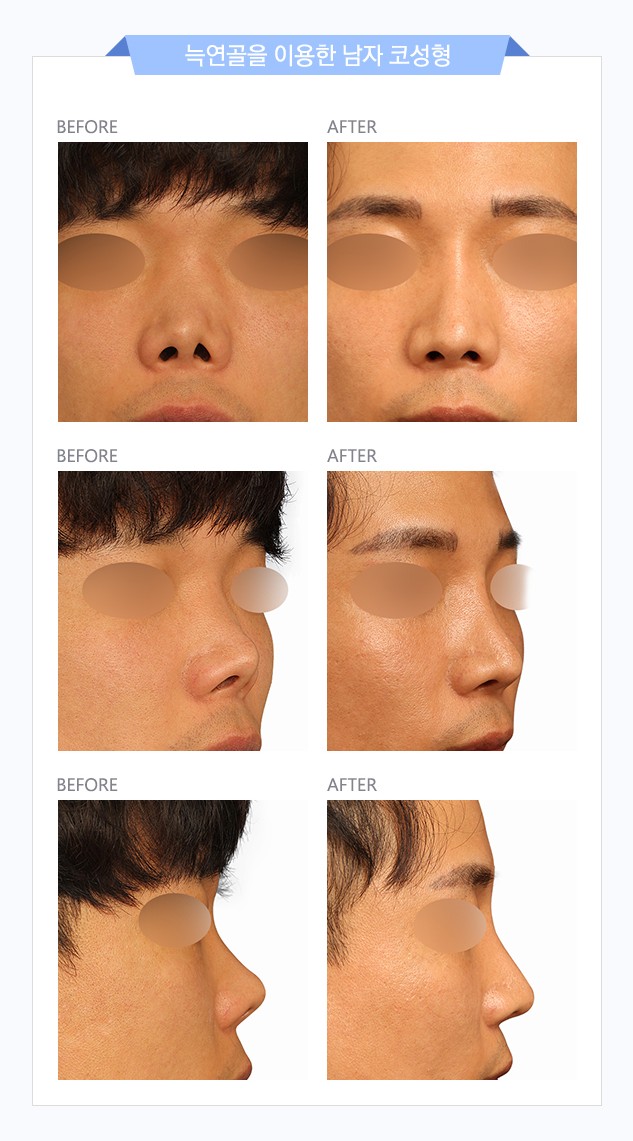
The autologous cartilage used at this time includes septal cartilage,
ear cartilage, and costal cartilage. Septal cartilage and costal cartilage
are firm and provide the strongest fixation,
but their drawback is that they are hard.
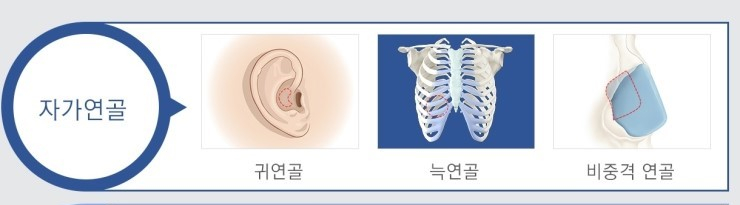
Ear cartilage allows for a soft nasal tip and even a pig nose shape,
making it the most ideal material,
but because soft cartilage must be grafted and fixed,
high-level technical skill is required.
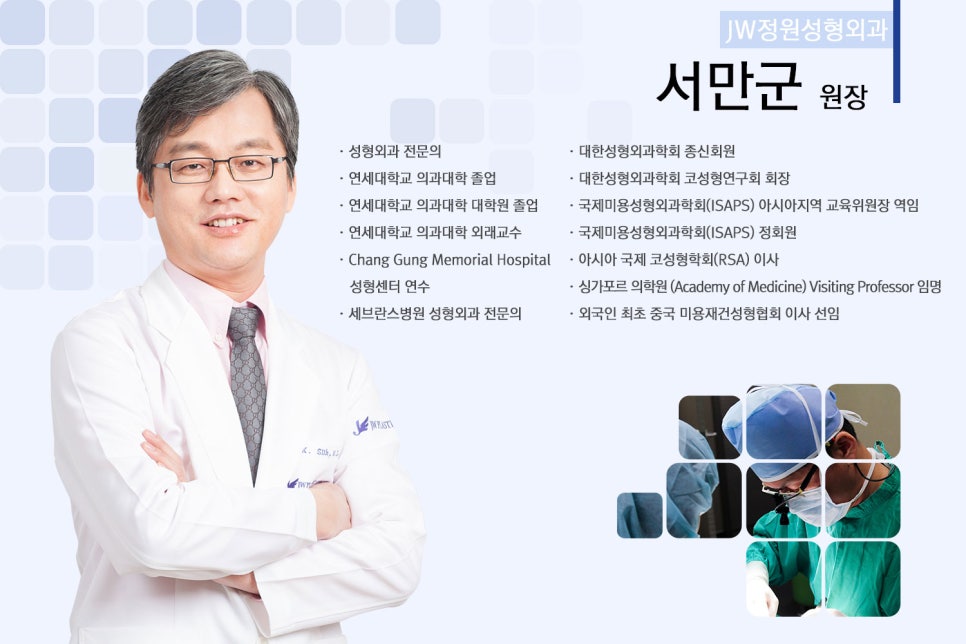
Dr. Seo Man-gun of JW Plastic Surgery Clinic
has focused exclusively on nasal surgery for 20 years,
and with his own know-how and technical expertise,
he achieves satisfying results.
However, if the septal cartilage has collapsed,
or if saddle nose deformity has occurred,
or if the columella has sunken in severely,
correction should be performed using costal cartilage.
When is the right time for revision surgery for contracted nose?
Revision surgery for contracted nose should be performed only after giving the nasal tissue time to stabilize and soften,
so it is done as early as 6 months after the last surgery,
or in some cases after more than 1 year.
Plastic surgery may involve side effects such as bleeding and infection, depending on the individual.