Hello :)
We deliver results.
This is JW Jeongwon Plastic Surgery.
As we enter the era of centenarians, more and more people are trying to enjoy a younger
and more energetic later life. The trend is also to learn more about facelift surgery
in order to stay youthful in both body and mind.
Among the various types of facelifts, lifting procedures, and age-defying cosmetic surgeries,
which one is the best fit for me?
Today, let’s take a closer look.
What Is a Facelift (SMAS Lifting)?
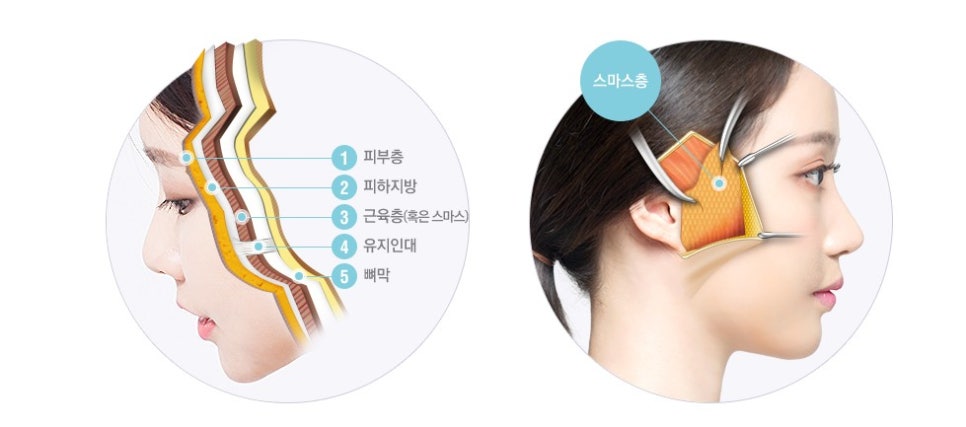
A facelift can be described as a surgery that pulls up sagging, wrinkled skin caused by aging,
making the face firmer and more elastic.
It is not simply a procedure that pulls the loose skin; rather, it lifts the muscle layer located deep within the skin,
that is, the SMAS layer, allowing for a more definite improvement and longer-lasting results.
Facelift (SMAS Lifting) Procedure
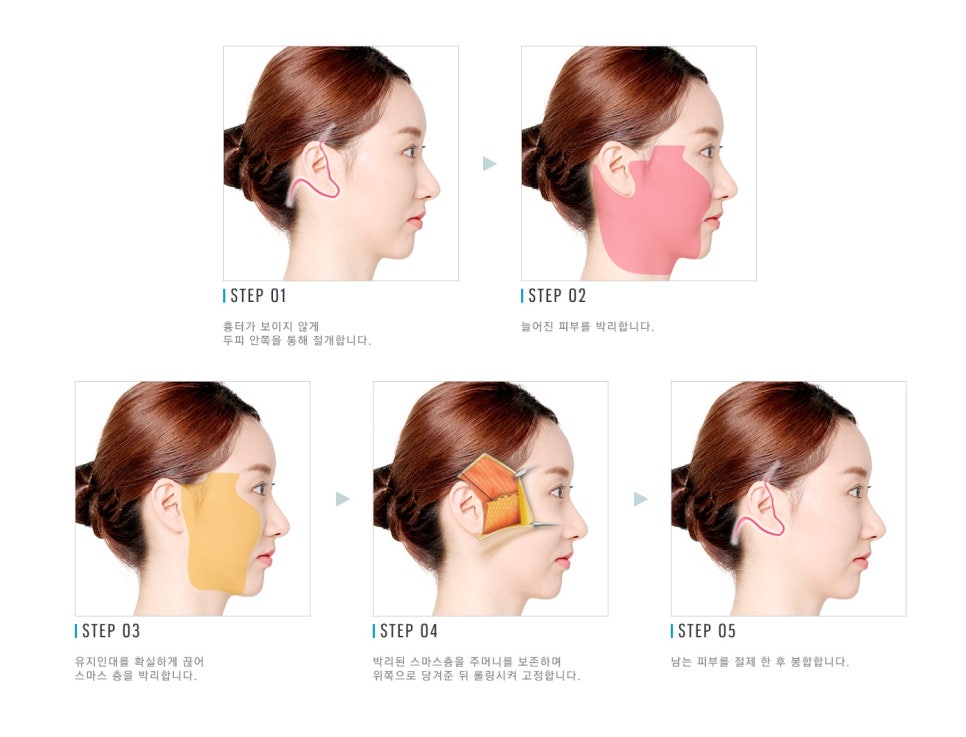
A facelift is a surgery that improves wrinkles and sagging facial contours distributed widely across the face,
so the incision area tends to be fairly large. A small incision cannot produce a clear lifting effect,
so the surgery is performed with a wide incision and deep dissection.
Because of this, the time required for the surgery is also longer compared to other plastic surgeries.
Scarless, or Nearly Invisible, Scars!
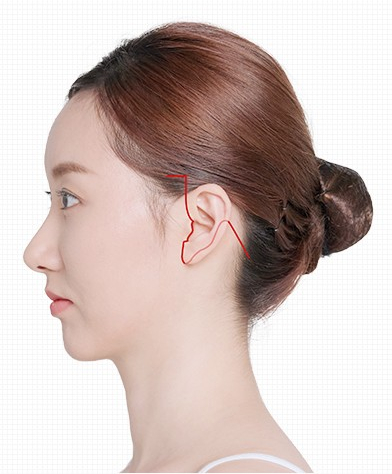
Therefore, many people worry about the scars that may remain after facelift surgery. However,
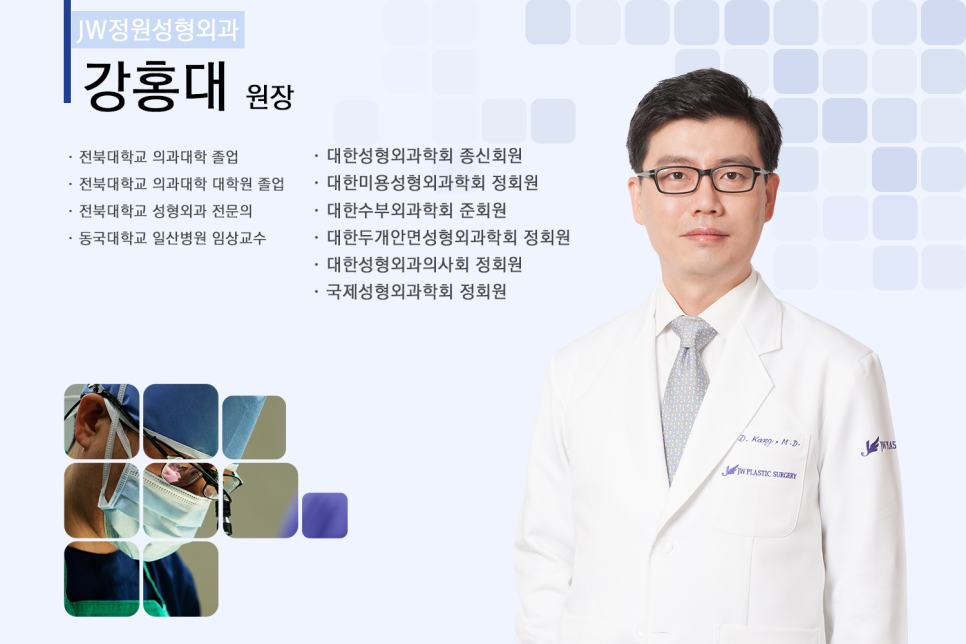
Dr. Kang Hong-dae of JW Jeongwon Plastic Surgery uses a method of making the incision from inside the scalp,
along the inner curve of the ear, based on years of facelift surgery experience and unique know-how,
so the scars are hardly noticeable even after surgery.
Dissection of the retaining ligaments
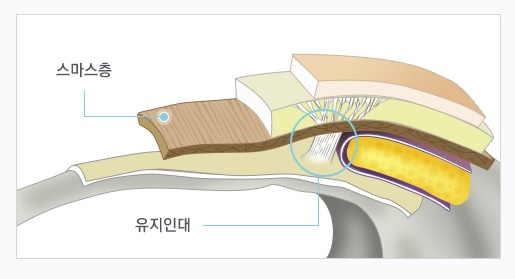
The face has retaining ligaments that connect the skin and fat to the bones. These ligaments help keep the various tissues in their proper place.
These retaining ligaments also loosen with aging, causing the skin and fat to sag downward.
To achieve a clear facelift effect, these retaining ligaments must be released. Since they are located deep within the skin
and there are many nerve pathways nearby, the medical team’s extensive experience and skill are especially important for proper dissection.
Rolling Fixation Instead of Cutting
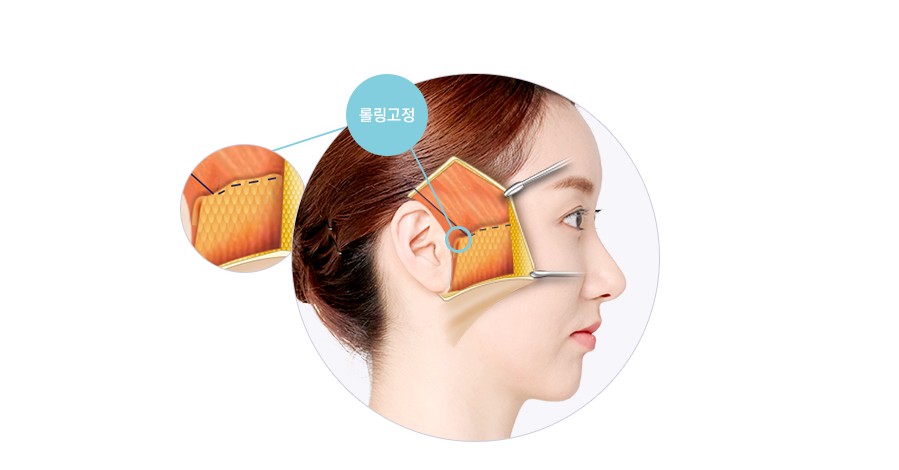
The facelift at JW Jeongwon Plastic Surgery uses a method in which the stretched SMAS layer is not cut,
but rolled and then fixed.
This secures the loosened SMAS layer more firmly once again, helps the improvement in sagging last longer,
and can also provide added volume at the same time.
Mini Facelift vs. Full Facelift: How Are They Different?
As mentioned earlier, a facelift is a surgery that improves wrinkles across the entire face. However,
when the extent of sagging or wrinkles is less severe, a partial lift through a minimal incision is possible.
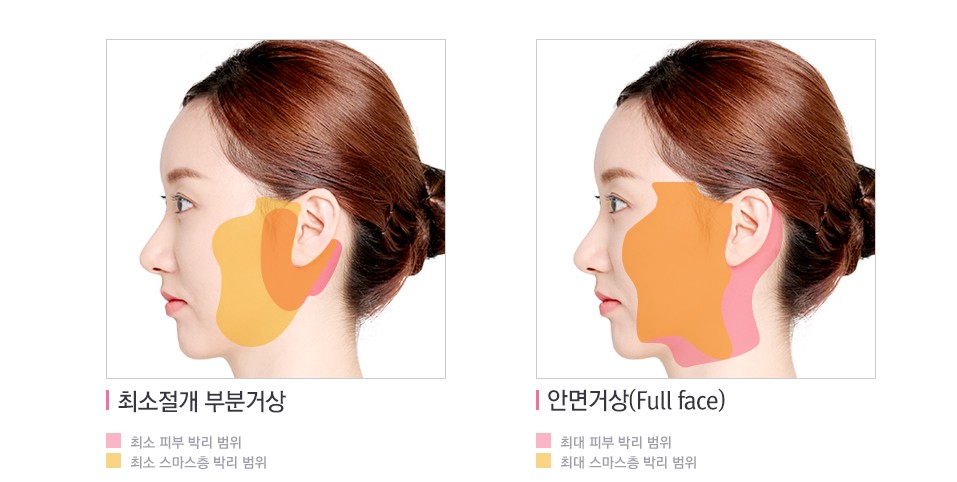
A mini facelift (minimal-incision partial lift) refers to a partial lifting procedure that improves specific wrinkles and facial lines by minimizing the incision.
The incision range varies depending on the degree of wrinkles and aging, so it is best to decide after 충분한 상담 with an experienced medical team.
Facelift (SMAS Lifting) Is Recommended for the Following People.
When you want a strong lifting effect
When the nasolabial folds are pronounced
When deep wrinkles across the face are a concern
When you have neck wrinkles
When you want long-lasting results
Facelift Surgery: How to Care Before and After Surgery
Before a facelift, you should discuss any medications you normally take with the attending medical team.
In particular, medications related to blood clotting or thrombosis should be stopped 1 to 2 weeks before surgery.
Health products such as red ginseng, nutritional supplements, herbal medicine, hormone medications, and vitamins should also be stopped before surgery.
If you have an underlying condition such as high blood pressure, the surgery will be decided after consultation with the doctor in charge.
Alcohol and smoking should also be stopped starting 2 weeks before surgery.
A facelift does not require hospitalization and can be treated on an outpatient basis.
To reduce swelling after surgery, a compression bandage must be worn for about 1 to 2 days, and after that,
the mask should be worn only while sleeping.
To prevent swelling, it is good to keep the head elevated and use cold compresses.
All stitches are removed after one week.
There may be mild pain, and unnatural movements or pulling sensations in the skin and muscles may occur,
but these are temporary and will recover over time.
After surgery, it is best to avoid smoking and drinking alcohol for about one month,
and it is also recommended to wait about one month before using a sauna, dyeing hair, or getting a perm.

*Plastic surgery may cause side effects such as bleeding or infection depending on the individual.