Hello 😊
JW Jeongwon Plastic Surgery,
where results speak for themselves.

For those considering rhinoplasty,
the biggest concern is whether there will be side effects after nasal surgery.
As the number of people undergoing rhinoplasty increases,
the number of people having revision surgery is also on the rise.
One of the most common misconceptions is that
rhinoplasty always requires revision surgery.
That is not true.
Just because you had surgery to raise the nose
does not mean revision surgery is always necessary.
Misconceptions and facts about rhinoplasty: Is revision always necessary?
As Director Seo Man-gun, a leading expert in rhinoplasty, says,
having rhinoplasty does not automatically mean revision surgery is required.
Nevertheless, there are cases where revision surgery is needed.
That is, when contracture deformity occurs after rhinoplasty, revision surgery should be considered.
What is nasal contracture? About contracture nose symptoms
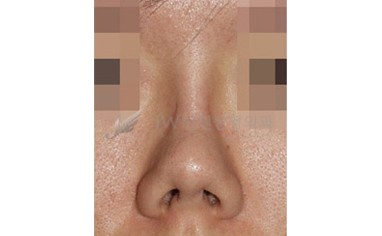
So what does a contracture nose refer to?
Symptoms of contracture nose include a feeling that the nose is being pulled or tightened after rhinoplasty,
and as this worsens, the shape becomes distorted,
the nasal tip lifts and exposes the nostrils,
or the nose becomes stiff and does not move.
In such cases, a contracture nose may be suspected.
Because contracture does not improve naturally,
it must be corrected surgically.
If a contracture nose is suspected, it is important to visit a board-certified plastic surgeon with extensive experience and know-how,
receive an accurate diagnosis, and proceed with appropriate correction.

The causes of contracture nose include multiple surgeries,
inflammation that occurs after surgery, or constitutional incompatibility with artificial implants such as silicone.
A stiff, shortened nose with a significantly lifted tip that exposes the nostrils
is a representative symptom.
Revision surgery for contracture nose: What is the key technique for correcting contracture nose?
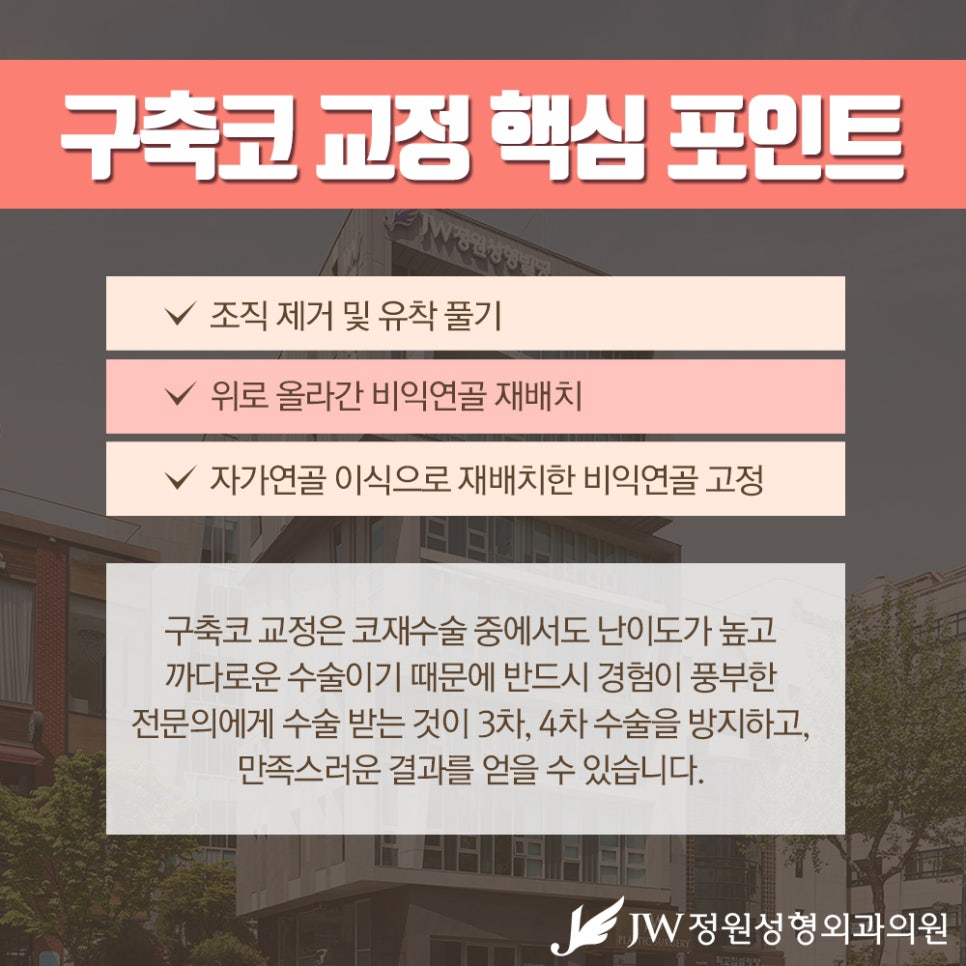
Inside a nose with contracture symptoms, scar tissue (capsule)
becomes thickened.
To correct contracture nose, the first step is to sufficiently remove the silicone and the scar tissue that surrounded it,
and to release the adhesions.
The first step is one of the most important steps in contracture nose correction,
and it is also a step that requires a high level of skill and expertise.
Next, the nasal shape must be corrected.
The alar cartilage of the elevated nasal tip is repositioned along the length of the nose.
Finally, autologous cartilage is grafted and fixed to stably maintain the repositioned alar cartilage.
For contracture nose, artificial implants such as silicone are not used;
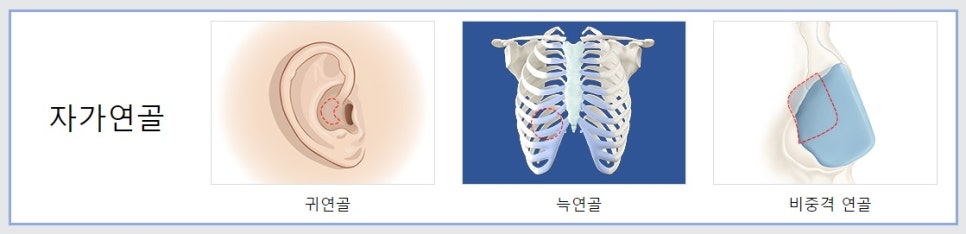
instead, autologous tissues such as ear cartilage, rib cartilage, or autologous dermis must be used.
Because each type of cartilage has different characteristics,
the appropriate surgical method must be applied to prevent additional side effects.
Is rib cartilage always used for contracture nose? They say rib cartilage bends easily...
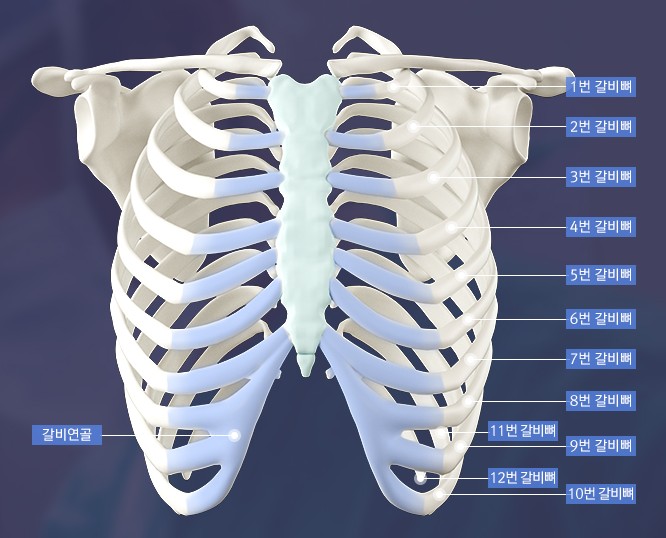
The cartilage most commonly used to extend a shortened nose is rib cartilage.
Because a large amount can be harvested, sufficient length can be secured,
and its firmness allows the nose to be supported firmly,
so it is often used in reconstruction and revision surgery.
However, rib cartilage is somewhat difficult to harvest,
and due to its nature, it can bend.
To prevent cartilage bending after surgery,
Director Seo Man-gun of JW Jeongwon Plastic Surgery uses a surgical method he personally developed called the multilayer rib cartilage carving technique.
This surgical method developed by Director Seo Man-gun
was also listed earlier this year in the SCI-level international journal Aesthetic Plastic Surgery.
How to achieve natural movement in contracture nose reconstruction with ear cartilage!
In addition to rib cartilage for contracture nose correction,
septal extension using septal cartilage is performed to lower the shortened nasal tip.
However, this method has the drawback that if the septum is weak or the procedure is performed too aggressively,
the nasal tip may bend or collapse.
Also, due to the rigid nature of the septum, the nasal tip does not move.
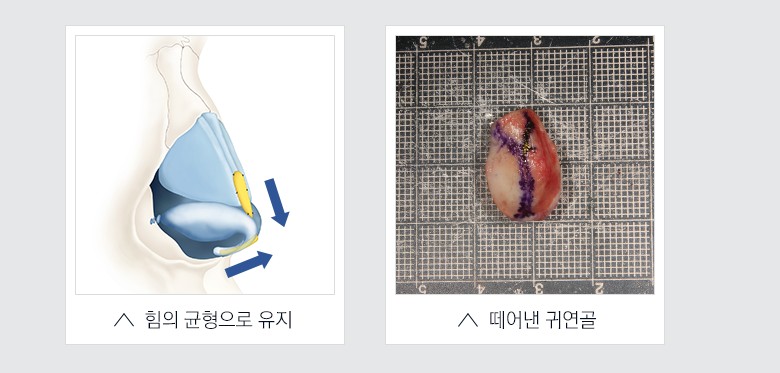
In such cases, ear cartilage can be used.
After harvesting the ear cartilage and trimming it into an appropriate shape,
a double-fixation extension procedure can be used, which lowers the nasal tip and supports it from below once more,
allowing the shortened nose to be lengthened and the tip to be made more refined.
Because of the soft nature of ear cartilage, natural side-to-side movement is possible,
and it is a method that allows the nose to be pinched upward.
Double-fixation extension surgery requires advanced skill and takes a long time,
but it is a highly stable surgical method.
Because of its high difficulty,
it has not yet become widely common.
Director Seo Man-gun of JW Jeongwon Plastic Surgery has personally performed rhinoplasty for over 20 years,
accumulating extensive experience and know-how.
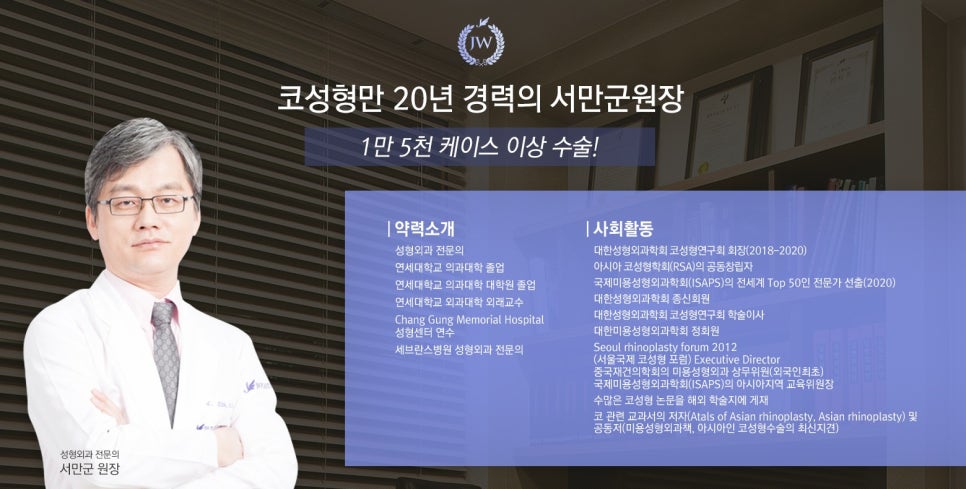
Director Seo Man-gun was recently invited as a representative Korean rhinoplasty expert
to the 89th PSTM (Plastic Surgery The Meeting), the largest plastic surgery conference in the United States,
where he also delivered a lecture on the procedure.
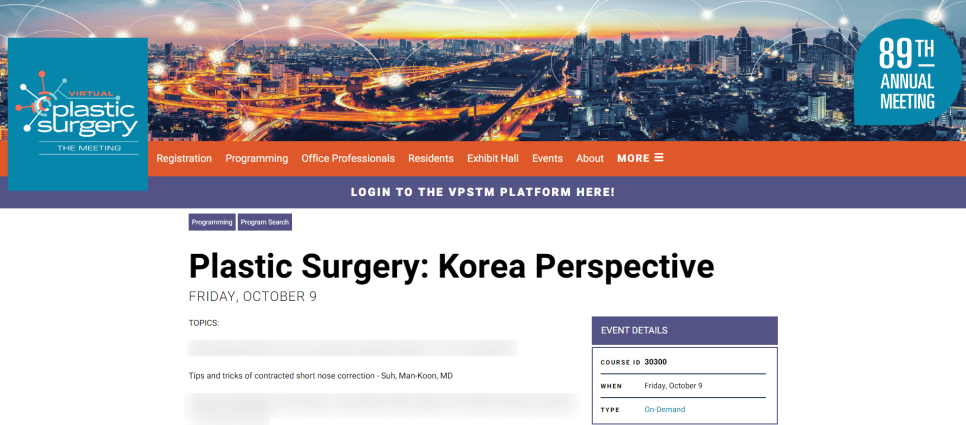
Among rhinoplasty topics at this conference, Director Seo Man-gun lectured on one of the most difficult areas:
a surgical method for contracture nose.
Under the theme "The pitfalls of contracture nose correction and techniques to avoid them,"
he introduced surgical methods using septal cartilage and rib cartilage when correcting a short nose,
and shared his own know-how for preventing side effects and bending of the nasal tip.
He also introduced a contracture nose correction method using ear cartilage,
the double-fixation extension procedure, as well as a combined grafting technique that uses skin and ear cartilage together,
teaching effective ways to correct a short nose with exposed nostrils,
which drew great interest and praise from medical professionals around the world.
Contracture nose surgery methods, with accurate diagnosis and a careful plan
Clicking will take you to the before-and-after photo page.
Today we looked at contracture nose.
If contracture symptoms are suspected after rhinoplasty,
you should visit a plastic surgery clinic to accurately diagnose your current nose condition
and correct it with the appropriate surgical method.
This can help prevent repeated revision surgery
and achieve stable, satisfying results.
Even with the same materials and the same surgical method,
the outcome can depend on the surgeon's skill.
If you are stressed about contracture nose or worried about side effects from rhinoplasty,
or if you are concerned about complications after nasal surgery,
careful selection of the medical team and hospital
is what can complete a beautiful nose.


Plastic surgery may involve side effects such as bleeding and infection, depending on the individual.