Hello :)
Delivering results
This is JW Jungwon Plastic Surgery.
A refined, smooth nose line: hump nose correction
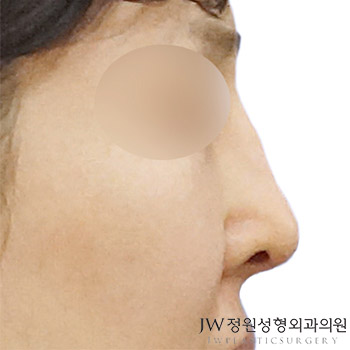
Everyone has a different appearance,
and a hump nose, where the middle of the bridge is raised,
can create a strong or tough impression,
so many people want correction.
Today, we will introduce JW Jungwon Plastic Surgery’s hump nose correction,
which smooths out a protruding nasal bridge.
Could my nose also be a hump nose? Diagnosis and correction methods for a hump nose
Clicking will take you to the before-and-after photo page
A hump nose is not only characterized by a raised nasal bridge,
but also by a downward drooping tip, resembling an eagle’s beak.
Surgery that trims the protruding nasal bone and cartilage
and lifts the drooping tip is called hump nose surgery.
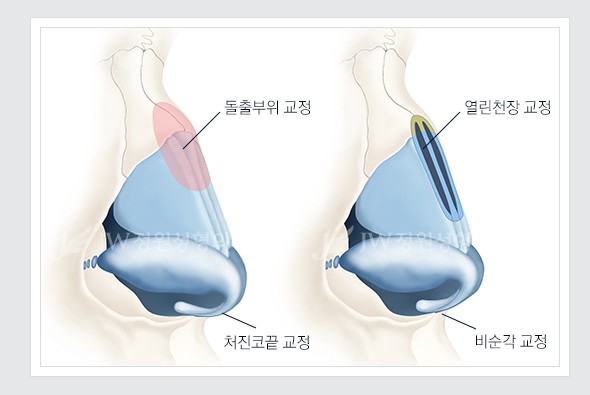
JW Jungwon Plastic Surgery’s combined hump nose correction
Because hump nose correction requires work on the bone,
it is considered one of the more difficult types of rhinoplasty.
If the nasal bone is removed too much, a perforation can occur,
and if too little is removed, the surgical effect may be insufficient,
so choosing a medical team with abundant experience and skill is especially important.
JW Jungwon’s unique technique to prevent saddle nose deformity!
As mentioned earlier, hump nose surgery involves removing the protruding bone
and cartilage. If the cartilage folds into the space left after removal,
a reverse-V deformity may occur,
that is, a saddle nose deformity.
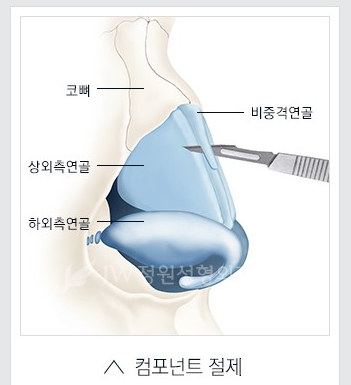
To prevent this, Director Seo Man-gun of JW Jungwon Plastic Surgery
separates the cartilage and uses a component resection method,
in which only the septal cartilage is shaved down, excluding the upper lateral cartilage,
to prevent a reverse-V deformity.

When correcting a hump nose, the protruding bone and cartilage
of the raised nasal bridge must first be removed.
After removal, the area is left looking as if it has a hole in it.
This is called an open roof deformity.
If it is minor, it may be left as is, but if the area is extensive,
it must be corrected by covering it with appropriate materials to create a smooth line.
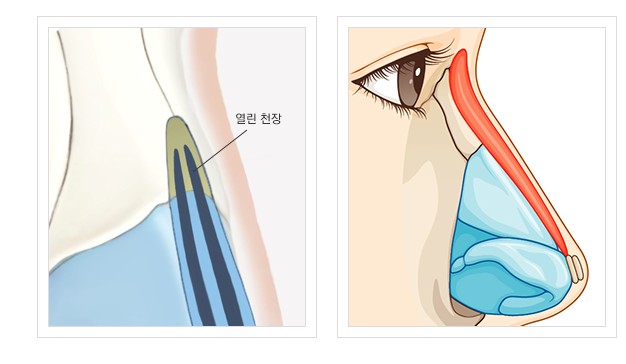
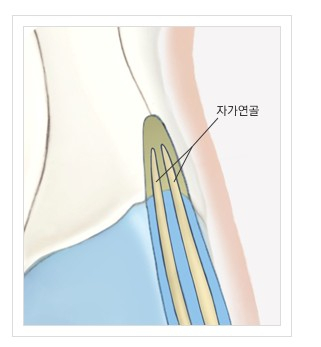
As shown in the illustrations above, the area where an open roof deformity occurs
can be covered with artificial implants such as silicone or Gore-Tex,
or with autologous cartilage such as septal cartilage,
to create a flat, smooth line.
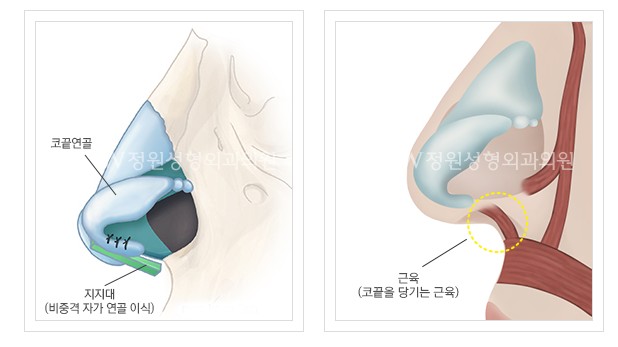
Finally, surgery is performed to correct the drooping tip.
This procedure repositions and lifts the structural cartilage of the tip (alar cartilage)
by adjusting its shape and position.
To prevent the hump nose from recurring over time,
and the tip from drooping again after surgery,
a support strut (septal cartilage) may be placed in the columella area to support the tip,
and the muscle that pulls the tip downward may also be cut.
20 Years Exclusively in Rhinoplasty, Director Seo Man-gun of JW Jungwon Plastic Surgery
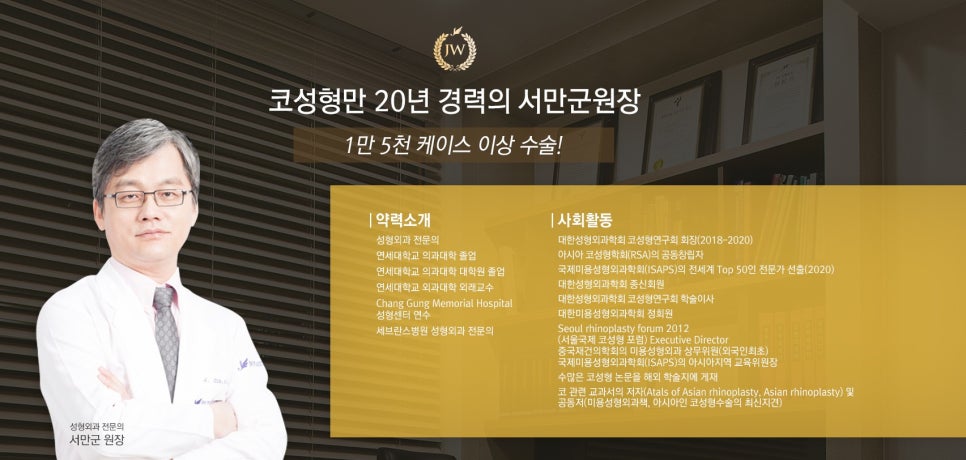
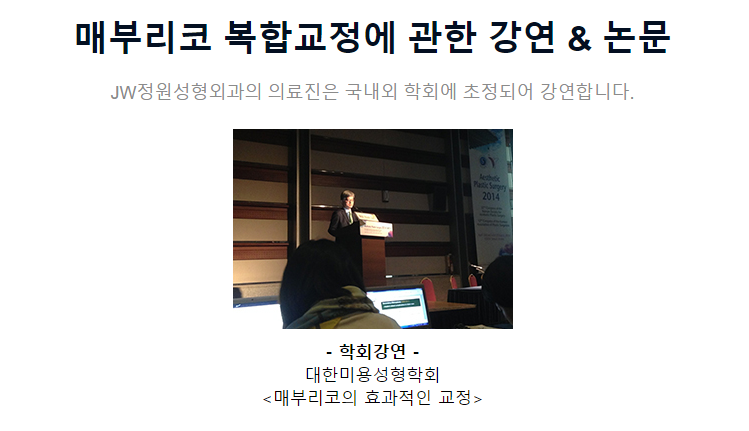
Director Seo Man-gun, president of the Korean Society of Rhinoplasty Research
and chief director of JW Jungwon Plastic Surgery,
has focused exclusively on rhinoplasty for more than 20 years.
With extensive clinical experience and his own surgical techniques,
he is recognized worldwide for his expertise.
If you are concerned about a hump nose, from clear correction and recurrence prevention to fast recovery,
it can be addressed now at JW Jungwon Plastic Surgery.


*Plastic surgery may cause side effects such as bleeding or infection depending on the individual.