Hello :)
JW Jeongwon Plastic Surgery,
where results speak for themselves.
Rhinoplasty has become one of the most commonly performed
plastic surgeries, along with eye surgery.
As a result, the demand for
revision surgery has also been increasing recently.
Is the cause of revision rhinoplasty side effects?
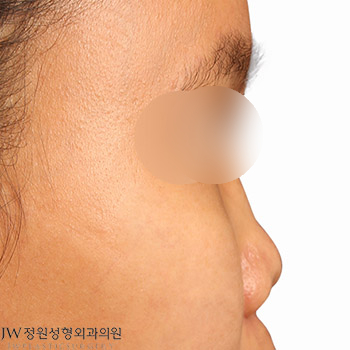
There are many reasons for revising a surgically altered nose,
but the biggest reason is dissatisfaction with the appearance.
If the nose looks higher than expected,
or conversely if it is lower than expected,
that is the most common reason people decide to have revision surgery.
However, in some cases, the silicone implant inserted into the nose
may not suit the person constitutionally,
or repeated nose surgeries may cause the nasal tissue to contract,
leading to a contracted nose deformity in which the tip turns upward.
In such cases, the silicone inserted inside the nose must be removed,
and the nose shape corrected using autologous tissue.
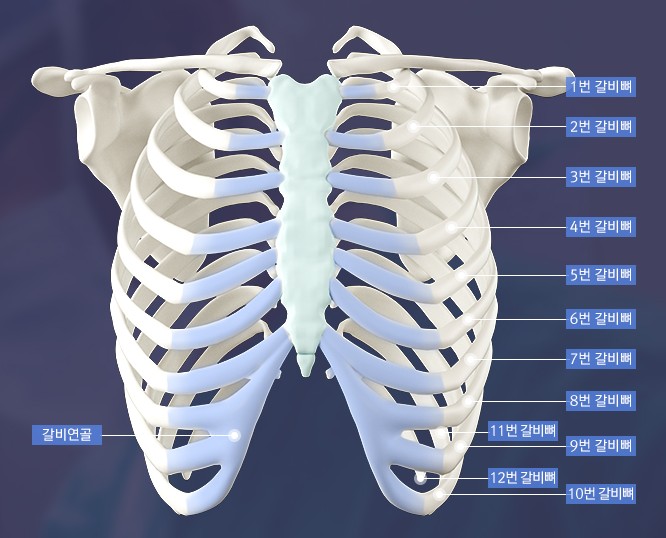
The autologous tissue used at this time is rib cartilage.
Advantages and disadvantages of autologous rib cartilage

Rib cartilage refers to chest cartilage.
Compared with septal cartilage or ear cartilage,
a larger amount can be harvested,
and its absorption rate is relatively low compared with other autologous tissues.
Because it is autologous tissue, it also has the advantage of not causing
rejection reactions that can occur when using artificial implants such as silicone.
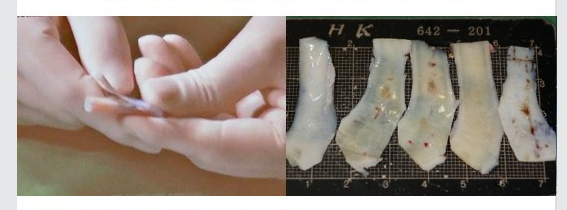
'Layered rib cartilage grafting technique' to prevent bending _ JW Jeongwon website
However, it is difficult to shape,
and over time it may warp.
For this reason, revision rhinoplasty using autologous rib cartilage
should be decided after sufficient consultation with an experienced board-certified plastic surgeon.
Actual case of revision rhinoplasty using autologous rib cartilage
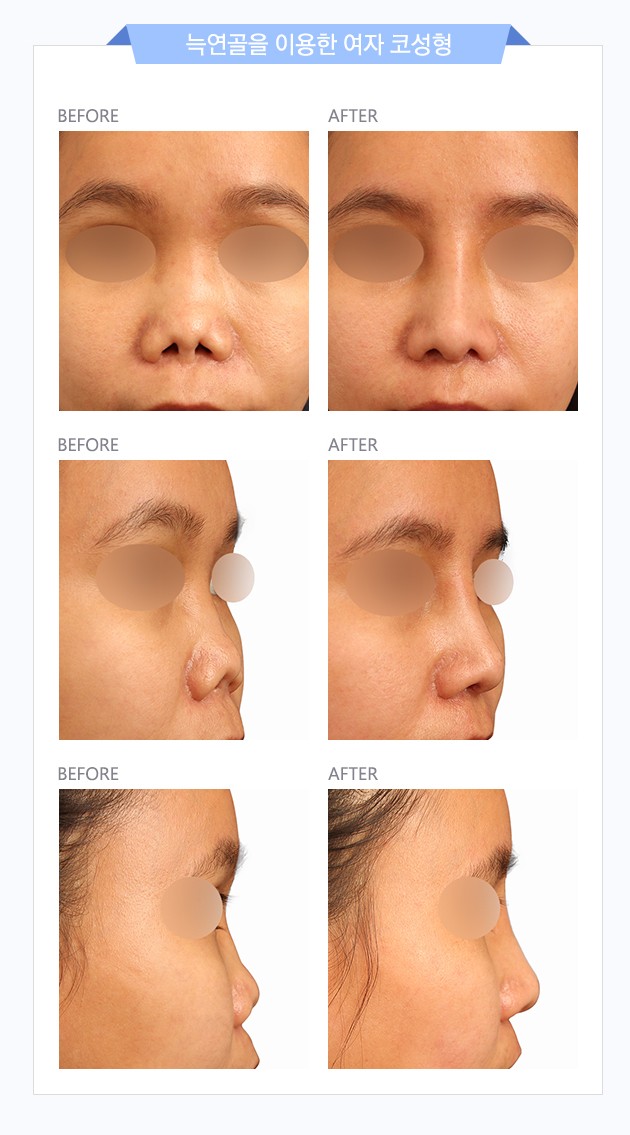
In the case above, after several nose surgeries,
septal collapse and contracted nose deformity occurred.
Using rib cartilage, the septum was reconstructed
and the shape of the nose affected by the contraction deformity was corrected.
Rib cartilage was also used in dorsal augmentation to raise the bridge of the nose,
creating a nasal bridge that is harmonious with the face and structurally firm.
Director Seo Man-kyun's know-how in handling even difficult autologous rib cartilage with ease!
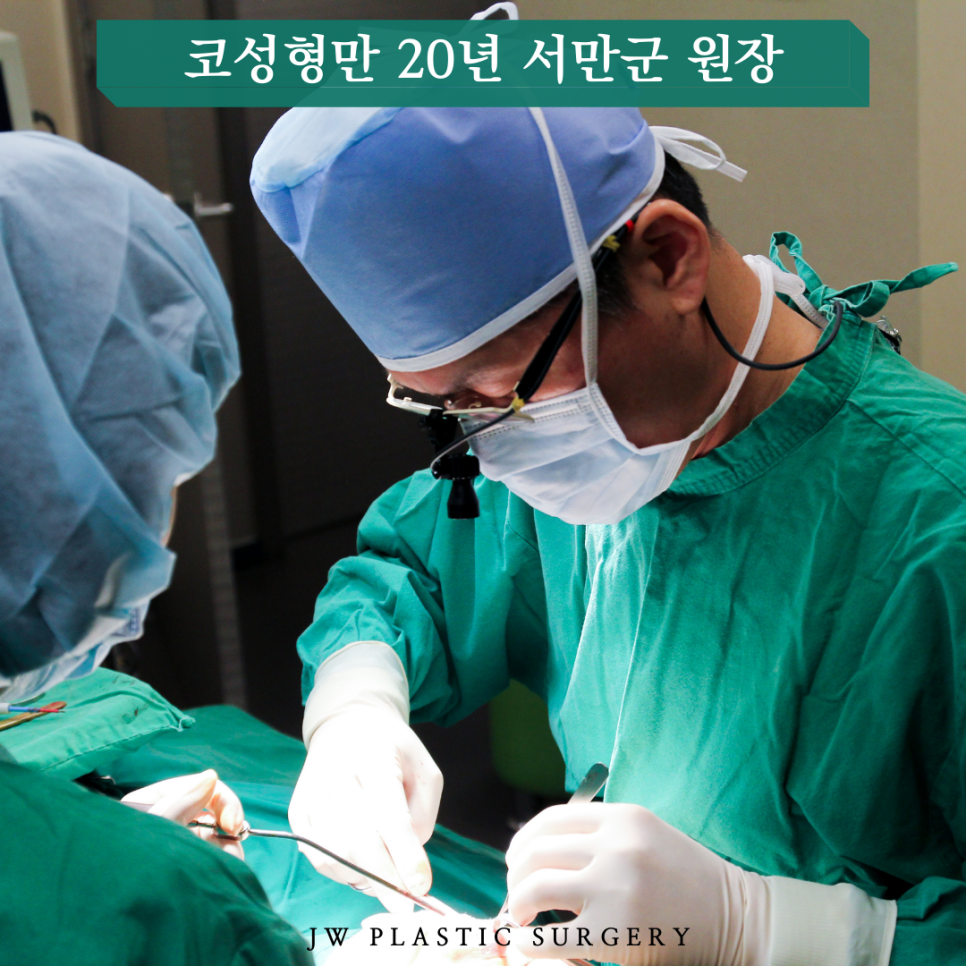
As explained earlier, autologous rib cartilage is difficult to harvest
and, because of its firmness and tendency to warp,
it is not a rhinoplasty material that many plastic surgery clinics use easily.
However, in cases where there is no autologous cartilage left to use after multiple revisions,
when a strong and refined nasal line is needed,
or when nasal reconstruction is required,
autologous rib cartilage is the most suitable material.
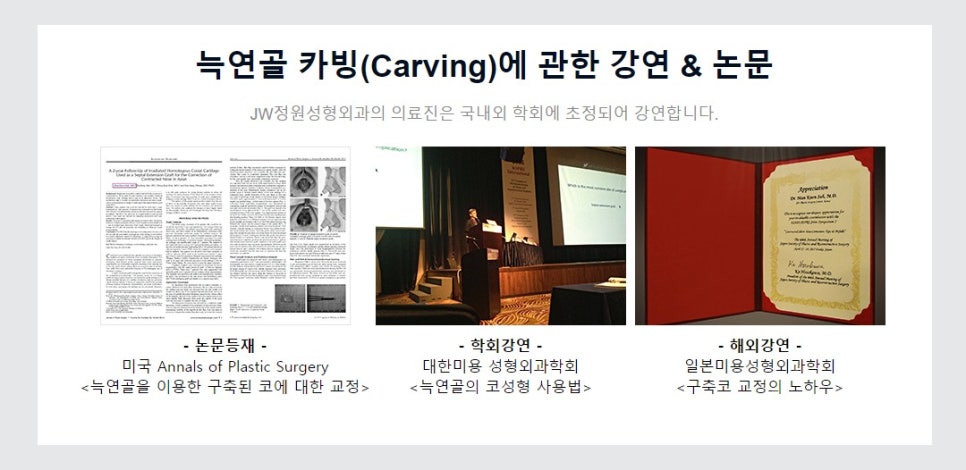
Seo Man-kyun, Director of JW Jeongwon Plastic Surgery,
has focused on rhinoplasty for more than 20 years
and has performed more than 15,000 rhinoplasty cases.
He has extensive clinical experience and know-how,
and through ongoing research activities,
he has developed his own surgical techniques,
which have received worldwide praise.
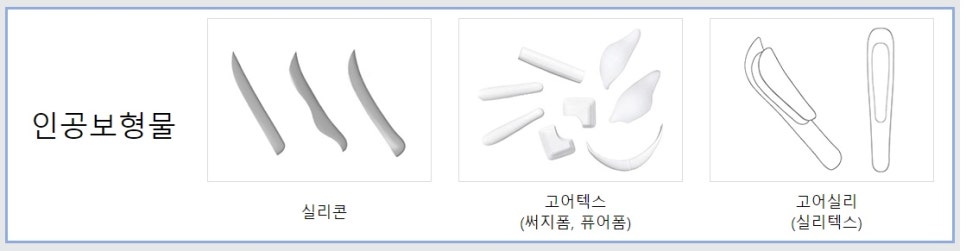
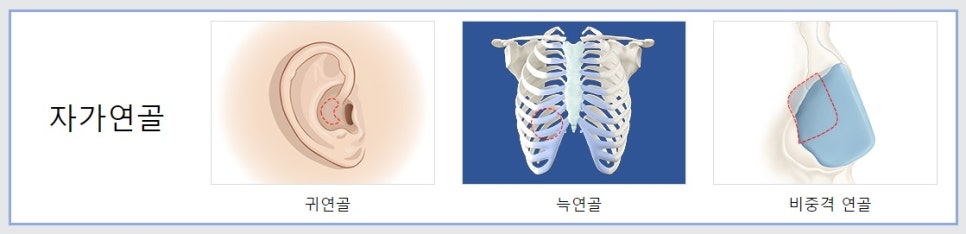

Director Seo's exceptional skill in handling not only autologous rib cartilage
but also any rhinoplasty material with ease
was not built overnight.
For those worrying about silicone side effects, capsular contracture, contracted deformity,
revision rhinoplasty, or nasal reconstruction,
JW Jeongwon Plastic Surgery's autologous rib cartilage rhinoplasty can help complete a safe and beautiful nasal line.


*Plastic surgery may cause side effects such as bleeding or infection, depending on the individual.