Hello :)
We are
JW Jeongwon Plastic Surgery,
where we repay you with results.

Rhinoplasty is not only about creating an attractive shape,
but also about considering the nose’s function,
so it is a procedure that requires
more careful and cautious attention.
Today, among rhinoplasty procedures,
let’s take a look at nasal reconstruction using autologous rib cartilage.
Nasal reconstruction surgery is performed for a variety of reasons,
such as when there is a congenital deformity
or when the nose has undergone severe distortion due to an accident or disease.
It must be performed while considering not only
the external appearance, that is, restoring an attractive nasal shape,
but also the functional aspect.
Therefore, after 충분히 consulting with an experienced specialist,
deciding on surgery can lead to a more satisfying result.
Nasal reconstruction surgery: what material should be used?
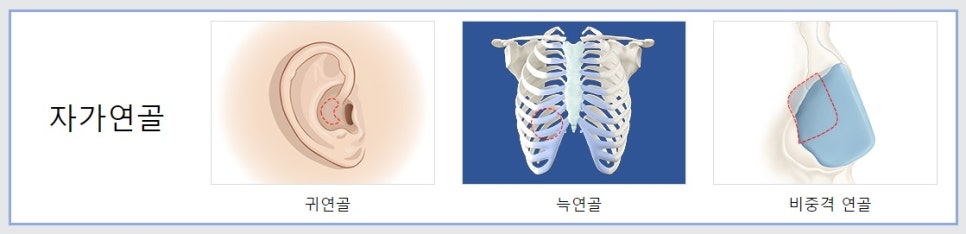
Various materials are used in rhinoplasty.
From silicone implants, which have been used the longest and most widely,
to autologous cartilage such as ear cartilage, septal cartilage, and rib cartilage,
autologous tissue such as dermis or fascia, and donor tissue,
these are all used as rhinoplasty materials.
Each material has its own characteristics, so the material chosen depends on the type of rhinoplasty.
For simply raising the nasal bridge or the tip of the nose,
silicone implants or ear cartilage are often used.
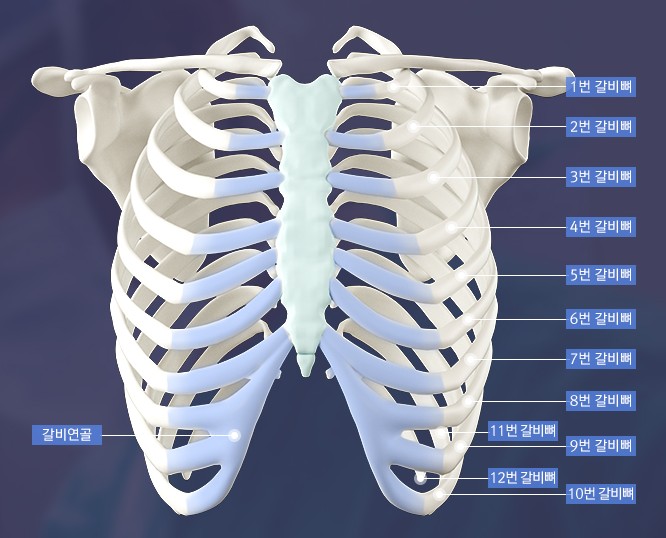
In nasal reconstruction surgery,
because a distorted or sunken nasal bridge must be straightened,
a material that can be harvested in a large amount
and is sturdy is needed.
If contracture deformity has occurred due to complications from a first surgery,
artificial implants such as silicone cannot be used,
so nose surgery must be performed using autologous cartilage.
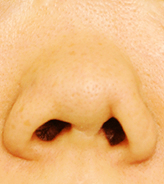
In the case of the patient above,
the nasal bridge had collapsed due to trauma,
so nasal reconstruction surgery was necessary.
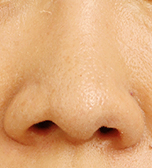
Through augmentation using autologous rib cartilage,
the nasal bridge could be straightened.
Advantages of autologous rib cartilage
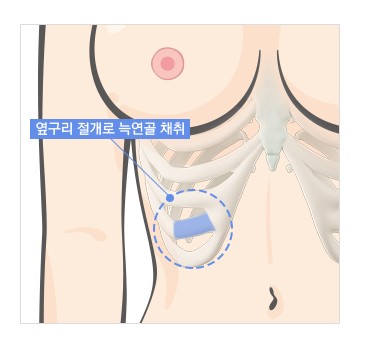
Autologous rib cartilage, harvested from the patient’s own body,
is a chest cartilage material often used for nasal reconstruction or revision surgery.
Because a large amount can be harvested,
it is possible to secure sufficient length,
and compared with other autologous cartilages,
its absorption rate is relatively low,
making it a suitable material for reconstructive surgery
or revision surgery.
It is also hard, which makes it advantageous
for creating a firm and high nose.
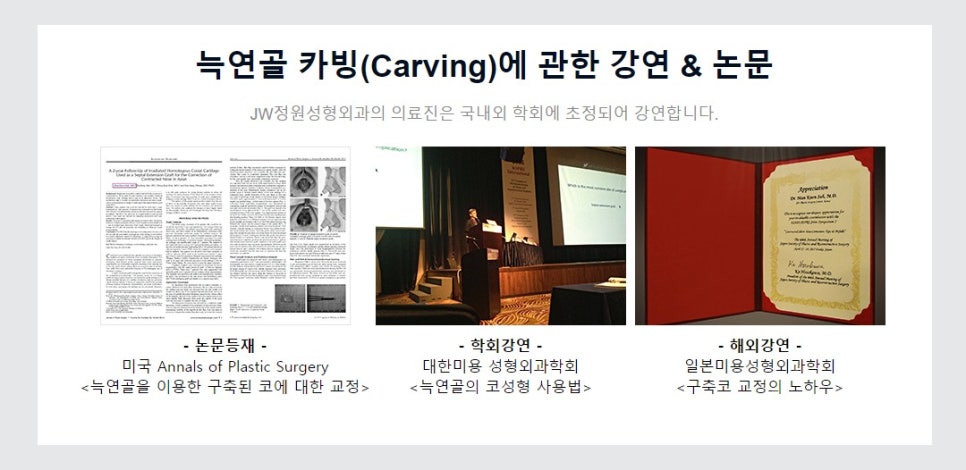
However, autologous rib cartilage has the drawback
that it is somewhat difficult to handle.
Because of its hardness, shaping it can be difficult,
and over time, bending may occur.
For this reason, nasal surgery using autologous rib cartilage
is more stable and more likely to produce satisfying results
when performed by a specialist with extensive experience.
See more before-and-after photos of rib cartilage rhinoplasty
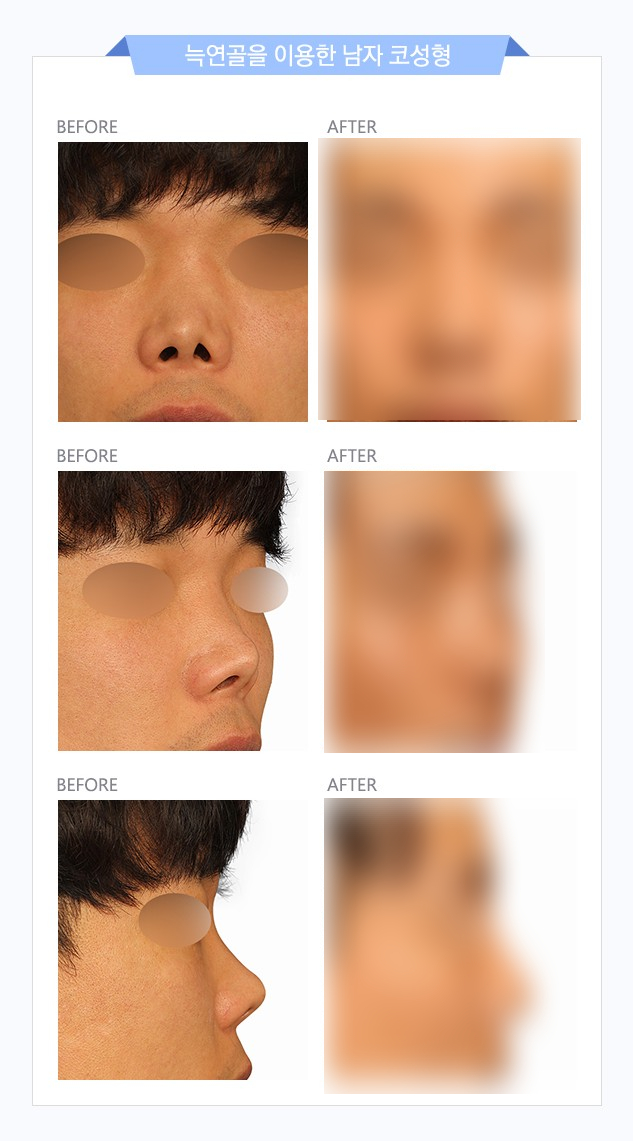
Click to view post-surgery photos.



*Plastic surgery may cause side effects such as bleeding or infection depending on the individual.